Game Boy Color (1998)
A 1992 prototype that lasted an hour, a cheap new screen and ten months: the twelve hidden palettes, black and clear cartridges, Gold and Silver, and six tasty colours.
https://averagetechnerds.com/game-boy-color/
The secret at the logo
Put an old grey Game Boy cartridge into a Game Boy Color, switch it on, and hold Left and B while the Game Boy logo is on screen. The game comes up in grey. Hold Up and A instead and it’s red. Right and B turns the whole picture into a negative.
None of it is a cheat code. Nintendo put all twelve button combinations in the Game Boy Color’s own instruction manual, from a soft pale yellow to a deep dark green. They only work with original Game Boy cartridges, and only while the logo is up, so your thumbs have to be on the buttons before the game’s title appears.
Some older games didn’t need the trick. When the console starts, it adds up the letters of the game’s title stored on the cartridge and looks the total up in a built-in table, so certain older games got a hand-picked palette automatically. Either way, an old game ends up in 4 to 10 colours on a screen that used to show four shades of green.
That little feature is the Game Boy Color in miniature: the same Game Boy, now in colour, with your old games coming along for the ride. Getting there took one shelved prototype, one cheap new screen and ten months.
An hour of battery
Nintendo had a colour Game Boy working back in 1992. It used a backlit colour screen, the cheaper kind at the time, and it had two problems you’d spot in a minute: it was too big, and the batteries were dead in about an hour. Into the drawer it went. That’s how Satoru Okada told it in 1999, and he’s the man who went on to build the Game Boy Color.
Okada has also described a more powerful prototype, a 32-bit machine he called “humongous” and too expensive, which never even got shown to Nintendo’s president, Hiroshi Yamauchi. So when you read that the Color only happened because the Game Boy Advance was running late, that’s not how Okada tells it. Nintendo had shelved a bigger colour handheld as too costly, and it went for a quick colour Game Boy instead.
The funny part is that Okada himself didn’t think a handheld needed colour. He said ten years of the Game Boy changed his mind.
Ten months
What changed everything was a piece of glass. In October 1997, a screen maker told Nintendo that reflective colour screens had become cheap. A reflective screen lights itself with the light already in the room, bouncing it back like a mirror, so it needs no backlight. No backlight meant no bulky case and no hour-long battery life. In Okada’s 2022 retelling, Yamauchi’s instruction was short: Sharp’s colour screens look affordable, so use those.
What it cost:
| What | When | Price |
|---|---|---|
| Game Boy Light | April 1998, Japan only | ¥6,800, the backlit black-and-white one that came first |
| Game Boy Color | October 1998, Japan | ¥8,900 |
| Game Boy Color | November 1998, US | $79.95, as reported |
| Price cut | May 1999, Japan | ¥6,800 |
Nintendo had a rival to think about, too. Bandai was building a handheld called the WonderSwan, and Okada says it was enough for Nintendo’s bosses to hold a meeting about it in 1997. You can see why they paid attention. It was reportedly designed by Koto, the company Gunpei Yokoi set up after he left Nintendo, and Yokoi’s team had made the original Game Boy. He died in October 1997, a year before the Color came out, so if you’ve read that the Game Boy Color was his, it wasn’t. Okada ran it.
The team got 10 months. New hardware usually took two to three years. Okada said the hardest part was keeping about 1,600 existing Game Boy games working while still making the machine more powerful, and some of Nintendo’s own developers weren’t impressed. “The only upgrade you bring us is color?!” is how Okada remembers the reaction.
Money was tight in small ways. The A, B, START and SELECT labels printed under the buttons on the original Game Boy were dropped to save on printing. And yet the logo on the front uses five colours, designed by an American designer. Okada said the logo, the name and the shell colours were all picked with American designers, for a worldwide market.
Six tasty colours
Then it shipped, in Japan in October 1998 and in North America and Europe a month later. Six years after that one-hour prototype, colour finally fit in your pocket.
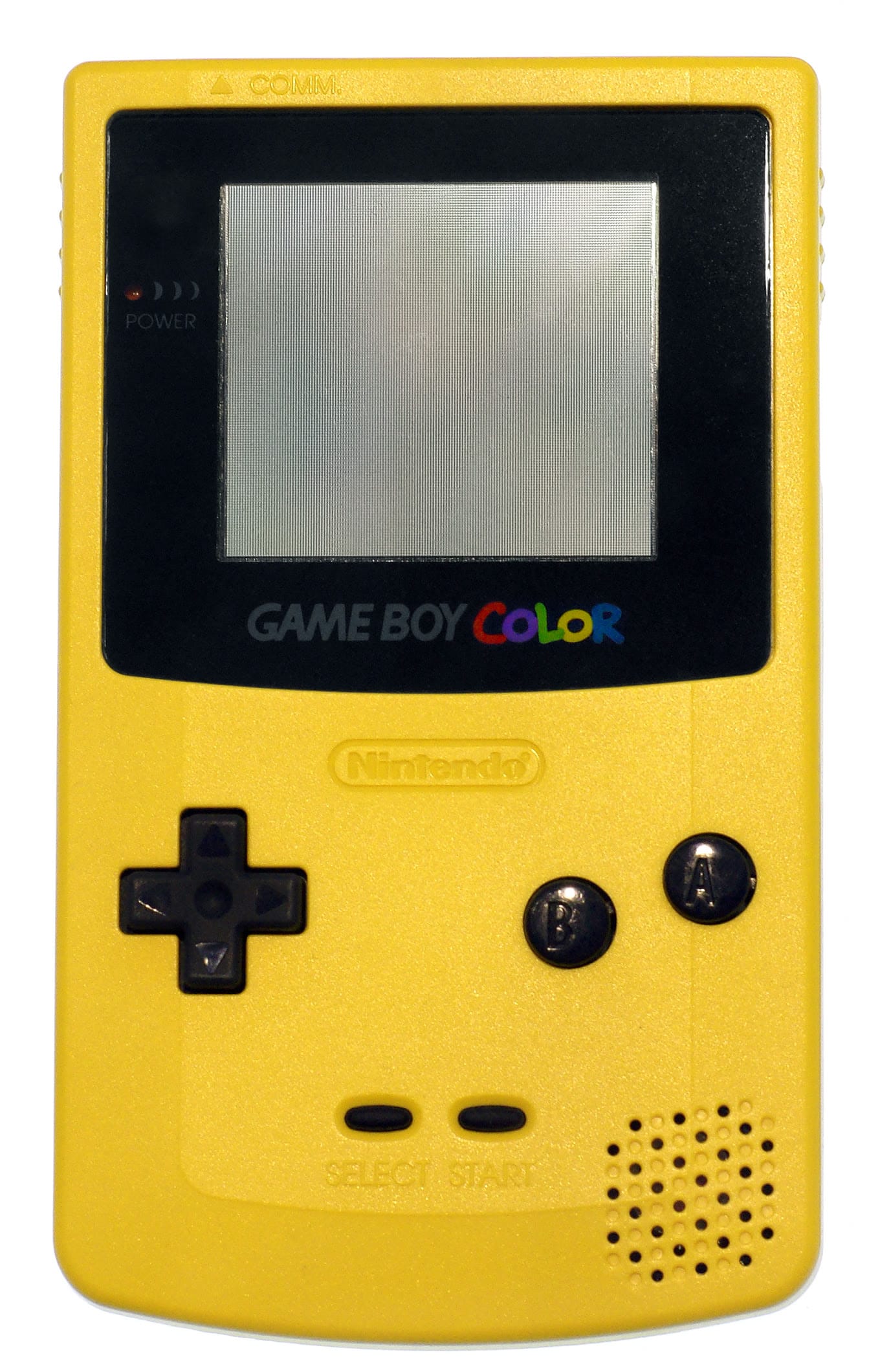
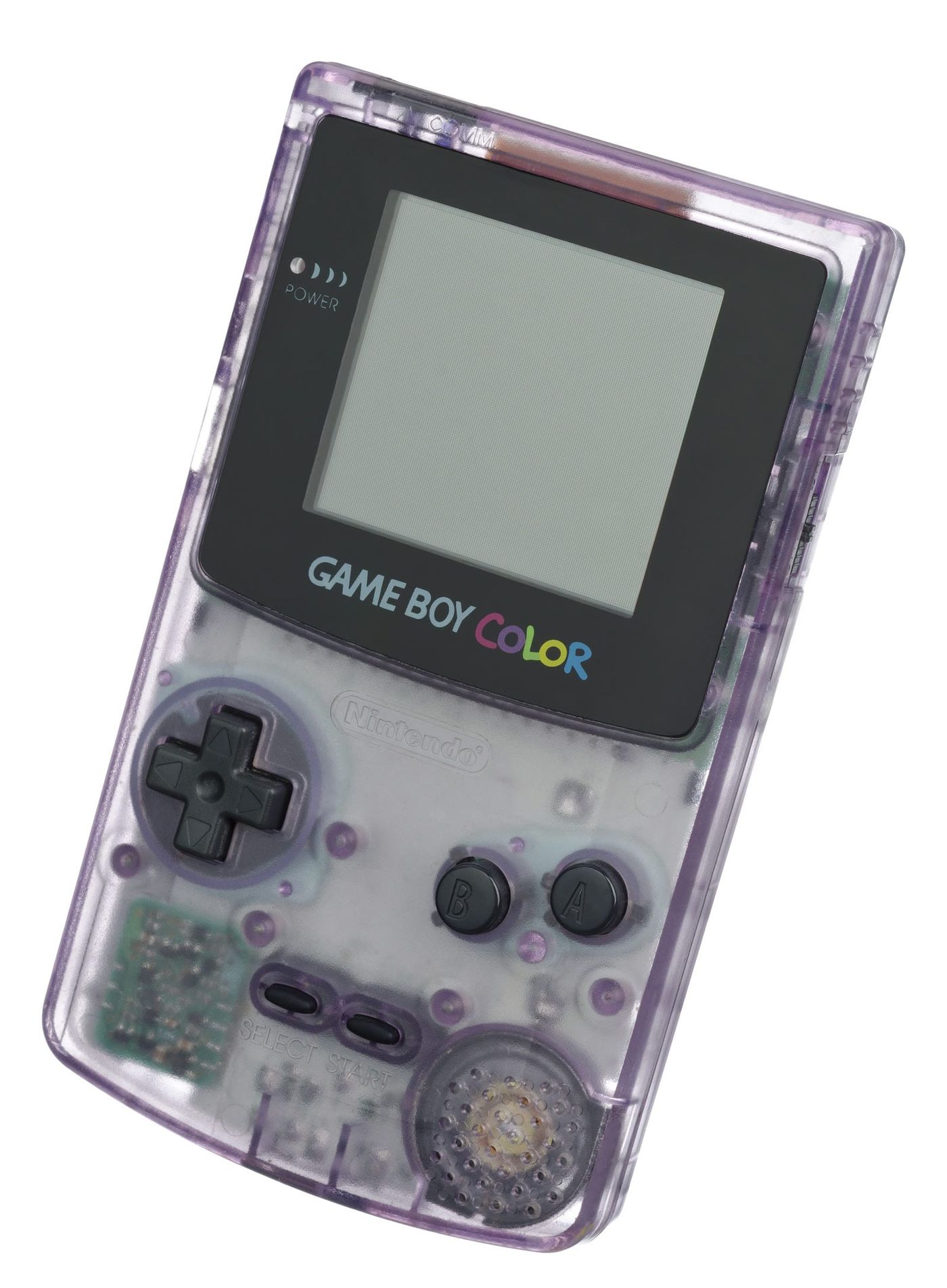
And you got to pick your colour. Nintendo of America called them “six tasty colors”: Teal, Kiwi, Grape, Berry, Dandelion and Atomic Purple, the see-through one. Now look at the logo on the front. Count the letters in COLOR. Five letters, five colours, and the five solid shells reportedly match them. Once you see it, you can’t unsee it.
Japan had already had a Game Boy you could play in the dark. The Game Boy Light came out there in April 1998 with a green backlight, a little lamp behind the screen like the one in your phone, and a switch to turn it off and save batteries. It never left Japan, and it had no colour. So in Japan that year, whichever one you picked, you gave something up: the light or the colour.
It caught on fast, with over three million shipped in Japan in its first five months. The number Nintendo cared about was bigger, though: 20.84 million. That’s how many Game Boys without colour were already out there in Japan, and Nintendo wanted those owners to switch. So it cut the price, and said that was why. In Nintendo’s eyes, the best customers for the new Game Boy were the people who already had the old one.
Black cartridges and clear ones
From then on there were three kinds of cartridge. The original grey ones played in those 4 to 10 colours. Dual-mode cartridges showed up to 56 colours on a Game Boy Color and still worked, in grey, on an old Game Boy. Color-only cartridges wouldn’t run on an older Game Boy at all.
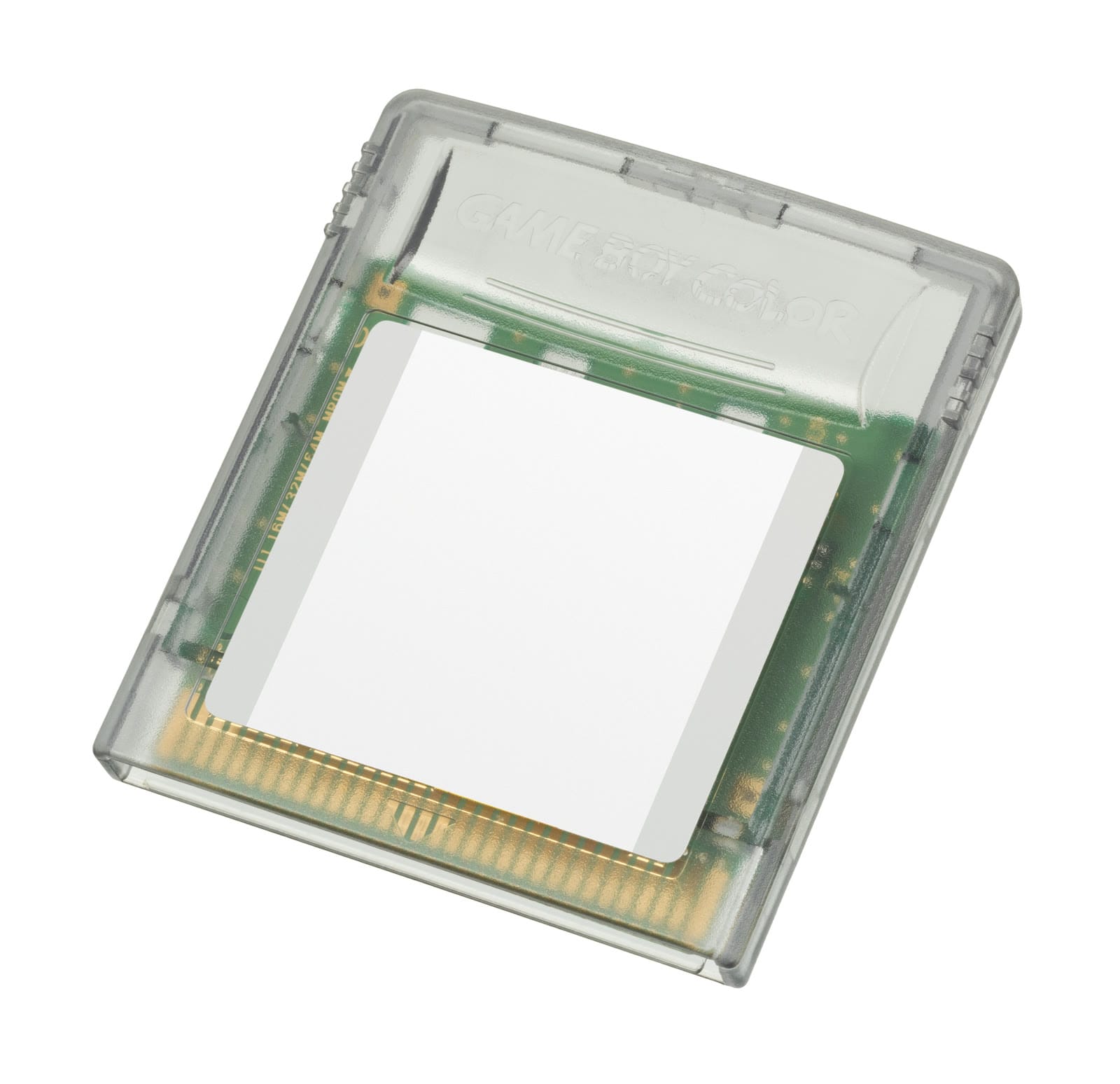
By the usual convention, the dual-mode ones were black and the Color-only ones were clear, which is reported rather than written down by Nintendo, and Pokémon Gold and Silver broke the rule with their own gold and silver shells. You’ll sometimes see it said the other way round. Black is the one that plays on both.
Nintendo also had a rule for older games coming back in colour. Its programming manual says a colour version of an old game had to add something players of the original would notice, like new stages, characters or items. A plain coat of paint wasn’t enough, which is the idea behind the DX releases.
Gold and Silver
About four programmers. That’s how many wrote the code for Pokémon Gold and Silver, by Game Freak’s own account in Iwata Asks, and the games took three and a half years. If you lost a summer to either one, a handful of programmers is why. Japan got them in November 1999, and North America waited almost a year. Crystal came later as a Color-only cartridge, so that one wouldn’t run on an original Game Boy.
One of the people who helped was Satoru Iwata, the man who would later run Nintendo itself and host those Iwata Asks interviews. Back then he was president of HAL Laboratory. And he still wrote code. He dug through the original Pokémon code for the overseas versions. He rebuilt the battle system for Pokémon Stadium in about a week. And he made “the compression tools” for the Pokémon pictures, which squeeze them smaller the way a zip file shrinks a folder. His priority, he said, was not doing anything that would hold up Gold and Silver’s development.
Fans tell a bigger version of that story: that Iwata’s compression freed so much space that the whole Kanto region fit on the cartridge as a bonus. It’s a lovely story, and Iwata Asks doesn’t say it. A 2023 analysis of the game’s code found the compression mostly saved time, in places like battle starts, and that Kanto made it in regardless. What is in the games is a thank-you. In Pokémon Ultra Sun and Ultra Moon, a character in the Game Freak office remembers when the team couldn’t fit all the data for Gold and Silver, until “this amazing guy came along” with a program that solved it. Iwata’s name never comes up.
Gold and Silver also kept a real clock inside, so some Pokémon only came out at certain times of day. Then there was Mystery Gift. You talked to a girl on the fifth floor of the Goldenrod Department Store, held your Game Boy Color up to a friend’s, and the two of you swapped gifts through the little window on top. That window is infrared, the same invisible light a TV remote uses, and it only worked between two Colors. Two kids, two Game Boys pointed at each other, a present each.
Pokémon got its own consoles, too. The one worth picturing is the US Pokémon edition from 1999, with Pikachu, Jigglypuff and Togepi printed around the screen, reportedly sold with Pokémon Yellow in the box. If you had one, you can probably still see where Pikachu sat.
How it was made
The clever part of the Game Boy Color is how little it changed. Open one up and you’re mostly looking at the 1989 Game Boy with a few smart upgrades.
In numbers:
| Part | Game Boy Color |
|---|---|
| Processor | 8-bit, at 8 MHz in double-speed mode, the original Game Boy’s speed otherwise |
| Memory | 32 KB, plus 16 KB for the picture |
| Screen | 160 x 144 reflective colour LCD, no backlight |
| Colours | 56 at once, out of 32,768; more with tricks |
| Extras | An infrared port, which Pokémon Gold and Silver used for gifts |
| Old games | Plays original Game Boy cartridges, with colour added |
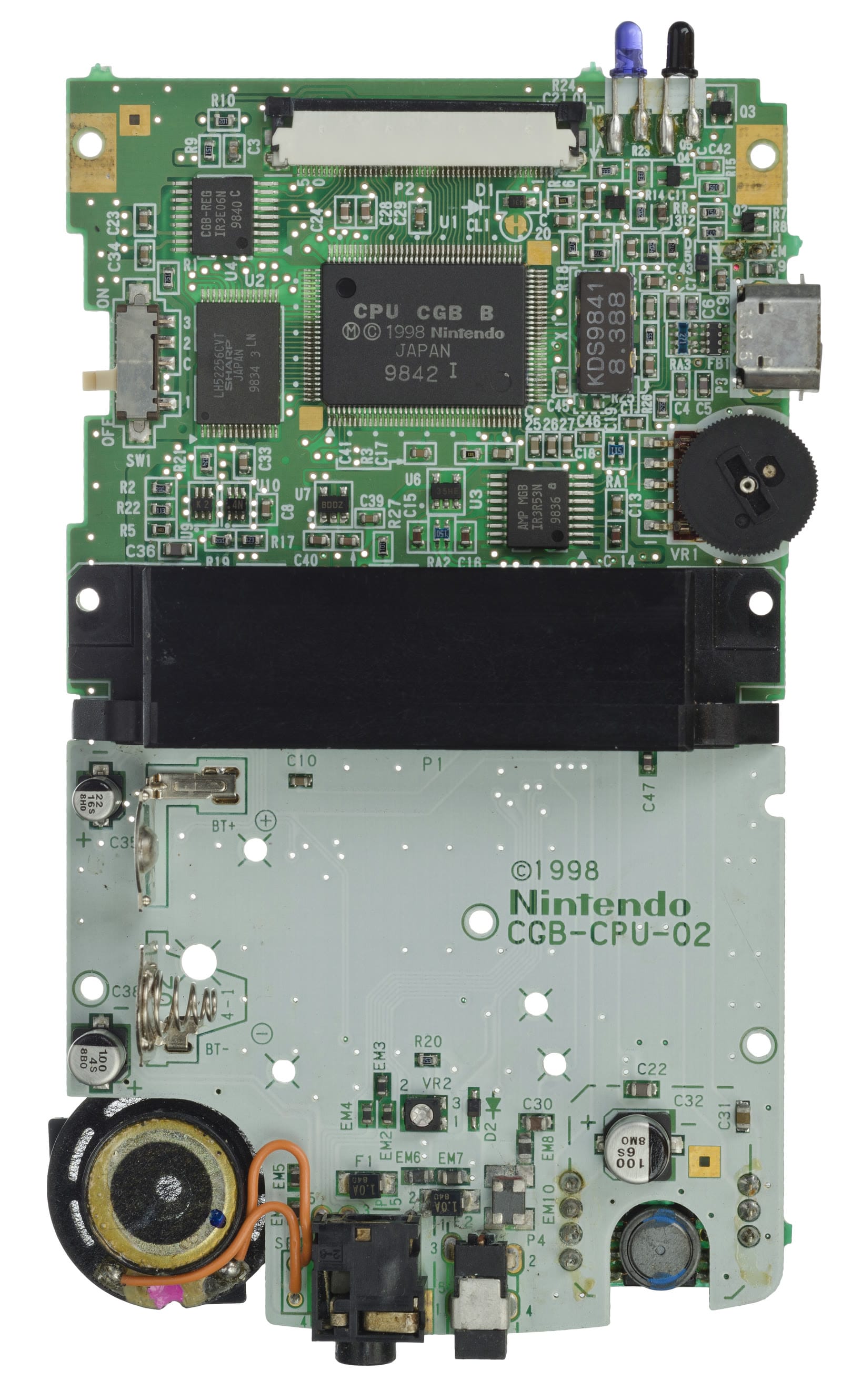
The brain. It’s the same Sharp chip family as the 1989 Game Boy, with one new trick. A colour game can flip a switch that makes nearly everything inside run twice as fast, like playing a video at 2x. The screen and the sound stay at normal speed, and your batteries drain faster while it’s on. Okada’s own summary is the honest one: almost the same machine as the Game Boy, plus the colour screen and a slightly faster clock.
The memory. It has four times the Game Boy’s working memory and twice the memory for graphics. Think of working memory as the desk a game spreads its papers on. A bigger desk means more going on at once, and more graphics memory means more art ready to draw.
The screen. It’s the same grid as the old Game Boy, 160 dots across and 144 down, on a colour screen about the size of a matchbook. It has no light of its own, so you played by a window or under a lamp, the way you’d read a paperback. There’s no contrast dial, either. The colours brighten on their own in strong light, and Nintendo promised fast games would smear less than on the old screens.
The colours. The chip can mix 32,768 colours, but it can only show 56 at once. Picture a painter with a huge paint store and a few small trays. The backgrounds get eight trays of four colours. The moving characters, which programmers call sprites, get eight trays of three. Some developers reportedly swapped trays partway through drawing each picture to sneak far more than 56 onto the screen. Your old grey cartridges get one background tray and two sprite trays, which is where that “up to 10” comes from. People who study the chip have even found leftovers of a colour-picking menu that never shipped.
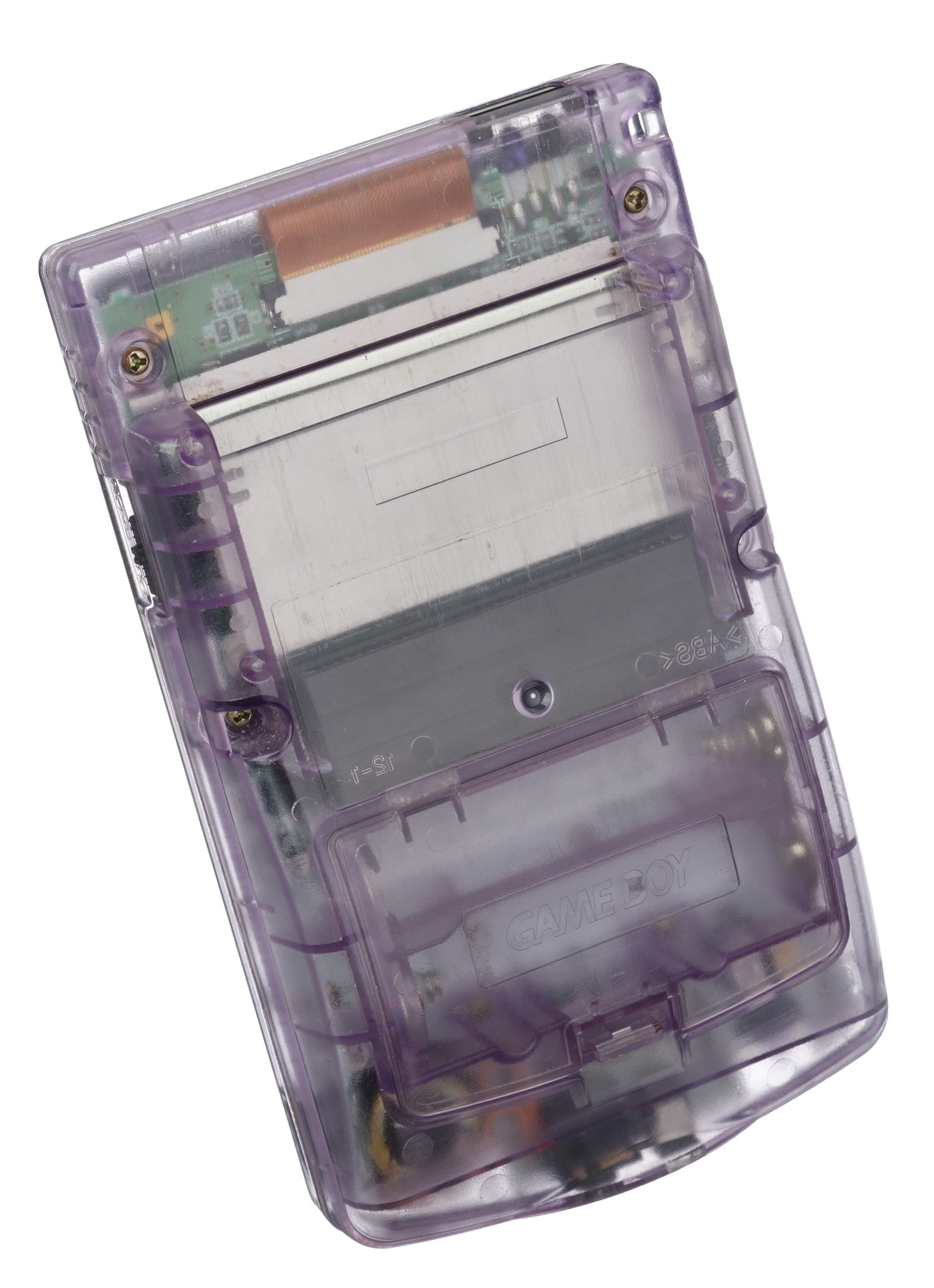
The infrared port. That’s the dark window on the top edge, the one Mystery Gift used. Because it reads the same light as a TV remote, it can learn one, and the Game Boy Color version of Mission: Impossible reportedly did exactly that. It copied your remote’s signal and played it back. Your Game Boy became the TV remote. For two Colors to talk, you held them about two fingers apart, 4 to 5 cm, with the little triangles lined up and out of the sun.
Everything else. It runs on two AA batteries, good for roughly 10 to 20 hours, longer on alkalines than on Nintendo’s rechargeable pack. And if you wanted to trade with a friend who still had an original Game Boy, you needed an adapter, because the Color uses the smaller link port from the Game Boy Pocket.
Still in colour
The Game Boy Advance took over in Japan in March 2001, and even Nintendo’s American side was nervous about it. Minoru Arakawa, who ran Nintendo of America, worried the new machine would eat into the Game Boy Color, “which has been a huge hit here”, as Okada remembers it. You could still find the Color on shelves until about 2003.
How many sold is a trickier question than it looks. Nintendo counts the Game Boy and the Game Boy Color together: 118.69 million between them. It has never published a number for the Color alone, so any “118 million Game Boy Colors” you see is both of them.
When Gold and Silver came back on the DS as HeartGold and SoulSilver, Iwata hoped they’d bridge generations, with parents, siblings and grandparents playing the same game. The Color’s games keep finding new players that way. Switch Online added them in 2023, in every membership, from $19.99 a year. The Analogue Pocket and the ModRetro Chromatic play your original cartridges on chips built to behave like the real hardware. And people are still making brand new Game Boy Color games with free tools like GB Studio.
Based on Nintendo’s Japanese Game Boy Color pages and 1999 price release, Nintendo of Europe’s technical data and instruction booklet, Nintendo’s Game Boy Programming Manual, Satoru Okada’s 1999 Nintendo Online Magazine interview and his 2022 4Gamer interview, Nintendo of America’s 2001 Game Boy Color page, Iwata Asks on HeartGold and SoulSilver, the Pokémon Gold instruction booklet, Pan Docs, Nintendo IR sales data, Nintendo’s Switch Online page, Nintendo Life, Time Extension and Koto’s own history of Gunpei Yokoi, as of November 16, 2026. Where the sources disagree, the page says so.
Nerd Alert
Your Turn
What are YOUR thoughts
What have your experiences been? Let us know.