Nintendo 64 (1996)
Started on SGI workstations before its chips existed: Mario in a room of blocks, four ports and GoldenEye's beginner team, Ocarina's ninja show, and the cartridge bet.
https://averagetechnerds.com/nintendo-64/
Made before it existed
The first Nintendo 64 games were started before there was a Nintendo 64. In the summer of 1994, Nintendo, Rare and DMA began building them on an emulator running on Silicon Graphics Onyx workstations, because the console’s own chips hadn’t been made yet.
Silicon Graphics, SGI for short, made the big workstations that serious 3D graphics ran on, the kind of computer a studio bought and you never had at home. In August 1993, Nintendo and SGI teamed up under the name Project Reality, and SGI’s Jim Clark made a promise you could put on a poster: the “combined computer power of hundreds of PCs” in a box for under $250. Hundreds of PCs. Under $250. Over at 3DO, a rival console company, the stock dropped $4 that same day.
SGI designed the two chips that matter: the processor, through its MIPS team, and the Reality Coprocessor, the chip that handles graphics and sound. When the first design of that graphics chip went off to be made, early in 1995, the team celebrated with a water-balloon fight. The chips came back untested and were running a full program within a week. The next round got Super Soakers.
Two delays and a rush
For a while it went by Ultra 64. By the time Nintendo let the public see it, at Shoshinkai, its own trade show in Japan, in November 1995, it was the Nintendo 64. That was more than two years after the SGI deal. And you still couldn’t buy one.
And you’d have to keep waiting. The launch slipped twice: first to April 1996, to give developers more time, Nintendo said, then again over what it called a shortage of parts. When the dust settled, Japan had June 23, 1996, and North America had the end of September.
Japan was ready. Nintendo shipped half a million consoles that first month, and every single one was already reserved. You could take it home with one of three games: Super Mario 64, Pilotwings 64, or a game of shogi, which is Japanese chess.
America was supposed to wait until September 29. It didn’t. K-B Toys started selling early, Electronics Boutique and Toys R Us got Nintendo’s OK to do the same, and by the 26th you could walk out of a store with one, three days before the date on the ads. It cost about $200. There was no game in the box, and only two on the shelf: Super Mario 64 and Pilotwings 64.
A room full of blocks
Super Mario 64 started as almost nothing. By Shigeru Miyamoto’s account, the very first version was Mario and Luigi running around a room of “simple lego-like blocks”. No castle, no world yet. The goal was a game where just moving Mario around was fun, and everything else got built around that.
Luigi stayed in until February 1996, when he was cut to save memory. A two-player idea went too, because most people buying a new console would own one controller.
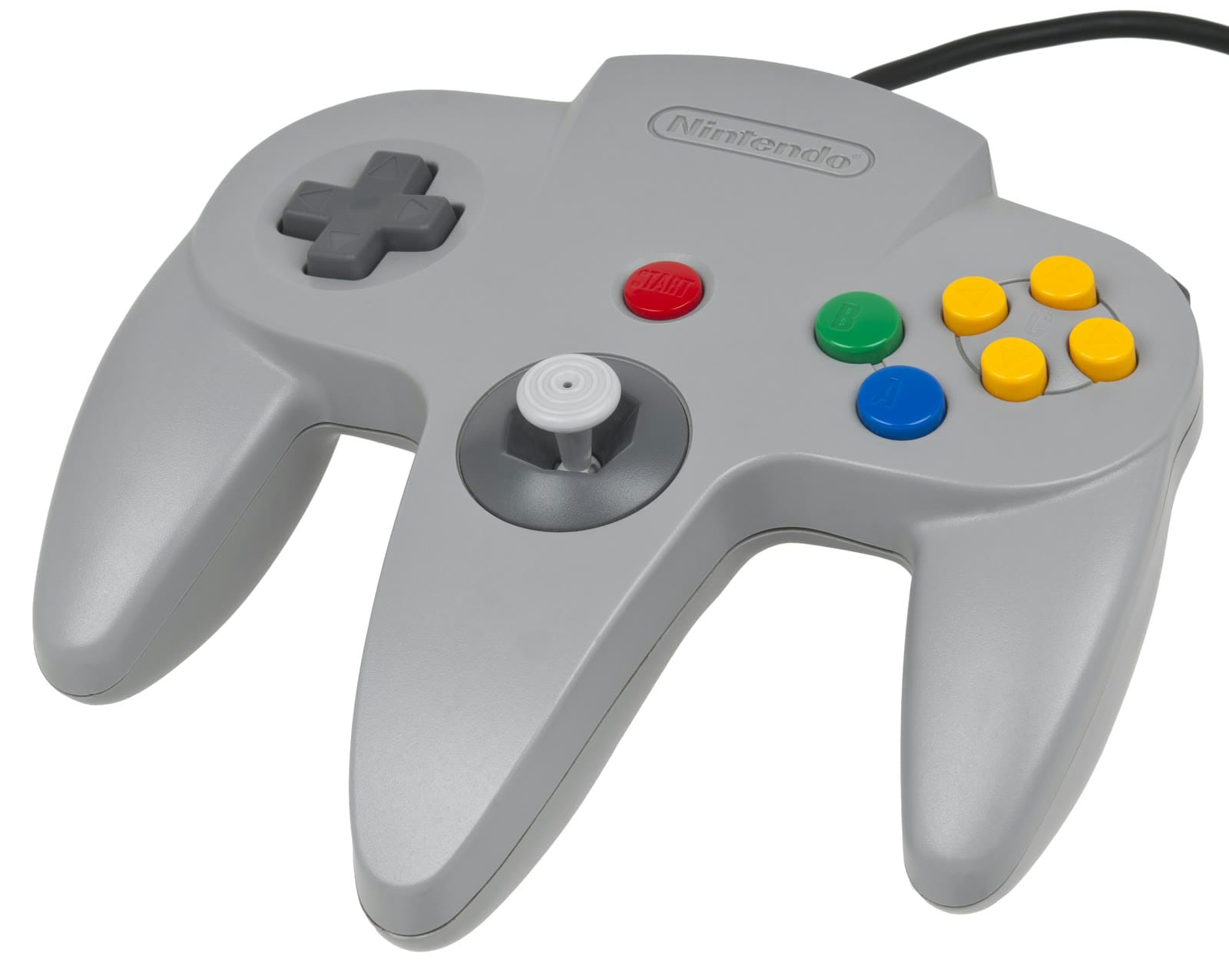
That controller is the other half of the story. Its thumb stick is analog, which means it reads how far you push it as well as which way, so a small nudge is a slow walk and a full push is a run. Nintendo called it the “3D stick” and built it for very subtle movement, the kind you need to spin Bowser around by his tail. Analog sticks had been around before, but the N64 is reported to be the first console to put a thumb stick on the controller that came in the box. Every player had one from day one.
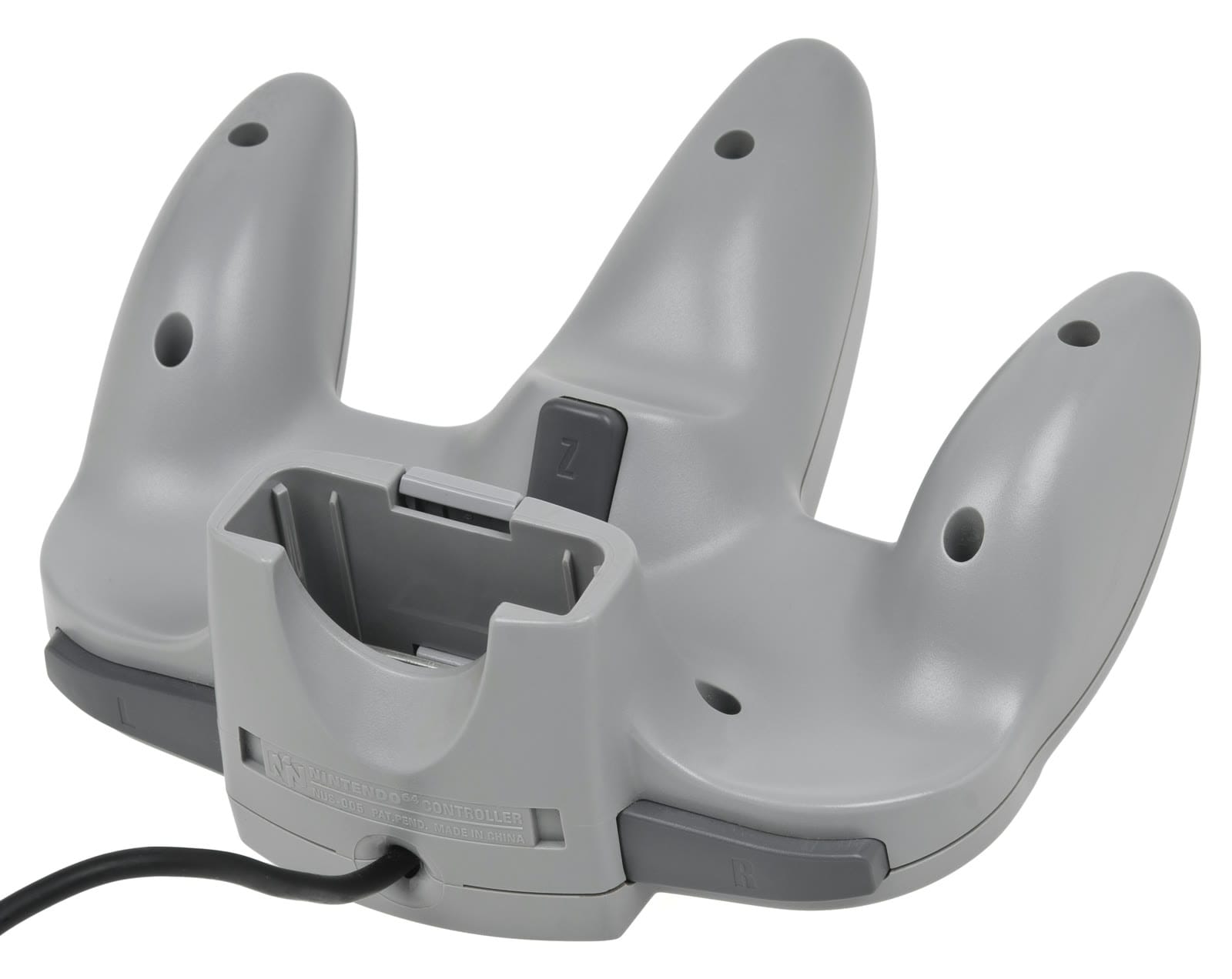
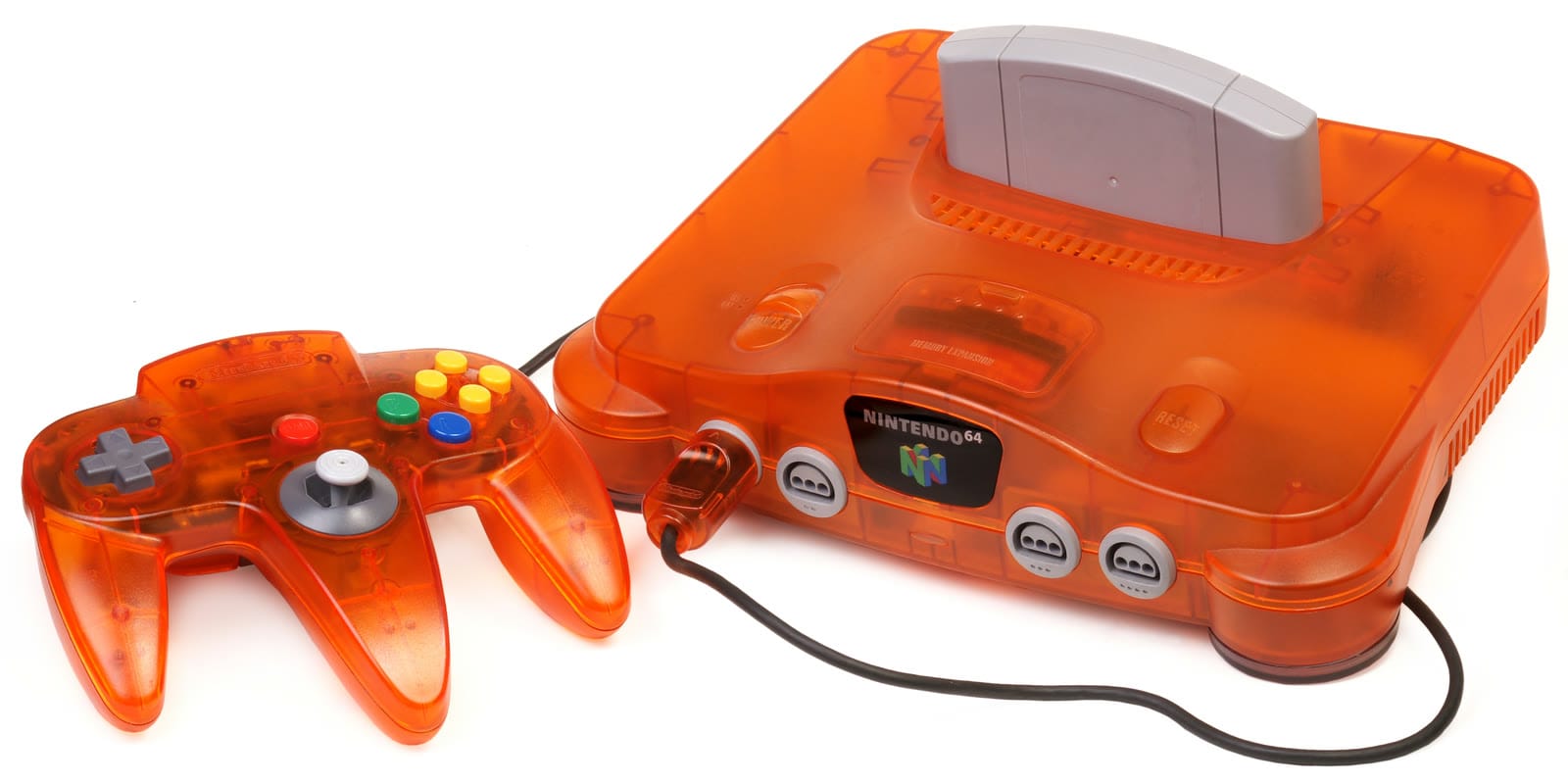
Nintendo built that controller to be two pads in one. Hold the middle and right prongs and your left thumb lands on the stick, the way Nintendo meant you to play in 3D. Slide your hands out to the two outer prongs and you’ve got a D-pad and buttons, an old-school pad for 2D games. Nintendo even named that grip the Famicom Position, after Japan’s NES. The yellow C buttons were the camera, kept off the stick on purpose. And with four people about to grab these at once, Japan got them in 11 colours, so nobody picked up the wrong one.
Four controllers
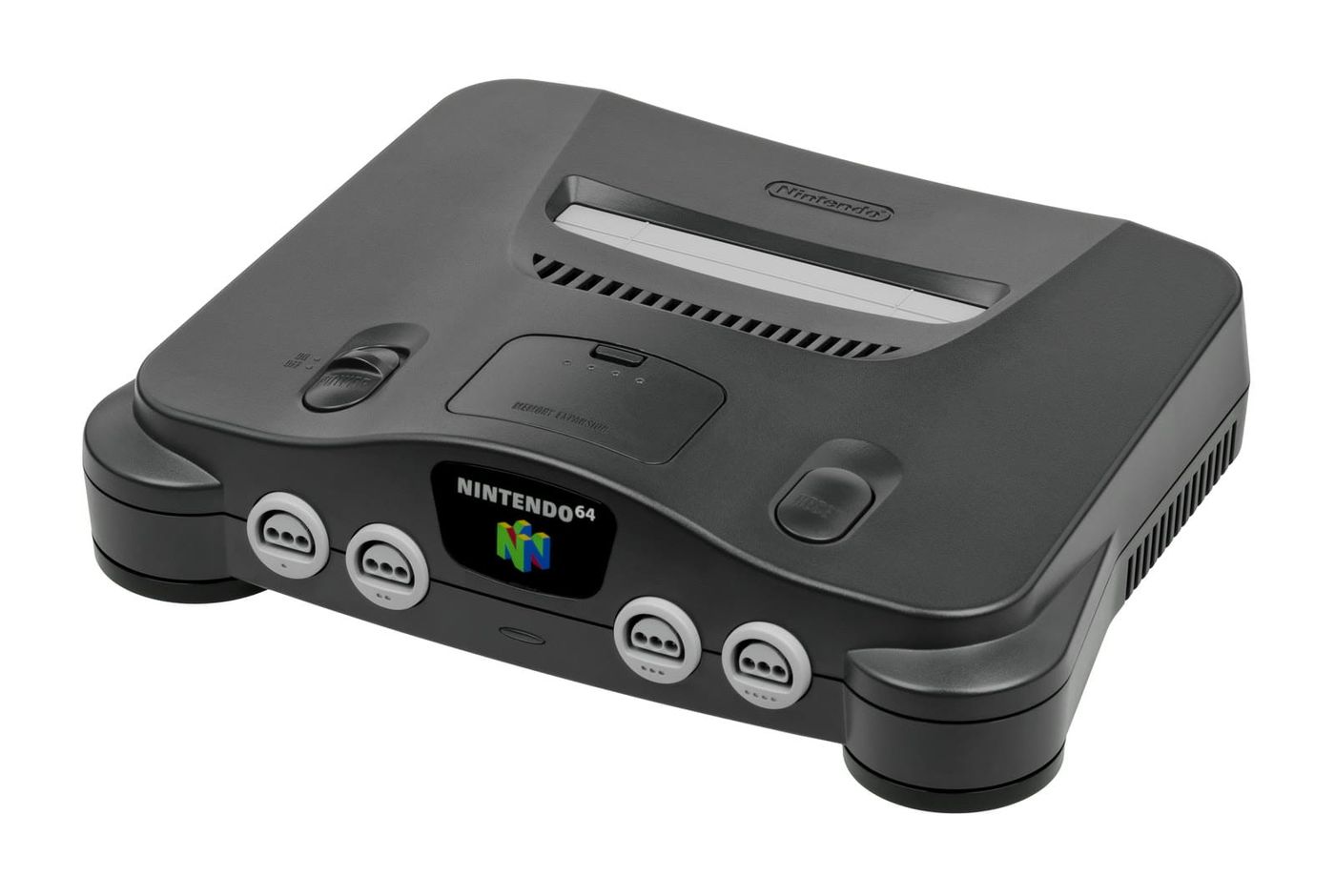
Four players needed four controllers, and the N64 came with four ports on the front as standard. That’s what turned it into a four-player console, and GoldenEye 007 is the game that shows it.
GoldenEye was made by a team that had barely made games before. Martin Hollis, who started it, had worked on exactly one, Killer Instinct, as its third programmer. He started with two other people, and by the end of the third year the team was about a dozen, most of them new hires with no experience making games. When they missed Christmas 1996, Nintendo’s Howard Lincoln sent them a three-page fax about it.
The four-player split screen came last. Steve Ellis programmed it in the final four months. If you lost weekends to that mode, it was one of the last things they built. The game came out in August 1997 on a 12 MB cartridge, which is 12 megabytes, roughly three songs on an MP3 player. Hollis put it best: “I get emails bigger than that now.” It went on to sell about 8 million copies.
The same year, Star Fox 64 came with a little box that made your controller shake: the Rumble Pak. Inside is the same kind of motor you’d find in a CD player, running on two AAA batteries. And if you had GoldenEye, it shook too.
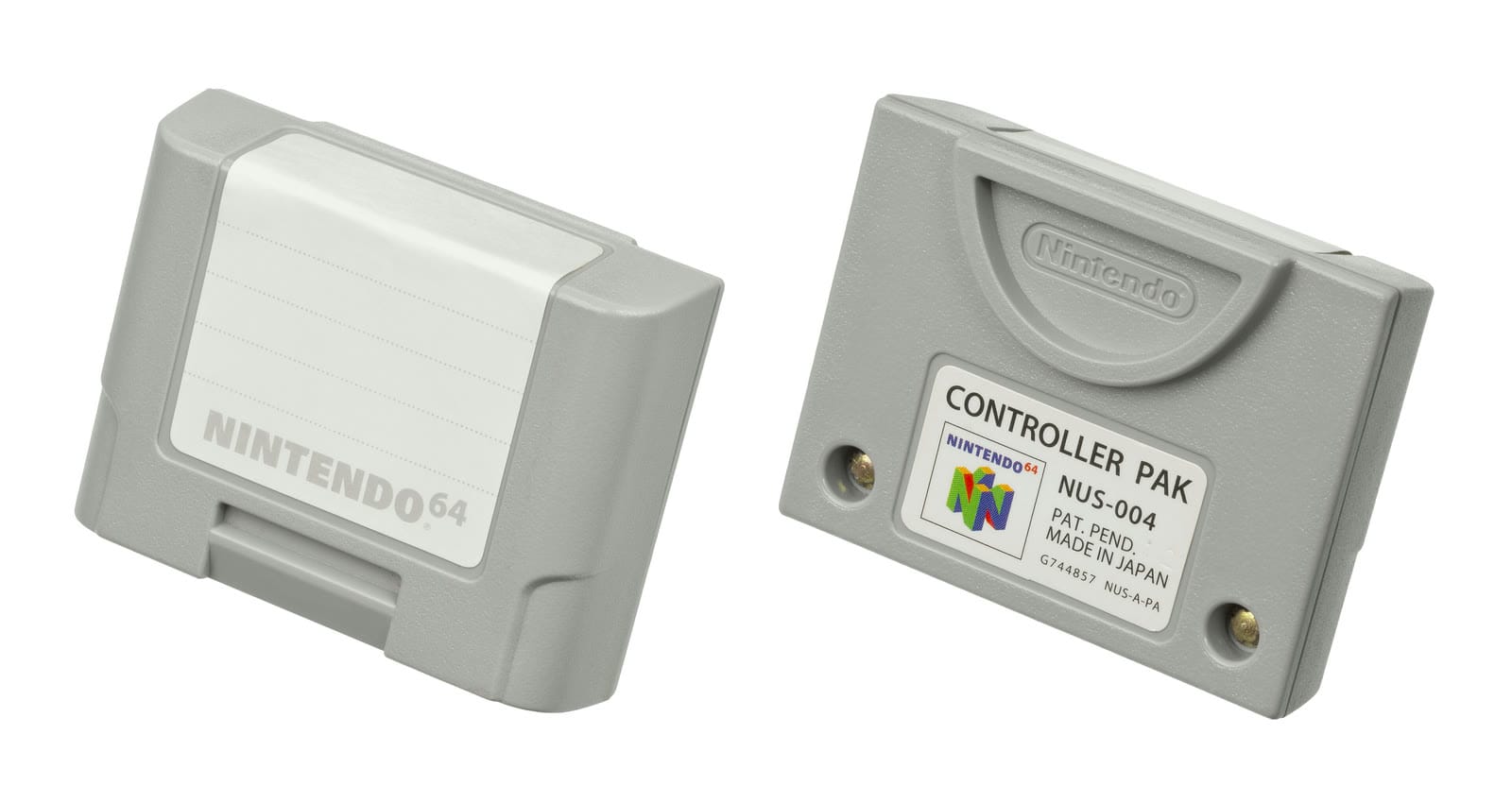
There was one snag: the slot. The Rumble Pak and the Controller Pak, the little memory card for game saves, plug into the same spot on the bottom of the controller, so using one meant pulling the other out.
The game that was meant for a disk
Ocarina of Time almost didn’t come on a cartridge at all. It was planned for the 64DD, a disk drive Nintendo was making to sit under the console. The problem was Link. He has around 500 animation patterns, and the game has to pull up the right one instantly. A disk couldn’t do that fast enough, so Ocarina went onto a cartridge and came out in November 1998.
The way you fight in it came from a ninja show. At the Toei Kyoto Studio Park, the team watched a ninja sword-fighting show and noticed the enemies attacked the hero one at a time. That became Z-targeting: lock onto one enemy, deal with it, move to the next. The targeting marker started out as a plain triangle, and it turned into Navi. And Epona goes back even further: a horse first came up in discussions while the team was making Super Mario 64.
The cartridge bet
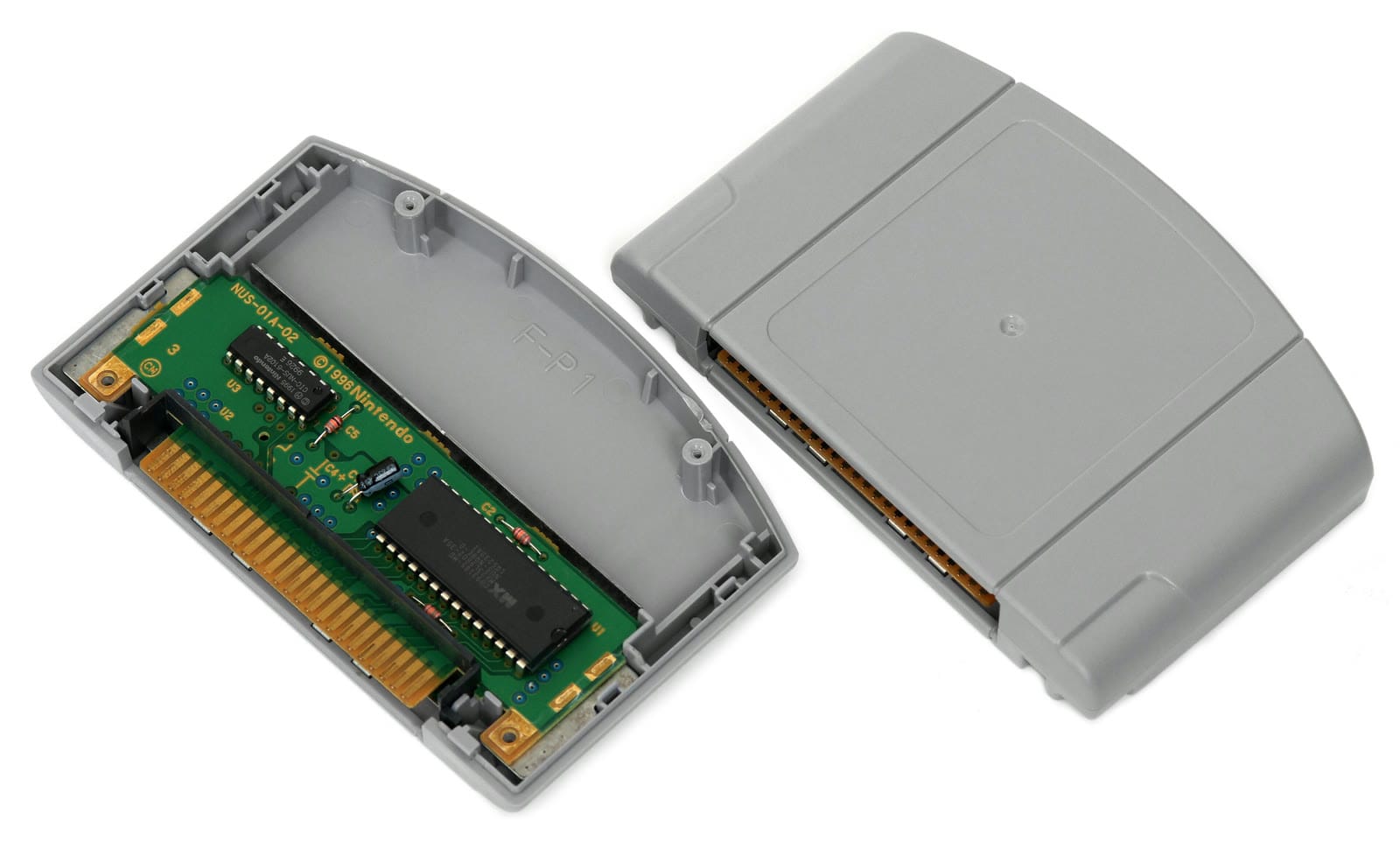
All of this ran on cartridges, while the PlayStation used CDs. Nintendo’s reason was speed. A cartridge has nothing to spin up and nothing to seek, so there are no loading screens. Copying cartridges was also costly and complicated, which kept piracy down, and Nintendo kept control of making them. Speed came first, though, and Nintendo said so.
Cartridges cost more, though, and held less. In 1997 a new N64 game cost you $75 to $89. And some games simply didn’t fit. Square wanted 3D characters and movie-style video scenes for Final Fantasy VII, which needed the room a CD gives you, so it took the game to the PlayStation, on three discs. That’s how Final Fantasy VII became a PlayStation game. A cartridge version would have cost over ¥10,000, Hironobu Sakaguchi has said, against ¥6,800 for the discs.
Nintendo fought back the same year. By spring 1997 the console was down to about $150, and Nintendo charged publishers less to make cartridges, so new games could sit around $59 to $69.
By Nintendo’s numbers, the N64 sold 20.63 million in the Americas and 5.54 million in Japan. America got the four-player nights. In Japan, much of that ground went to the PlayStation.
How it was made
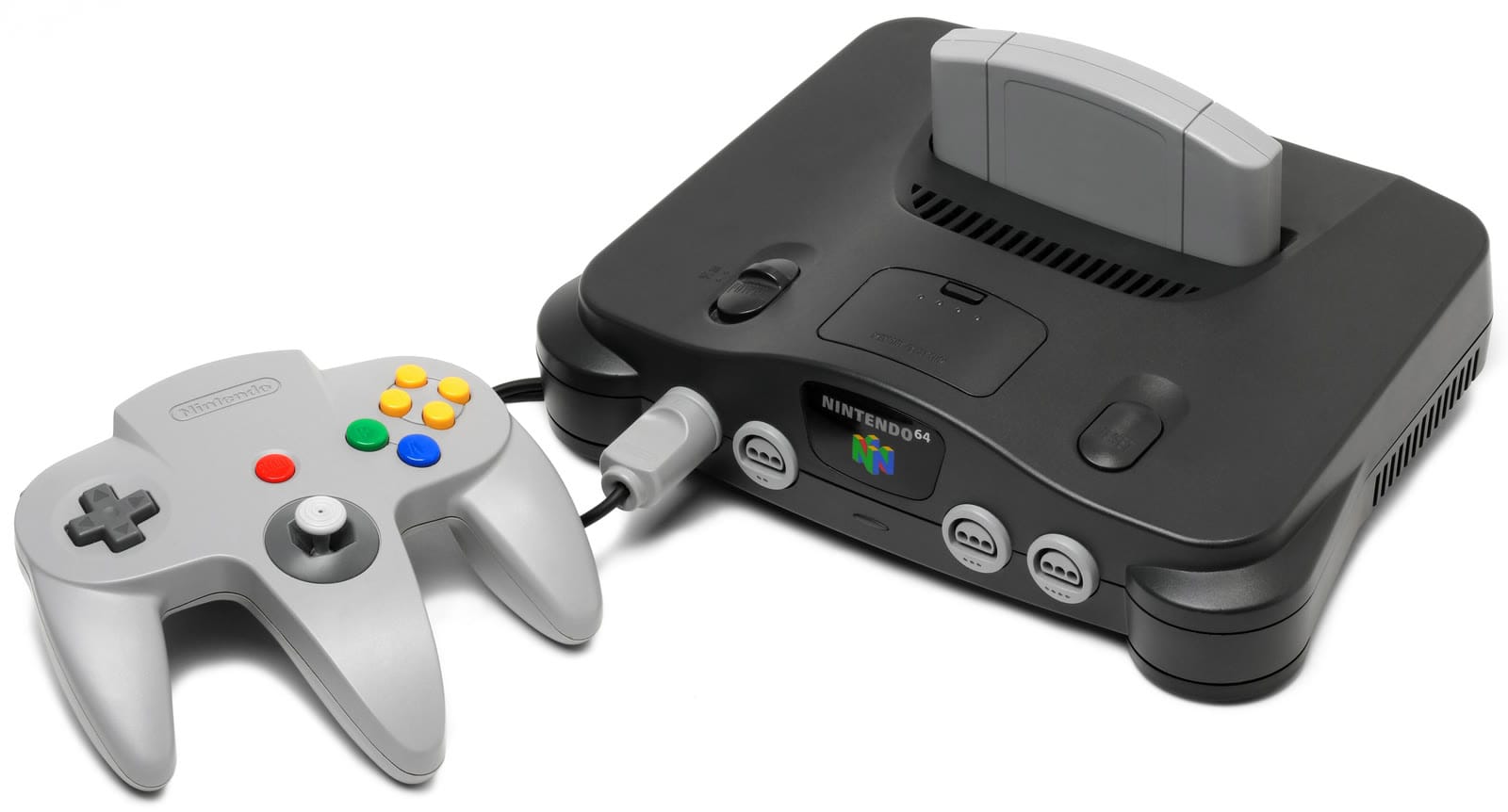
Inside, the N64 is SGI workstation graphics shrunk down to sit under your TV. One chip thinks. One chip draws the picture and makes the sound. And they all share one small pool of memory.
In numbers:
| Part | Nintendo 64 |
|---|---|
| Processor | A 64-bit NEC VR4300, built on MIPS designs, at 93.75 MHz |
| Graphics and sound | The Reality Coprocessor, designed by SGI, at 62.5 MHz |
| Memory | 4 MB of Rambus memory for games, 8 MB with the Expansion Pak |
| Games | Cartridges, plus the Japan-only 64DD disk drive |
| Controller | An analog stick and a Z trigger, with four controller ports on the console |
The brain. The processor is an NEC VR4300, built from a design by SGI’s MIPS team, and its clock ticks 93.75 million times a second. That’s what 93.75 MHz means, and every tick is a chance to get a little work done. It’s a 64-bit chip, and that’s where the “64” in the name comes from. The bit count is how big a number the chip can handle in one step, the way a calculator with more digits on its screen can handle bigger sums. Games mostly ran it in 32-bit mode anyway, because that was faster in practice. And it wasn’t the first console sold as 64-bit. Atari marketed the Jaguar that way in 1993. The N64 was the first to have a 64-bit processor at its centre.
The graphics chip. The Reality Coprocessor has two halves, and the easiest way to picture them is a math whiz and a painter. The math whiz is the Signal Processor. It runs tiny programs called microcode that do the 3D maths, working out where every shape sits on your screen, and it mixes the sound too. The painter is the Display Processor, and it puts the actual pixels down. It remembers how far away every pixel is, so a wall in the back never ends up drawn on top of Mario in front. It softens jagged edges, smooths textures and keeps them from warping as they tilt away from you. That’s a lot of why N64 games looked so different from PlayStation games.
No sound chip. There isn’t one. The processor and the Signal Processor mix the audio in software, up to CD quality in theory, but the best quality cost a lot of processing power and cartridge space.
The memory. Think of memory as the console’s desk, the space where it spreads out whatever it’s working on right now. The N64’s desk is 4.5 MB, about one song on an MP3 player, and the processor, the graphics and the sound all share it. Games get 4 MB of it, because the graphics chip keeps a slice for itself. That memory could move a lot of data once it got going, but it was slow to start every single transfer. Picture a fast elevator with slow doors: great for one big load, painful when you need lots of little trips. Games need lots of little trips.
Why it looks soft. The graphics chip keeps its textures, the pictures painted onto every wall and floor, in a tiny 4 KB cache, a scratchpad right on the chip. A kilobyte is a thousandth of a megabyte, so 4 KB is about one page of plain text. Only half of that is usable with mip-mapping on, a trick that keeps smaller copies of each texture for things far away. So textures had to be small. Turok’s were 32 by 32 pixels, smaller than an app icon on your phone. Super Mario 64 dodged some of the problem by painting surfaces with plain shaded colour. Turok’s team used fog, and one of them said later, “The fog was the only thing at the time to get the frames-per-second up.” And every one of those tiny textures got smoothed as the console stretched it across a wall or a floor. Up close, that’s the blur you remember.
The cartridges. They held anywhere from 4 MB to 64 MB. Super Mario 64 fit in 8 MB, a couple of songs, and Nintendo later pointed out that one GameCube disc holds about 190 times as much. Space was so tight that squeezing a game in became a trick of its own. Resident Evil 2 reportedly fit two PlayStation CDs onto one 64 MB cartridge and still kept its video scenes. What a cartridge gave you in return was no waiting. There’s no disc to spin and nothing to search for, so some studios pulled data from the cartridge the whole time the game was running.
The controller. The 3D stick reportedly reads movement with slotted wheels and little light sensors, much like an old ball mouse. If you ever took one of those mice apart, you’ve seen the idea. After years of play, what wears out is the plastic bowl and gear inside the stick. And the Rumble Pak sets how hard it shakes by pulsing its motor in longer or shorter bursts, a bit like flicking a light switch on and off really fast.
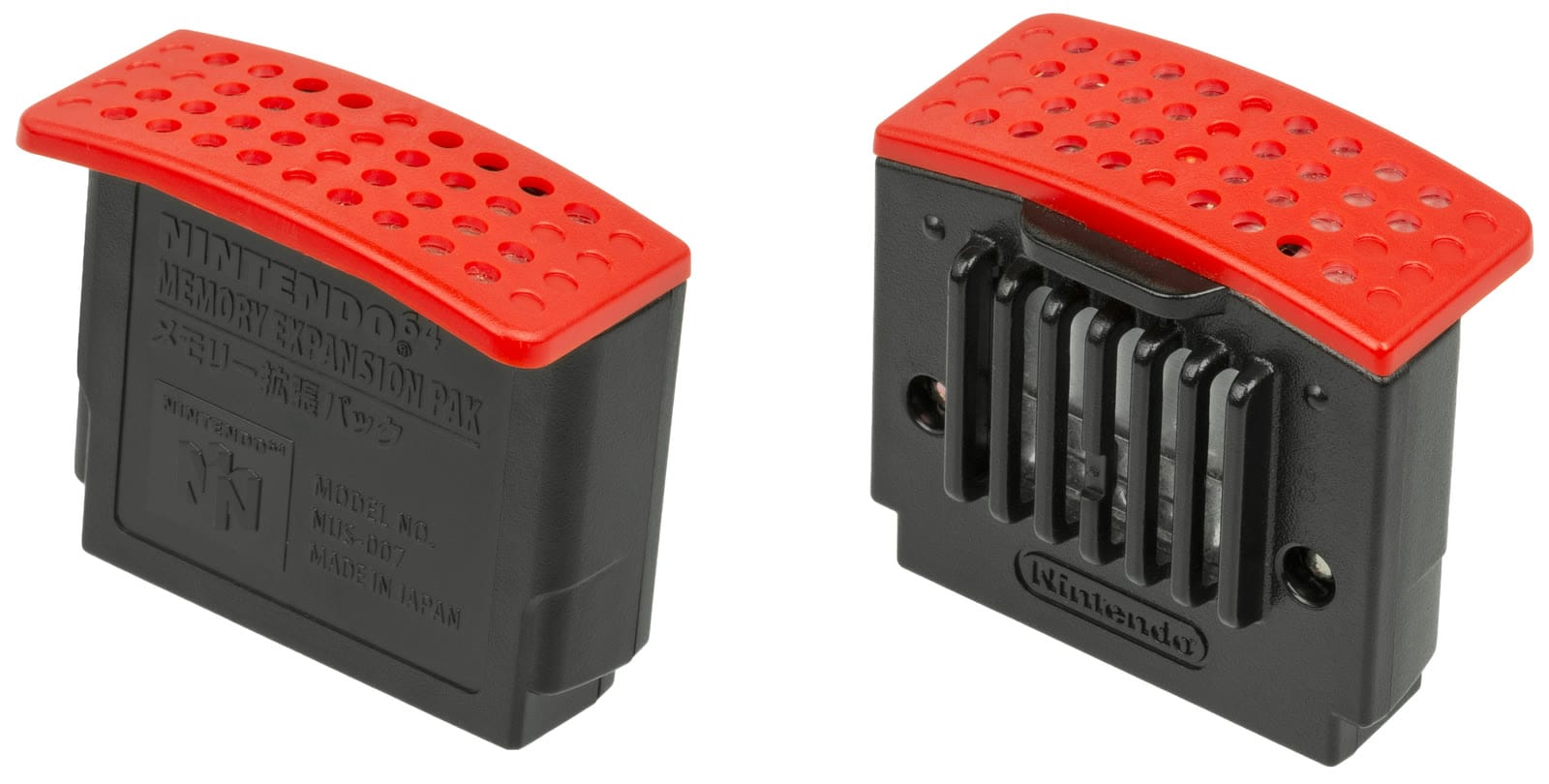
The Expansion Pak. In Japan it started out as the Hi-Res Pak, and what it does is simple: it doubles the desk. Plug it in and your games get 8 MB to work with instead of 4. It goes in where a little part called the Jumper Pak sits, and the console needs one or the other in there to finish off the memory circuit. Take both out and it won’t even start. The Japanese box came with a tool just for pulling the Jumper Pak out. Some games couldn’t live without it. Donkey Kong 64 needed it and came with one in the box, Majora’s Mask needed it too, and Perfect Dark reportedly locked most of its campaign and much of its multiplayer if you didn’t have one.
The 64DD. The disk drive Ocarina was meant for finally came out in December 1999, more than three years after the console, and only in Japan. It sat under the N64 like a second floor for your console and read 64 MB disks you could partly save onto. You mostly got one by mail order, together with an online service called Randnet. It sold in the low tens of thousands, and Randnet shut down in February 2001. Blink and you missed it.
Still plugged in
Nintendo stopped making the N64 in 2002. By then it had sold nearly 33 million consoles and about 225 million games. That’s roughly seven games for every console out there.
What it cost, and what plugged into it:
| What | When | Price |
|---|---|---|
| Nintendo 64 | June 1996, Japan | ¥25,000 |
| Nintendo 64 | September 1996, US | About $200 |
| Price cut | March 1997, Japan | ¥16,800 |
| Price cut | 1997, US | $149.95 |
| Rumble Pak | April 1997, Japan | ¥1,400, with Star Fox 64 |
| Expansion Pak | June 1999, Japan | ¥2,800 |
| 64DD | December 1999, Japan only | Sold mostly by mail order, with an online service |
| Switch Online + Expansion Pack, with the N64 library | Since 2021 | $49.99 a year |
It never really went away. If you have a Switch, the N64 library is on Switch Online, in the Expansion Pack tier, and Mario Kart 64 even plays online with four people. Donkey Kong 64 joined it in June 2026, and a Switch 2 remake of Ocarina of Time came out on November 5, 2026. And if your cartridges are sitting in a closet, the Analogue 3D and the ModRetro M64 play them on a modern TV. Both use FPGA chips, hardware that gets rewired to act like the original console, and both have four controller ports and the Expansion Pak built in.
Based on Nintendo’s Japanese hardware, accessory and software pages, Nintendo IR sales data, Steve Shepard’s 1996 account of Project Reality at SGI, Miyamoto’s 1996 Super Mario 64 interviews, Iwata Asks on Ocarina of Time, Martin Hollis in Game Developer and Time Extension, PC Watch, IGN and Supermarket News from 1996 and 1997, Hironobu Sakaguchi via Automaton, Rodrigo Copetti’s Nintendo 64 architecture analysis, Nintendo Life on Turok, Game Informer on the Ocarina remake, and Nintendo’s Switch Online pages, as of November 16, 2026. Where the sources disagree, the page says so.
Nerd Alert
Your Turn
What are YOUR thoughts
What have your experiences been? Let us know.