News · News · Console Gaming
Nintendo’s Latest GitHub Takedowns Hit Switch Modchip Firmware and Citron Neo
Four Nintendo notices filed November 6 took Picofly modchip firmware and 143 copies off GitHub, along with Citron Neo, a continuation of the Citron emulator, and 70 copies of it.
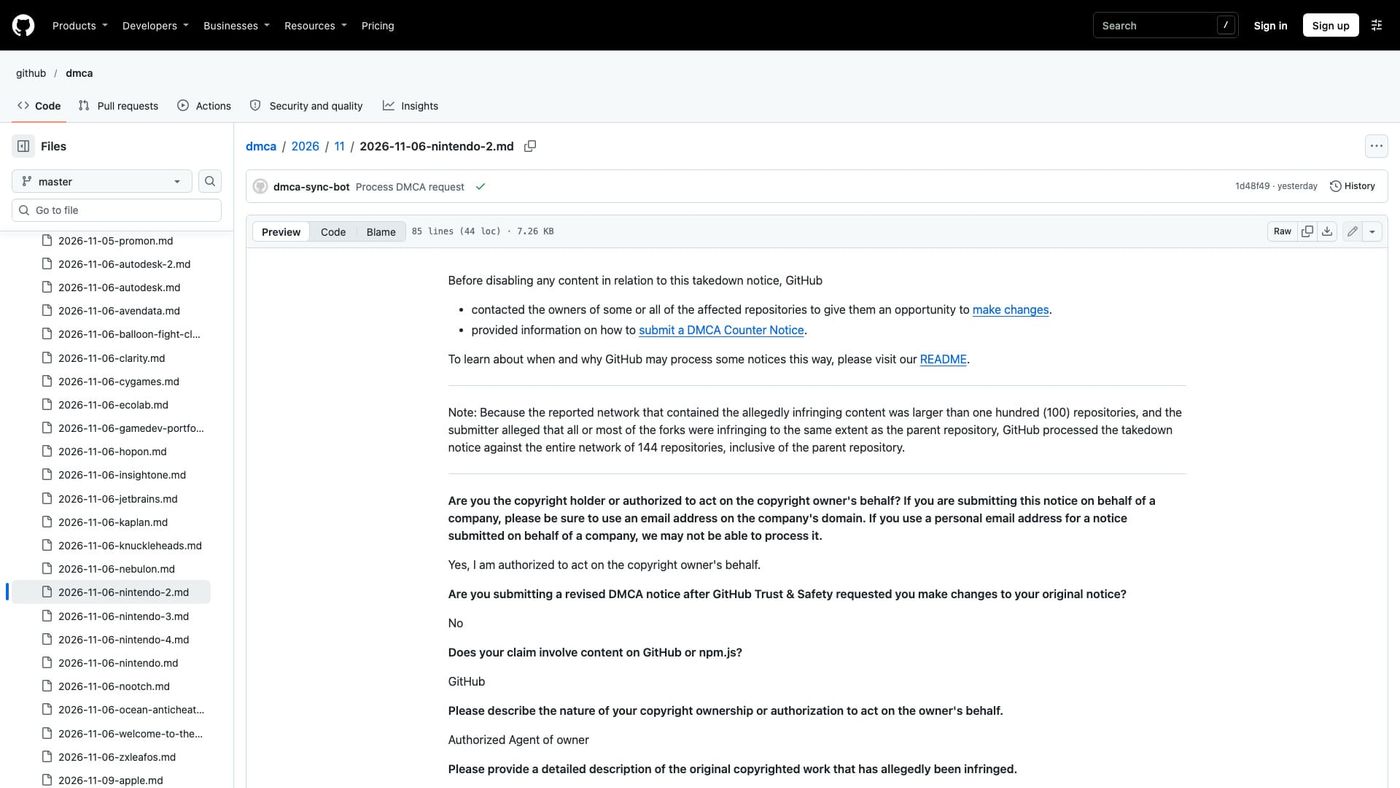
Inside some modded Switches sits a small board that lets the console run unofficial software. Picofly is open-source code for those boards, and at Nintendo’s request, GitHub has now pulled it down, along with 143 copies. Nintendo has been going after Switch emulators on GitHub for more than two years, and this is a new kind of target. The same notices, filed November 6, also took out Citron Neo, a continuation of the discontinued Citron emulator, and 70 copies of it.
What did Nintendo take down?
Three things, in four notices to GitHub.
The biggest is Picofly. It’s open-source firmware for Switch modchips, the small boards some owners solder inside the console to run unofficial software. Nintendo’s notice named one Picofly repository, and because so many people had copied it, GitHub disabled the whole family of 144 repositories. The notice also names other modchip firmware, SX Core, SX Lite and HWFLY, as the kind of thing it covers.
The second is Citron, a Switch emulator built from Yuzu’s code. Citron itself shut down in February after a falling-out among its developers, but its code lived on in copies, the biggest being Citron Neo. Nintendo’s notice named Citron Neo and 40 copies of it, and because people were still copying it, GitHub disabled the whole family of 71 repositories.
The last two notices each named a single copy of Yuzu, the Switch emulator that shut down in 2024 after Nintendo sued its makers. Its owner cleared both before GitHub had to disable them.
Why does Nintendo say it can do this?
The same argument it has used against every Switch emulator. Under US copyright law, it’s illegal to share tools whose main purpose is getting around the protection on copyrighted work. Nintendo says the Switch’s encryption is that protection, and that modchip firmware gets around it by bypassing the console’s start-up checks.
Nintendo doesn’t need a court order for any of this. A takedown notice is enough to get GitHub to act, and Nintendo already has court wins behind it, including the 2024 judgment that ended Yuzu. A developer who thinks their code was pulled by mistake can file a counter-notice and fight it.
Is this the end of Switch emulation or modding?
No. This takes code off one website. Nintendo’s earlier rounds of takedowns went the same way: in February, it went after at least 13 Switch emulators on GitHub, and the big projects kept going because their code was hosted somewhere else.
What it does show is that Nintendo keeps widening the net. First the emulators, then their copies, and now the firmware inside modded consoles.
Should Switch owners worry?
Not about this notice. Nothing in it touches a console you own or the games you bought. The takedowns are about who can share the code. If you already have it, they don’t change anything.
If you mod your Switch, the bigger risk is the one that was always there. Nintendo can ban modded consoles from its online services, and that hasn’t changed.
Nerd Alert
Your Turn
What are YOUR thoughts
What have your experiences been? Let us know.