Sega Game Gear (1991)
A helicopter on an aircraft carrier, a Master System turned sideways, a backlit colour screen that ate six AA batteries, and a TV tuner in the cartridge slot.
https://averagetechnerds.com/sega-game-gear/
On April 5, 1991, a helicopter landed on an aircraft carrier in New York Harbor to deliver a handheld game console. The carrier was the USS Intrepid, the package was what Sega called “America’s first Game Gear”, and waiting on deck were 600 kids, about 100 of them children of Desert Storm service members. Sega had filled three pools with 10,000 foam balls. Sixty of those balls were marked, and every marked one won a Game Gear.
That was Sega in 1991: loud, a little ridiculous, and sure it had something the Game Boy didn’t. Colour, and a screen that lit itself up. What follows is the story of a home console turned sideways, lit from behind, and then locked in a long fight with its own batteries.
A colour answer to a grey screen
Japan got it first, on October 6, 1990, with three games on day one: Columns, Super Monaco GP and Pengo. Three. That was your whole shelf, and people bought it anyway, 40,000 of them in the first two days by early reports.
Hideki Sato, who ran Sega’s console hardware, later summed up the whole idea in a line. Nintendo’s Game Boy was black and white, he said, and “at Sega, we saw that as a challenge to make our own color handheld system.”
The way the team got there is worth picturing. They started from weight. Batteries weigh something, a backlight weighs something, cartridges weigh something, so they added it all up and worked backwards to a target of about 500 grams. That put it right between the Game Boy at 270 grams and Atari’s Lynx at about 800.
The Lynx belongs in this story for another reason: it came first. You’ll see the Game Gear called the first colour handheld, and the Lynx beat it by a year, in 1989. Sega’s own claim is narrower, and true. It calls the Game Gear the first Japanese-made handheld with a backlit colour LCD.
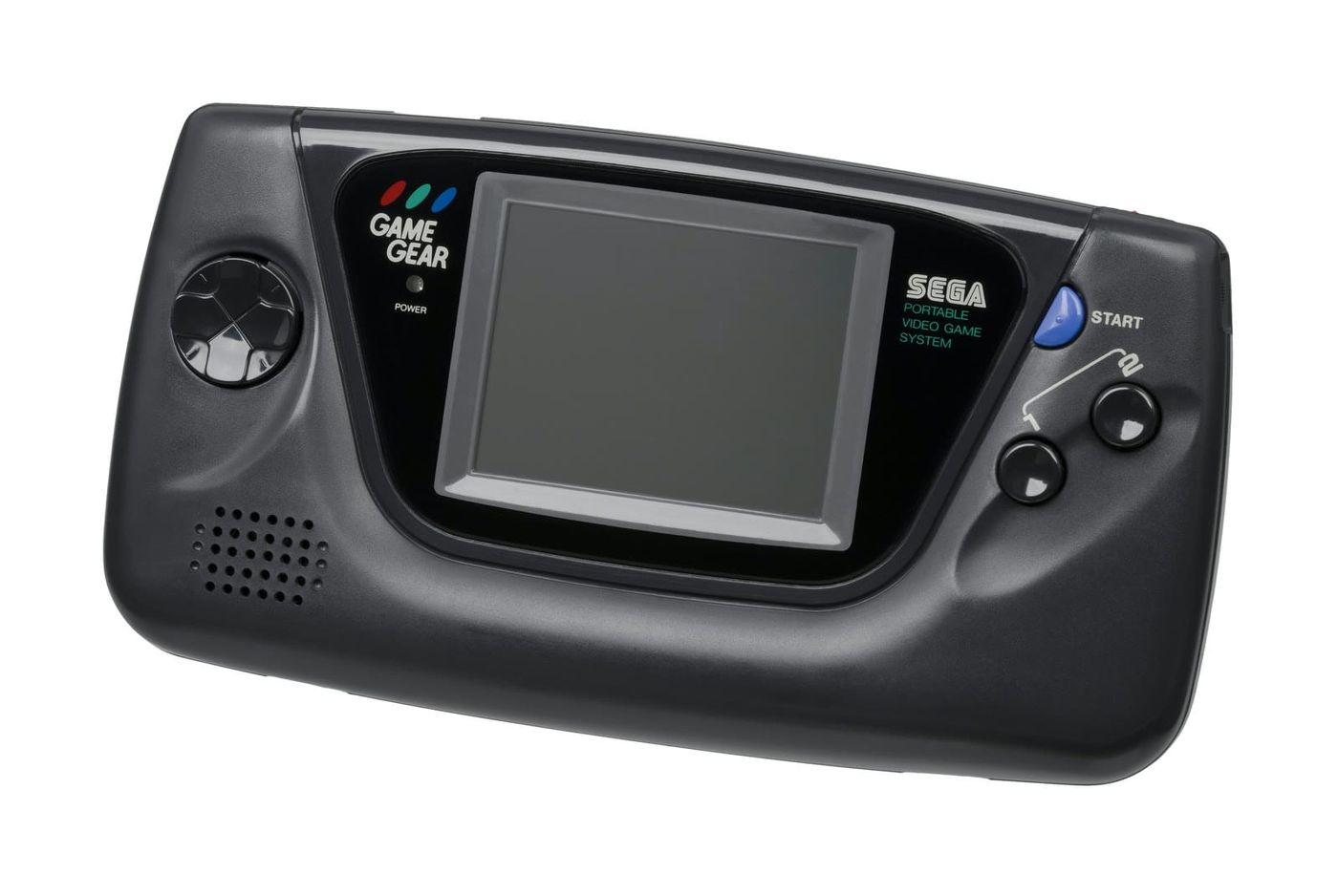
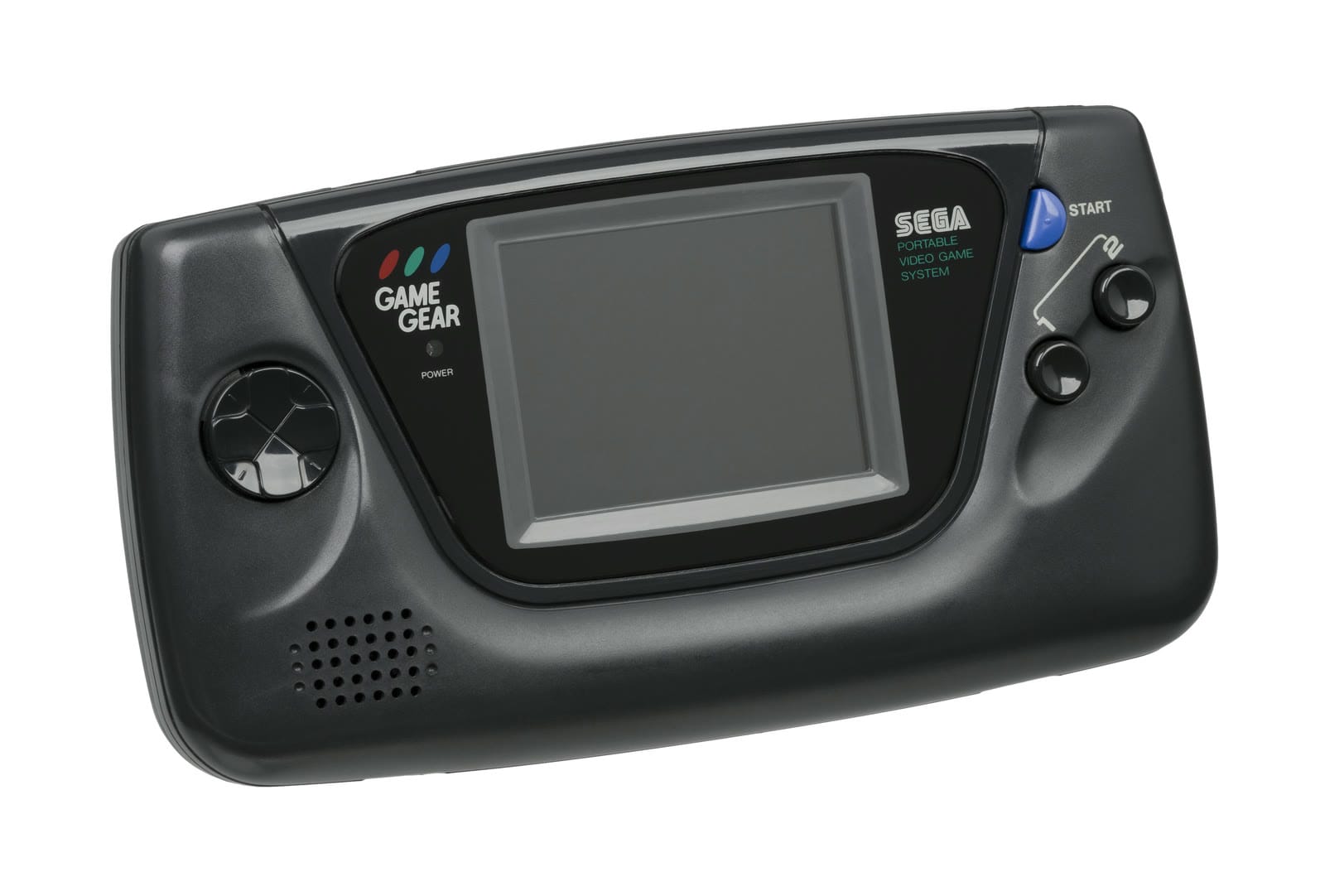
Rather than building the insides from scratch, Sega based it on the Master System, its home console, to save development time. Then it laid the thing out wide, so you held it like a controller, with the D-pad on one side of the screen and the buttons on the other.
Time to grow up
America got its turn in April 1991, for about $150. Open the box and you found Columns and a wrist strap. A strap. Sega fully expected this thing to leave the house.
Sega didn’t sell it quietly. Its first American ad went straight at the kid with the Game Boy: “If you’re still playing with Game Boy, it’s time to grow up.” The same ad promised the backlit screen would let you play “in any kind of light, even total darkness.” Under the covers after lights out. In the back seat on a night drive. That was the pitch.
That November, Sega put out a press release saying 91.79% of kids aged 8 to 14 preferred the Game Gear. It was Sega’s own survey, two decimal places and all.
Six AA batteries
The backlight was the whole point, and it came with a bill. Six AA batteries, three on each side.
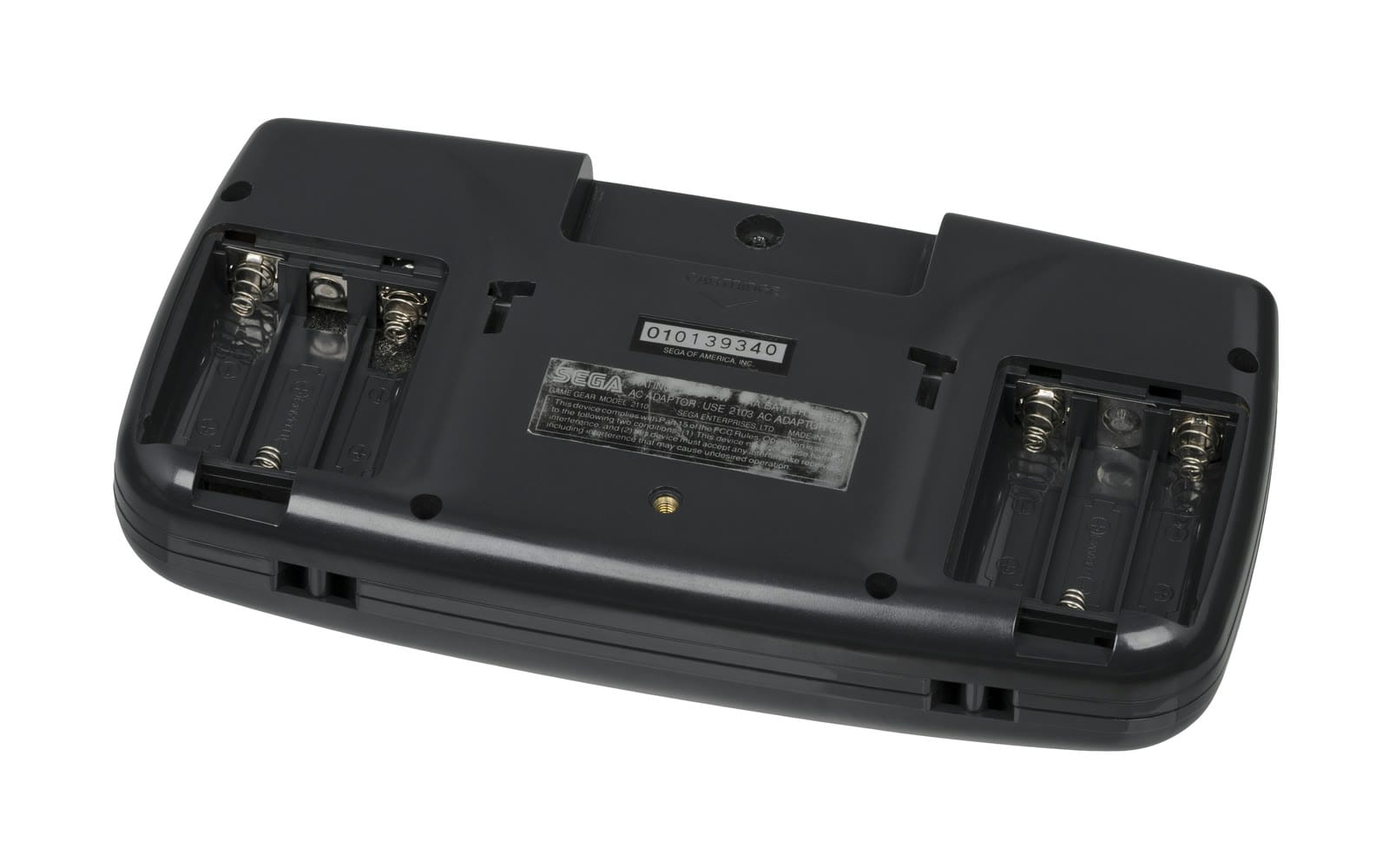
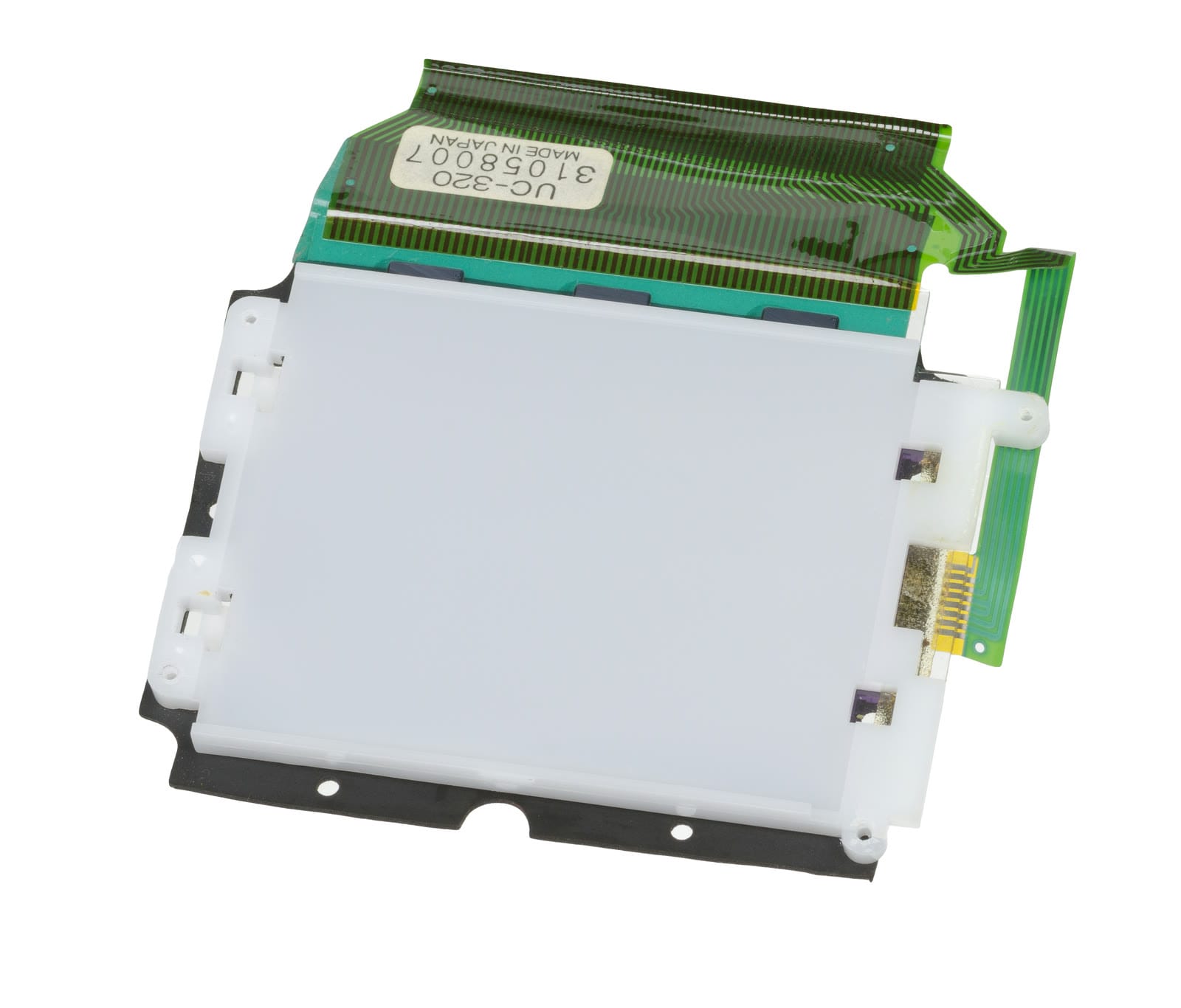
Behind the screen sat a small fluorescent tube, the same kind of light as the long tube on a kitchen ceiling, shrunk down to fit in your hands. A Game Boy screen made no light of its own. It used whatever light was in the room, so in the dark you had nothing. The Game Gear lit its own screen every second you played, and you couldn’t switch the tube off. That’s where your batteries went. Sega promised roughly three to five hours on a set of alkalines, though its own manuals and spec sheets never quite agree on the number.
You’ll hear that they lasted an hour. No Sega figure goes anywhere near that low. The real sting was the shopping: six at a time, again and again.
That’s why the cables mattered so much. Sega sold three ways out: a wall adapter, a car adapter and a rechargeable battery pack, and the moment you plugged into any of them, the AAs stopped draining. The battery pack was no miracle. In Japan, you charged it for about eight hours to get about three hours of play. The car adapter was the clever one. It went into the cigarette lighter, so your road trip didn’t have to end when the batteries did.
A TV in the cartridge slot
Then came the accessory that made the Game Gear something else entirely. The TV Tuner slid into the cartridge slot and turned it into a pocket colour television. It caught the same broadcast channels as a TV with rabbit ears, which is all VHF and UHF means, so anywhere you could get a signal, you could watch TV in your hands. It also had a video input, so you could plug in a camcorder and watch what you’d just filmed. For a kid back then, that was a TV of your own.
Sega has a sense of humour about it. Its own history page shows a Game Gear wearing the TV Tuner, the Big Window magnifier and a battery pack all at once, says it looks like an SLR camera and could hardly be called a portable game machine, and then points out that as a colour TV, it was cheap for its time. The Big Window, for the record, blew the 3.2-inch screen up about one and a half times, to what Sega called a 5-inch equivalent.
There was a way to play the home console’s games, too. An adapter called the Master Gear Converter plugged into the slot and ran Master System cartridges, so the games on the shelf under your TV could come along in your bag. Most of them, at least. Some games didn’t work, and it never went the other way: Game Gear cartridges won’t run on a Master System.
Sonic in your hands
Then Sonic showed up. On December 28, 1991, in Japan, the Game Gear got a Sonic the Hedgehog of its own, built for the small screen, six zones of three acts each. Sega Visions, Sega’s American magazine, covered it that month under a headline you can’t beat: “Sonic the Hedgehog becomes Sonic the hand-held.” The Genesis mascot, in colour, in your backpack. His sequel, Sonic the Hedgehog 2, reportedly went on to sell about 400,000 copies, more than any other Game Gear game.
Japan also got colours, and the best one wasn’t for sale. The red Coca-Cola Game Gear was a prize, handed out for a game called Coca-Cola Kid. You could walk into a shop and buy a blue one, a yellow one or a smoke-grey one. The red one, you had to win.
And Sega’s marketing got stranger. Sega of America reportedly teamed up with Howard Johnson’s, the hotel chain, on a promotion called “Kids Go HoJo with Sega”, complete with Game Gear tip tapes on VHS. A game company, a hotel and a videotape. Strange, sure, but think about where tips came from back then: a magazine, a friend, or nowhere. A tape you could pause and rewind wasn’t the worst idea.
How it was made
Open a Game Gear and you find a Master System that learned to travel. Same family of brain, same sound, a far bigger box of colours, and a screen glued to the front.
In numbers:
| Part | Sega Game Gear |
|---|---|
| Processor | Z80 at 3.58 MHz |
| Memory | 8 KB, plus 16 KB for the picture |
| Screen | 3.2-inch backlit colour LCD, 160 x 144 for games |
| Colours | 32 on screen, out of 4,096 |
| Sound | Three tones and one noise channel, stereo through the headphones |
| Cartridges | 256 kilobits to 8 megabits |
| Power | Six AA batteries, 3 to 5 hours by Sega’s own figures |
The brain. The processor is a Z80, the 8-bit chip family that ran the Master System and a lot of 1980s home computers. It runs at 3.58 MHz, or 3.579545 MHz exactly in Sega’s developer manual. That oddly specific number is borrowed from American colour TV, where it’s the frequency the signal uses as its colour reference. Early boards use a Toshiba chip that behaves like a Z80, and later boards reportedly fold almost everything into one Sega custom chip.
Memory and cartridges. Good news if you ever pick one up: every Game Gear reportedly plays every Game Gear cartridge, whatever the region, so a Japanese game runs on an American console. The cartridges are about 7 centimetres square, a bit smaller than a drink coaster, and hold anywhere from 32 KB to 1 MB. Inside, the console gives a game 8 KB to work in, a few pages of plain text, plus 16 KB for the graphics.
Colour. The video chip is the Master System’s design with one big upgrade. The Master System describes each colour with two bits each of red, green and blue, which gives 64 possible colours. The Game Gear uses four bits each, which gives 4,096. That’s 64 times the choice. In a game, 32 of them can be on screen at once, split into two palettes of 16. Used as a TV, the screen shows the full range.
The screen. A backlit 3.2-inch colour LCD, showing a game picture 160 by 144 pixels, a small window cut from the middle of the bigger picture a Master System sends to a TV. Sega’s own spec sheets print other numbers because they count the panel itself, but that window is what you played on. It also explains why Master System games look a little off on it. Each pixel on the screen is really three tiny dots side by side, one red, one green, one blue. To fit a Master System game through the Master Gear, the chip squeezed it sideways and treated those dots almost like pixels of their own. You get colour fringes around the edges, and small text gets hard to read.
Sound. The Master System’s sound chip lives inside the video chip: three tone voices and one noise channel. The speaker is mono. Plug in headphones and the speaker cuts out, and each of the four channels can be sent left, right or both. Stereo existed on the Game Gear, but only in your ears.
Controls and ports. A D-pad, two buttons and Start, with two little wheels for brightness and volume. The port worth knowing about is the one for the Gear-to-Gear cable. It linked two Game Gears so you and a friend could play together, but each of you needed your own copy of the game. Two consoles, two cartridges, one cable.
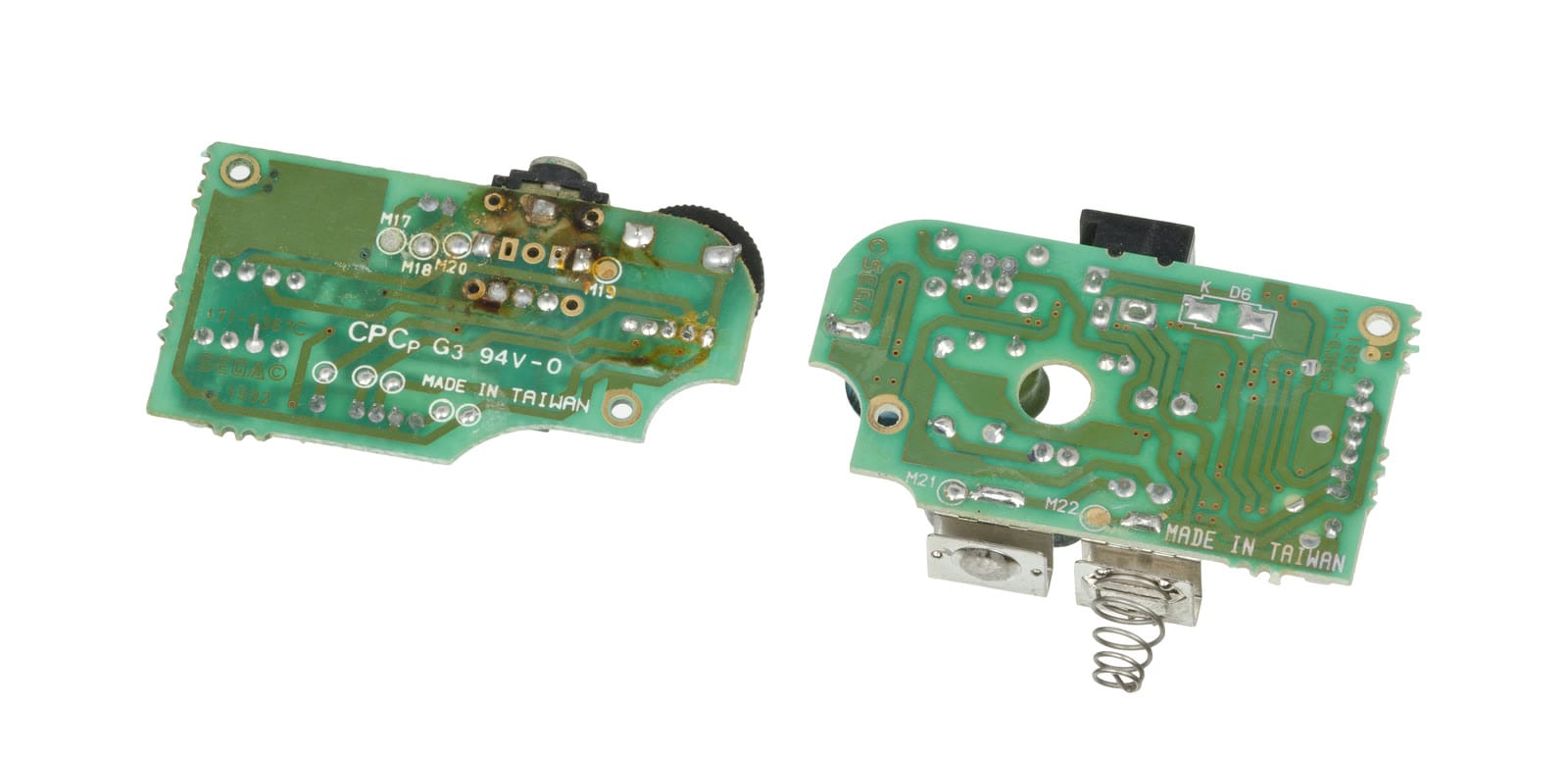
The weak spot. Repairers know the Game Gear for its capacitors, the little components that smooth out power on the boards. They leak with age, and the symptoms are weak or missing speaker sound, a washed-out picture, or a unit that won’t turn on. The fix is replacing them, a job called a recap, and repairers sell capacitor kits for each board revision.
A distant second
So how many did it sell? Somewhere between 10 and 14 million, and nobody can get closer than that, because Sega never published an audited total. The careful count, from Famitsu’s sales table, is about 10.6 million shipped by March 1996; the 14 million is Sega’s own round number. If you see “over 14 million” somewhere, that one has nothing behind it.
Either way, it was a distant second. The same Famitsu table puts the Game Boy at 47.66 million by March 1996. The Game Gear reportedly outsold its other colour rivals, the Lynx and NEC’s TurboExpress, and calling it a total failure goes too far. Sato’s own view was more interesting: the Game Gear won “a respectable chunk of market share,” yet “our success was still seen as a failure.”
It kept coming back
The ending came with a costume change. In 1996, Sega handed the Game Gear in Japan to its toy division, today’s Sega Toys, and gave it a new name: Kids Gear. Same insides, a friendlier shell. Five years after telling you to grow up, the Game Gear was a toy. The last Game Gear game Sega put out in Japan, G Sonic, which you might know as Sonic Blast, arrived that December, and the machine wound down over 1996 and 1997.
Then it came back. In 2001, Majesco licensed the Game Gear from Sega Toys and put it back on shelves, brand new, at Toys R Us for $29.99. A fifth of the launch price, ten years later. If you find one with darker plastic and a purple Start button, that’s reportedly a Majesco unit. And a decade after that, the games came back again on the Nintendo 3DS. Sega’s old rival’s handheld, of all places. Nintendo has since closed that shop, so today the easy way in is Sonic: Sonic Origins Plus added 12 Sonic Game Gear games in 2023, on Switch, PlayStation, Xbox and PC.
The main versions, start to finish:
| Model | When | Price | What it was |
|---|---|---|---|
| Game Gear | October 1990, Japan | ¥19,800 | The original, with Columns, Super Monaco GP and Pengo on day one |
| Game Gear | April 1991, US | About $150 | Columns in the box |
| Game Gear | June 1991, UK | £99.99 | The same machine for Europe |
| Kids Gear | March 1996, Japan | ¥14,800 | The same insides in a friendlier shell, from Sega’s toy division |
| Majesco Game Gear | 2001, US | $29.99 | A licensed re-release, darker plastic, purple Start button |
| Game Gear Micro | October 2020, Japan | ¥4,980 each | Four palm-sized colours with four games each |
And on October 6, 2020, thirty years to the day after the original, Sega released the Game Gear Micro in Japan. You can close your hand around it, and its screen is about an inch, so Sega gave a tiny Big Window Micro magnifier to anyone who bought all four colours as a set. A magnifier for a one-inch screen. Sega’s anniversary site calls the Game Gear “the only handheld-only game machine in Sega’s history,” and that holds up: the Nomad was a portable Mega Drive.
The original hardware isn’t done either. Sega’s own developer manual is public, people still write new Game Gear games, many of them for SMS Power’s yearly coding competition, and modern replacement screens exist for anyone with a steady soldering hand.
Based on Sega Japan’s own hardware history pages, Sega’s Game Gear developer manual and US instruction manual, Sega Visions (1991), Hideki Sato’s 1998 Famitsu DC interview, Weekly Famitsu’s 1996 shipment table, Majesco’s 2001 press release, the Game Gear Micro site, Sega’s 2023 Sonic Origins Plus release, SMS Power, Charles MacDonald’s video chip notes, Sega Retro and the Console5 repair wiki, as of November 16, 2026, and where the sources disagree, the page says so.
Nerd Alert
Your Turn
What are YOUR thoughts
What have your experiences been? Let us know.