Sega Master System (1986)
Sega's 8-bit console lost America to the NES in a six-month rush, then won Europe and became a childhood console in Brazil, still made there in 2016.
https://averagetechnerds.com/sega-master-system/
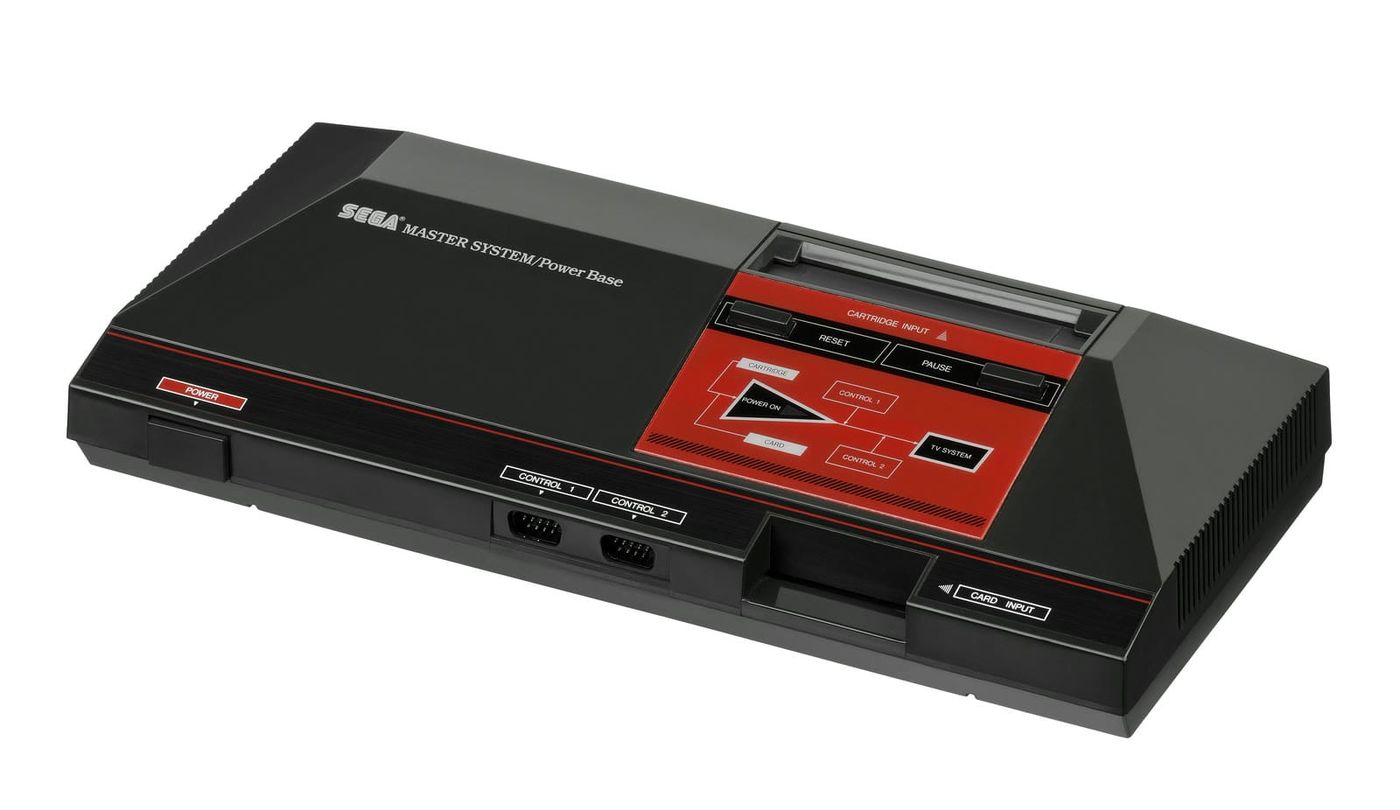
In 2016, a company in Brazil was still making a game console from 1986. Tectoy, which built it there under licence from Sega, said the people buying it by then were small children getting their very first console. Kids born in the 2010s, starting in the same place kids started in 1986.
That console is the Sega Master System. In America it was the other 8-bit machine, the one that lost to the NES. In Europe it did a lot better than that. In Brazil it became a childhood. Which of those stories you know depends on where you grew up. Mine had an Atari and an NES in it, with a Master System on the side. The hall is about more than mine, though, and this console is a big part of a lot of other people’s.
Before the Master System
Even the name has a story. Sega is short for SErvice GAmes, a company that supplied amusement machines to US military bases in Japan back in the 1950s. In 1960 the company that replaced it put out a jukebox called the SEGA 1000, and the name stuck.
Sega’s first home console, the SG-1000, came out in Japan on July 15, 1983. That’s the same day as Nintendo’s Famicom. Sega had started it in a hurry after Nintendo announced its machine, and by Sega’s own count it sold about 160,000 in its first year.
Two years later, on October 20, 1985, came the Sega Mark III. This one was different. It was the first console Sega designed from the start as a home machine, built with ports of its own arcade games in mind, and it still played the older SG-1000 games. It cost ¥15,000, and next to the cartridge slot it had a second slot for games on cards.
The Master System is that Mark III, redesigned for the rest of the world.
Six months to get it there
Nintendo got there first. The NES launched in New York for Christmas 1985, and by March 1986 Sega had decided to chase it with the Mark III. Sega of America was set up that same month to do it.
Then it nearly missed its own debut. The first American showing was the Summer CES in Chicago in June 1986, and the sample consoles were flown in from Japan. The plane couldn’t land in the fog, carried on to New York, and the machines got to Sega’s booth with very little time to spare. That’s how Steve Hanawa, Sega of America’s product manager at the launch, told it in 1989.
The FCC cleared it in mid-August. It was in stores at the beginning of September. From the decision to the shelf took six months.
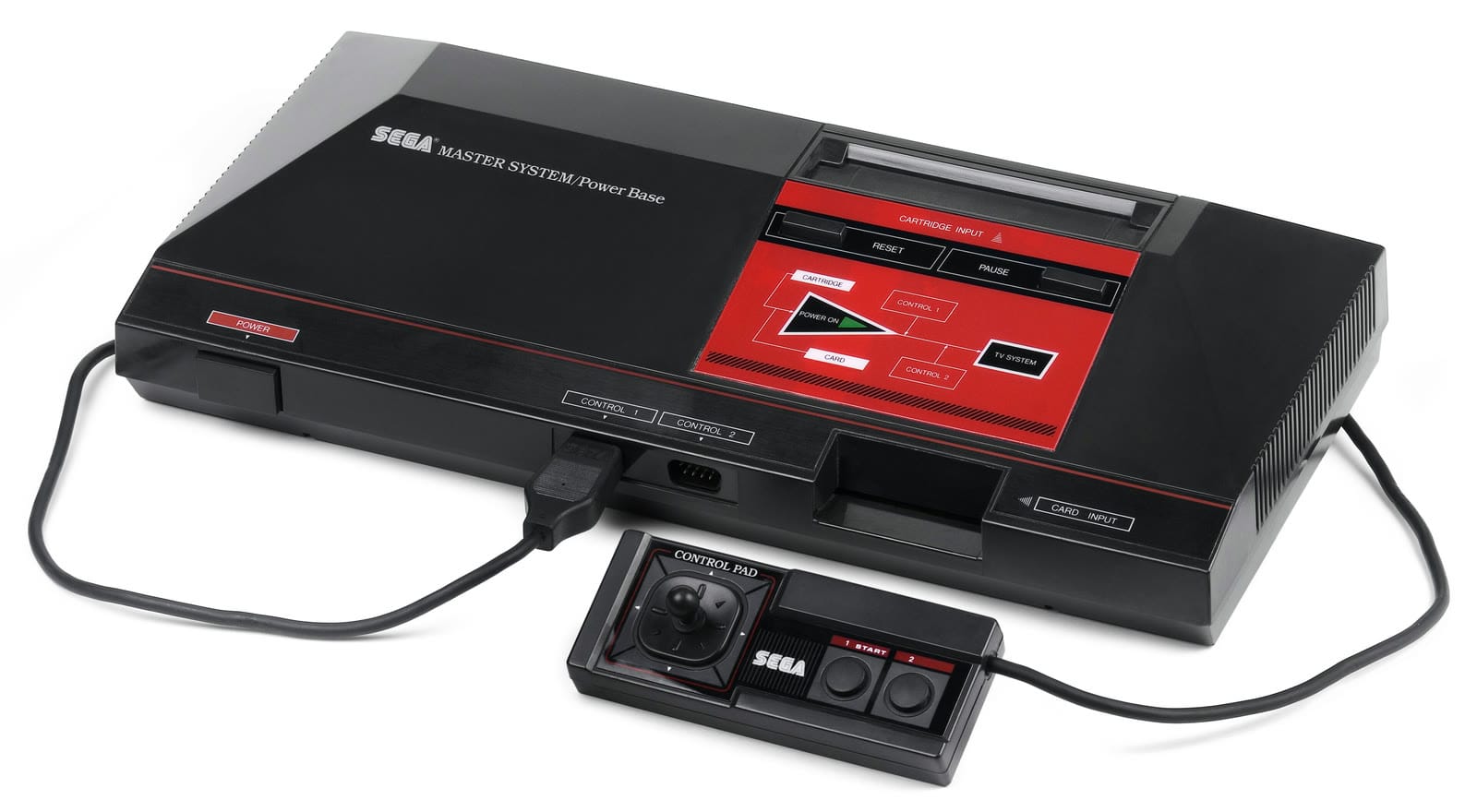
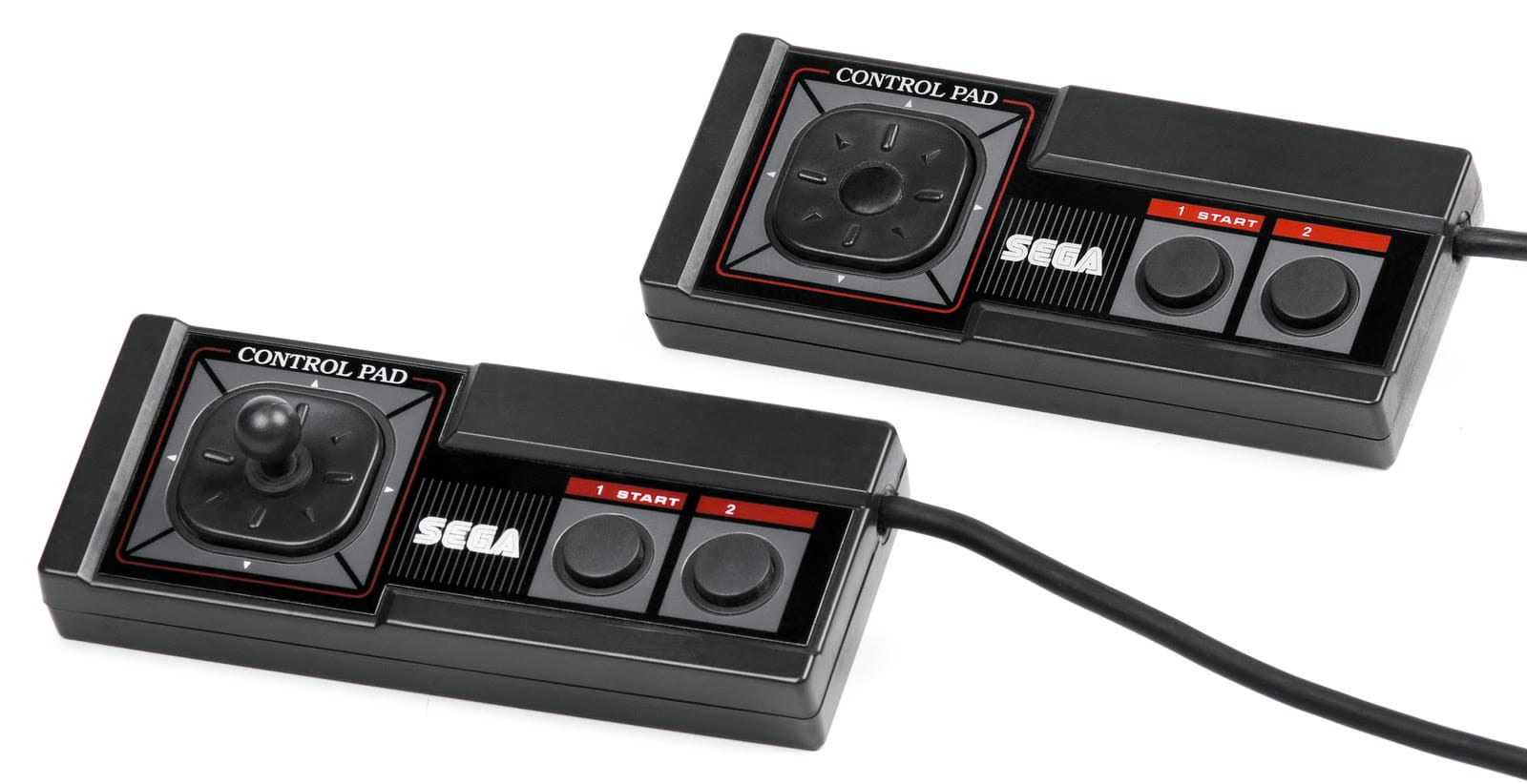
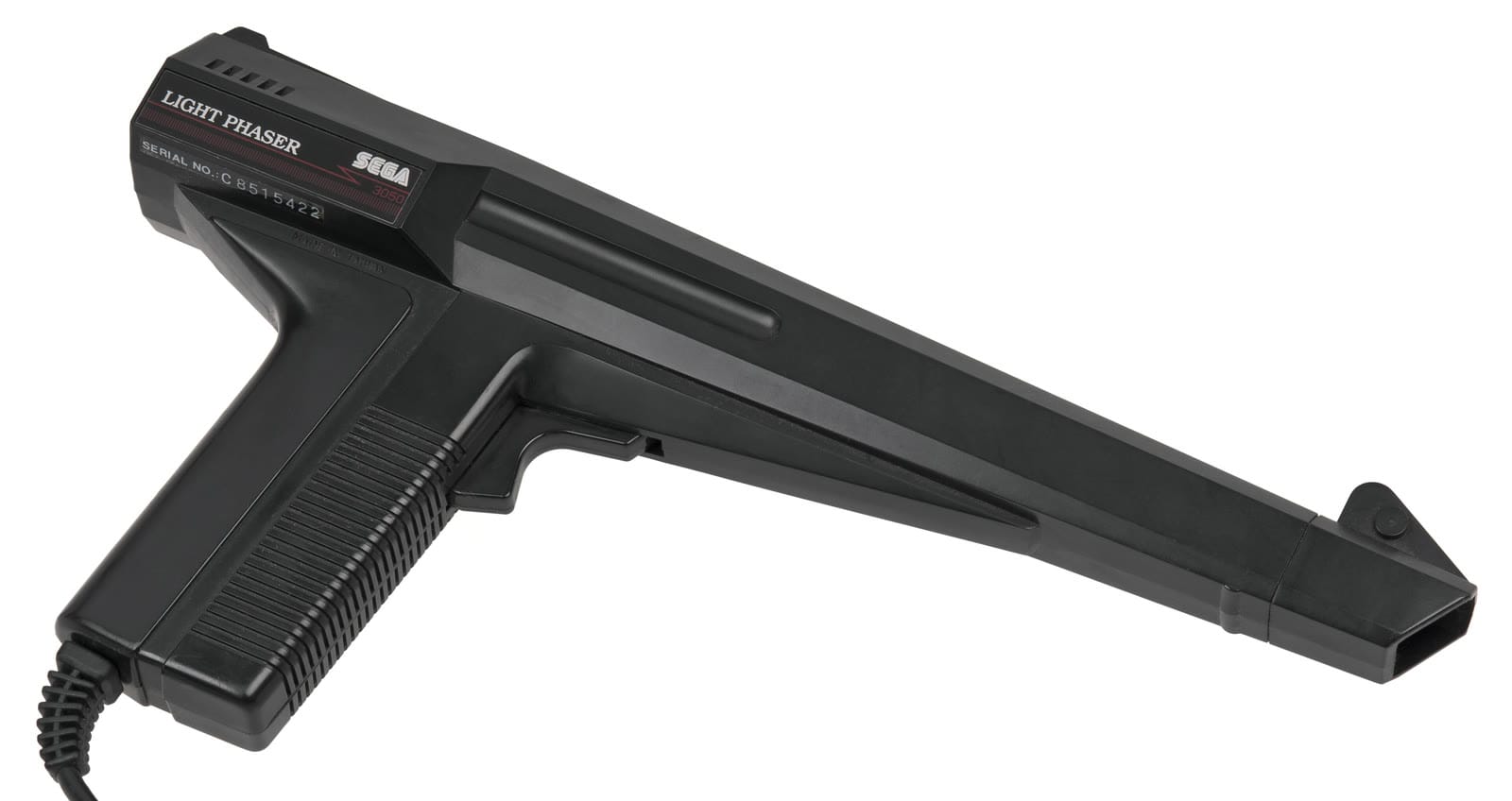
If you walked into a store that September, $150 got you the lot: the console (Sega called it the Power Base), two pads, the Light Phaser gun, and Hang-On and Safari Hunt together on one cartridge. Leave the gun behind and it was $125, with Astro Warrior in place of Safari Hunt. You’ll see $200 quoted as the launch price all over the place. The trade press of 1986 says $150.
Games came two ways: Sega Cards at $30 and Mega Cartridges at $35. The ads liked big numbers, like “128K” and “1 Mega”, and those were counted in kilobits and megabits, which are eight times smaller than they sound. A 1 Mega cartridge holds 128 KB. The console itself has 8 KB of memory to run a game in.
Losing America
The NES had a head start, and it had a rule. Nintendo required developers to give it exclusive rights to their new games for two years. It dropped the practice in 1990. You’ll read online that those contracts were ruled illegal, and no court ever said that. Atari took Nintendo to court on antitrust grounds, and the case was dismissed in 1992.
Mark Cerny, who worked at Sega back then, remembers the American market as roughly 94% Nintendo and 4% Sega. He says it with an “I believe” in front, so treat it as one person’s memory. It’s a vivid one.
In August 1987, Sega handed American sales, marketing and distribution to Tonka. Yes, the toy truck company. Sega still designed and built the console. It didn’t go well. Tonka reportedly put about $30 million into marketing and sold fewer than a million consoles over two years. When the deal ran out in 1989, Sega took the rights back. By 1991 or 1992, the American story was effectively over.
Japan got its own Master System
Japan went much the same way. In Sega’s own telling, Super Mario Bros. is what made the Famicom’s lead there unshakeable. Japan still got a Master System of its own, on October 18, 1987, for ¥16,800, and it was the best-equipped model of all: an FM sound chip built in, a rapid-fire switch, and a port for 3-D glasses. Switch it on with no game in it and it played you a demo set to Space Harrier music.
The last Sega game for it in Japan, Bomber Raid, came out in February 1989. By then, Europe had picked it up.
Where it won
Europe is where it all turns around. The same console that lost America found its people there, and Alex Kidd led the way. His games were hits, and by Sega’s own account they shaped how Europe saw Sega well into the 1990s. In the UK it cost £99.95 with Hang-On on a card. By 1993 it had passed the NES in the UK and across Western Europe, going by the figures usually cited. If you grew up there, there’s a fair chance your 8-bit console was a Sega. Sega kept supporting it in Europe until about 1996.
That’s a good run. Brazil is something else.
Brazil
Brazil is another world again, and it starts with a law. From 1984, Brazil kept foreign computer companies out and limited what could come in. Sega couldn’t just ship you a console. It needed a Brazilian company that could build the hardware locally and import only the key chips. That company was Tectoy, founded in 1987, and its very first product was a Zillion laser-tag pistol made with Sega. The Master System came in September 1989, built in Manaus. Nintendo didn’t have an official partner in the country until 1993. Four years.
Tectoy did a lot more than put Sega’s console in a box. Take Wonder Boy in Monster Land, one of Sega’s own games. Tectoy swapped its hero for Monica, the little girl from Monica’s Gang, a Brazilian comic book, and called it Mônica no Castelo do Dragão. Same game underneath, a face Brazilian kids already knew on top. Wonder Boy III got the same treatment two years later. Tectoy also translated Phantasy Star into Portuguese and made games of its own from scratch, like Castelo Rá-Tim-Bum and Sítio do Picapau Amarelo.
And it kept making the console for decades. Tectoy put out 16 versions over the years, including a pink Master System Girl and a plug-and-play Evolution with the games built in. In May 2016, Tectoy said it had sold more than 8 million Master Systems in Brazil. That’s the company’s own count, and it includes every model, the plug-and-play ones too. The Mega Drive had already stopped production there in 2010. The Master System was still going, and Tectoy’s Stefano Arnhold said there were no plans to stop. That’s where the kids getting their first console come in.
You can still find it on Tectoy’s store today: the Master System Evolution, with 132 games built in. You just can’t buy one. Every archived copy of the page since early 2025 shows it sold out.
Add it all up and it comes to about 19 million, Mark III included. That’s Sega’s own rough estimate. Leave Brazil out and the figure usually given is nearer 13 million, which tells you how much of this console’s life happened there. The NES sold about 62 million. Second place, by a long way. Just not everywhere.
The games
If you owned one, a few games did most of the talking. Alex Kidd in Miracle World was the first, in 1986, and before Sonic came along, Alex was Sega’s face in Europe. Phantasy Star, at the end of 1987, was the big one. Its 4-megabit cartridge was the biggest of its day, a battery inside kept your save alive while the console was off, and its dungeons moved smoothly in 3D. Wonder Boy III: The Dragon’s Trap, in 1989, flipped the usual order: it was made for America and Europe, and on this console Japan never got it. And in 1991, Europe got an 8-bit Sonic the Hedgehog of its own, made by a studio called Ancient.
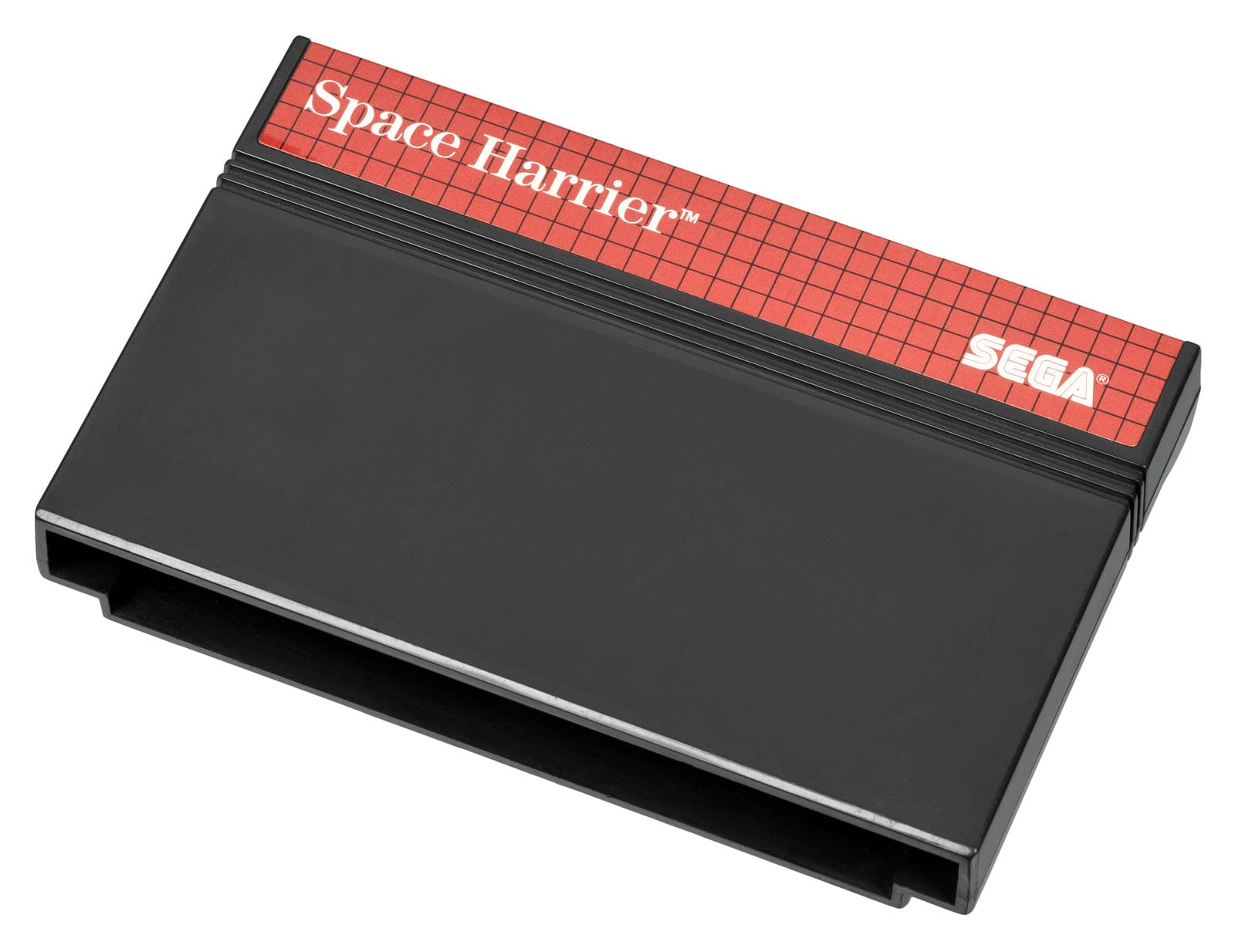
Space Harrier is the one that shows off. The Mark III couldn’t draw its giant enemies, so Sega faked them by redrawing the background layer at high speed. The monster coming at you is really the scenery, moving fast enough to look alive.
Glasses, cards and a secret maze
The 3-D glasses started with a movie. Mark Cerny saw Captain EO, Michael Jackson’s 3D film, at Tokyo Disneyland and pitched Sega on glasses for the console. What Sega built were liquid-crystal shutter glasses. The game shows a picture for the left eye, then one for the right, over and over, and each lens blacks out in turn so every eye only sees its own picture. Together they add up to depth. Zaxxon 3D was the first 3-D game in Japan, in November 1987. Japan got four of them, and more came out overseas, like OutRun 3-D, where the glasses were sold as the SegaScope 3-D.
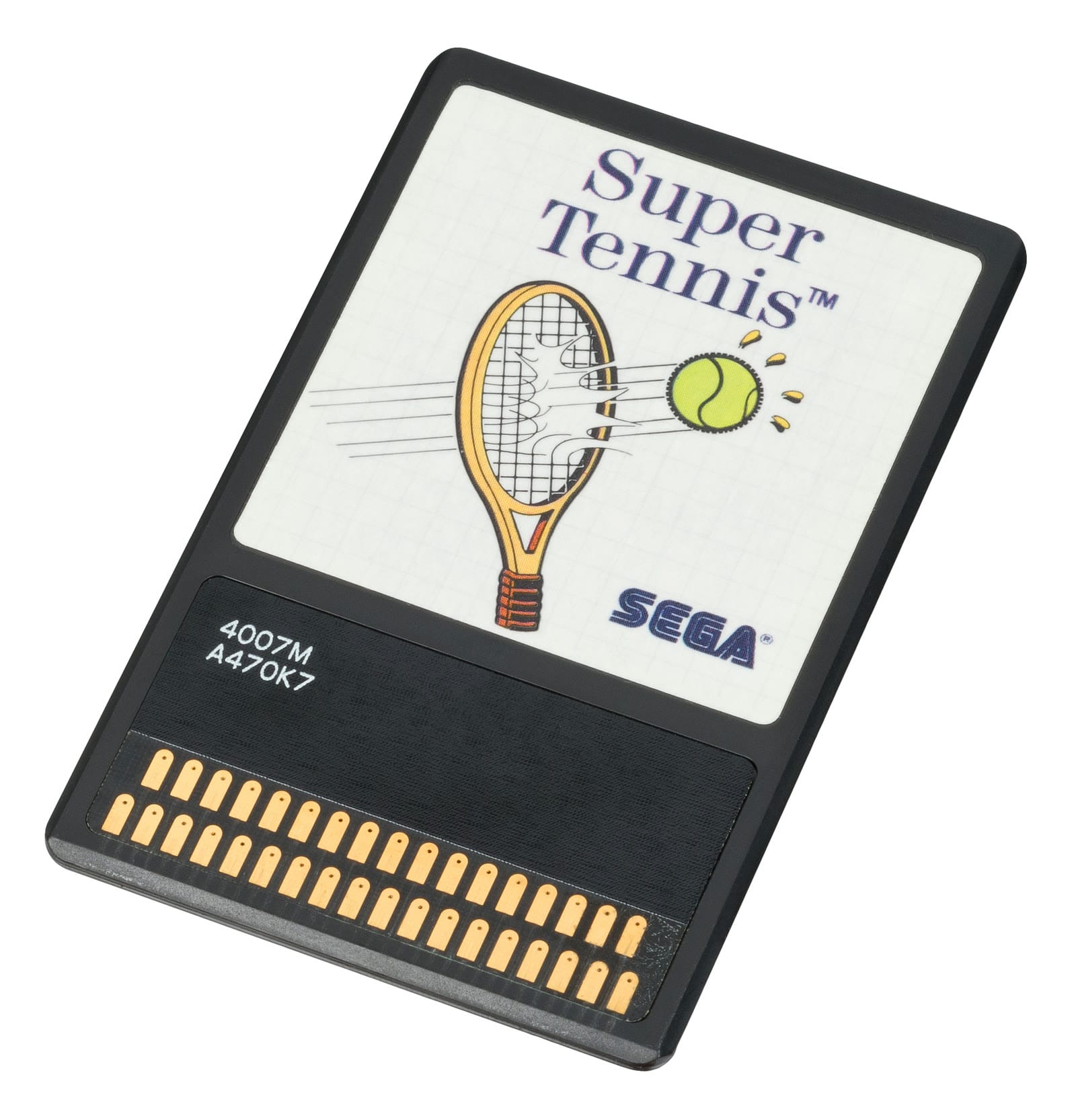
The cards were the other thing you’d notice. A Sega Card was the size of a business card, about 2 mm thick, and held 32 KB. It slid into the slot on the front of the console. Overseas, that slot did a second job: the 3-D glasses plugged into it, reportedly.
And the maze. The early American and European consoles have a small program built in that runs when you switch on, checks for a game, and asks you to insert one if there isn’t any. Hidden inside it is a whole game. With nothing in the slots, hold Up and both buttons on the first pad at that screen, and Snail Maze starts. A secret game living in the console itself.
How it was made
What’s inside it, then?
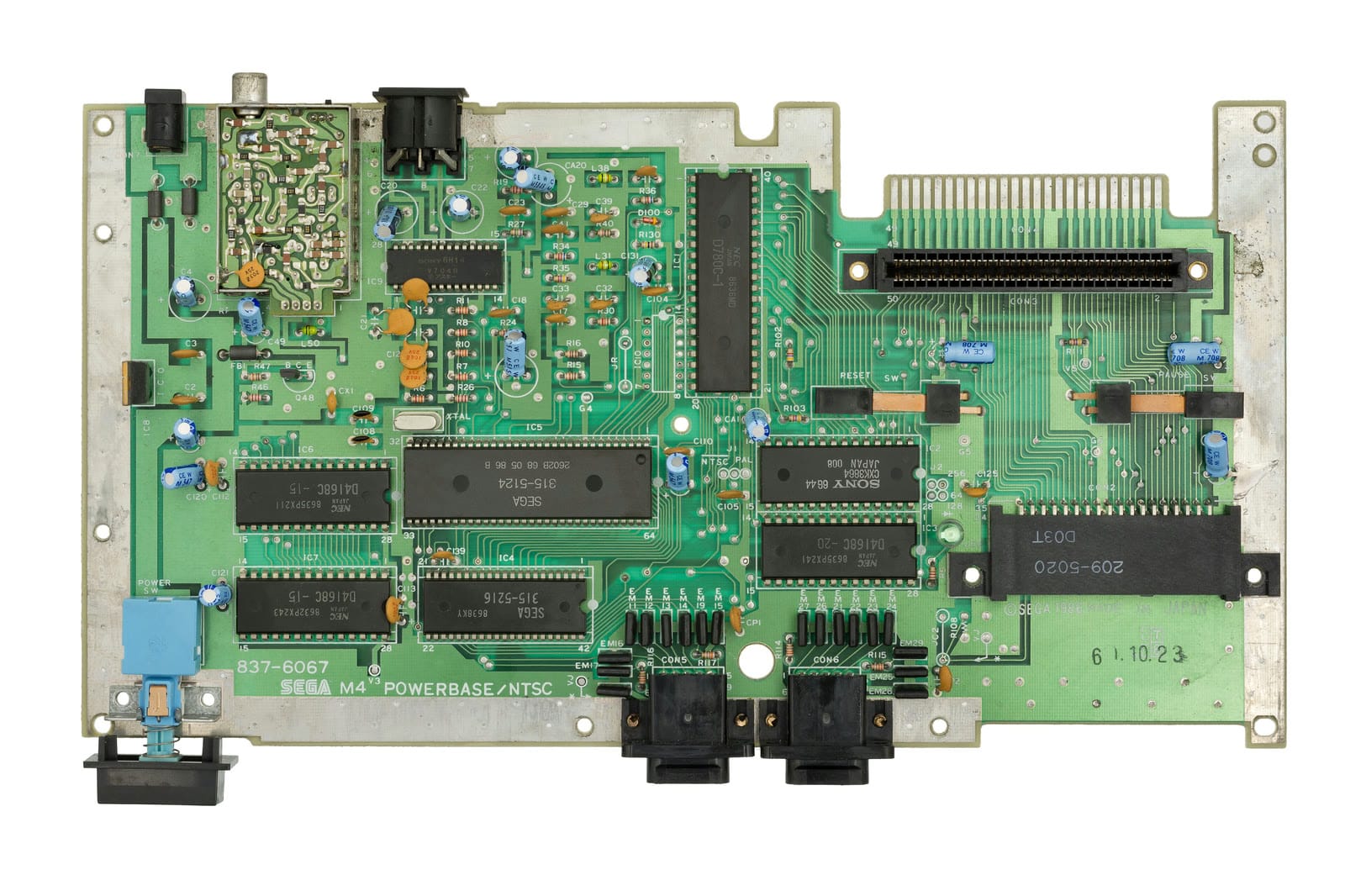
In numbers:
| Part | Sega Master System |
|---|---|
| Processor | Zilog Z80A at about 3.58 MHz |
| Memory | 8 KB, plus 16 KB for the picture |
| Picture | 256 x 192 |
| Colours | 32 on screen, out of 64 |
| Sprites | Up to 64 on screen, 8 on one line |
| Sound | Three tones and one noise channel; Japan’s model added a Yamaha FM chip with 9 voices |
| Games | Cartridges and, on the first models, credit-card-sized Sega Cards |
The brain. The processor is a Zilog Z80A, an 8-bit chip that also ran a lot of home computers. It runs at about 3.58 MHz. Sega’s own spec sheet says 4 MHz, which is the most the chip is rated for, and the console runs it a little slower than that.
The memory. 8 KB for the game to work in, and 16 KB for the picture. The Master System also has 8 KB of built-in program, the bit that runs at power-on, and that’s where Snail Maze lives.
The picture. Sega started from a Texas Instruments video chip, the TMS9918, the same one in the SG-1000 and in MSX computers, and kept its old modes so the SG-1000 games still worked. Then it added a mode of its own, and that’s the one you’d notice. The old chip had 15 fixed colours, like a box of crayons glued shut. Sega’s mode hands each game a box of 64 and lets it put 32 on the screen at once. Sprites, the moving things like characters and bullets, doubled too: twice as many on screen, and twice as many side by side on one line. And the hardware could scroll the picture smoothly in any direction.
The sound. Every Master System makes its music with a simple sound chip tucked inside the video chip: three musical tones, plus one noise channel for drums and explosions. Japan’s Master System added a Yamaha FM synthesis chip, which builds fuller, instrument-like sounds instead of plain beeps. It could play nine notes at once and came with a set of built-in instruments, like the preset buttons on an electronic keyboard. Mark III owners could buy it as an add-on, and about 40 games used it, Phantasy Star and After Burner among them. If your console came from America or Europe, you never heard it.
The games. Remember those big numbers in the ads? The biggest cartridges held sixteen times what a card could. More room meant more game, and Phantasy Star’s whole world filled the biggest size there was at the time.
The pause button. It’s on the console. You get up and walk over to pause.
The Light Phaser. The light gun came with the American launch bundle, and Japan never got it. You’ll read that it was modelled on the Zillion laser-tag gun, and the two reportedly share a design. The dates point the other way. The Phaser was in American stores in September 1986, and Zillion didn’t come out until 1987. If one borrowed from the other, the Phaser got there first.
The people. One name worth knowing is Masami Ishikawa. He worked on the hardware of the SG-1000 II, the Mark III and the Master System, then moved on to the Mega Drive, the console you know here as the Genesis. If you grew up with a Genesis, you grew up with his work too.
Back to the arcade. Sega’s System E arcade board was a beefed-up Mark III. Fantasy Zone II, made for the home console, got re-released in arcades on it. Usually games went from the arcade to the living room. This one went the other way.
The Master System II
In 1990, Sega brought out the Master System II, a smaller redesign made to sell for less. You could spot it by how little was on it: a power button, a pause button, and that’s it. Most models only reached the TV through the aerial plug, the same one the antenna used (France got proper video out), and you got one pad in the box. The card slot was gone too. No Sega Cards, no 3-D glasses. Inside, a newer video chip added taller screen modes, 32 or 48 more lines of picture top to bottom.
The main models, from the first to the last:
| Model | When | Price | What it was |
|---|---|---|---|
| SG-1000 | July 1983, Japan | ¥15,000 | Sega’s first home console |
| Mark III | October 1985, Japan | ¥15,000 | The console the Master System was built from |
| Master System | September 1986, US | $150 with the Light Phaser, $125 without | The export version |
| Master System (Japan) | October 1987, Japan | ¥16,800 | With the FM sound chip and a 3-D glasses port built in |
| Master System (Brazil) | September 1989 | - | Made in Manaus by Tectoy |
| Master System II | 1990, North America (Europe 1990-91) | - | Smaller and cheaper, with a game built in |
| Master System Evolution | 2009, Brazil | R$379 | Tectoy’s plug-and-play version with 132 games, now sold out |
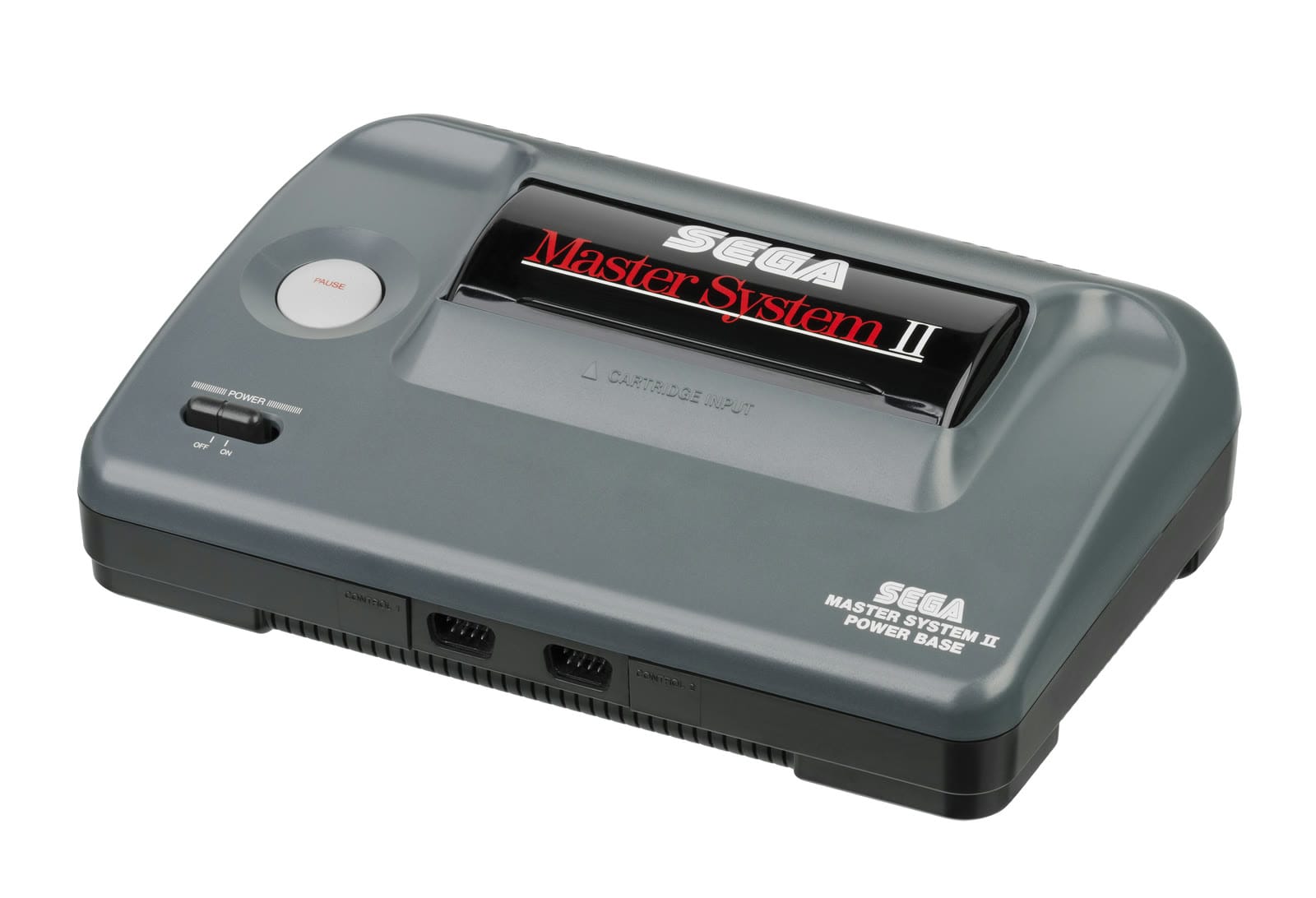
What it gained was a game built in. Most Master System IIs had Alex Kidd in Miracle World inside, and in Europe from 1992 it was Sonic. The built-in Alex Kidd is a little different from the cartridge, by the accounts of the people who’ve dumped the chips: the jump and punch buttons are swapped, and before each level Alex eats a hamburger instead of a rice cake. Those later boot programs also dropped Snail Maze, so most Master System IIs don’t have it.
It never really left
When the Genesis came along, it could play Master System games through an adapter, the Power Base Converter here and the Mega Adaptor in Japan. The Game Gear has a Master System mode built into its video chip, so in a way it was a Master System you could carry. The Wii’s Virtual Console carried Master System games from 2008, and Sega has put Phantasy Star and Alex Kidd in Miracle World on the Switch.
In 2017, Lizardcube remade The Dragon’s Trap, and you can switch between the new art and the original 1989 graphics and sound at the press of a button. Its technical director reverse-engineered the original cartridge to get it right. Alex Kidd got a remake with the same kind of toggle in 2021.
People are still writing new games for the real thing. The SMS Power coding competition runs every year, and the 2026 edition ranked 23 entries, with a Master System remake of Konami’s arcade game Road Fighter on top.
Based on Sega’s own Sega Hard Encyclopedia pages and hardware history columns, Computer Entertainer’s 1986 to 1989 coverage, Sega’s Master System II manual, the Texas Instruments TMS9918A and Yamaha YM2413 data sheets, SMS Power’s hardware documentation, Mark Cerny’s 2006 interview with Sega-16, Tectoy’s own history and store, UOL Jogos (2016), Canaltech on the Master System Evolution, Emmanoel Ferreira’s 2025 paper on Brazilian games, the New York Times (1992), Lizardcube on Xbox Wire, and Nintendo’s sales data, as of November 16, 2026. Where the sources disagree, the page says so.
Nerd Alert
Your Turn
What are YOUR thoughts
What have your experiences been? Let us know.