Xbox (2001)
Microsoft's first console, from Dell laptop prototypes and Halo's debut on a Mac to the Duke, a hard drive in every box, your own music in games, Xbox Live and the billions it cost.
https://averagetechnerds.com/xbox/
Picture Times Square a little before midnight on November 14, 2001. A thousand consoles are waiting inside Toys “R” Us, there’s a line, and Bill Gates himself is there to greet the first person in it. When the clock rolls over to the 15th, the Xbox goes on sale for $299, and Microsoft’s launch announcement quotes Gates: “The future of gaming starts today”.
One of the games on the shelf next to it was Halo. Two years earlier, that same Halo had been introduced to the world on stage at Macworld, by Steve Jobs.
That’s the Xbox in one breath. A software company that had never built a console bolted PC parts into a big black box, gave every one of them a hard drive and an Ethernet port, lost billions of dollars doing it, and bought its way into the living room with Halo and Xbox Live.
A box built from laptops
It started small. In 1998 a few people around Microsoft’s DirectX team, the group that made the software PC games run on, started building prototype consoles out of Dell laptops. The four usually named are Kevin Bachus, Seamus Blackley, Otto Berkes and Ted Hase. They pitched the idea to Ed Fries, who ran Microsoft’s games publishing, as a “DirectX Box”. Some colleagues called it the “coffin box”, because they expected it to be dead on arrival.
The project got a secret code name, Midway, after the World War II battle. Its first documented meeting was on March 30, 1999, 28 days after Sony announced the PlayStation 2. That’s the reported timing, and it tells you exactly who Microsoft was looking at.
There was a fight inside the building, too. On May 5, 1999, Gates sat through what’s been called a “beauty contest”, and picture it: two teams from the same company, each pitching the boss a different console. The DirectX team brought its box of PC parts with a hard drive inside. Microsoft’s WebTV team brought a cheaper appliance. Fries argued that the hard drive was what would let you play online one day. Gates sided with the DirectX team. Remember that hard drive. The final green light came in February 2000, at an all-day review that people inside nicknamed the “St. Valentine’s Day massacre”, and somewhere along the way DirectX Box got cut down to Xbox. Otto Berkes credits a colleague with the name; others don’t remember who it was.
Then came the scramble. Gates announced the Xbox at the Game Developers Conference in San Jose on March 10, 2000, and two of its biggest parts were reportedly settled at the very last minute before he took the stage. Microsoft had first picked a company called GigaPixel to make the graphics chip, then switched to Nvidia. For the processor, Intel beat AMD. It’s like choosing the engine for your new car right before you drive it into the showroom. Those two names went into what was basically a gaming PC hiding under your TV.
Halo, The Rock, and midnight in New York
Three months after the announcement, on June 19, 2000, Microsoft bought Bungie, the studio making Halo. Up to then, Halo had been headed for the Mac and the PC. That Macworld unveiling with Steve Jobs was in July 1999. A year later, it belonged to Microsoft.
The finished console was shown at CES in Las Vegas on January 6, 2001, as the finale of Gates’ keynote, and he called up The Rock, then a World Wrestling Federation star, to help unveil it. If you want one image of a software company trying very hard to be cool, that’s it. The demos that day ran on hardware with only 20 percent of the final console’s horsepower.
The North American consoles came out of a Flextronics factory in Guadalajara, Mexico, which made the Xbox the only video game system being built in North America at the time. Launch slipped a week, from November 8 to the 15th, and that slip is how you got a midnight in Times Square. Nineteen games came out that first week. Halo was one of them, and it’s the one we keep coming back to.
It went well. Microsoft says 1.5 million people in North America bought one before 2001 was over, and the average buyer walked out with more than three games. Japan and Europe got theirs early in 2002. If you held off, you got lucky: six months after launch, in May 2002, the US price dropped a hundred dollars, to $199.99.
Why the Duke was so big
The original Xbox controller is known as the Duke, and it’s enormous: nearly three times the size of a PlayStation DualShock, and 425 grams in your hands.
The size wasn’t a style choice. The circuit boards inside had already been made too large, and Mitsumi, the supplier, wouldn’t give Microsoft the compact board design that Sony used. So a contractor named Denise Chaudhari, working from sketches by the console’s designer Horace Luke, had to shape the most comfortable shell she could around boards that were already built. The joke controller is really a story about making the best of it.
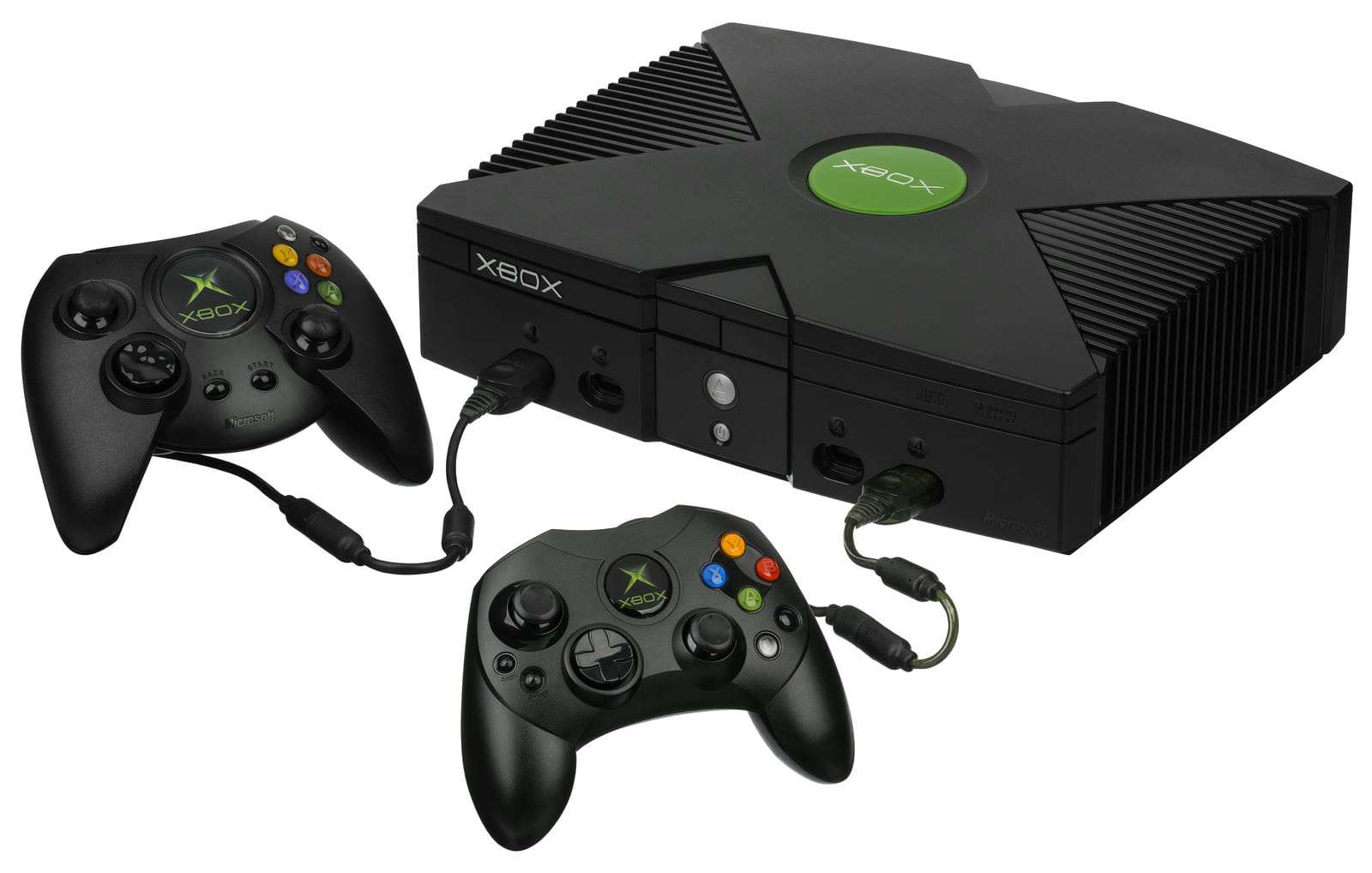
It came with some good ideas. The left stick sits higher than the right because the Tony Hawk players on the team wanted it there, and the A, B, X, Y layout is still on every Xbox controller made since. The cables were over 9 feet long with a breakaway plug in the line, so a tripping foot pulled the cable apart instead of yanking the console off the shelf.
Japan pushed back hard. Japanese developers petitioned against the Duke, and Microsoft Japan reportedly threatened to warn developers off unless it changed. It worked. Japan got a smaller pad from day one, the Controller S: about two-thirds the size, with a normal cross-shaped D-pad. By the fall of 2002 it was the pad in the box in the US too, and the Duke was on its way out.
The Duke had the last laugh, though. Years later, Hyperkin made a licensed reissue for Xbox One and PC with Blackley’s help. He tested it by resting it in his lap like a dinner plate, and the little screen in its center jewel plays the old boot animation, an idea he took from his love of the Dreamcast’s VMU.
Big, black and very green
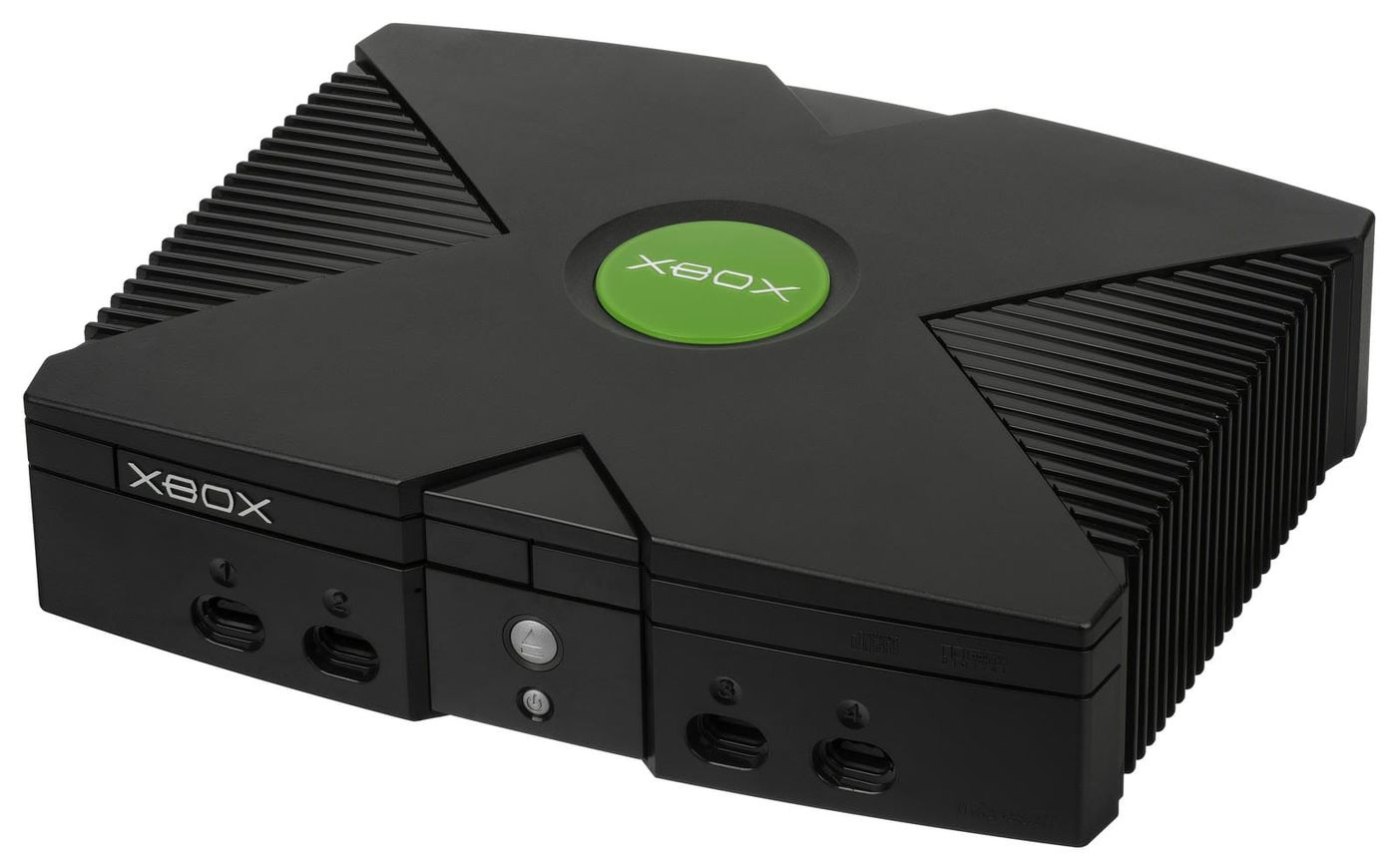
The console itself ships in what Microsoft called a “rich shade of black”, with a big X across the top and a glowing green jewel in the middle. Horace Luke reportedly wanted the jewel to give off “nuclear energy”.
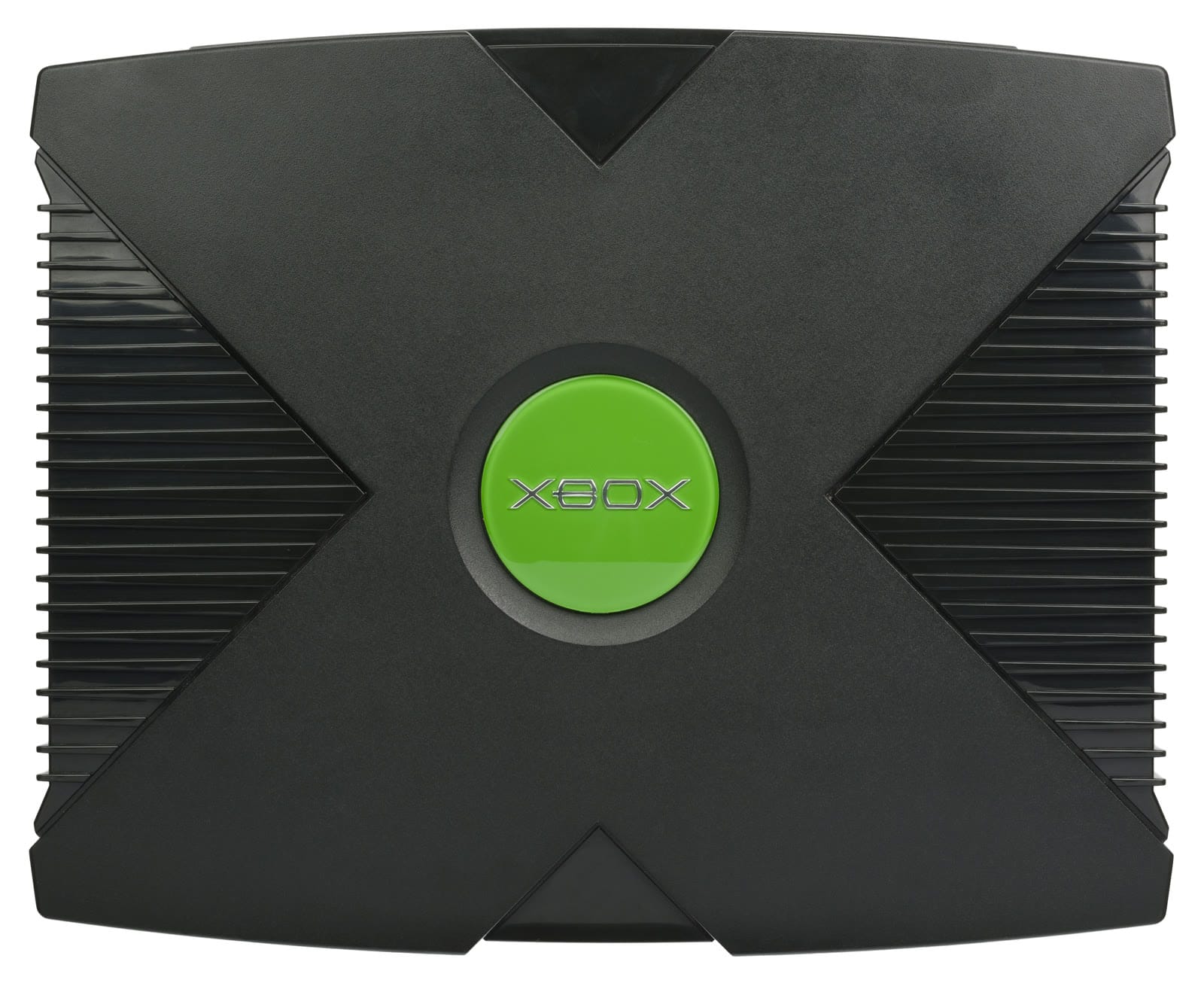
Why green? Luke’s own answer was that green is technology’s signature color. Seamus Blackley has a funnier version: he believes Luke used green because it was the only marker he had left because other people had taken his other colors. That’s Blackley’s belief about a colleague, so take it as a good story rather than the official reason.
As for the size, a big part of it is that the power supply lives inside the box instead of in a brick on the cable, which also meant a big fan. One of the people who worked on it later called that a mistake.
How it was made
This is the half of the story that makes the Xbox different from everything before it. It was, quite deliberately, built out of the same kinds of parts as a PC.
In numbers:
| Part | Xbox |
|---|---|
| Processor | A 733 MHz Intel Pentium III-class chip |
| Graphics | Nvidia’s NV2A at 233 MHz |
| Memory | 64 MB, shared by the game and the graphics |
| Storage | An 8 GB hard drive, built in |
| Discs | DVD |
| Online | Ethernet built in, no modem |
| Controller | The Duke at launch in North America, then the smaller Controller S |
The brain. An Intel Pentium III, the same family of chip that sat in desktop PCs in 2001. Open one up, though, and it’s really a laptop-style version, with a smaller cache. The cache is the processor’s desk drawer, a little bit of very fast memory it keeps within reach so it isn’t always walking to the filing cabinet down the hall, and this one had a smaller drawer than the desktop chip. Still, it meant the Xbox thought like a home PC from the same year, squeezed under your TV.
The graphics. Nvidia built the chip, the NV2A, a custom cousin of the GeForce3 card in gaming PCs at the time. Its extra trick was a second vertex shader. That’s the part of a graphics chip that takes every 3D model in a scene and moves and lights it, and the PC card only had one. Two of them working side by side meant the Xbox could handle more of those models at once.
The memory. 64 MB, shared between the processor and the graphics chip. The PlayStation 2 had 32 MB and the GameCube had 40, so this was a lot for the time.
The hard drive. This is the big one. Every Xbox had an 8 GB hard drive inside, a first for consoles by Microsoft’s own description, so you didn’t need a memory card for your saves. Games still ran from the disc, but they could use the drive as a cache to load faster, and it also held your profiles, downloads and music. It was also expensive: reportedly the drive never got cheaper than about $50 a unit over the console’s life, the main reason costs ran over.
The discs. A DVD drive that played games and music CDs, and DVD movies too if you bought the $30 playback kit with a remote.
The sound. An Nvidia audio chip with a Dolby encoder built in, so games came out in Dolby Digital 5.1 surround while you were actually playing. Earlier consoles only managed it in cut scenes. Dolby and Microsoft called it the first gaming product with that technology, and with one optical cable your living room turned into a home theater.
Online. A 10/100 Ethernet port in every box, and no modem at all. It was broadband or nothing, by design. Dropping the modem reportedly saved $5.18 a console, and it also said exactly what kind of online Microsoft was planning.
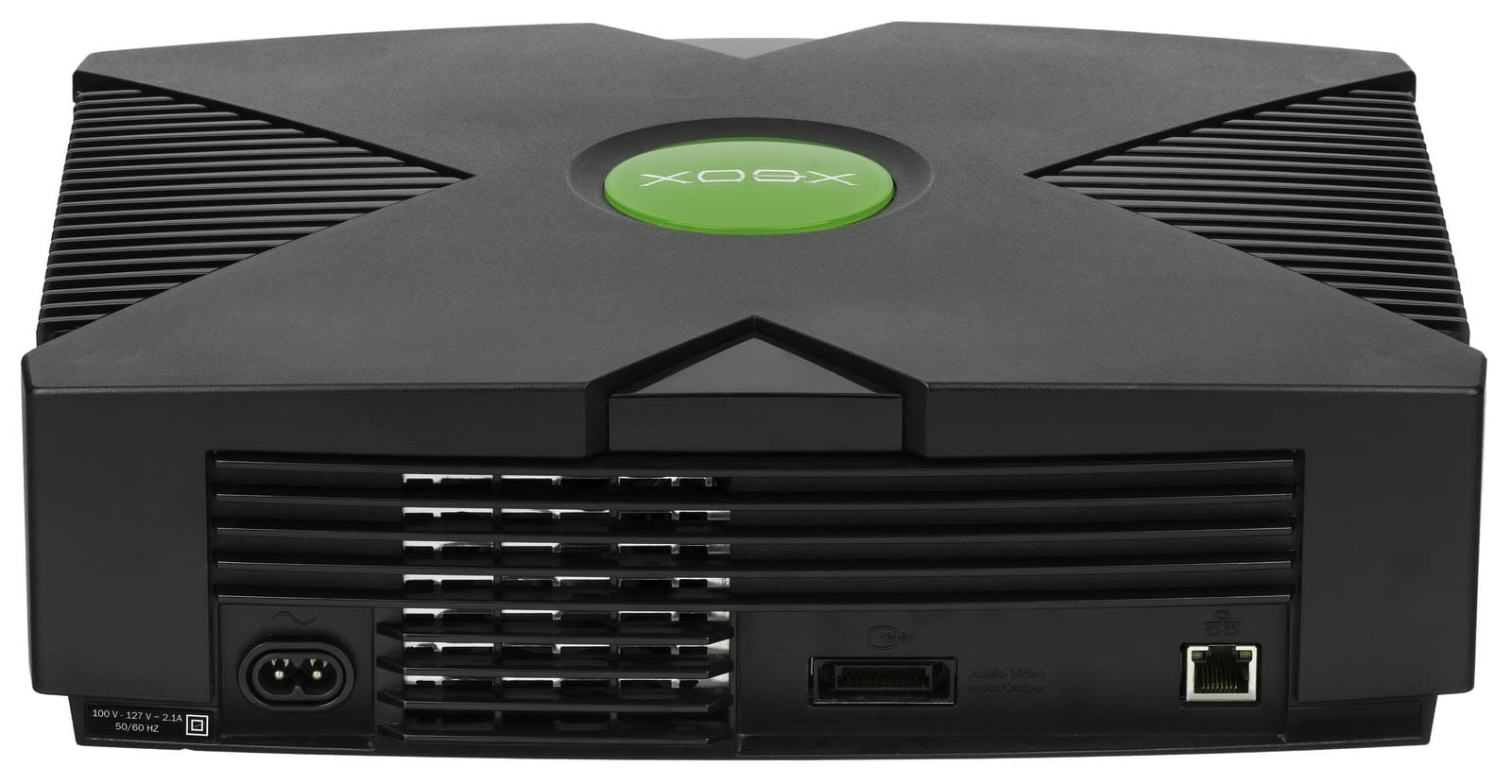
The picture. Standard TV out of the box, and HD (480p, 720p or 1080i) with a $20 HD cable pack, in the games that supported it. Some did. Plenty went to 480p, but 720p and 1080i were rare.
The software. You’ll hear that the Xbox was just a PC running Windows 2000. That oversimplifies it. Its operating system started from the Windows 2000 kernel, the core underneath, but it had no Windows screens at all, booted straight from the game disc in seconds, and its own team told Gates it wouldn’t run Windows. More of a DirectX machine than a Windows one.
Your music, in the game
That hard drive gave the Xbox its best trick. You could put a music CD in, copy it to the drive from the Dashboard, and then play your own songs as the soundtrack in games that supported it. Your albums on the radio while you raced, your music under a fight. Not every game supported it, and there’s no official list of which ones did, but the ones that did made it feel like your console.
There’s a secret in that CD ripper, too. Name a ripped soundtrack “Timmyyyy...!” and the Dashboard shows the credits of the team that built it. Blackley revealed it in 2017, a hidden thank-you note that sat there for well over a decade.
And the hard drive made one game do something wonderful. On long loads, Morrowind would sometimes quietly restart the whole Xbox to clear its memory and carry on, and you’d never know. It sounds like a myth. It isn’t: Todd Howard has said so, and a look inside the game’s code found the call that does it.
Sixteen players and a headset
The Ethernet port mattered before online even existed. With system link, you could cable four Xboxes together, each running four-player split screen on its own TV, for 16 people playing Halo at once. That’s the reported limit, and it’s where the dorm-room and basement LAN parties came from: four TVs, four consoles and a tangle of cables.
Then, a year to the day after launch, Xbox Live opened. For $49.99 you got a year of it and a headset in the box, and you got one name. Your gamertag and your friends list followed you into every game, so the friend you beat in one could find you in the next, and you could hear them complain about it. It sold twice as fast as Microsoft expected, and Live passed a million members in July 2004.
Four months after that came Halo 2, and it played over Live, which brought the LAN party into your own living room with a headset on. It made $125 million in the US and Canada in its first 24 hours. One day, one game, on a console some of Microsoft’s own people had called the coffin box.
What it cost Microsoft
All of this cost a fortune. At launch every Xbox sold for $299, reportedly about $125 less than it cost to make, so each one that went out the door lost Microsoft money. The final bill is disputed, since Microsoft’s books lump the Xbox in with PC games, mice and keyboards, but most counts land around $4 billion, and Robbie Bach, who ran the Xbox business, has put it as high as $7 billion. Billions, to get a black box under your TV.
What it cost you:
| What | When | Price |
|---|---|---|
| Xbox | November 2001, US | $299 |
| Xbox | February 2002, Japan | ¥34,800 |
| Xbox | March 2002, Europe | €479 or £299 |
| Price cut | April 2002, Europe | €299 or £199 |
| Price cut | May 2002, US | $199.99 |
| Xbox Live Starter Kit | November 2002, US | $49.99, with a year of Live and a headset |
What did all that money buy? A seat at the table. By May 2006 Microsoft counted more than 24 million Xboxes sold. That’s a distant second to the PS2, but it put Microsoft in the console business for good.
And if you were a Dreamcast kid, the big black box had something for you, too. Sega kept making games after its own console was gone, and some of them landed here, like Jet Set Radio Future and Sega GT 2002. It gave Dreamcast fans somewhere to follow Sega next.
It refused to switch off
Xbox Live for the original Xbox shut down on April 15, 2010. That should have been the end of it. Instead, a small group of Halo 2 players just didn’t turn their consoles off, and they stayed connected for almost four more weeks. The last of them left shortly before 11 p.m. Pacific time on May 10, 2010.
Fans picked up from there, and the biggest thing they made has nothing to do with Halo. Modders who opened up the Xbox to get at that hard drive wrote a media player for it in 2002, the Xbox Media Player. It grew into Xbox Media Center, then XBMC, and in 2014 it took the name you might know it by: Kodi. If you’ve ever used Kodi, it started life on a hacked original Xbox.
Others brought the old Xbox Live back. Insignia, an unofficial replacement, has more than 36,000 registered users, and it’s still adding games: Burnout 3 joined in October 2026.
And if you still have a stack of original Xbox discs, some of them will play on a newer console. Microsoft made a selection work on the Xbox 360, brought some to the Xbox One in 2017, and they carry on to the Series X and S, at a higher resolution than the big black box ever ran them. The console list stopped growing in November 2021. Then the old games found somewhere new: since July 2026 a selection of them runs on PC, and for the Xbox’s 25th birthday Microsoft added 21 more on November 12, Morrowind, both Knights of the Old Republic games and TimeSplitters 2 among them.
On November 15, 2026, the Xbox turns 25.
Based on Microsoft’s own press releases from 2000 to 2006, its 2002 and 2005 annual reports, Dolby’s 2001 release, Microsoft’s custom soundtrack support article, Major Nelson and Xbox Wire, AnandTech’s 2001 teardown, Microprocessor Report (2000), Dean Takahashi’s making-of series and book Opening the Xbox, Engadget’s history of the Duke, Kotaku, TechCrunch, Hackaday, The FPS Review, Macworld, PureXbox and Gamereactor, as of November 16, 2026. Where the sources disagree, the page says so.
Nerd Alert
Your Turn
What are YOUR thoughts
What have your experiences been? Let us know.