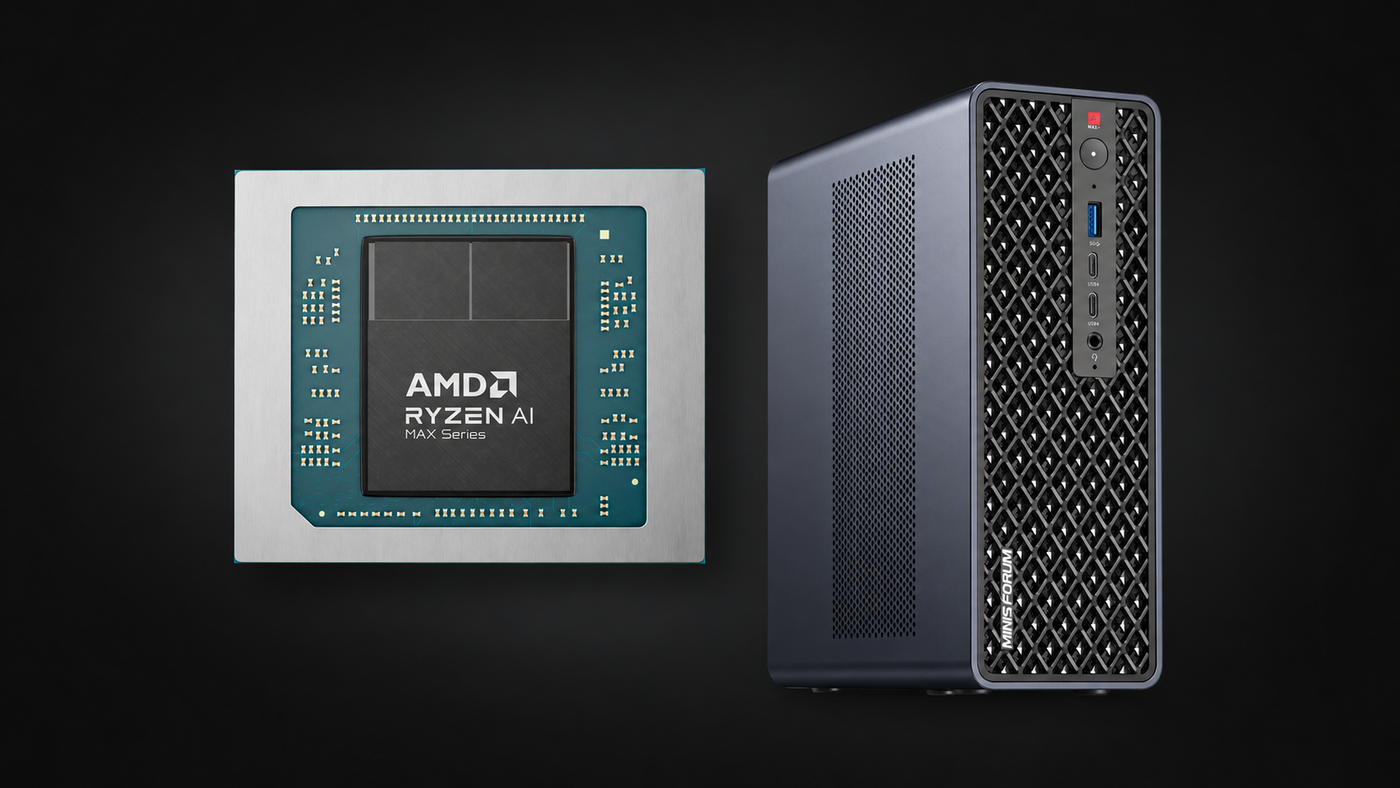
AMD’s Ryzen AI Max+ PRO 495 raises the memory ceiling of its high-end integrated platform to 192GB. For anyone running AI models or other memory-heavy tools locally, that is an unusual amount of capacity for a single compact machine. The rest of the chip is a smaller step over the Ryzen AI Max+ 395, and the first systems built on it are priced well above their predecessors. The questions worth answering are what changed, what the extra memory is for, and who can justify the cost.
I haven’t tested the processor or the Minisforum system, so this analysis is based on published specifications from AMD and Minisforum. The figures establish what the hardware offers and where it could be useful. Whether it delivers in practice depends on testing that has not yet been published. The comparison below starts with the 395, the chip the 495 replaces.
395 vs. 495: what changed?
A side-by-side comparison makes the scope of the upgrade clear. Both chips have 16 Zen 5 CPU cores, 32 threads and integrated Radeon graphics with 40 graphics cores. The 495 raises clock speeds slightly, increases memory speed and supports an additional 64GB of RAM. The table summarizes the differences, based on AMD’s published specifications.
| Specification | Ryzen AI Max+ 395 | Ryzen AI Max+ PRO 495 |
|---|---|---|
| Maximum supported RAM | 128GB | 192GB |
| Memory data rate | 8,000 MT/s | 8,533 MT/s |
| CPU cores / threads | 16 / 32 | 16 / 32 |
| CPU base / boost clock | 3.0 / up to 5.1GHz | 3.1 / up to 5.2GHz |
| L2 + L3 cache | 80MB | 80MB |
| Integrated graphics | Radeon 8060S, 40 cores | Radeon 8065S, 40 cores |
| GPU clock | 2.9GHz | 3.0GHz |
| NPU compute, up to | 50 TOPS | 55 TOPS |
| Overall AI compute, up to | 126 TOPS | 131 TOPS |
Comparison based on AMD’s published specifications. Credit to Hassan Mujtaba at Wccftech for highlighting ACEMAGIC’s F9A comparison, which prompted this closer look.
Memory capacity is the largest change, with 50% more than the 395 supports. CPU and GPU clocks each rise by 0.1GHz, and the memory data rate increases by about 6.7%. These changes affect different workloads: more capacity allows larger jobs to load at all, while faster memory and processing help them run. Which matters more depends entirely on the workload.
What 192GB is for
The clearest use case is a local AI model too large for the memory in an existing machine. A larger shared memory pool can make that model loadable, with headroom depending on the model and how it is run. Minisforum says its 192GB configuration can allocate up to 160GB as graphics memory. That allocation comes from the same pool the rest of the system uses, so the operating system and other applications still need room.
Loading a model is only the first requirement. For regular use, the model also has to respond at a practical speed. A model that fits but answers slowly offers limited value, however much memory it occupies. Useful testing will need to report both what fits and how quickly it runs.
AMD’s AI figures need the same context. TOPS stands for trillions of operations per second, and AMD lists up to 55 TOPS for the NPU, the dedicated hardware used by supported AI tasks such as camera effects. The advertised 131 TOPS overall combines the peak capabilities of the CPU, GPU and NPU. Software has to support the specific hardware involved, so the total does not predict how quickly a particular local model will respond.
For local AI work, the appeal is more room within a single computer. That matters for keeping projects on premises or running something too large for existing hardware. Buyers should confirm support for the specific software they plan to use before spending at this level. The memory creates possibilities, and software support and performance determine which ones are practical.
What about gaming?
A higher model number on a new AMD chip invites questions about gaming performance. The graphics name moves from Radeon 8060S to 8065S, but ACEMAGIC’s published comparison shows the same RDNA 3.5 architecture and 40 compute units. The graphics clock rises from 2.9GHz to 3.0GHz, an increase of about 3.4%. On paper, the graphics hardware is nearly unchanged.
Faster memory could contribute as well, because integrated graphics use system memory. With the same 256-bit interface, the move from LPDDR5x-8000 to LPDDR5x-8533 raises theoretical bandwidth from 256GB/s to about 273GB/s. That is roughly 6.7%, calculated from the published specifications. The benefit in any given game depends on how much memory bandwidth was limiting it to begin with.
The jump to 192GB offers little for gaming alone. A 128GB system already far exceeds what current games use, so an extra 64GB provides almost no usable headroom. Graphics clock, memory bandwidth, power limits and cooling have far more influence on frame rates. Taken together, the specifications point to a modest refresh within the same gaming class.
Putting a percentage on the improvement requires a controlled comparison. Matching power settings, drivers, resolutions and games would isolate what the new hardware contributes. Average frame rates and 1% lows would then show whether the difference is noticeable during play. Until that data exists, the change in the graphics name says little about real performance.
Minisforum’s MS-S1 MAX-P495
Minisforum has listed the MS-S1 MAX-P495 with the full 192GB of unified memory. It is one of the first concrete systems built on the new processor. Beyond the chip, its connectivity, expansion and cooling shape what the machine can actually do.
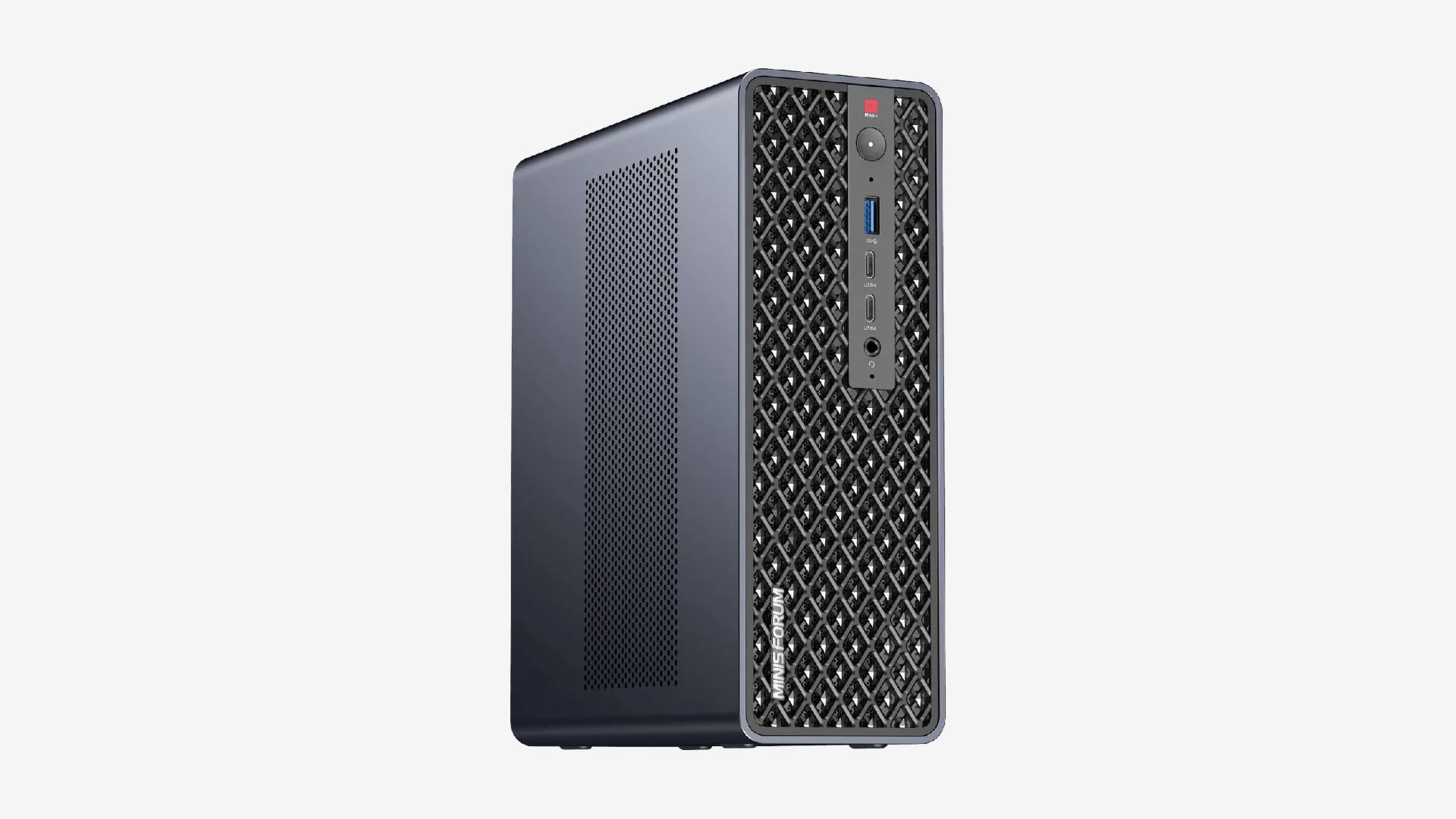
For home-lab use, dual 10GbE ports allow fast connections to storage or other computers, provided the network supports those speeds. The system also has two rear 80Gbps USB4 V2 ports and two front 40Gbps USB4 ports for compatible peripherals. Internal expansion has limits: one M.2 slot runs at PCIe 4.0 x4 and the other at x1. The full-length PCIe x16 slot is wired electrically for x4, which constrains the bandwidth available to an expansion card.
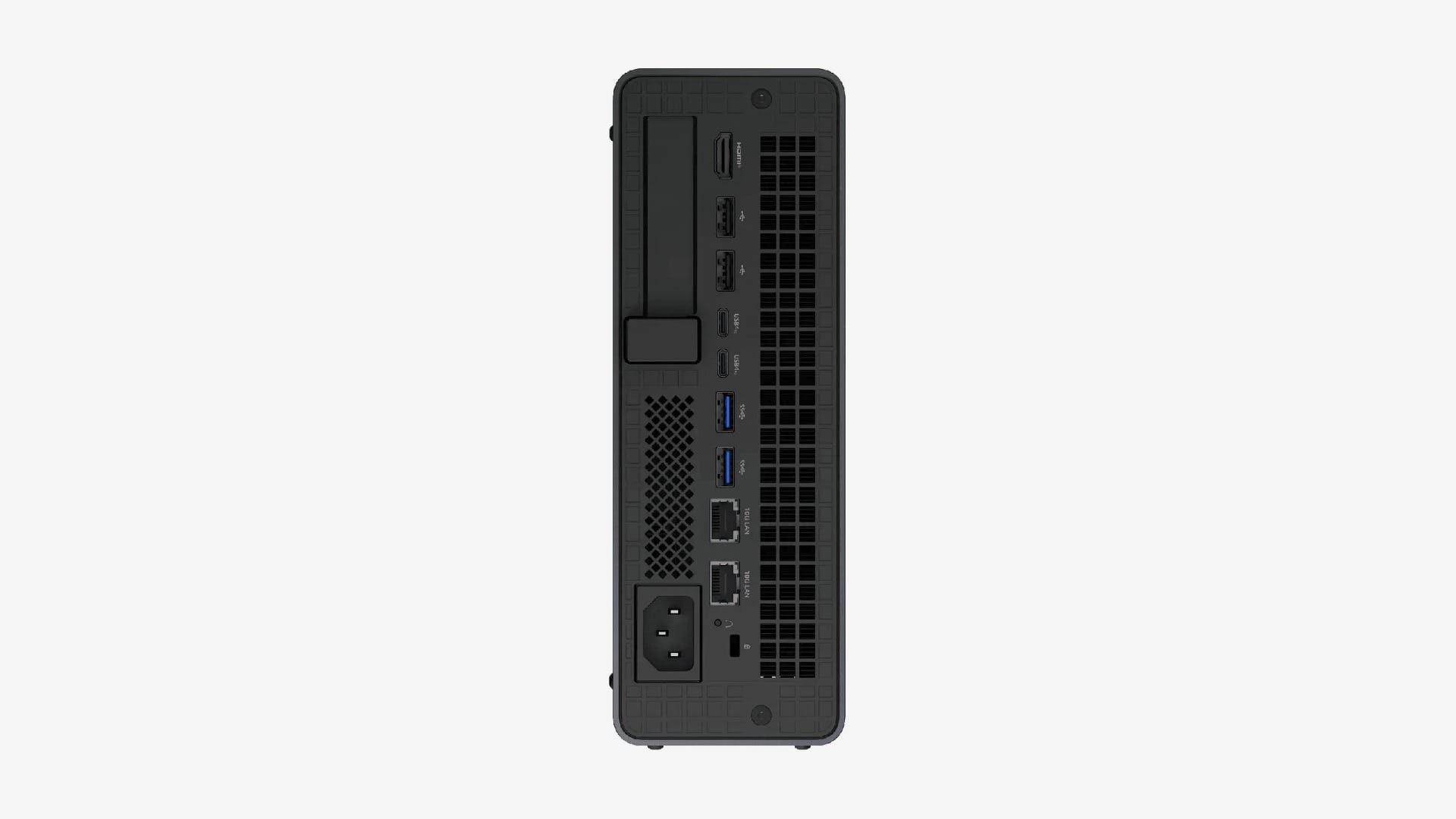
Minisforum advertises 120W of sustained processor-package power and up to 160W for short bursts. Those figures reflect how this system is configured, whereas AMD’s 55W default TDP is a thermal-design specification for the processor. The whole system will draw considerably more than 55W under load. For a machine likely to stay powered on, idle consumption, load draw and fan noise are the measurements that matter.
What PRO adds
The PRO designation adds security and management features aimed mainly at business systems. One is Memory Guard, which encrypts data held in RAM. It protects against attempts to read data directly from memory with physical access to the machine. Drive encryption, by comparison, protects stored files.
AMD also lists DASH support for remote management. On compatible, properly configured hardware, DASH lets an administrator check system information or control power remotely, including when the operating system is unresponsive. That capability suits a machine managed from another location. Minisforum’s documentation will need to confirm which of these controls this system actually exposes.
These features matter for a computer that holds sensitive work or runs somewhere hard to reach. Their value depends on whether they are configured and used. For a system used mainly for gaming, graphics performance and cooling are far more relevant.
Price
At the time of writing, Minisforum’s product page showed “$7???” and “Price Reveal Coming Soon.” The company withheld the final digits and the shipping date. A seven followed by three hidden digits places the expected price in the $7,000s.
For comparison, Minisforum’s US store listed the 395-based MS-S1 MAX with 128GB of RAM and a 2TB SSD at $3,799 as of September 13. Two of those would cost $7,598 before tax. The teased price of one 495 system is therefore close to the cost of two of its predecessors. At that price, the newer machine needs to enable something the older one cannot.
The memory arrangement is the meaningful difference in that comparison. Two 128GB computers provide two separate pools, and an application cannot automatically treat them as one 256GB pool. Splitting work across both requires suitable software and networking. The 495 system offers 192GB in a single shared pool, which has real value for a workload that needs it.
For a general buyer, the value case is weak. Gaming receives a small hardware refresh, and everyday tasks give little reason to spend thousands more for this much memory. A buyer who needs the capacity for a specific project faces a different calculation. Without that need, the premium is difficult to justify.
UPDATE What’s new since publishing
The first independent gaming tests of the 495 are out, and on some machines the graphics gain is larger than the 3.4% clock increase suggests. VideoCardz gathered two sets of results, both on systems with 192GB of memory. A Chinese reviewer tested FEVM’s FAEX2 mini PC, which held 160 watts for up to 18 minutes. ETA Prime tested GMKtec’s EVO-X5 Pro at a sustained 120 watts.
On the FEVM machine, compared with a 395 system, Cyberpunk 2077 at 1080p High rose from 90 to 104 frames per second. Forza Horizon 5 went from 125 to 133, Black Myth: Wukong from 72 to 79, and Shadow of the Tomb Raider from 107 to 151. Its score in 3DMark Time Spy, a standard graphics benchmark, was only about 3.4% ahead of FEVM’s previous 395 model, though. ETA Prime measured an 11.8% higher Time Spy score than GMKtec’s 395-based EVO-X2 at the same 120-watt limit.
The spread is the useful part: the gain depends on the machine. VideoCardz suggests better cooling, the faster LPDDR5X-8533 memory and newer drivers as possible reasons, and notes that older machines are rarely retested on current drivers. So a 495 system that keeps the older memory speed, such as iBuyPower’s, can’t be assumed to see the same gain. For gaming alone, the price gap to a 395 machine is still far larger than the performance gap.
Minisforum has revealed the price, and it is steep. The MS-S1 MAX-P495 is listed at $7,399 for its only configuration, the Ryzen AI Max+ PRO 495 with 192GB of memory and a 2TB SSD, with an estimated shipping time of mid-October in the US. The store presents that as a sale price against a regular price of $9,249, about 20% off, without naming the promotion or saying how long it lasts. Even at the discounted figure, this is an extraordinary amount of money for a computer small enough to sit beside a monitor.
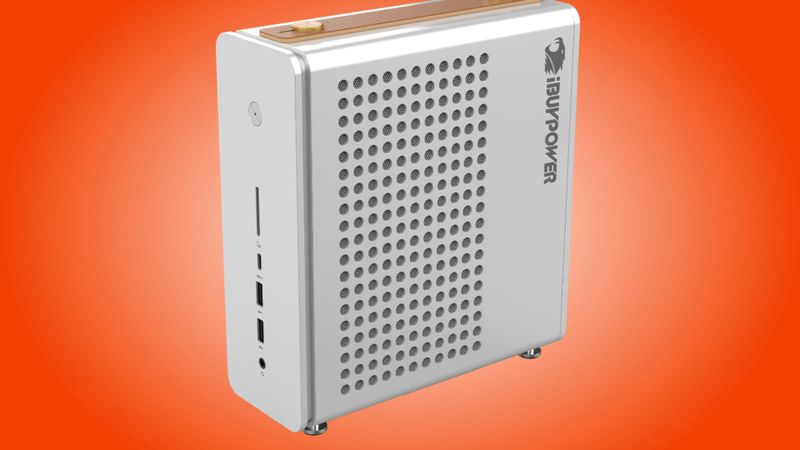
The comparison with the 395 model barely moves. Minisforum lists the 128GB, 2TB MS-S1 MAX at $3,799, also shown as a sale price against a regular $4,749. Two of them cost $7,598, so the P495 comes in $199 under the pair at current prices, and $249 under it if both return to their regular prices. The single 192GB pool is priced almost exactly like two separate 128GB computers. Not every 495 machine uses the extra memory: iBuyPower’s Pro AMD AI Halo pairs the chip with 128 GB for $3,999.
That leaves the case for this machine exactly where it was, only more expensive to make. For gaming and everyday use, the P495 is a small step over a system that costs about half as much. Its value rests entirely on needing 192GB of memory in one shared pool, for a workload that cannot be split across two machines. For anyone without that specific need, $7,399 is a very large sum to spend on a mini PC. Framework has since opened pre-orders for a Framework Desktop built on the same chip with 192GB, starting at $6,799 without a drive, and Lucebox has paired it with a Radeon AI PRO R9700 graphics card in the Lucebox Zero 495.
Before you buy
The purchase decision comes down to what the extra memory would be used for. Gaming and everyday use are unlikely to benefit from the additional capacity, while a large local model or a memory-bound project may have a clear use for it. Buyers still need to confirm that their software runs properly and that performance is acceptable for regular use. Those checks matter more at $7,399.