News · News · PC Hardware · Local AI
iBuyPower’s First Mini PC Puts the Ryzen AI Max+ PRO 495 at $3,999, With a Catch
iBuyPower’s first mini PC is the cheapest Ryzen AI Max+ PRO 495 box in the US with a firm price. The catch: it stops at 128 GB, at 395 memory speed.
https://averagetechnerds.com/ibuypower-pro-ai-halo-mini-pc-ryzen-ai-max-pro-495/
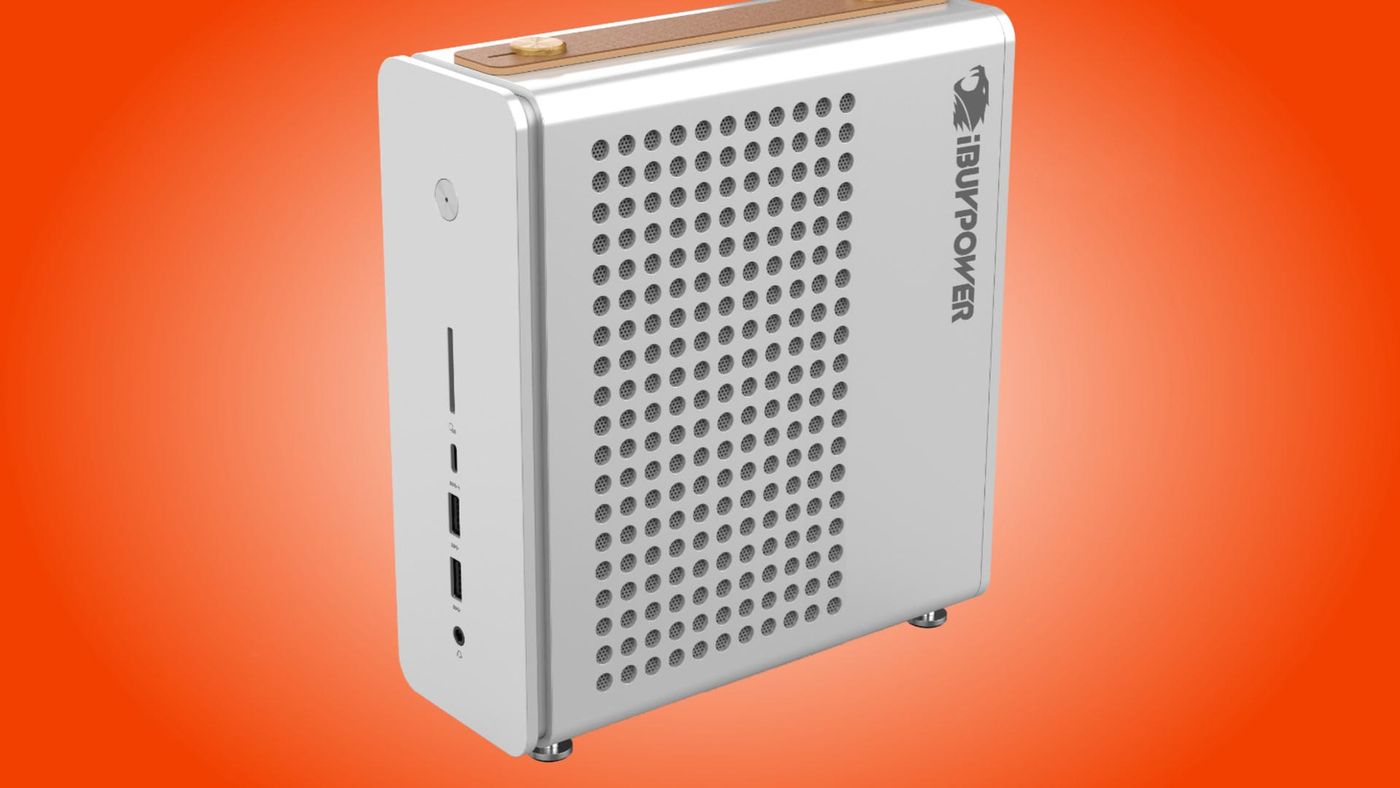
iBuyPower has spent more than twenty-five years selling gaming desktops. Its first mini PC is a small white box with a leather strap on top. It’s called the Pro AMD AI Halo Mini PC, it runs AMD’s Ryzen AI Max+ PRO 495, and iBuyPower says it’ll go on sale before the end of the year at $3,999. For a 495 machine with a firm price, that’s thousands less than anything else in the US. There’s a reason it’s that cheap, though, and it’s the same thing that makes it look a lot like the cheaper Ryzen AI Max+ 395 boxes already on sale. Here’s what you get, what you don’t, and where it sits among everything else built on this chip.
What is the iBuyPower Pro AMD AI Halo?
It’s a compact workstation for running AI models at home or in the office, and iBuyPower’s first try at a mini PC. The company announced it on October 8 as part of its PRO workstation line. Inside is AMD’s Ryzen AI Max+ PRO 495, a 16-core chip with powerful built-in Radeon graphics that share one big pool of memory with the processor. That shared memory is the whole point of these machines: the graphics can use most of it, so a small box can load AI models that would need a very expensive graphics card in a normal PC.
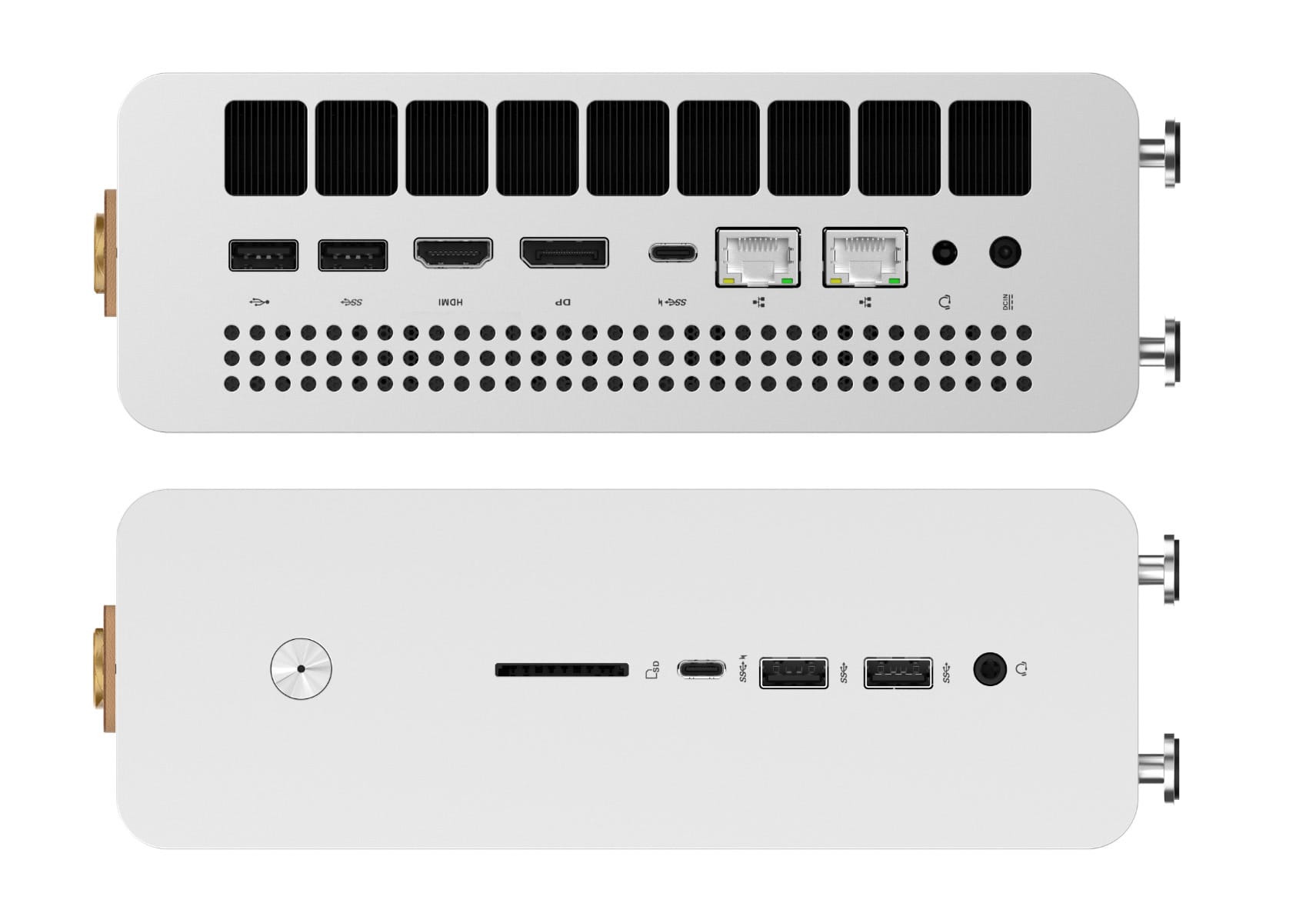
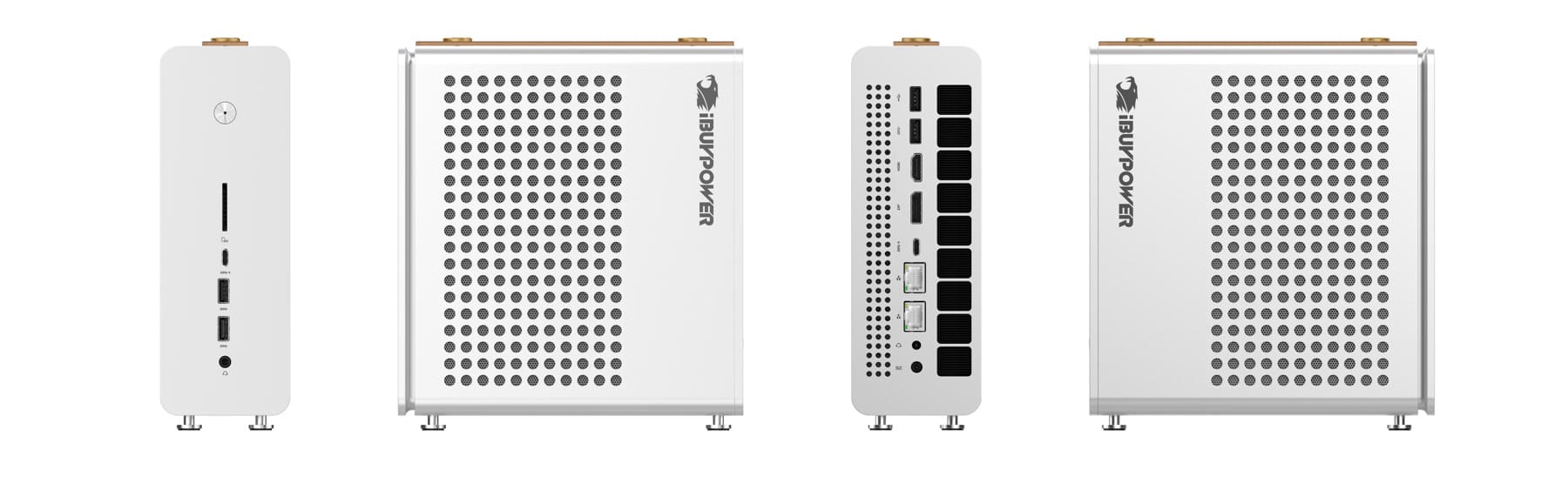
The box itself is white, with perforated sides for airflow and that strap across the top, and at 200 x 198 x 70 mm, about 2.8 litres, it’s a touch smaller than Minisforum’s and Framework’s boxes on the same chip and bigger than AMD’s own. iBuyPower hasn’t said how much power it’s allowed to draw or how loud it gets.
How much does it cost, and when can you buy it?
$3,999 to start, and not yet. iBuyPower says it’ll be available in the fourth quarter “while supplies last”, but there’s no order page on its site, and no listing has turned up at Micro Center, Amazon, Best Buy or Newegg. The company told TechRadar that the $3,999 version comes with a 1 TB SSD, and that you’ll be able to pick bigger drives on its site for more money. It hasn’t said how much more.
The memory is fixed. All 128 GB comes standard and it’s soldered next to the chip, so what you buy is what you keep. iBuyPower hasn’t said which countries it’ll sell in. It describes itself as North America’s leading system builder, and its repair network is Micro Center, which is US-only.
What are its specs?
The chip is the full 495, with nothing cut down. It’s the memory and the box around it where iBuyPower made its choices.
| Part | iBuyPower Pro AMD AI Halo |
|---|---|
| Chip | AMD Ryzen AI Max+ PRO 495, 16 cores and 32 threads, up to 5.2 GHz |
| Graphics | Radeon 8065S, 40 graphics cores |
| NPU | Up to 55 TOPS |
| Memory | 128 GB LPDDR5X-8000 |
| Storage | 1 TB at $3,999; two M.2 2280 slots plus one M.2 2242/2280, up to 8 TB |
| Front | USB4 (40 Gbps) Type-C, two USB 3.2 Gen 2 Type-A, SD card slot, audio jack |
| Rear | USB4 (40 Gbps) Type-C, USB 3.2 Gen 2 Type-A, USB 2.0 Type-A, HDMI 2.1, DisplayPort 1.4, two 10 Gb Ethernet, audio jack, DC power |
| Wireless | Wi-Fi 7, Bluetooth 5.4 |
| Operating system | Windows 11 Pro |
| Size | 200 x 198 x 70 mm |
Three M.2 slots is generous for a box this size, and the two 10 Gb Ethernet ports suit anyone moving big model files off a network drive. iBuyPower hasn’t announced any way to link several of these together over those ports, which some other 495 makers pitch as a selling point.
Is it faster than a Ryzen AI Max+ 395 mini PC?
Barely, and that’s the catch. The 495 and the 395 have the same 16 processor cores and the same 40 graphics cores. The 495 clocks a little higher, its NPU goes from 50 to 55 TOPS, and it supports two things the 395 can’t: up to 192 GB of memory, and faster memory at 8,533 MT/s. Those last two are why the 495 exists, as I covered when AMD announced it.
iBuyPower’s box uses neither. It has 128 GB, the same maximum as a 395, and runs it at 8,000 MT/s, the same speed a 395 uses. Memory speed matters a lot for AI here, because generating text from a big model is mostly a matter of how fast the chip can read the model out of memory. With the same amount at the same speed, you’d expect local AI performance within a few percent of a good 128 GB 395 machine.
How much of the 128 GB can the graphics use?
Probably up to 96 GB on Windows, though iBuyPower and AMD haven’t said so for this box. On these chips, you set aside part of the shared memory for the graphics in the BIOS or AMD’s software, and on 128 GB machines Windows tops out at 96 GB. AMD’s headline figure of 160 GB for graphics applies only to 192 GB machines. Linux can let the graphics reach further into the shared pool. Microsoft has been testing a smarter memory split for Windows, but it hasn’t shipped and nobody has confirmed it’ll apply to AMD.
Is it AMD’s own Ryzen AI Halo?
No. The name is close, and so is the price, but AMD sells its own boxes under the Ryzen AI Halo name at Micro Center, and they’re different machines. AMD’s 395 Halo costs $3,999.99 with 128 GB and a 2 TB SSD. Its 495 Halo arrived in October with 192 GB and a 2 TB SSD for $7,299.99, running Linux and sold only in Micro Center stores, as Notebookcheck reported. Both are a smaller 150 x 150 mm design. iBuyPower’s product page does reuse some of AMD’s Halo marketing charts, but those charts compare AMD’s own platform with Apple’s and Nvidia’s machines, and they don’t measure this box.
How does it compare with other 495 and 395 mini PCs?
Apart from Lucebox’s bigger workstation with its own graphics card, it’s the only 128 GB PRO 495 machine in the US with a firm price, and it costs $2,200 less than the cheapest 192 GB one. It also costs more than the 128 GB 395 machines it’ll perform most like.
| Machine | Chip | Memory and SSD | Price | Status |
|---|---|---|---|---|
| iBuyPower Pro AMD AI Halo | PRO 495 | 128 GB, 1 TB | $3,999 | Announced, Q4 2026 |
| AMD Ryzen AI Halo | 395 | 128 GB, 2 TB | $3,999.99 | On sale, Micro Center |
| GMKtec EVO-X2 | 395 | 128 GB, 1 TB | $3,499.99 | On sale |
| ACEMAGIC M1A Pro+ | 395 | 128 GB, 2 TB | $3,399 | On sale |
| Bosgame M5 MAX | PRO 495 | 192 GB, 2 TB | $6,199 first batch | Pre-order |
| ACEMAGIC F9A | PRO 495 | 192 GB, 2 TB | $6,699 | On sale |
| GMKtec EVO-X5 Pro | PRO 495 | 192 GB, 2 TB | $6,799 | On sale |
| AMD Ryzen AI Halo | PRO 495 | 192 GB, 2 TB | $7,299.99 | On sale, Micro Center stores |
| Minisforum MS-S1 MAX-P495 | PRO 495 | 192 GB, 2 TB | $7,399 | On sale |
Against the GMKtec EVO-X2, with the same 128 GB and 1 TB, iBuyPower charges $499 more for a slightly newer chip, a third M.2 slot, faster networking and a US company behind it. Bosgame has also announced a 128 GB version of its M5 MAX, expected at $3,600 to $3,800 with a 2 TB SSD, though it isn’t priced or on sale yet.
If you need the 192 GB, I’ve covered that route with the Framework Desktop and the Lucebox Zero 495, which pairs the chip with a separate graphics card. And if you’d rather go with Nvidia, Microsoft’s Surface RTX Spark Dev Box has 128 GB and a 2 TB SSD for $5,999.99, on pre-order and due in November.
Why would you pick iBuyPower?
For the company behind it more than for the chip. Most of the boxes in that table come from companies based in China that sell mostly online. iBuyPower is a California system builder that normally gives the PCs it sells a three-year parts and labour warranty, with Micro Center handling in-warranty repairs, so there’s a store you can walk into if something goes wrong. It hasn’t spelled out the warranty for this model yet. Add the third M.2 slot, two 10 Gb Ethernet ports and Windows 11 Pro out of the box, and it’s a more office-friendly package than most.
What happens next?
An order page, first of all, with the price of each storage size. Then a ship date, which iBuyPower has only pinned to the last three months of the year. After that, the first reviews will show how warm and loud this box gets under a long AI job, which matters more than usual on a chip that can run anywhere from 45 to 120 W depending on how the maker sets it up.
Nerd Alert
Your Turn
What are YOUR thoughts
What have your experiences been? Let us know.