Sega Genesis (1989)
The rebel 16-bit console: Sonic in the box, the ads that went after Nintendo, EA's yellow tab, the court case over reverse engineering, and the Brazil that never let it go.
Two names, one console
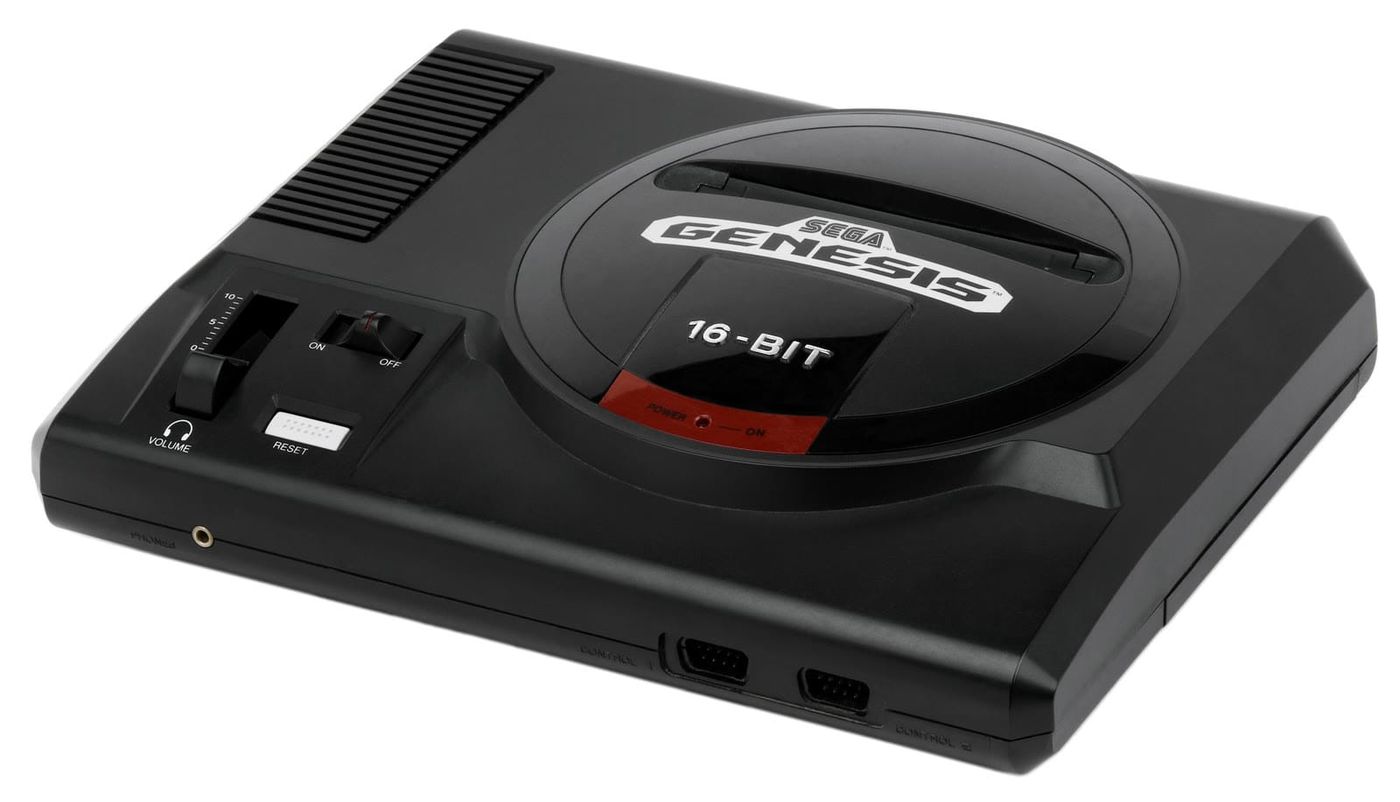
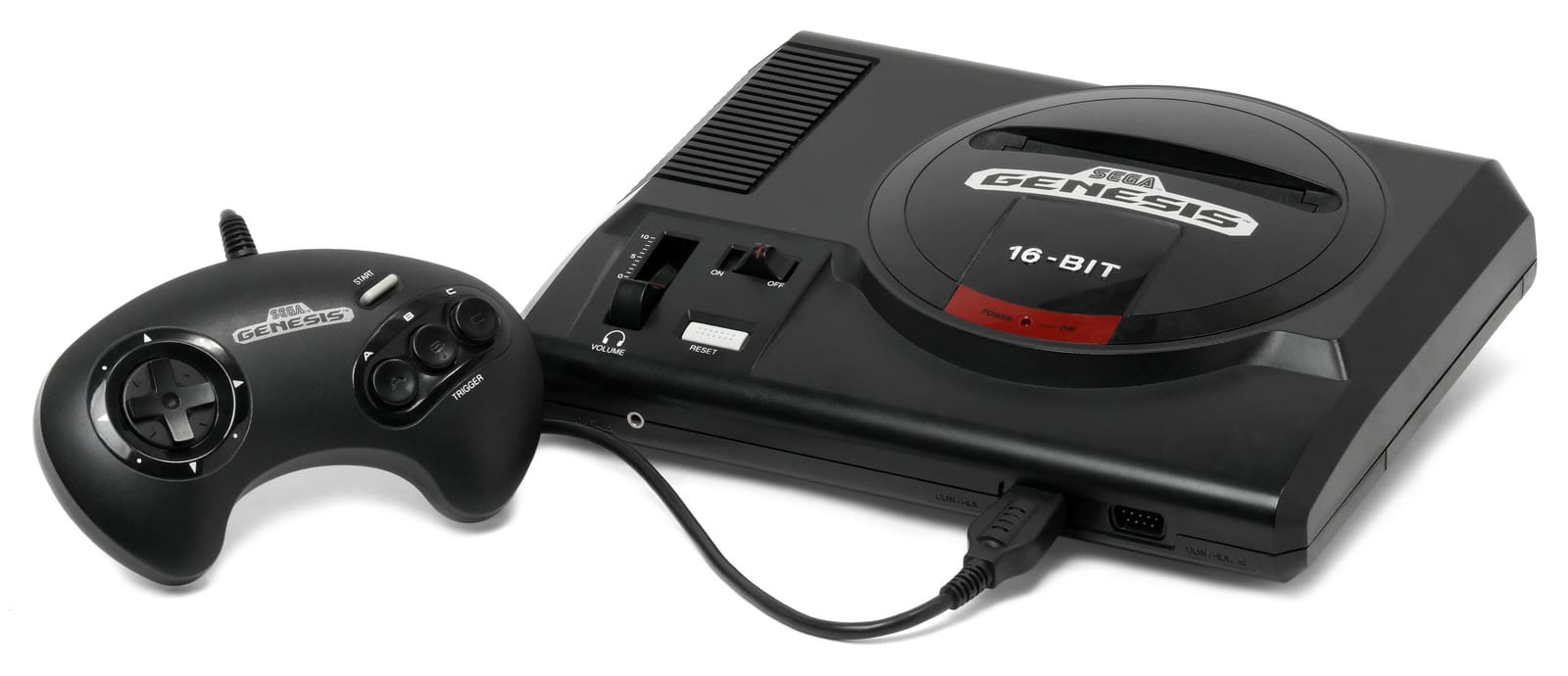
In Japan it was the Mega Drive, out on October 29, 1988 at ¥21,000. Sega says the name meant a machine that “drives” mega-sized cartridges, and the gold “16-BIT” on the case was there to tell the world it got there first. In North America it became the Genesis, which Sega says meant creating the 16-bit market. You’ll read that the Mega Drive name was taken in the US by some other company. Nobody has ever shown a record of that, so this page sticks to what Sega said.
Here’s the thing: at home in Japan it didn’t win. It sold over 3 million there, Sega’s first home console to pass a million, and it still couldn’t break the Famicom, the Super Famicom or the PC Engine. The Genesis story is an American, European and Brazilian story.
Late summer 1989
The first Genesis units hit stores in the New York and Los Angeles areas in late August 1989, a little ahead of the planned September launch. You’ll see “August 14” everywhere online. No Sega document or period report names that day, so this page doesn’t either. There was no official list price. The trade press said “less than $200”, and Tom Kalinske, who ran Sega of America later, remembers $189.99. Altered Beast came in the box, with one controller.
The first man in charge was Michael Katz, and “Genesis does what Nintendon’t” was his, along with the celebrity sports games: Joe Montana, Pat Riley, Tommy Lasorda, Michael Jackson. He says he paid Montana $1.7 million. Sega Japan wanted a million units sold in the first stretch. Katz says they sold about 500,000.
Then Sonic
Kalinske took over in 1990. His own account: Sega’s boss, Hayao Nakayama, found him lying on a beach in Hawaii and talked him into flying to Japan to see some technology. Kalinske’s plan was to cut the price, drop Altered Beast from the box (“not going to sell in Kansas”), build American software teams, go after Nintendo in the ads, and bundle the new mascot game instead. Sega Japan’s board said no to all of it. Nakayama stopped him at the door and told him to go ahead and do it anyway.
Sonic the Hedgehog came out in the summer of 1991, built with North America in mind, with rings that forgive your mistakes. It went in the box in place of Altered Beast, and by Sega’s own account, with Sonic 2 the Genesis became the number one 16-bit console in North America. Kalinske says Sega went from about a 1% share to 50% by 1994. Sega’s own release in January 1996 put its US dollar share ahead of Nintendo’s for the third year running, 43% to 42%, and by then the Genesis was selling for under $100 with a game. You’ll also read that it beat the SNES “four Christmases in a row”. One book says three. Sega’s own claim is about dollar share, 1993 to 1995, and that’s what this page goes with.
The yellow tab
EA’s Genesis cartridges had a yellow tab on the top, and kids had theories: extra memory, a save battery, a bigger chip. Bing Gordon, who ran EA’s creative side, says it was just a mark so you knew you were holding an EA game, and “we never explained it”. The bigger-chips story came out of focus groups. Kids made it up.
The real story is better. EA had its engineers take the Genesis apart clean-room style: one team studied the hardware and wrote down how it worked, lawyers checked the notes, and a separate team built from the notes. That meant EA could make Genesis games without Sega’s permission at all. The night before the January 1990 CES, Trip Hawkins told Nakayama that EA would run its own licensing program unless Sega gave it a better deal. The meeting ran all night. By morning EA could make its own cartridges, as many games as it wanted, at a better royalty. That’s why EA carts look different, and why the tab was possible in the first place. Hawkins says he built Joe Montana Football for Sega in six weeks and got paid $2 million for about $20,000 of work.
The court case that still matters
Accolade did the same thing without the deal. It bought a Genesis and three games, wired a decompiler into the console, wrote itself a manual, and shipped its own games. Sega’s answer was a check built into a 1991 revision of the console: it looks for the letters S-E-G-A in the cartridge and shows “PRODUCED BY OR UNDER LICENSE FROM SEGA ENTERPRISES LTD” for a few seconds. Accolade copied the header, so its games showed Sega’s message too, and Sega sued.
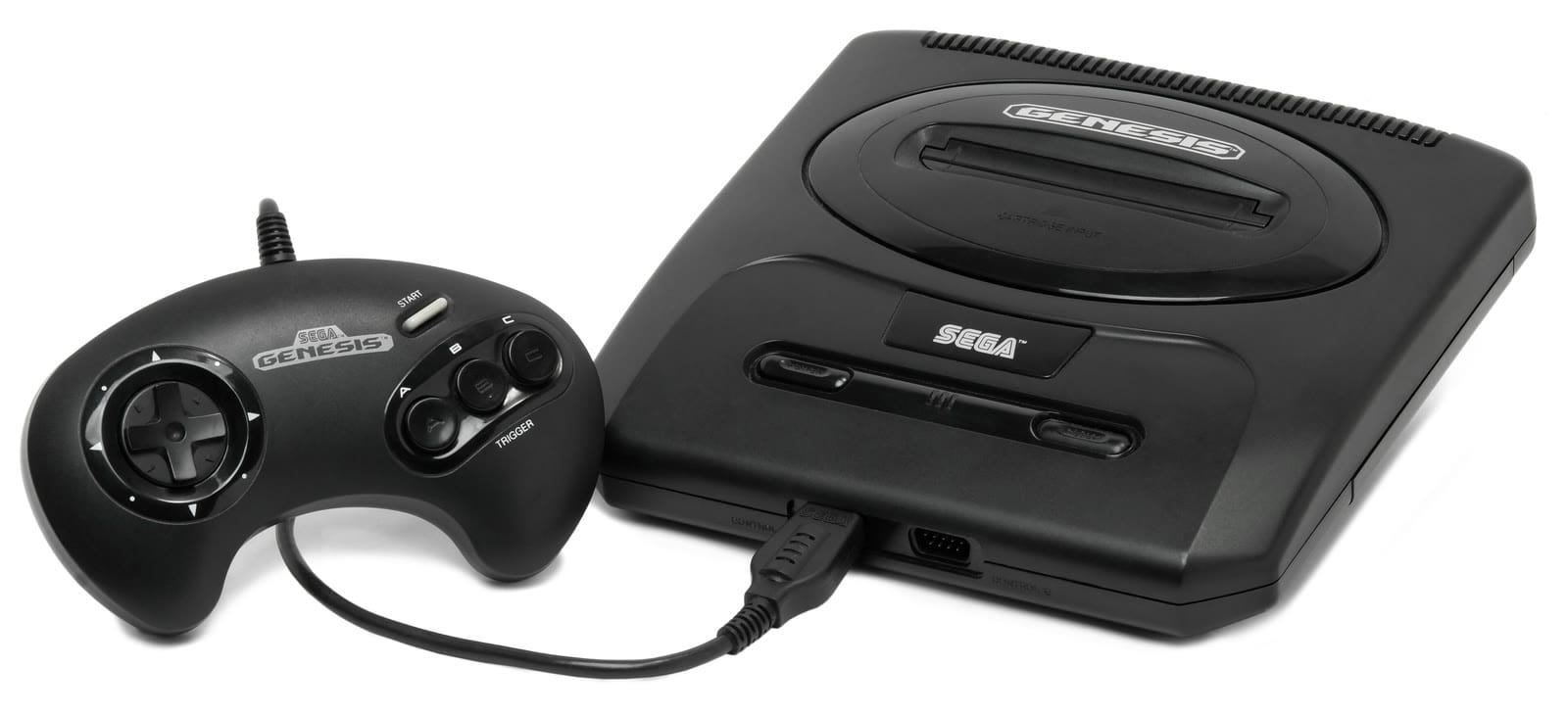
In October 1992 a federal appeals court ruled that taking a product apart to reach the parts that aren’t protected, when there’s no other way and a real reason, is fair use. The court called that 1991 console the “Genesis III”, which is not the Genesis 3 Majesco sold in 1998. Two different things.
Mortal Kombat and the letters on the box
The Genesis Mortal Kombat shipped with the blood off, and a well-known code turned it on. Sega had already built its own ratings system with outside professors and sociologists. Kalinske says he first asked the movie ratings board to lend theirs and got turned down, and Nintendo refused to join Sega’s. Then came the Senate hearings, December 9, 1993 and March 4, 1994, with Mortal Kombat and Night Trap on the screen. A rating bill was introduced in 1994 and never passed, and the industry set up the ESRB that same year. That’s where the letters on every game box come from.
Brazil never let it go
Tectoy made the Mega Drive in Brazil, at a factory in Manaus, and its chairman says it reached 80% of the market there. By 2015 Tectoy had made and sold over 3 million Mega Drives, ran a Sega Club with a million members, and made games you couldn’t get anywhere else, starring Mônica and Woody Woodpecker. There was a home-banking device for the Bradesco bank. Tectoy put the power supply inside the console, Sega complained, then did the same thing on the Saturn. Sega says production there ran into the 2000s. Whether Tectoy still sells new ones today I can’t verify: its store listed none when this was checked.
The add-ons
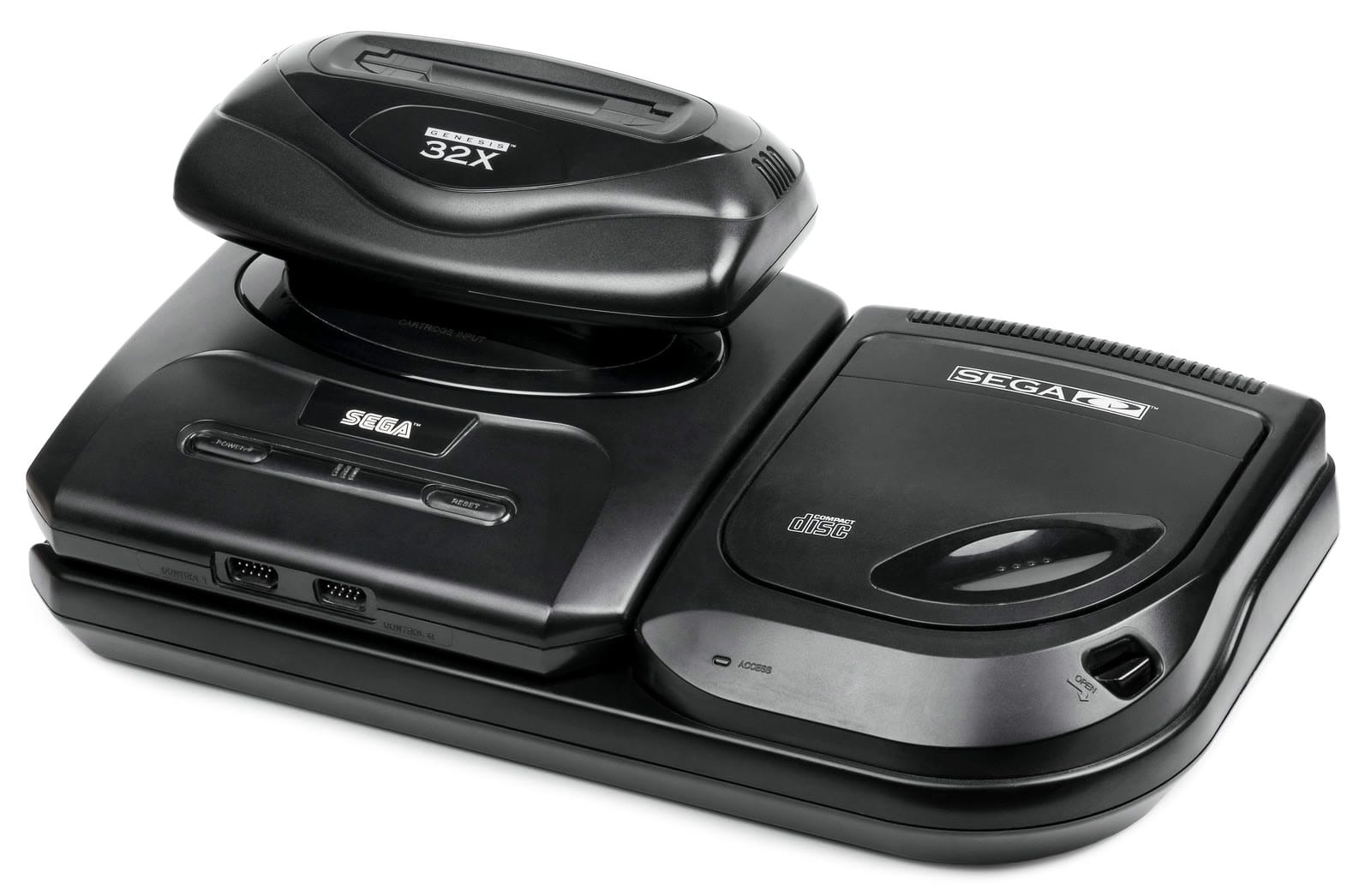
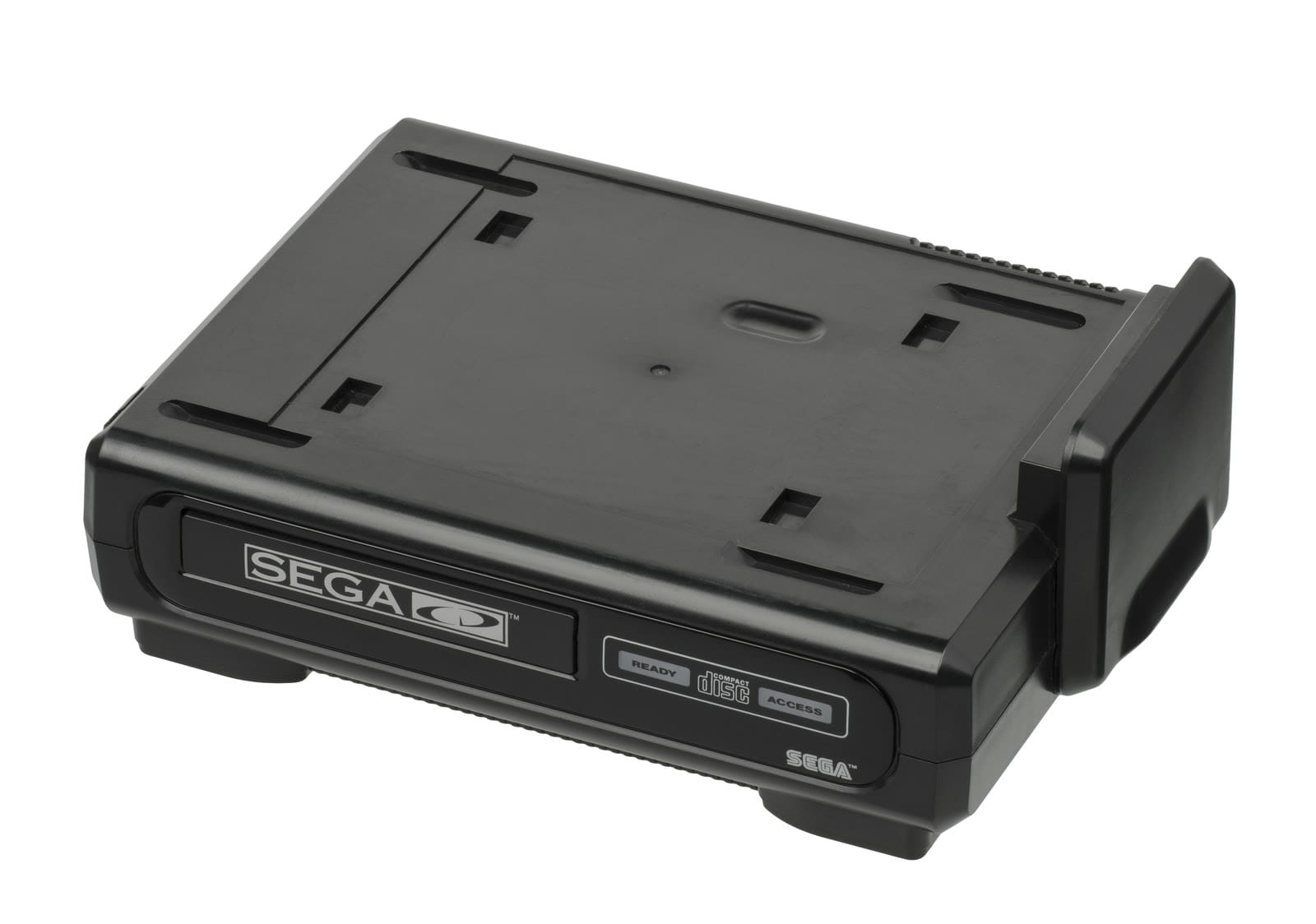
The Sega CD came first, Japan in December 1991, with its own faster 68000, a CD drive and hardware scaling and rotation. Sega credits it with starting the opening-movie tradition. The 32X followed in late 1994, a booster that turned the console into a 32-bit machine that could draw polygons. Worldwide numbers are reported at about 2.24 million Sega CDs and about 800,000 32X units shipped, with a Sega executive later saying 600,000 of those actually sold in year one and the rest sat in a warehouse.
Japan also got the console online in November 1990, with a modem and a game download service, years before the Sega Channel ran games over cable TV in North America. And from July 1993 Japan Airlines lent first and business class passengers a controller-shaped Mega Drive called the Mega Jet.
How it was made
Skip this part if chips aren’t your thing.
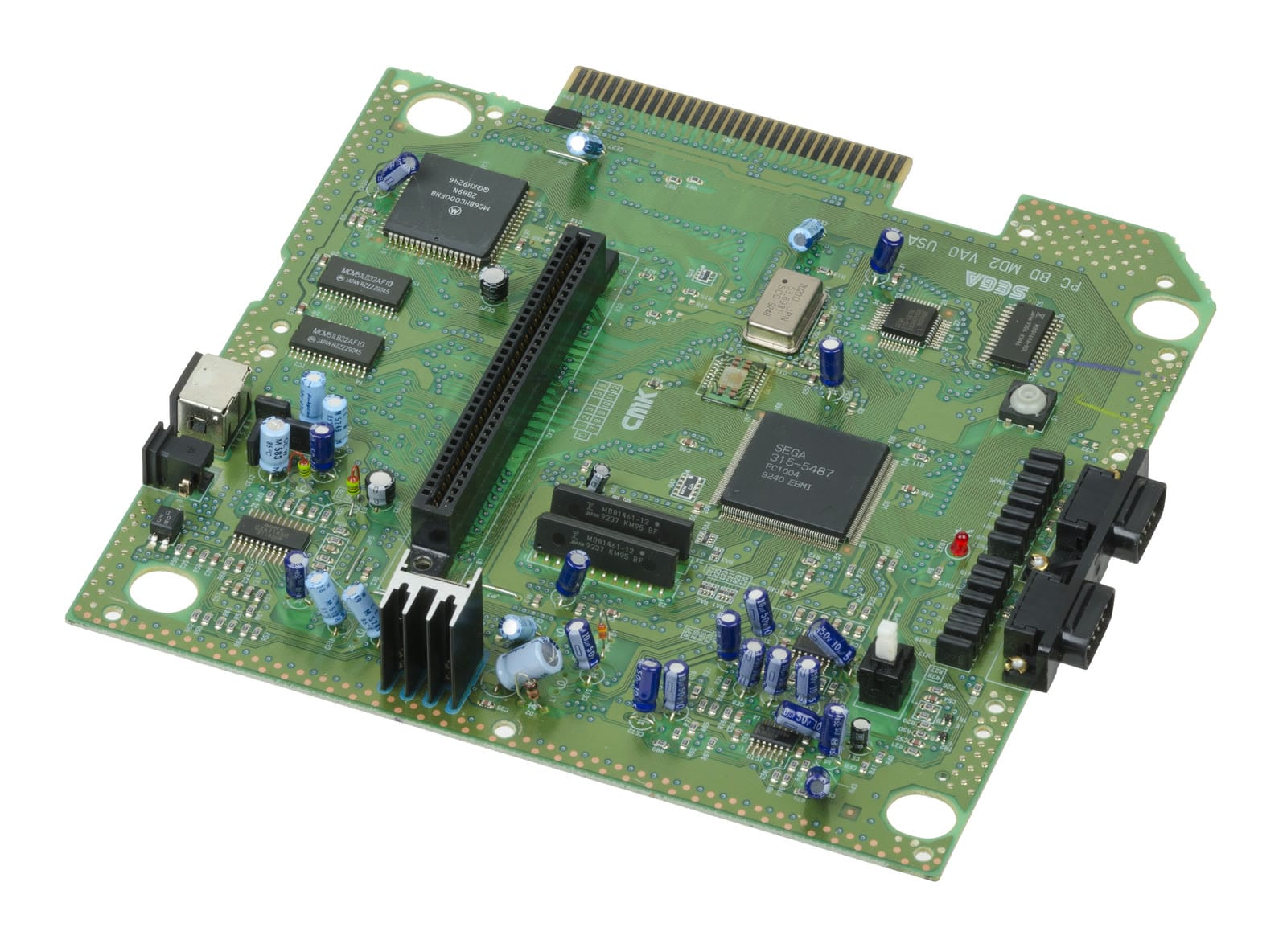
The brain. A Motorola 68000 at 7.67 MHz, the same chip family as Sega’s arcade boards, the first Macs and the Amiga. Sega’s big internal fight was 8-bit versus 16-bit, and it got the 68000 cheap by placing an enormous order. It works on 16 bits at a time on the outside and has 32-bit registers inside, so “16-bit” is fair but not the whole story.
The second brain. A Zilog Z80 with its own 8 KB of memory. Its day job is running the sound chips. With the Power Base Converter it becomes the heart of a Master System, which is how the old 8-bit games ran on a Genesis. That adapter doesn’t fit the Model 2.
The picture. Sega’s own video chip draws 320 by 224, two scrolling background layers, up to 80 sprites with 20 on a line, and 64 colors at once from 512 (61 in practice, since one slot per palette is transparent). Each background can scroll line by line, which is behind a lot of the fake-3D tricks. It can also copy graphics into its 64 KB of video memory by itself while the processor waits, about 7 KB between frames. The closest real thing to the “blast processing” in Sega’s ads is this. Blast processing itself was an ad slogan. There’s no part by that name, and the developer manual never uses the words.
The sound. A Yamaha YM2612 FM synthesizer with six voices, one of which can play recorded samples, plus a simpler chip with three tones and noise. That gritty FM sound is the Genesis voice, and the Model 1 put it out in stereo through a headphone jack on the front, with a volume slider. The Model 2 dropped the jack. Yuzo Koshiro, who wrote the Streets of Rage music, says he had piano lessons at seven from Joe Hisaishi, the Studio Ghibli composer.
The cartridge. 2 to 40 megabits. Those grooves on the sides of a cartridge are for a lock that holds it in while the power is on. The Model 2 dropped that too. Virtua Racing carried its own 3D chip, and Sonic & Knuckles had a slot on top for another cartridge.
The controller. The curved three-button pad, A, B, C and Start. The six-button pad came in 1993 for the fighting games.
It never really died
Lifetime sales are disputed, and the “40 million” you’ll see has no source behind it. The best figure is about 30 million worldwide, plus Tectoy’s 3 million in Brazil, counted separately. Sega itself says more than 15 million in North America alone.
Sega sold a palm-sized Genesis Mini in September 2019 with 42 games, and a Mini 2 in October 2022 in the Model 2 shape, with 60 games including Sega CD titles. Genesis games have been on Nintendo Switch Online since 2021. And people still make new Genesis games on real cartridges with a free kit called SGDK, which was still getting updates in October 2026.
Nerd Alert
Your Turn
What are YOUR thoughts
What have your experiences been? Let us know.