Super Nintendo (1991)
Nintendo's 16-bit console came late and caught up on games: Mode 7, the chips inside the cartridges, the controller every pad still copies, and the Sony PlayStation that was almost a Super Nintendo add-on.
The one your friend didn’t have
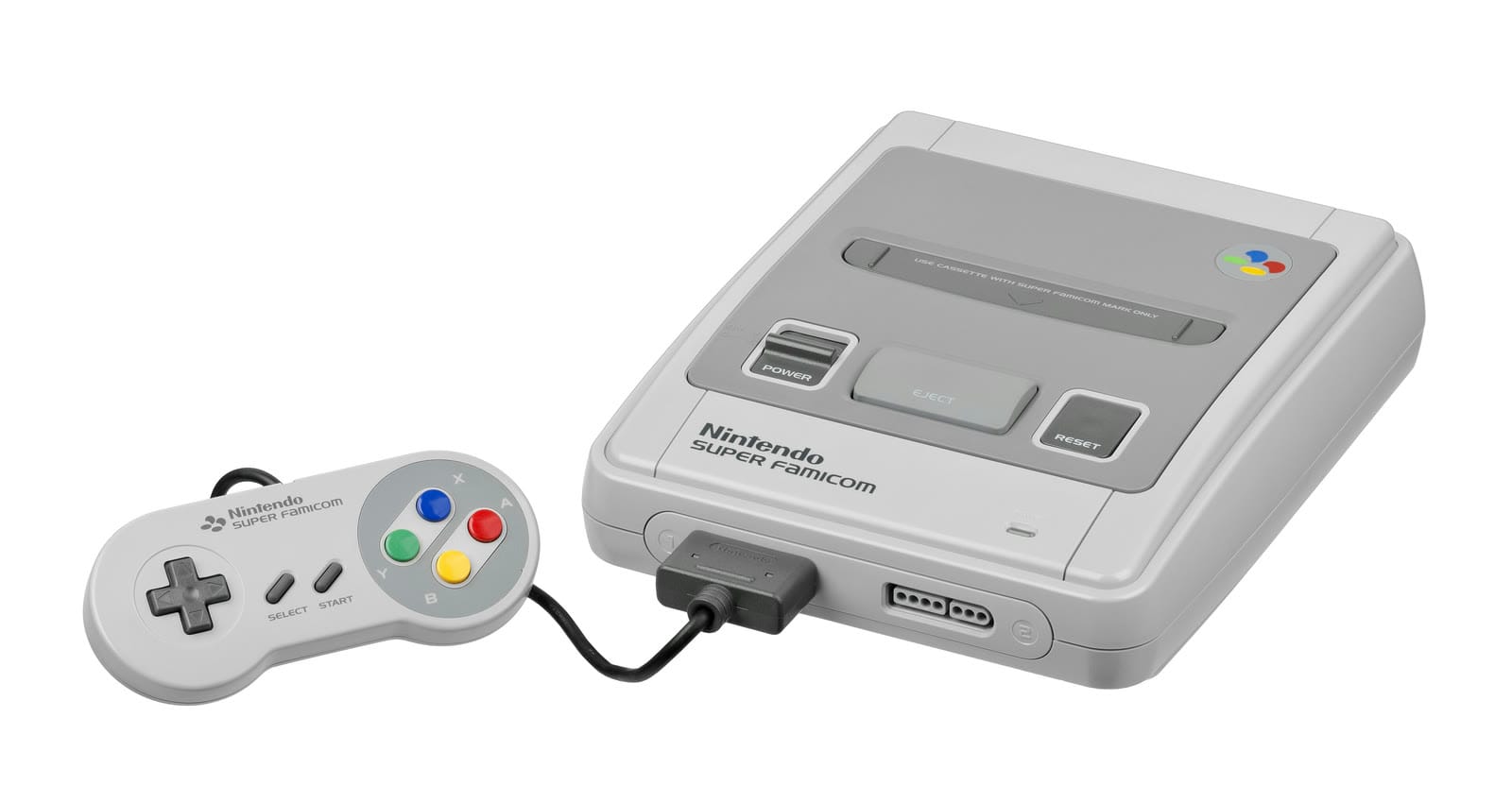
The Super Nintendo came out in Japan as the Super Famicom on November 21, 1990, with exactly two games that day, Super Mario World and F-Zero. The books say it cost ¥25,000, that the first 300,000 sold out within hours, and that Nintendo delivered at night so the trucks wouldn’t get robbed. No Nintendo document says any of that, so take it as reported. What Famitsu says is that the box in Japan held the console and two controllers and nothing else. You plugged it into your old Famicom’s power adapter and TV switch.
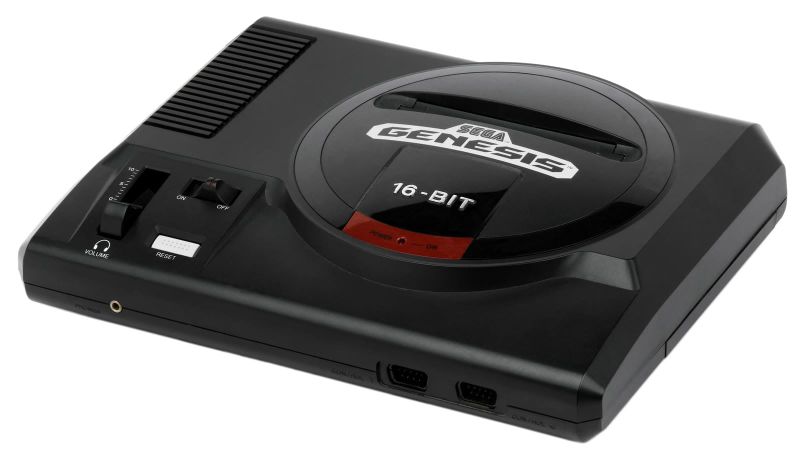
You’ll read that Nintendo built it to answer the Genesis. The timeline says otherwise. Nintendo’s president reportedly talked about a 16-bit console in September 1987, before the Mega Drive existed, and showed it to the Japanese press in November 1988, a month after the Mega Drive came out there. It was planned for July 1989 and slipped, Famitsu says because of a chip shortage. So it arrived late, after both the PC Engine and the Genesis.
Late August 1991
In America there was no launch day. Stores sold it the moment the boxes arrived, from about August 21 to 23, 1991, at $199.95 with Super Mario World in the box, and the nationwide launch was September 9. Nintendo of America itself counts August 23. One California store got 32 units on a Friday and had five left by Monday, while the manager across town counted the minutes to his delivery. Canada got it early, in December 1991, reportedly because Canadians kept driving across the border to buy it.
The start was slow. 1991 was a recession, the Genesis was $50 cheaper with a bigger library, and Sonic had come out that June. The SNES caught up on games. Street Fighter II sold 6.3 million copies on it, still Capcom’s biggest SNES game by Capcom’s own count. Then came A Link to the Past, Super Mario Kart, Super Metroid, Final Fantasy VI (sold here as Final Fantasy III), Chrono Trigger, and Donkey Kong Country in late 1994, which Rare built by rendering the graphics on Silicon Graphics workstations and flattening them into sprites. That last part is the developers’ own account. And no, DKC did not use a special chip. It’s ordinary SNES hardware and very clever art.
Why the American one looks different
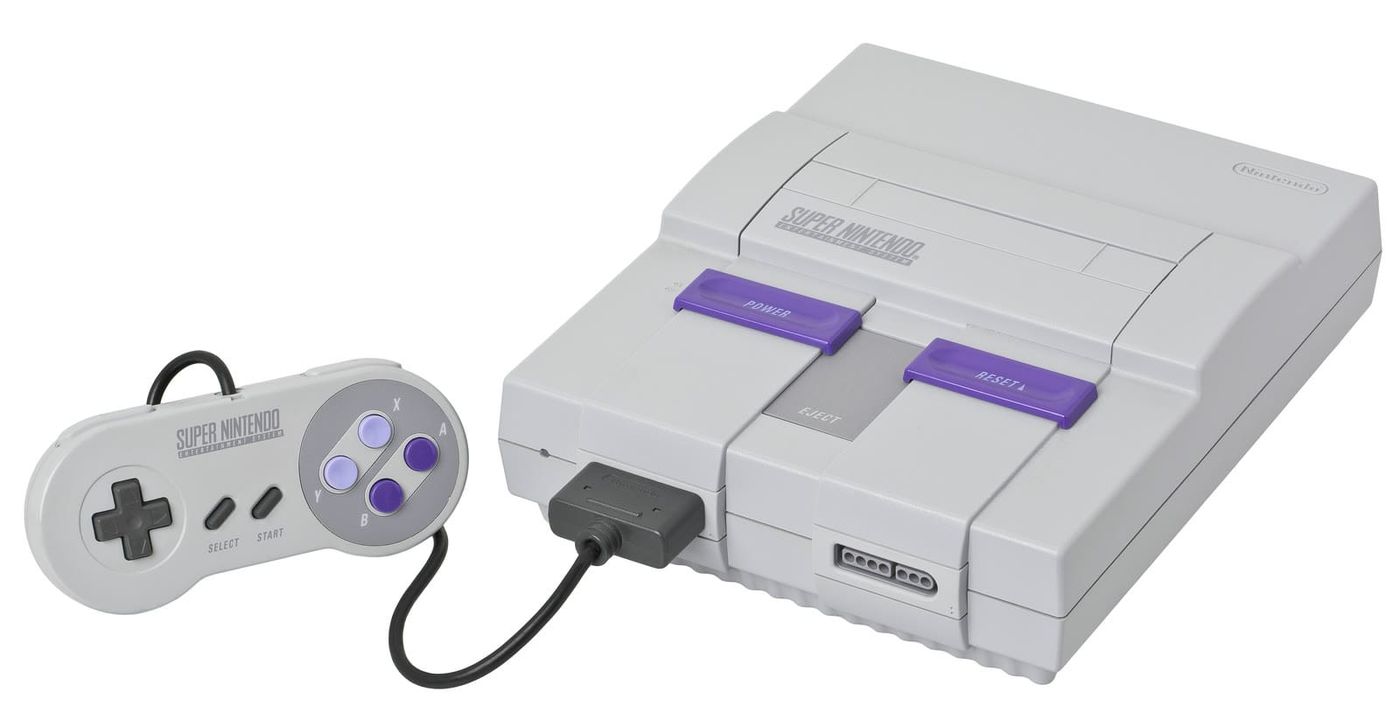
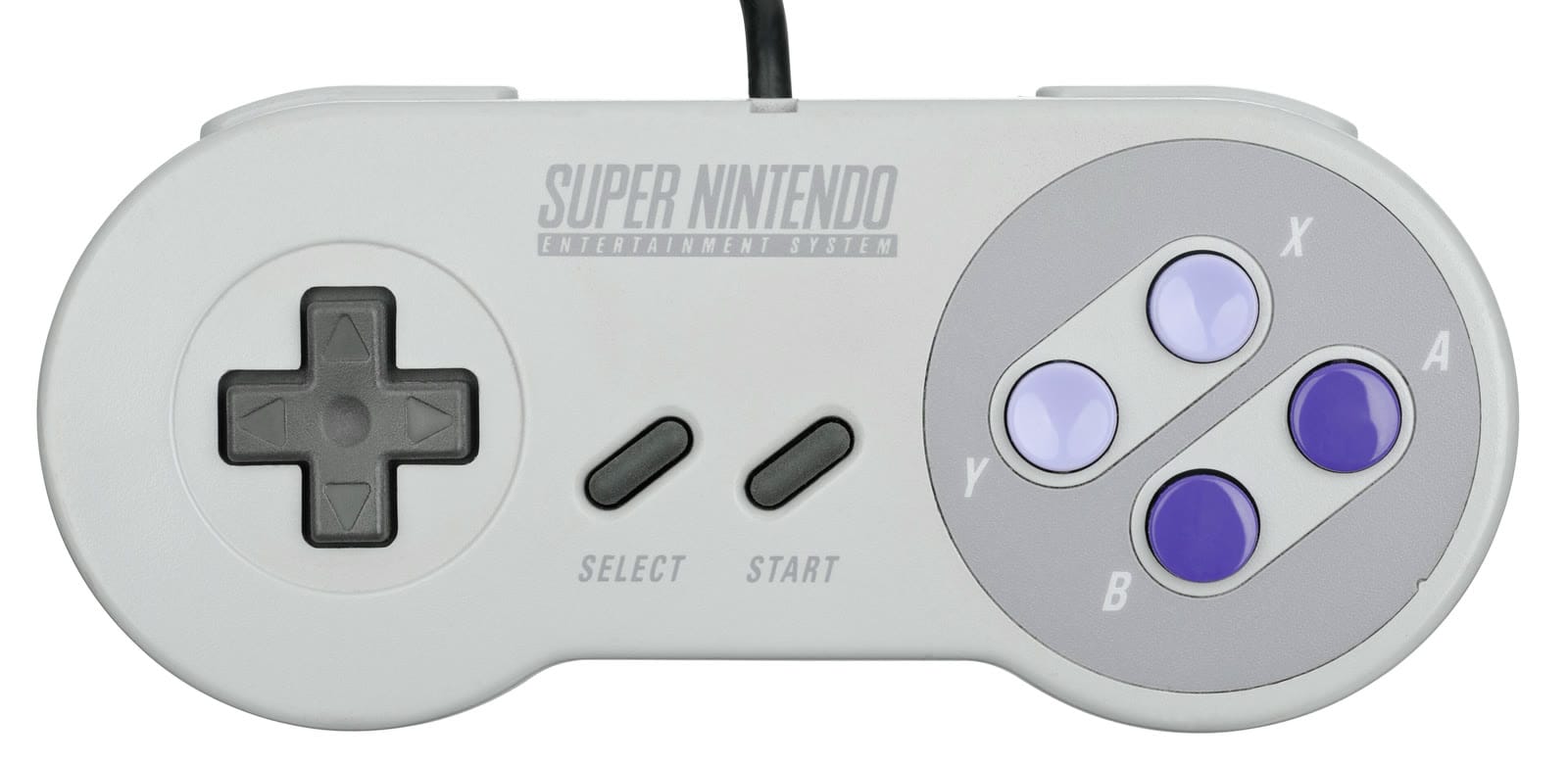
Japan and Europe got the rounded Super Famicom. America got the boxy grey-and-purple box, and that was one man’s call. Lance Barr, Nintendo of America’s designer, said in an interview with Nintendojo that the Japanese shape was “too soft” with “no edge”, bad for stacking, with a “bag of bread” look. So he redrew it. The controller got the same treatment: in the US, X and Y are lavender and concave, A and B are purple and convex, so you can tell them apart without looking. Japan and Europe used the red, yellow, blue and green that’s in the logo.
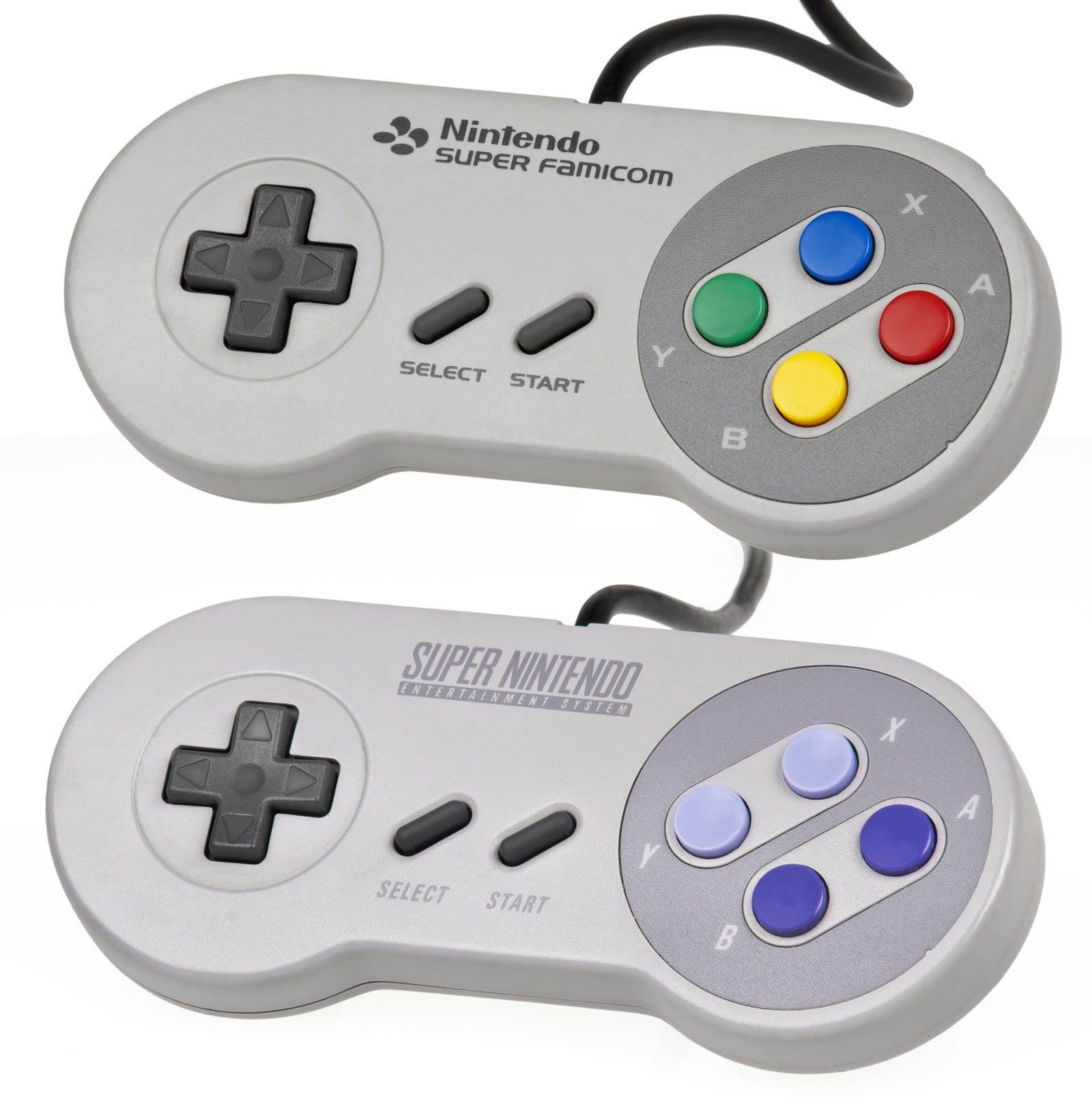
The layout is four face buttons in a diamond plus L and R on the shoulders. The X, Y, L and R were new over the Famicom, and Famitsu calls it the basic shape of controllers ever since. The Intellivision and the Atari 5200 already had buttons on the side, but this was the pad that made shoulder buttons standard.
The PlayStation that almost was
The sound in the SNES came from Sony. Nintendo’s own developer manual names the “Sony SPC700” as the sound CPU, and a Sony Computer Entertainment co-founder has said on record that Ken Kutaragi built that chip for Nintendo as a parts supplier. The same Kutaragi who later built the PlayStation. So the Chrono Trigger soundtrack ran on a chip by the father of the PlayStation.
The two companies went further. At CES in Chicago in June 1991, Sony announced a “Play Station”, a machine with a cartridge slot for SNES games and a CD drive. The next day Nintendo announced a CD deal with Philips instead. The New York Times ran it under the headline “Nintendo-Philips Deal Is a Slap at Sony”. Sony’s man on the record called it “a very serious matter”. The PlayStation that came out of that split launched in Japan in 1994.
One of those prototypes turned up in 2015 in a box lot a man had bought for $75 at a bankruptcy auction. It had been in the office of the Sony executive quoted above. It ran SNES cartridges when it was powered up in Hong Kong that November, though the CD drive didn’t. It sold at Heritage Auctions on March 6, 2020 for $360,000, and the auction house said it was believed to be the only surviving example of 200. It never played PlayStation discs, by the way. It was built for a Sony CD-ROM format called the Super Disc.
How it was made
Skip this part if chips aren’t your thing. If they are, Nintendo’s own SNES developer manual is the source for most of it.
The brain. A 16-bit 65C816. Its top speed is 3.58 MHz, but it drops to 2.68 MHz when reading normal cartridge memory or its own RAM, and to 1.79 MHz for some slow parts. Fast cartridges cost more, so many early games ran at the slower speed, which is one reason Gradius III chugs. Sega’s ads put 7.6 MHz against 3.58 and called it a day. Both numbers are true and the comparison is misleading: the Genesis chip is a different design doing different work per tick.
The picture. Two picture chips working as a pair. One draws the backgrounds and does the rotating and zooming, the other does the see-through effects, windows, mosaics and fades. A palette of 32,768 colors with 256 on screen at once, up to 128 sprites with 32 on a line, up to four background layers in eight modes. 128 KB of work RAM, 64 KB of video RAM.
Mode 7. It’s a hardware mode in Nintendo’s manual, “a screen which can rotate, enlarge or reduce”, one big background layer the console can spin and zoom. Change the settings on every scanline and it tilts into a floor. That’s the F-Zero track, the Pilotwings runway, the Mario Kart course. Japanese marketing just called it zoom, shrink, rotate. It was never a marketing word like “blast processing”. It’s a register setting.
The sound. A separate sound computer, the Sony SPC700, with its own 64 KB of memory and a DSP that plays eight sampled voices at once with echo.
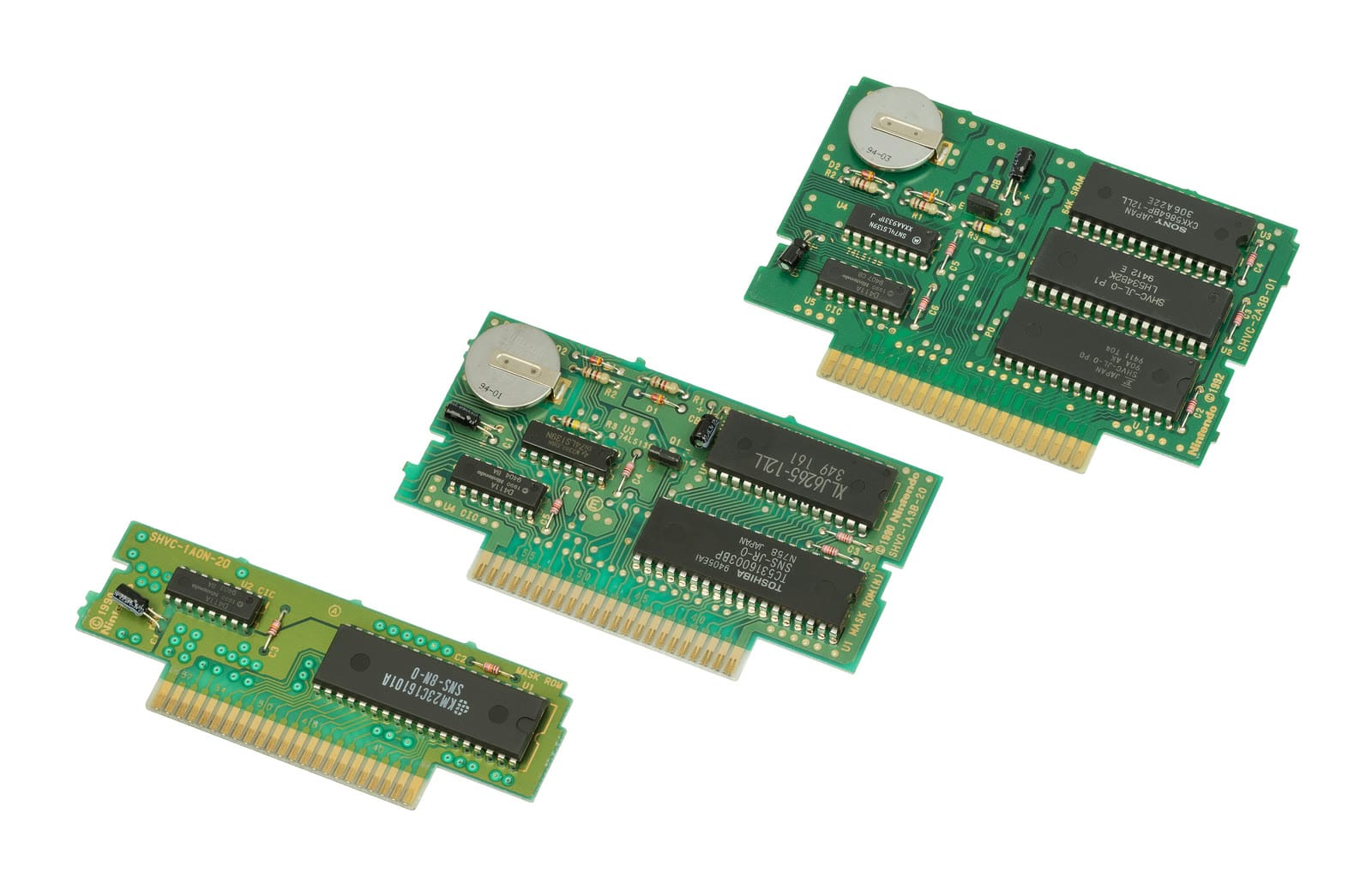
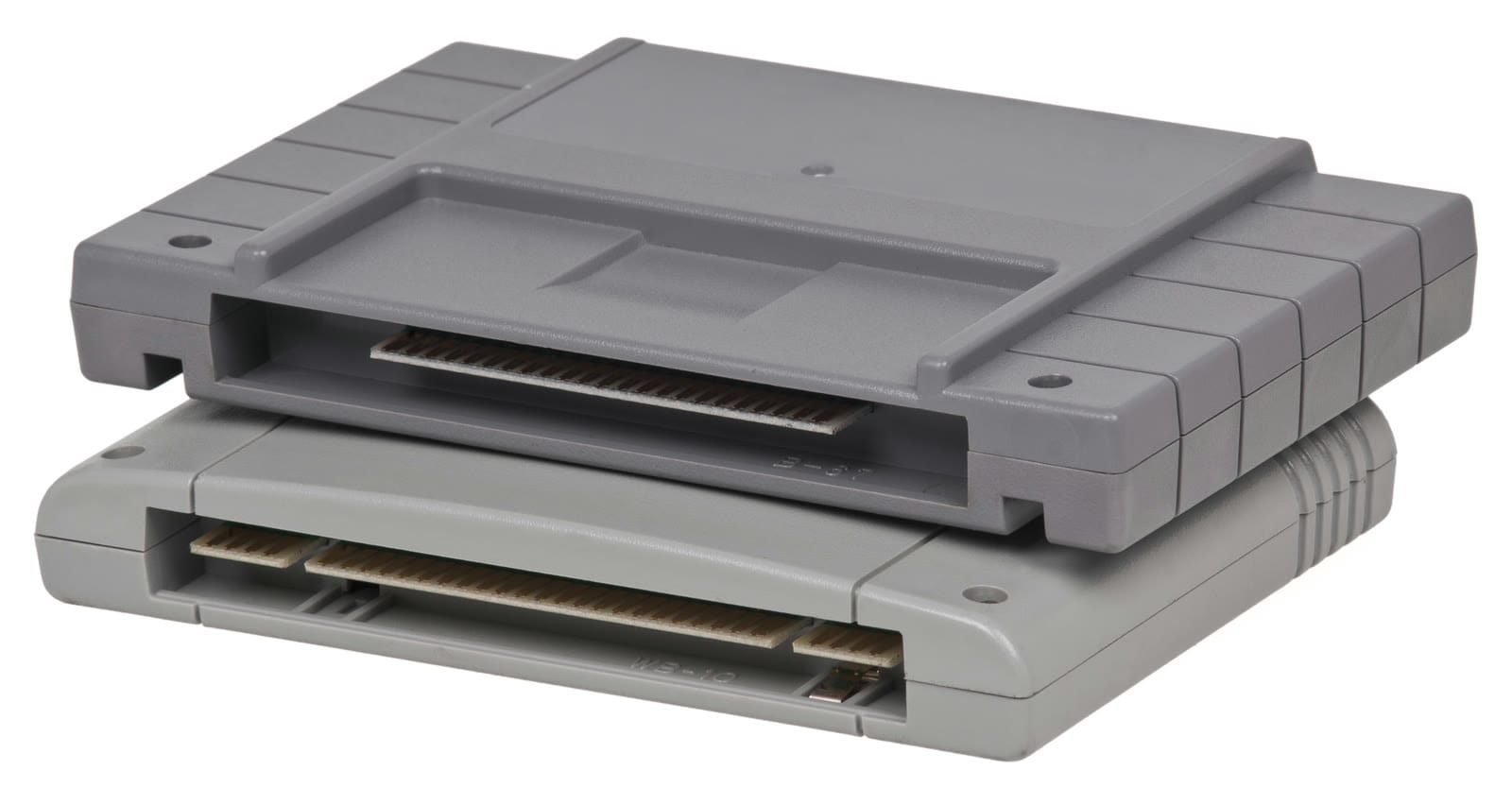
Chips in the cartridge. Some games brought their own processor. The Super FX, designed with Argonaut, ran at 10.74 MHz, “six times as fast as the Super NES CPU” in Nintendo’s words, and drew the polygons in Star Fox. The SA-1 was a second 65C816 at 10.74 MHz, used in Super Mario RPG and Kirby Super Star. The DSP-1 was a math chip for 3D, used in Pilotwings and Super Mario Kart. The game paid for the upgrade, so the console didn’t have to.
The plastic. Light grey, and some of them yellow. Nintendo of America told a customer the plastic contains flame-retardant chemicals and discolors with age, heat and light. That’s as far as the record goes. The flame retardant theory explains why two consoles, or two halves of one console, can age differently, but no published lab test on SNES plastic has turned up. It isn’t just sunlight: cases yellow evenly inside and out.
It never really died
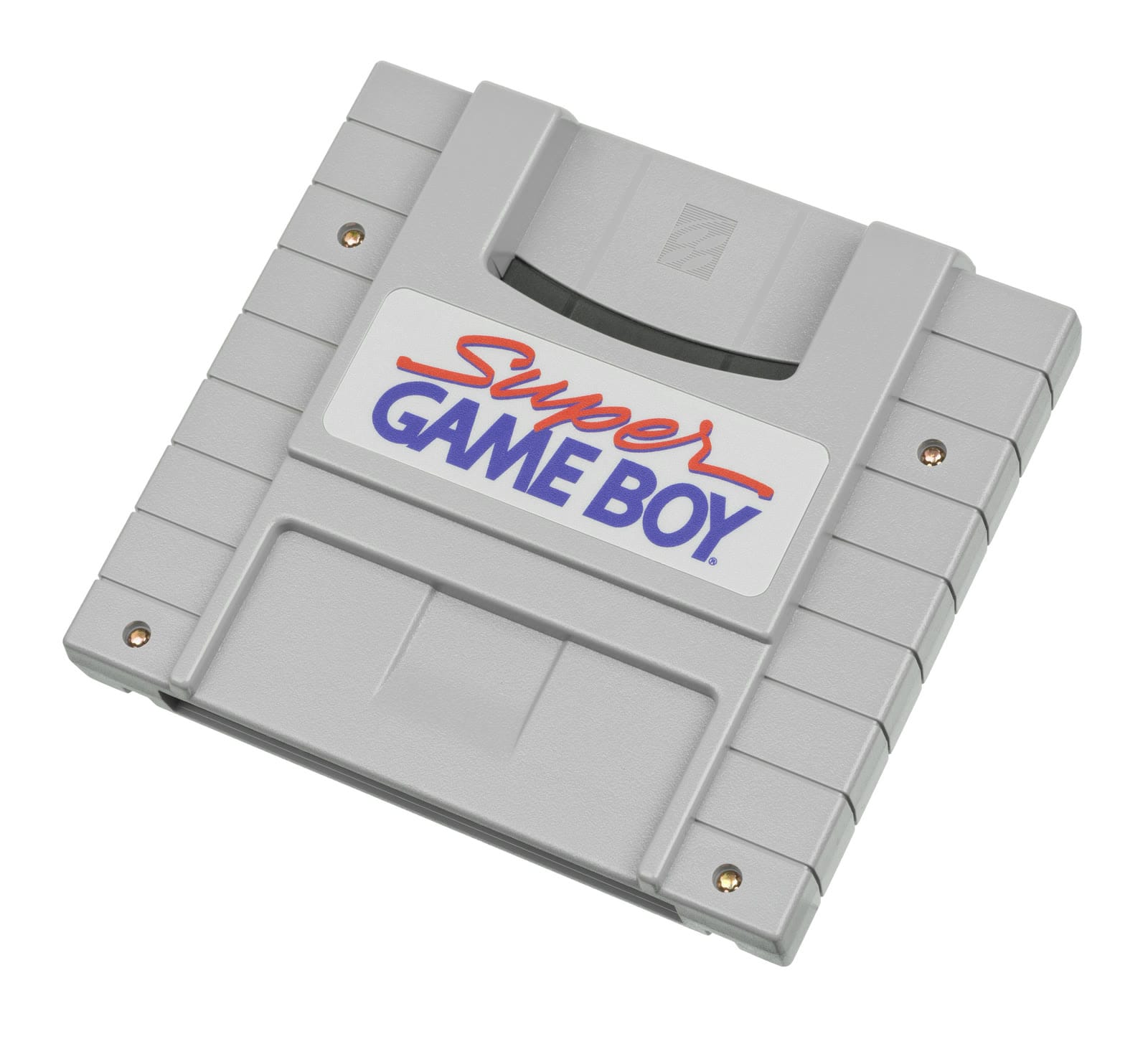
The Super Game Boy put your Game Boy games on the family TV in color in 1994. The 1997 New-Style Super NES, the smaller one, was Barr’s too. It reportedly dropped S-Video and RGB and sold for about $99. Nintendo stopped making the Super Famicom in Japan in September 2003, years after it left American shelves, and took repairs until October 2007. The last game on Nintendo’s own Super Famicom list is dated December 1, 2000.
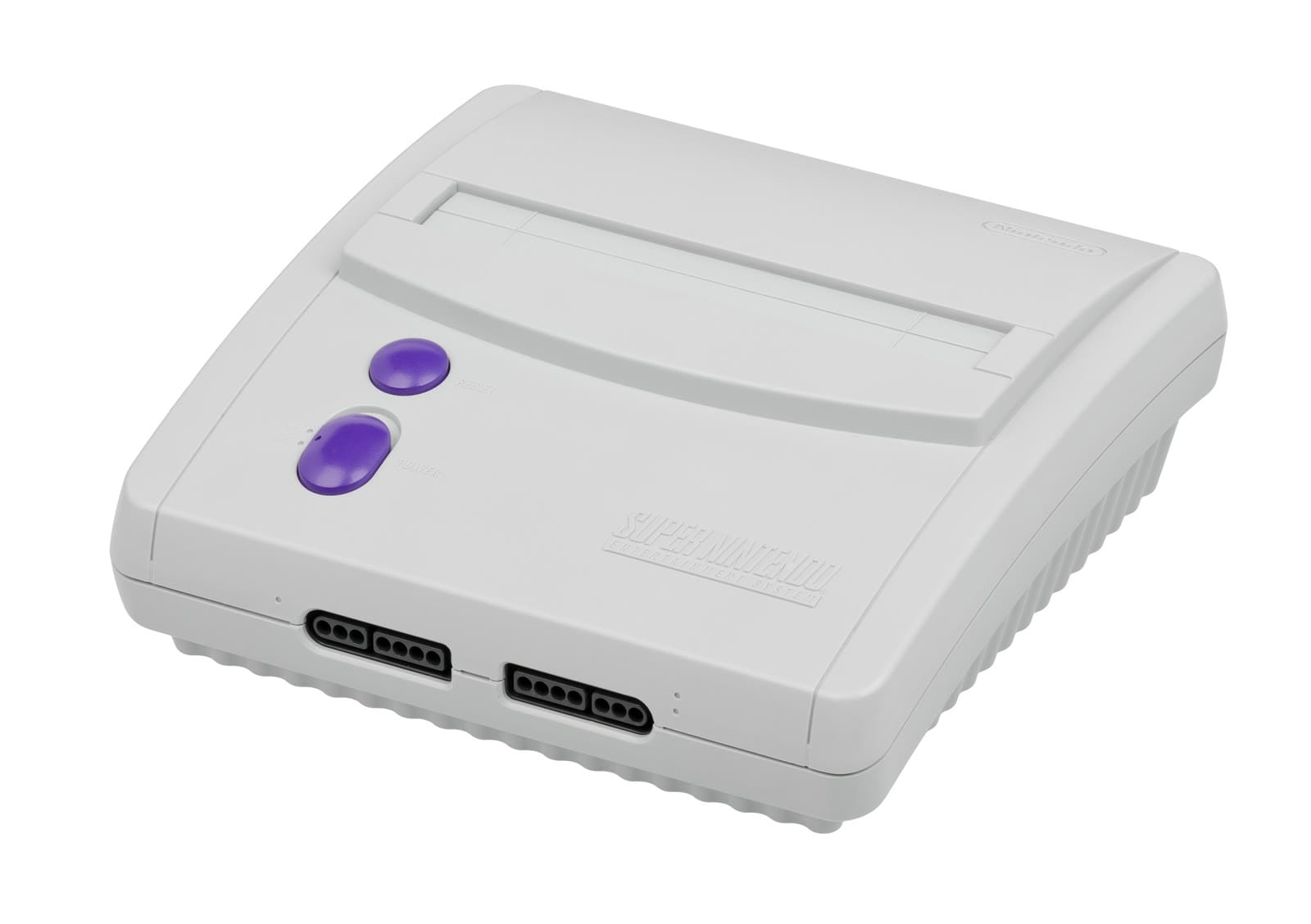
Nintendo’s final count: 49.10 million consoles, 17.17 million in Japan, 23.35 million in the Americas, 8.58 million everywhere else, and 379.06 million games. The Super NES Classic Edition came out on September 29, 2017 at $79.99 with 21 games, including Star Fox 2, a game finished in the 1990s and never released until that day. It sold 5.28 million by the following March. SNES games have reportedly been on Nintendo Switch Online since 2019.
Nerd Alert
Your Turn
What are YOUR thoughts
What have your experiences been? Let us know.