News · News · Handheld Gaming · Retro Gaming · Retro handhelds
SuperStation Pocket: The FPGA Game Boy That Wants to Play N64 Too
Taki Udon's first FPGA handheld plays Game Boy and GBA carts, claims PS1 and N64 cores and will cost somewhere between $100 and $199. Here's what's on the record so far.
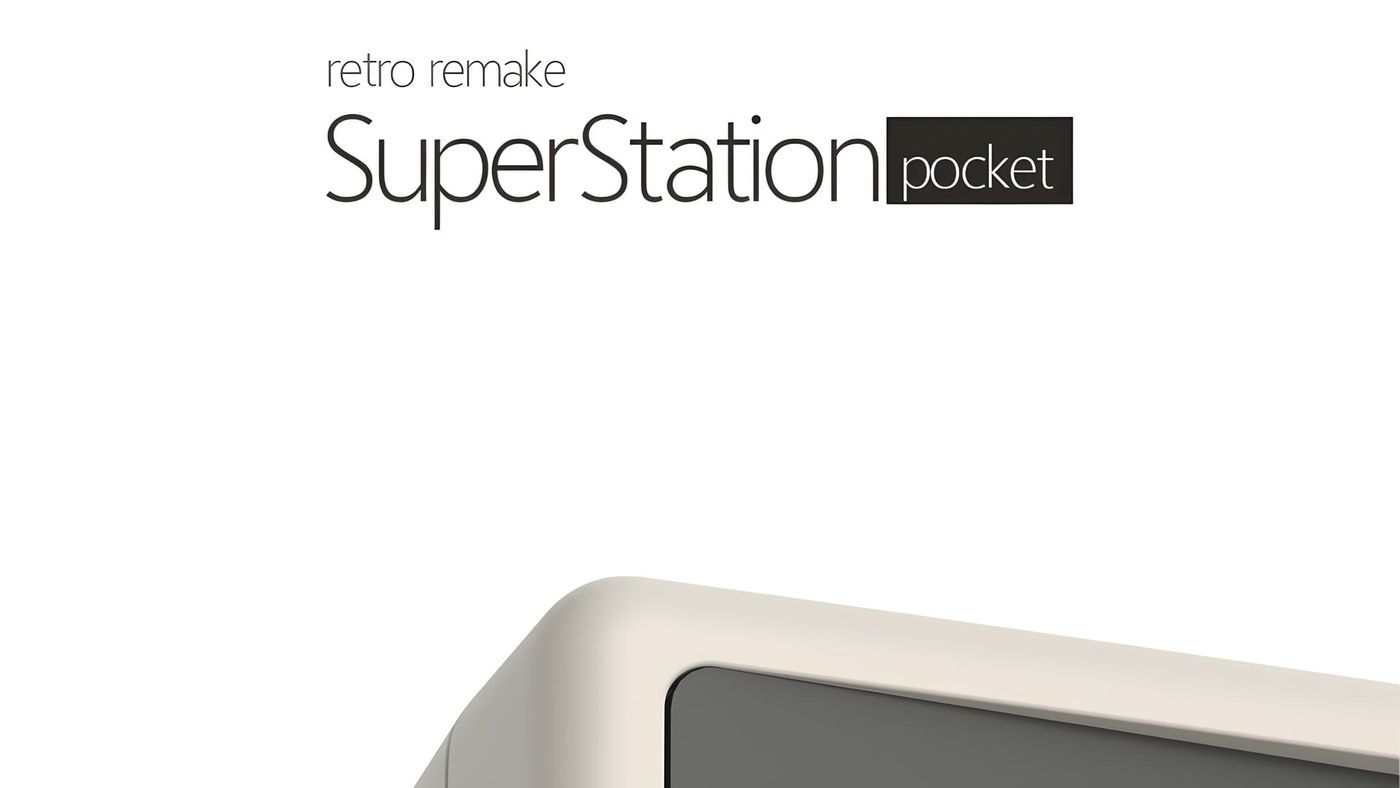
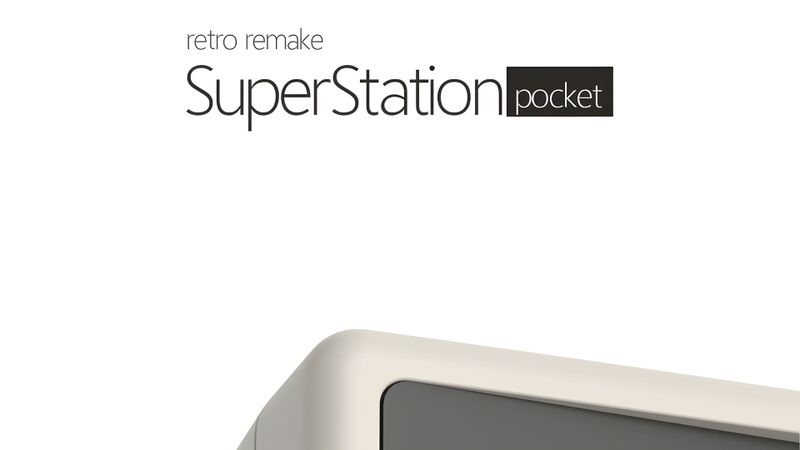
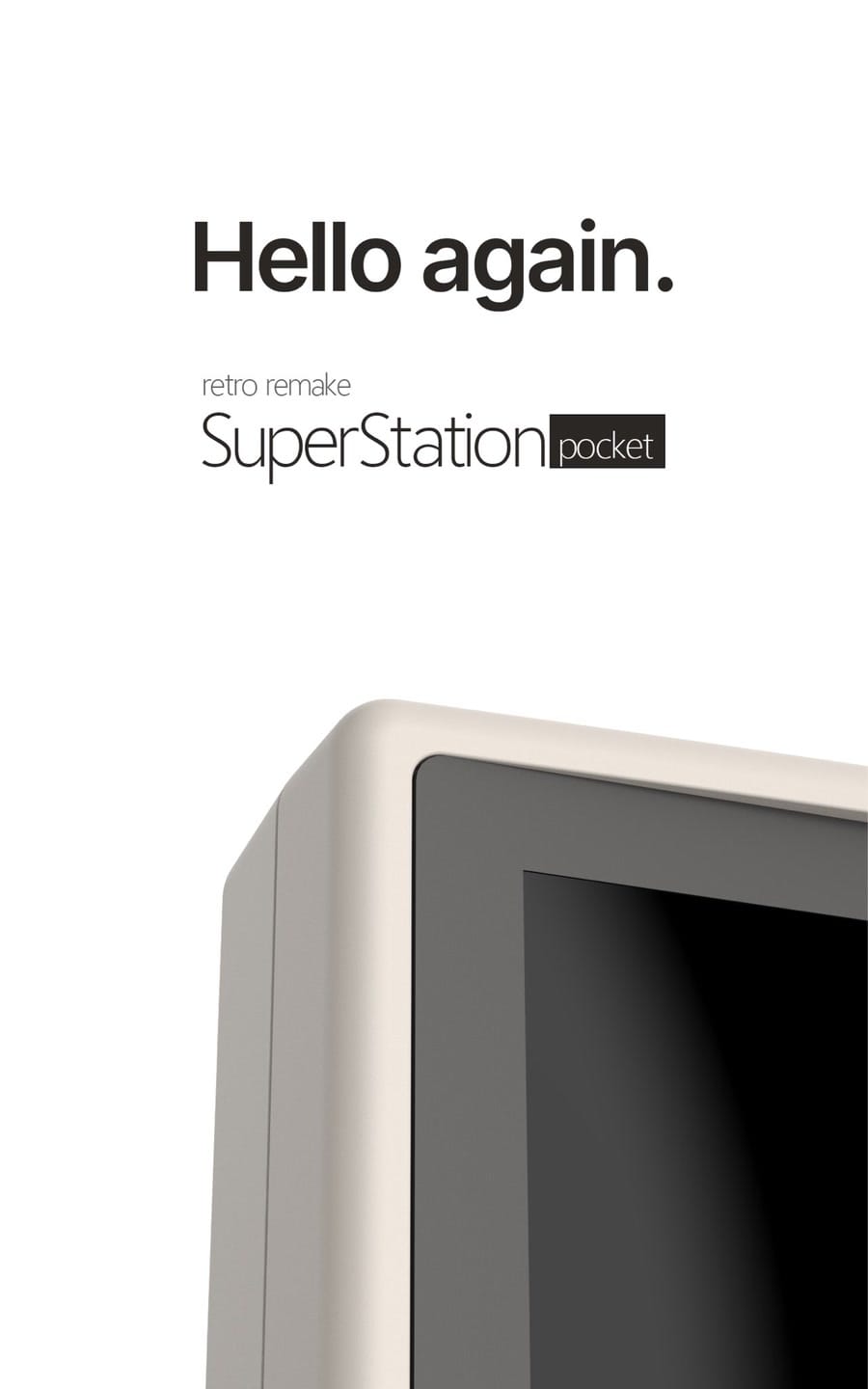
“Hello again.” That’s all the picture says, above a wordmark, “retro remake SuperStation pocket”, and the top corner of an upright, grey handheld that looks a lot like a Game Boy Pocket. Taki Udon posted it on October 28 with a short list underneath: Game Boy, Game Boy Color and Game Boy Advance cartridges, a “huge FPGA” for cores “up to PS1 and N64”, 4K out through a dock, open source, and a price written as “$1_ _”. Two blanks. That’s an Analogue Pocket rival that claims to go further than the Analogue Pocket can, for less. This is one I’m going to buy whenever I get the chance. So here’s everything that’s actually on the record, what’s still a claim, and what Retro Remake’s history says about waiting for one.
What is the SuperStation Pocket?
It’s the first handheld from Retro Remake, the company behind the SuperStation One, a PlayStation-shaped FPGA console, and the MiSTer Pi. FPGA means the chip inside is rewired to behave like the original hardware, so there’s no emulator layer guessing at timing. Taki’s announcement says the team has “been working on this the entire year” and that it’s “almost done.”
The name isn’t even in the post. It’s in the image, the wordmark under “Hello again.”, and the only part of the device you can see is one corner of a light grey, upright body with a dark screen bezel. Asked on Bluesky to show the whole design instead of a teaser, Taki’s answer was one word: “No.”
Most of what’s known came from him answering people under the post. It has four face buttons, which matters for anything past the Game Boy. It has a link cable port. It plays cartridges and game files (“Both”). It takes screenshots (“Yes”). And when someone asked about adapters for other handheld cartridges, the answer was “We can make cart adapters.”
Can it really play N64 and PS1 games?
That’s the claim, and it’s the one to read carefully, because it’s what would separate this from every Game Boy-shaped FPGA handheld you can buy. Taki’s words are “Huge FPGA to power cores up to PS1 and N64.” He hasn’t named the chip, its size or its memory.
The chip decides it. The MiSTer project, the open-source FPGA platform Retro Remake builds on, already has N64 and PlayStation cores in its official release. They run on a board called the DE10-Nano, whose Cyclone V FPGA has about 110,000 logic elements, per the MiSTer wiki. Think of logic elements as the building blocks the chip gets rewired with: more of them, bigger consoles. The SuperStation One uses that same Cyclone V family, according to Retro Remake’s own documentation.
The Analogue Pocket’s main FPGA is a smaller Cyclone V, Analogue’s developer template shows, at less than half that size. That’s likely why Analogue doesn’t advertise PS1 or N64. Fans have published experimental PlayStation and N64 cores for the Pocket this very month, and their own authors call them experimental: some games run, some glitch or don’t boot. So if the SuperStation Pocket really carries a DE10-class chip or bigger, it could run the cores MiSTer already has. If it carries something smaller, “up to PS1 and N64” gets a lot more complicated. Taki did show an N64 game, Diddy Kong Racing, booting on his separate FPGBA SP prototype in September, and called it a demonstration of the hardware, with no plan to focus on N64. Both handhelds share “some of the same hardware,” he says.
There’s one more limit he’s already stated: he doesn’t plan a Game Boy to N64 cartridge adapter for it. So N64 and PS1 would be game files, and the cartridge slot is for the Game Boy family.
How much will the SuperStation Pocket cost?
“From $1_ _ at launch” is the only number, so somewhere between $100 and $199. When someone under the post predicted it would land at $199.99, Taki replied, “No, don’t expect that.” That’s a hint toward the lower end, and it’s not a price.
Some coverage reads more into it. Retro Handhelds wrote “under $200”, which is simply what the blanks mean; Taki hasn’t said a figure. Time Extension called the Pocket “the end result” of Taki’s recent handheld posts, the FPGBA SP among them, and said his under-$100 hope had “proved unfeasible.” He says they’re different devices, and the $100 target was for the SP. In September he also wrote that Retro Remake has “a few FPGA handhelds in development at different price points,” with a goal of “around $100 for pocket-friendly N64 and below.” Which device that sentence was about, he didn’t say.
The dock that brings 4K HDMI out to a TV is extra, described only as “affordable,” with no price.
Is this the FPGA GBA SP Taki showed earlier?
No. Asked directly if this was the clamshell he’d been posting, he said, “This isn’t the SP.” Under the Bluesky post he added that the two have “Some of the same hardware, but different number of buttons,” and that the dock is the “same ecosystem” as the GBA-shaped model. So Retro Remake has at least three handhelds going: this Game Boy Pocket-shaped one, the FPGA GBA SP and the regular GBA shape covered here earlier this month. The Pocket is the first one he’s named and priced.
How does it compare with the Analogue Pocket, the Chromatic and the Game Bub?
On paper it’s aimed right at the Analogue Pocket, and it undercuts it. Here’s where everything stands today, with the SuperStation Pocket column filled in only with what Retro Remake has said:
| SuperStation Pocket | Analogue Pocket | ModRetro Chromatic | Game Bub | |
|---|---|---|---|---|
| Price | $1_ _ (TBA) | $239.99 | $149.99 (transparent) | $269 |
| Game Boy and Game Boy Color carts | Yes | Yes | Yes | Yes |
| Game Boy Advance carts | Yes | Yes | No | Yes |
| PS1 and N64 | Claimed | No (experimental fan cores only) | No | No |
| TV out | Dock, up to 4K | Dock, sold separately | No (USB-C video to a computer, as a webcam) | Dock, $65, sold separately |
| Open source | Claimed | No (many third-party cores are) | FPGA design and firmware | Hardware, firmware and gateware |
| Can you buy one? | No, no date | Yes | Yes | Yes |
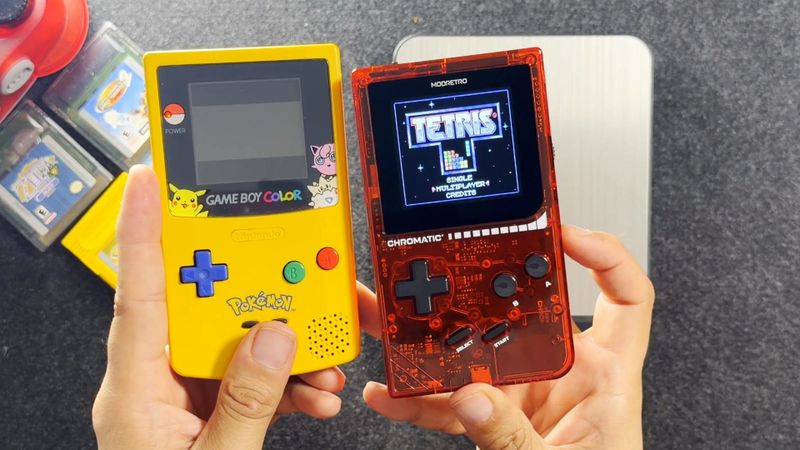
The Chromatic is the one I own, and it only plays Game Boy and Game Boy Color, so the GBA slot alone would be a step up for me. The Game Bub is the one most people haven’t heard of: a horizontal, fully open-source GBA-capable handheld that’s in stock now at $269. FunnyPlaying’s FPGB Mini ($69, Game Boy and Game Boy Color only) would be on this list too, but it’s sold out with no date for the next batch.
Is the “unbeatable latency” claim real?
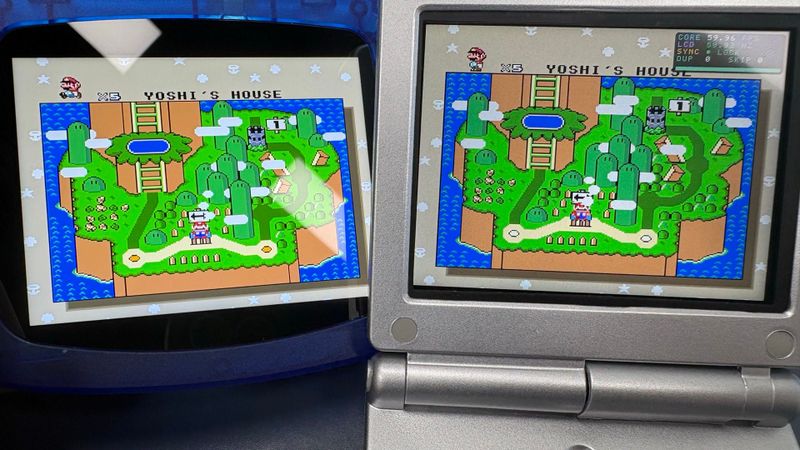
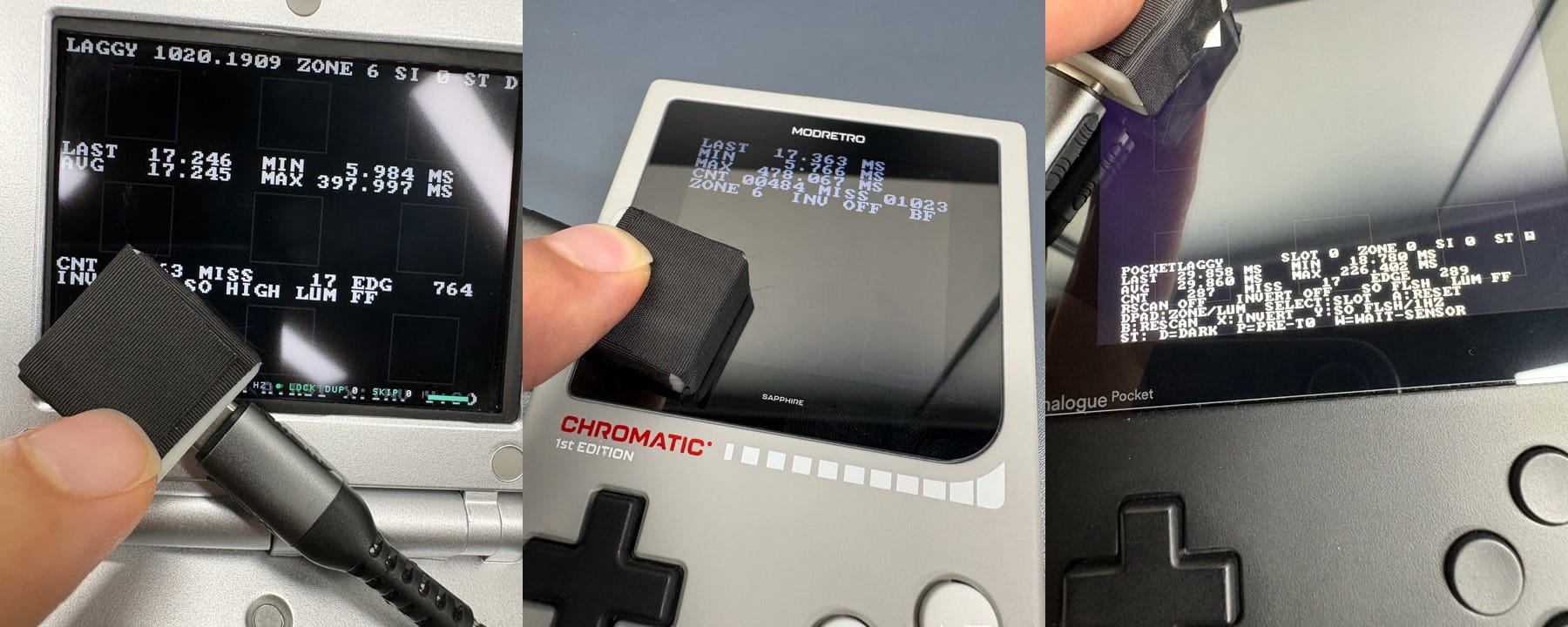
Partly measured, by Taki himself. On October 20 he posted a lag test of three handhelds, measuring when the top and the bottom of each screen updated. One frame at 60 fps is 16.66 ms, so a bottom reading close to that means almost nothing added. His FPGBA SP prototype read 17.25 ms at the bottom, the Chromatic 17.36 ms, and the Analogue Pocket 29.85 ms, about one extra frame. Asked whether that’s because the Pocket buffers each frame and rotates it for its panel, he said “Yes.”
Two things to keep in mind. That test was of the FPGBA SP; the SuperStation Pocket hasn’t been measured. And it came from the maker of a rival, using a tester called MiSTerLaggy, with no published write-up; I couldn’t find an independent measurement of the Analogue Pocket’s display lag to check it against. It’s a believable number with a plausible reason behind it, but for now “unbeatable” is Taki’s word.
What does “open source” mean for Retro Remake?
So far, it’s meant different things on different products, so it’s worth waiting to see what it covers here. Retro Remake publishes forks of MiSTer cores and some code on its GitHub. Its Console Mode menu for the SuperStation One is only partly open: the repository says the rest of the app “is separately licensed and is not included here.” The MiSTer Pi repository has accessory boards and a case, without full design files for the main board. Compare the Game Bub, which publishes its hardware, firmware and gateware. “Open source” on the Pocket could mean any point between those two. Taki hasn’t said which.
Will Retro Remake actually ship it?
Probably, but not on the first date it gives, if its record holds. The SuperStation One is the fair comparison. It’s a good machine: Time Extension gave it a 9 out of 10, and CGMagazine an 8. It was aimed at the third quarter of 2025 and reached buyers “a couple days before Christmas,” in Taki’s words, and he’s called 2025 the most stressful year he’s had. Its disc drive dock shipped mid-2026, and its Console Mode software slipped a month to July. The price moved too: $149 for the first “founders and friends” pre-orders in January 2025, up to $210 for standard units by this May, and $249.99 for this month’s limited Transparent Collection.
There’s an older promise too. In 2024 Taki teased an AMOLED MiSTer handheld codenamed Super R2, for “~$150 or less.” It never came out, and he hasn’t said whether this is what it became. And the SUPER5 HDMI mod for the Switch Lite took 18 months and more than $200,000 by his count, after early buyers were offered partial refunds to drop it from their bundles.
None of that is a reason to skip it. It’s a reason to treat “almost done” and “$1_ _” as targets, and to read the terms on any pre-order or deposit.
When does the SuperStation Pocket come out?
There’s no date, no pre-order and no store page. Retro Remake’s site doesn’t list it, and the only official material is the teaser post. It’s on this site’s upcoming handhelds tracker, which gets updated as details land.
The things that’ll tell us what it really is: the chip and its size, which decides whether PS1 and N64 are real; the screen; the final price; and what “open source” includes. Taki also has SNES and Mega Drive FPGA consoles in the works, which he’s called “4K and well under $200,” so Retro Remake has a lot going on at once.
Me, I’m in. A Game Boy Pocket shape that plays my Game Boy cartridges, adds the GBA, promises the PS1 and the N64 on top, and costs less than an Analogue Pocket: that’s why this one’s on my list. I said about the FPGBA SP that it’ll come down to build quality and the software, and that goes double for one that’s promising this much.
On the shelf
Retro handheldsSee the whole story →Nerd Alert
Your Turn
What are YOUR thoughts
What have your experiences been? Let us know.