News · News · PC Hardware
ZOTAC Built Three Wildcat Lake Mini PCs That Don’t Need a Fan
Three silent ZBOX nano barebones on chips that were supposed to need a fan: what is inside, what changed from last year, and what ZOTAC has not said.
https://averagetechnerds.com/zotac-zbox-nano-wildcat-lake-fanless-mini-pc/
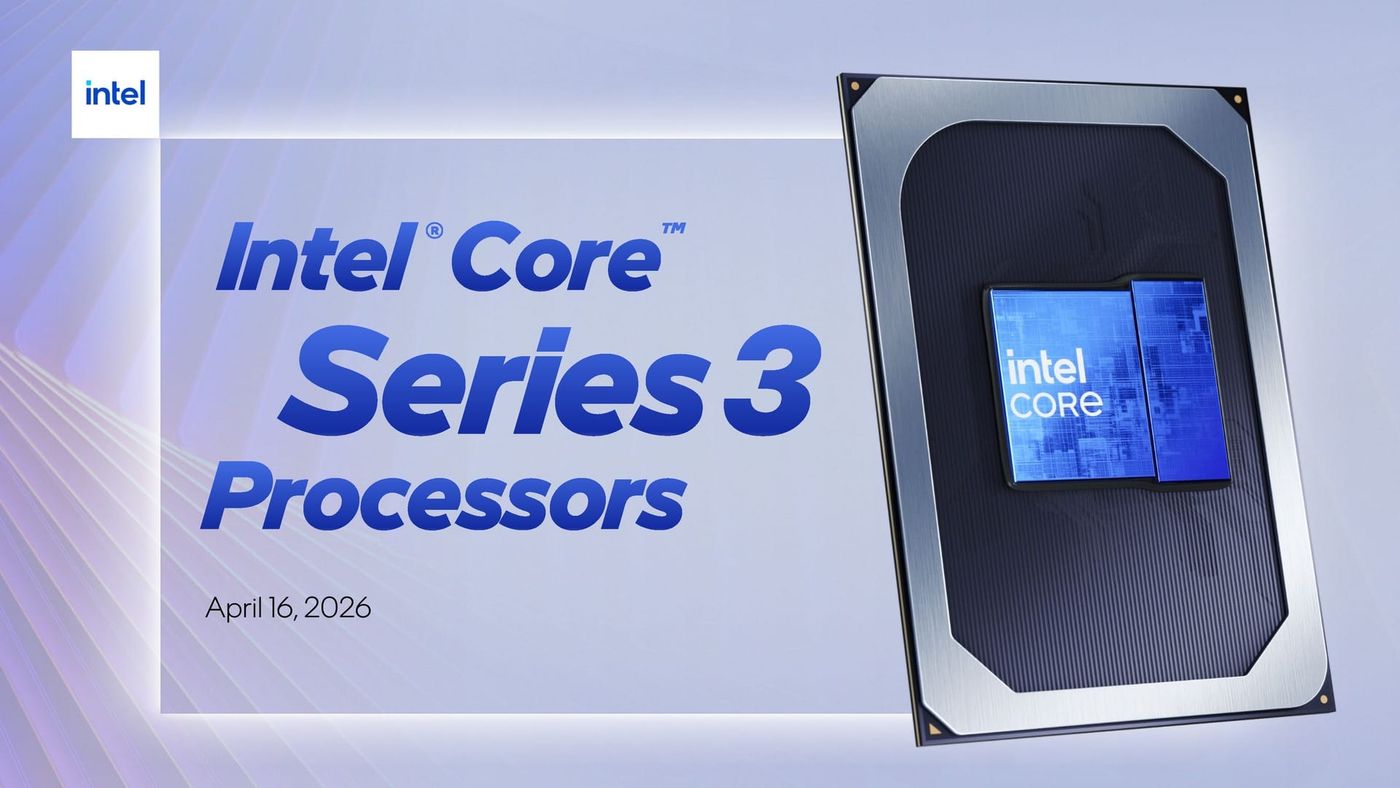
Back in April, when Intel launched its new Wildcat Lake chips, a reader on Liliputing asked whether they could run silent, the way a MacBook Air does. Someone posting as FanlessTech, a site devoted to fanless computers, answered in one line: “They will absolutely need a fan for cooling.” Now ZOTAC has put up product pages for three ZBOX nano mini PCs built on those exact chips, and not one of them has a fan. There’s no press release, no price and no date yet. Just three listings and a spec sheet. Here’s what’s inside them, what changed from last year’s model, and what ZOTAC still hasn’t said.
Which ZBOX gets which chip?
The CI431 nano gets the Core 3 304, the CI451 nano the Core 5 320, and the CI471 nano the Core 7 350. Everything else is shared: same box, same ports, same single memory slot. The real difference is in the chip. The Core 3 has five cores and one graphics core. The Core 5 and Core 7 both have six cores and two graphics cores, and the 7 just clocks a little higher. If you want the built-in graphics to do more than run a desktop and play video, the step from the CI431 to the CI451 is the one that counts, because it doubles the graphics.
| Model | Chip | Cores | Top speed | Graphics | AI engine (NPU) |
|---|---|---|---|---|---|
| ZBOX CI431 nano | Core 3 304 | 5 (1 performance, 4 low-power) | 4.3 GHz | 1 Xe3 core | 15 TOPS |
| ZBOX CI451 nano | Core 5 320 | 6 (2 performance, 4 low-power) | 4.6 GHz | 2 Xe3 cores | 16 TOPS |
| ZBOX CI471 nano | Core 7 350 | 6 (2 performance, 4 low-power) | 4.8 GHz | 2 Xe3 cores | 17 TOPS |
The CI471 nano isn’t completely new. ZOTAC showed it at Computex in June, when it was reported with the Core 3 304 inside. The November listings move that chip down to the CI431 and give the CI471 the Core 7 350.
How much do they cost, and when can you buy one?
Nobody knows yet. The product pages list no price and no release date, and none of the three shows up in ZOTAC’s US store. The listings exist. The shopping cart doesn’t.
Whatever ZOTAC ends up charging, it’s only part of the bill. These are barebones, so add a stick of DDR5, an M.2 SSD and a copy of Windows if you want it. That’s also the good news for anyone who’d rather run Linux, or who has a spare SSD sitting in a drawer: you pay for exactly the parts you need, and nothing comes preinstalled.
Can a 35 W chip really run without a fan?
ZOTAC says yes, and it’s built three of them to prove the point. Intel rates these chips at 15 W and lets them climb to 35 W in bursts when there’s work to do. That’s laptop territory, which is why that reply back in April sounded so sure of itself.
In a fanless box like this, the case does the cooling. It’s built to pull heat away from the chip and let it drift off into the room, which is why the nano is a bit chunkier than a lot of tiny mini PCs. Think of a stack of two or three hardback books.
What ZOTAC hasn’t published is the part that decides how it feels: how much power it lets the chip draw, and for how long, before the heat builds up. A fanless box can hold a 35 W chip well below that for long stretches and still put a Core 7 sticker on it. No fan means no fan noise, so silence is the easy part. How fast it stays after half an hour of real work is something nobody outside ZOTAC knows yet.
Is Wildcat Lake the N100’s successor?
No, and Intel’s own slides say so. Intel launched Wildcat Lake as Intel Core Series 3, with no “Ultra” in the name, and its launch deck measures it against older laptop chips like the Core 7 150U. The N-series doesn’t come up once. It’s the cheap end of Intel’s laptop line moving up, borrowing parts from the pricier Panther Lake chips. The little N100 and N150 that filled so many budget mini PCs are a different family. FanlessTech called Wildcat Lake “a step up in both power and price” back in June.
If you see these chips called Core Ultra Series 3 somewhere, that’s a mix-up. Core Ultra Series 3 is Panther Lake. Wildcat Lake is plain Core Series 3.
The N-series replacement is reportedly something else. TechPowerUp reported in late October that Intel is preparing a chip called Moon Lake, with low-power cores only and a 6 W base power, that could follow the N-series. Until that shows up, a Wildcat Lake box is a step up from an N100 machine, and you should expect to pay like it.
What changed from the last ZBOX nano?
It’s the same box with a different set of trade-offs. Last year’s CI655 nano used Intel’s Core Ultra 5 225U in a fanless case of exactly the same size. The new models add two Thunderbolt 4 ports and move from gigabit to 2.5 gigabit Ethernet. In return, they lose the second memory slot, the second M.2 slot and the HDMI 2.1 port, and the chip drops from 12 cores to five or six.
| ZBOX CI655 nano (2025) | New ZBOX nano (2026) | |
|---|---|---|
| Chip | Core Ultra 5 225U | Core 3 304, Core 5 320 or Core 7 350 |
| Cores | 12 | 5 or 6 |
| Memory slots | 2x DDR5-5600 SO-DIMM | 1x DDR5 SO-DIMM |
| Maximum memory | 64 GB | 64 GB |
| M.2 slots | 2 | 1 |
| Thunderbolt 4 | No | 2 ports |
| Ethernet | Gigabit | 2.5 gigabit |
| Display outputs | HDMI 2.1, 2x DisplayPort 1.4 | HDMI 2.0b, DisplayPort 2.0, DisplayPort over Thunderbolt |
| Wireless | Wi-Fi 7, Bluetooth 5.4 | Wi-Fi 7, Bluetooth 5.4 |
| Size | 204 x 129 x 68 mm | 204 x 129 x 68 mm |
| Cooling | Fanless | Fanless |
The memory slot is the one to think about. The good part: it’s a real slot, so the memory isn’t soldered to the board, and you can put up to 64 GB in it. The less good part: one stick means the chip runs its memory single channel, which is a limit of Wildcat Lake itself. Picture one lane to the memory where there used to be two. The built-in graphics share that lane with everything else, so that’s where you’d feel it most.
The missing second M.2 slot matters if you were planning a boot drive plus a big storage drive. Now it’s one internal drive, with anything extra hanging off Thunderbolt or USB.
Can it play games?
Light ones. Intel itself pitches these graphics at “casual gaming”, and the CI431’s single graphics core is the weakest of the three by a long way. Nobody has published game results for these ZBOXes yet, so think older and lighter games, or streaming from a bigger PC on your network, rather than new releases. The single-channel memory from the section above doesn’t help here either.
What other Wildcat Lake mini PCs are there?
A handful so far, and the closest match to the ZBOX is Biostar’s EdgeComp MS-U320, a fanless box aimed at industrial use, with the same one-slot memory setup. GMKtec’s NucBox M3S goes the other way, with a Core 3 304, a fan and 12 GB of memory soldered on for good. Beelink has also announced Core 3 304 versions of its mini PCs.
What ZOTAC brings is the combination: silent, Thunderbolt, a memory slot you can fill yourself, and a choice of all three chips. Most of what’s out there so far uses the Core 3 304, so the Core 5 and Core 7 versions are the less familiar part of this.
What happens next?
A price and a ship date, for a start. After that, the question that matters for any fanless box: how it behaves after half an hour of real work, with the case warm to the touch. And somewhere in the background there’s Moon Lake, if Intel really does have a 6 W chip coming for the cheap, silent boxes the N100 used to fill.
Nerd Alert
Your Turn
What are YOUR thoughts
What have your experiences been? Let us know.