A Fan Port Rebuilds Super Smash Bros. Brawl for PC, With Project+ and REX Built In
Project Nexus turns Super Smash Bros. Brawl into a native Windows and Linux program, with Project+ and REX built in and a beta rollback online mode. You bring the disc.
https://averagetechnerds.com/project-nexus-smash-bros-brawl-pc-port/
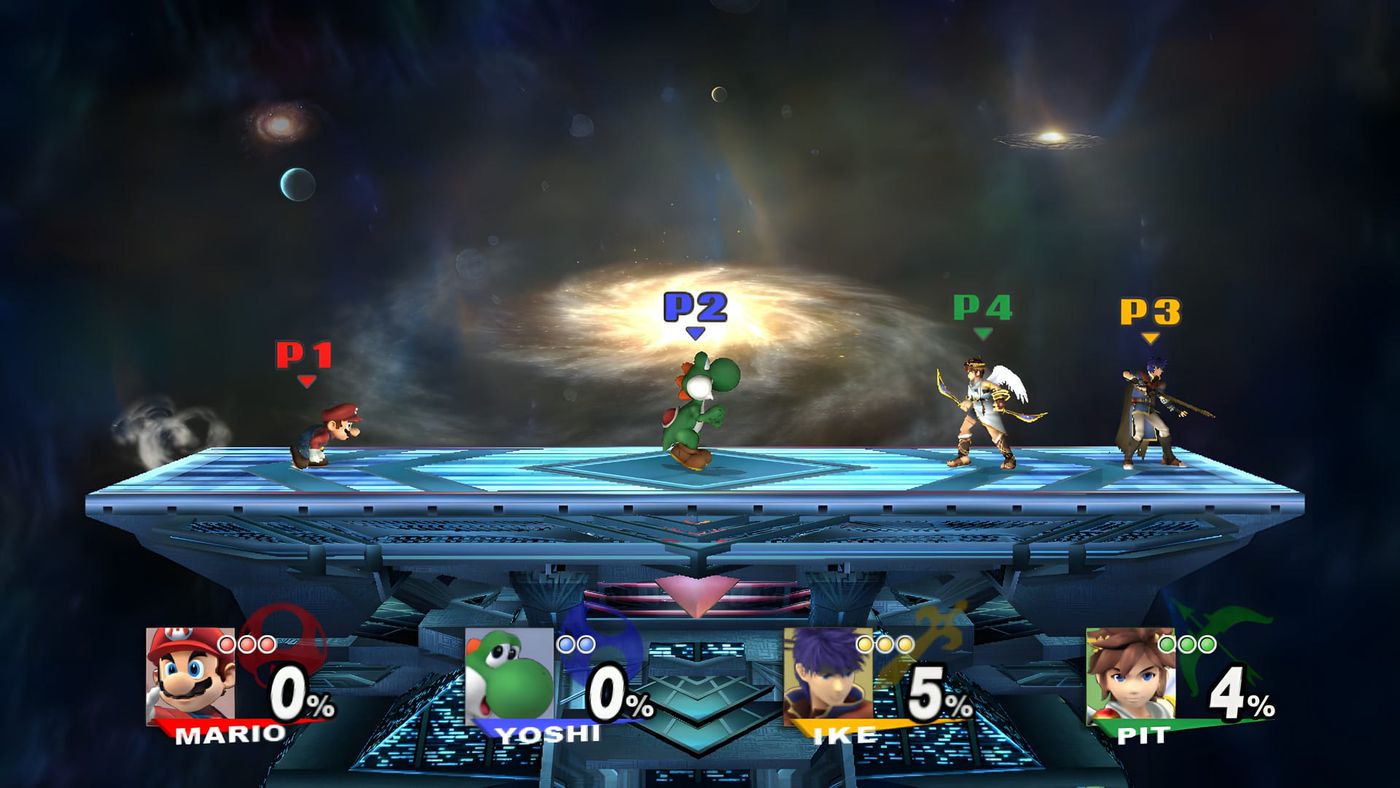
Final Destination, four players, Mario, Yoshi, Ike and Pit squaring off, and no emulator anywhere underneath. That’s Super Smash Bros. Brawl running as an ordinary PC program, courtesy of a small group called 8gram Labs and a project called Project Nexus. Brawl came out on the Wii in early 2008, Nintendo switched its online play off in 2014, and plenty of the people who kept playing did it in Dolphin or on a Wii with an SD card full of mods. Now Project+ and the 100-plus-fighter REX mod sit in the same launcher, one click away, and there’s an online mode that tries something Project+’s own team says it doesn’t have: rollback. It’s free. You bring the disc.
What is Project Nexus?
It’s Brawl turned into a regular program for your computer. You point the launcher at your own copy of the game, it rebuilds Brawl into a Windows or Linux program right there on your machine, and from then on you just press Play. None of Nintendo’s game ships with it. The disc files, the rebuilt code, every piece of it gets made on your PC from your copy, and it stays there.
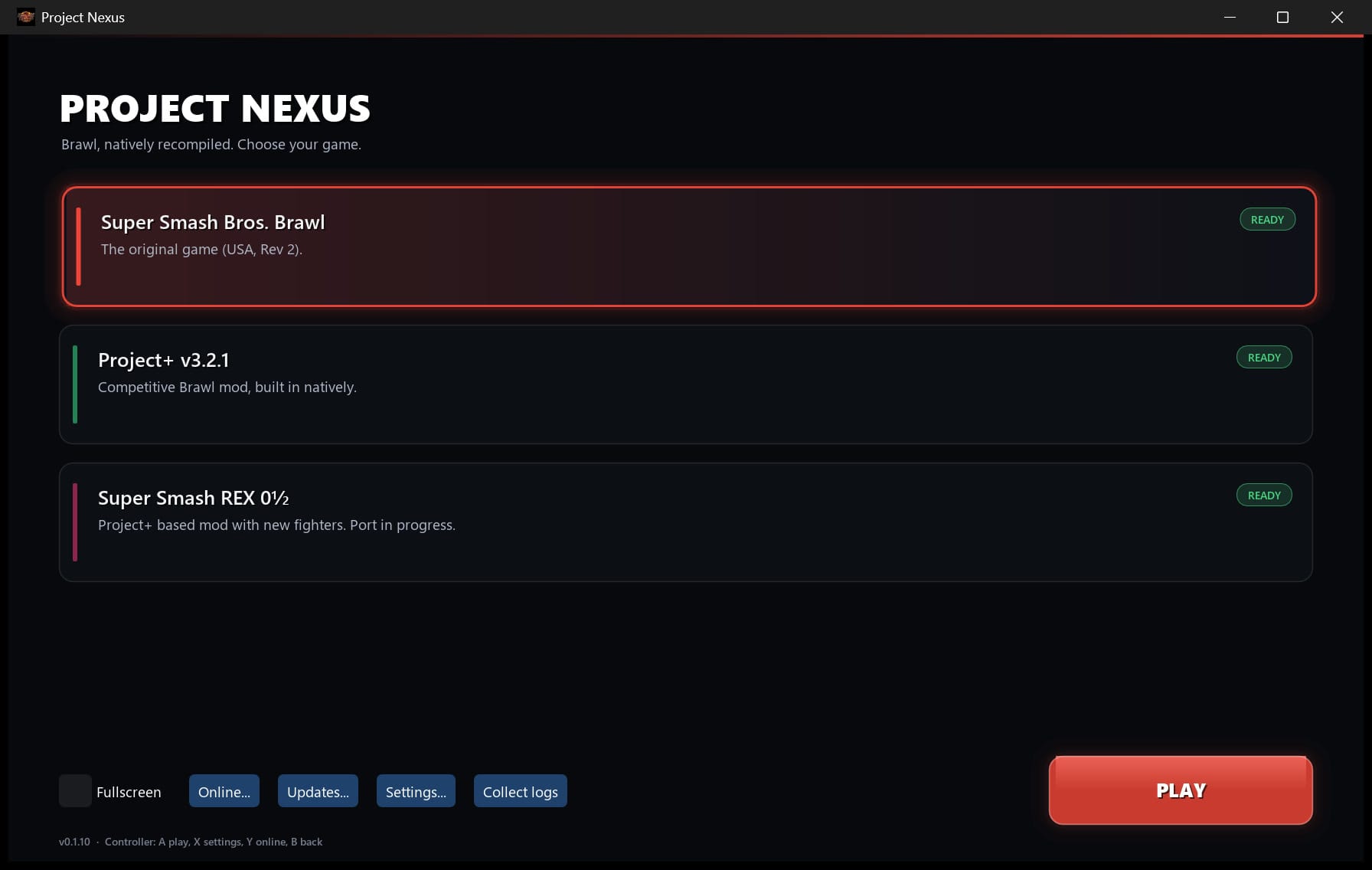
Brawl the way Nintendo made it, Project+ and Super Smash REX all live in that one window. Pick one on the left, press the big red button. That’s the whole interface, and it works with a controller from the couch too.
How is that different from Dolphin?
Dolphin pretends to be a Wii. The game’s code gets translated on the fly while you play, the way a live interpreter works through a speech. Project Nexus does the translating once, before you ever play. Its own tool turns the Wii’s processor code into C++, your PC compiles that into a real program, and the Wii’s graphics, sound and controller pieces are swapped for PC equivalents.
That’s why there’s no ready-made game to download. You build it, and the build takes roughly 10 to 30 minutes per game, depending on your processor. It’s also how the mods end up inside the program itself, instead of being layered on top of an emulated Wii.
Where do Project+ and REX come from?
Both go back to Project M, a fan rework of Brawl by players who missed how fast Melee felt. It ran from 2010 until its team stopped in late 2015. Project+ picked up from there. Think of Project+ as the community keeping the lights on: bug fixes, a rebalanced cast, new stages and music, and, in version 2.0, Knuckles as a 42nd fighter. Its FAQ is quick to point out that it isn’t an official continuation of Project M, and that it doesn’t use the old team’s unreleased work without permission.
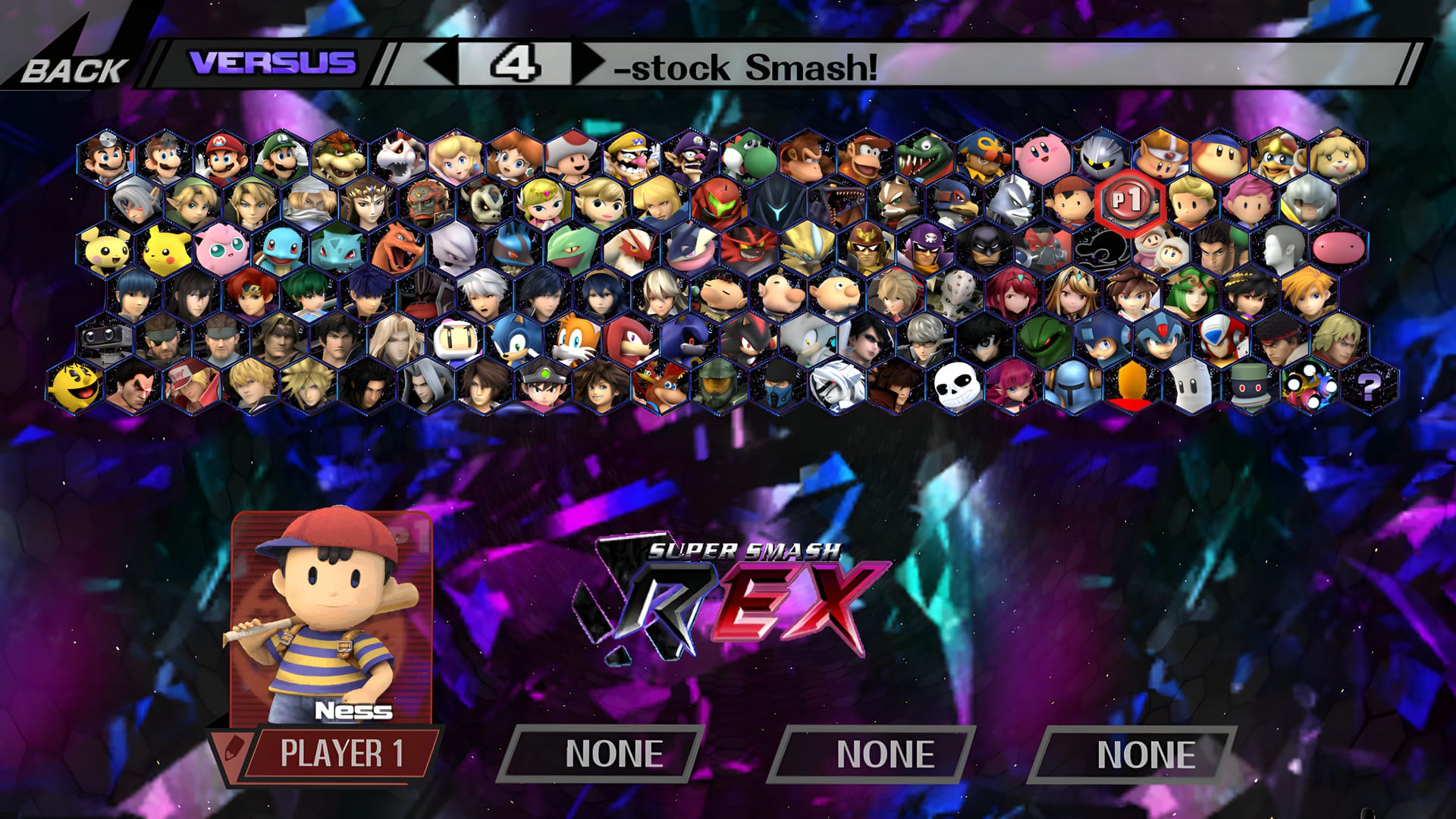
REX is the maximalist one. It’s built on Project+ and adds more than 100 extra fighters. One look at its character select tells you everything.
Playing either mod has usually meant a Wii with an SD card, with or without homebrew, or Dolphin with the mod’s own setup. Here they’re just two more cards in the launcher.
What do you get on PC?
Brawl on your terms, mostly. The picture is what you’ll notice first. You set the resolution, anti-aliasing cleans up the jagged edges around the fighters, and menus and full matches hold about 60 frames per second, going by the team’s testing. Then there’s the couch. One button in Settings puts it in your Steam library, and from there Big Picture and a controller do the rest. The “mostly” is everything further down this page, because this is still a very young port.
Does online work?
It’s a beta, and it’s the most interesting part of the whole project. Online Project+ runs on Dolphin’s netplay today, and Project+’s own FAQ says plainly there’s no rollback netcode, the kind Melee players get through Slippi. A separate project called Brawlback is working on it, with no release date.
Project Nexus says it does rollback today. Brawl is deterministic, which means the same button presses always produce the same match, so only controller inputs travel between players. In a match, your game doesn’t sit and wait for the others. It assumes they’re still pressing what they pressed last and keeps going, and when the real input arrives and it guessed wrong, it rewinds to that frame and replays up to the present before the next frame is drawn. You see your own inputs on time and smooth play. Menus and character select run in lockstep instead, everyone waiting on everyone, so they never drift apart.
Rooms go through Steam. Host a public room or a private one with a six-letter code, for up to four players plus spectators. You don’t need to own anything on Steam to join.
Now the fine print. So far, the README says, the team has tested all of this on one PC, several game windows talking to each other, and never yet over the internet. And the one public report of a real try, a Steam Deck against a ROG Ally on November 19, ended in freezes. The known bugs are rare desyncs, about one REX test run in eight among them, and for now Windows and Linux players can’t even find each other’s rooms. So this is a promise with code behind it. It could be the rollback Brawl that Brawlback set out to build, from a different team entirely. It just has to survive a real internet connection first.
What do you need?
Start with the disc, and it has to be the right one: Brawl’s North American release, revision 2. The launcher checks your files against a known revision 2 copy before it builds anything. You make the copy from your own disc on a Wii, and both this project and Project+ point you to CleanRip, a homebrew app, for the job. Want Project+ or REX as well? Each needs its own download on top, a version of that team’s release set up for Project Nexus.
The bar for your PC looks low. You need 64-bit Windows 10 or 11 and 8GB of RAM, and the README doesn’t name a minimum processor or graphics card at all. There’s one surprise. The installer also pulls in Microsoft’s C++ build tools and LLVM, both free compiler kits, because your PC does the compiling itself. Leave it room to work while a game builds. All of it costs nothing.
How does setup work?
Slowly, the first time. Install it, keep the build tools box ticked (without them nothing builds), open the launcher, pick a game and click Set Up. Point it at your disc image, and for a mod, at the mod’s download. Then wait while it extracts the disc, checks the files, recompiles and compiles.
Expect your antivirus to raise an eyebrow. The installer isn’t code-signed yet, and setup produces brand-new programs no scanner has seen before, so SmartScreen or Defender may flag them. The README’s fix excludes only the program’s own folder from Defender, and it says plainly not to switch your antivirus off.
Updates are easier. The launcher tells you when a new version is out, and rebuilding a game after an update only recompiles what changed. Your saves survive updates, and even an uninstall.
How does it run on a Steam Deck?
Smoothly, after a few early hitches. Steam Deck HQ’s hands-on had matches holding 60 frames per second, with the Deck’s controls recognized right away and low battery drain, which is about all you could ask of a couch session. A few stage loads took a few seconds, and REX showed some visual oddities. It also runs as a real Linux program, so Proton, the compatibility layer Steam uses to run Windows games on Linux, never has to get involved.
Getting there means a trip to Desktop Mode, because SteamOS doesn’t ship the compiler pieces the build needs; the README walks you through putting them in from the terminal. A SteamOS update wipes them again, which sounds worse than it is: games you’ve already built keep working, and you only need the tools back to build the next version. On Bazzite and similar systems the build runs inside a container instead. And build on the device you’ll actually play on, since a game built on a newer Linux system may refuse to start on an older one.
If you tried it early and heard crackling, or nothing at all, update. Two of the last three releases were sound fixes, both aimed at problems Steam Deck players ran into. Still silent after that? The release notes say SteamOS may have muted the game’s sound, and it needs unmuting once in Desktop Mode.
Leave online alone on the Deck for now. The developer says online isn’t supported on SteamOS handhelds yet and warns that an invite can freeze the system hard enough to need a restart.
Which controllers work?
GameCube controllers through Nintendo’s official adapter, Xbox, PlayStation and Switch Pro controllers, generic gamepads and the keyboard. Wii Remotes and the Classic Controller don’t work yet, so anyone who played Brawl with a Wii Remote held sideways will have to pick up something else.
Couch play got its big fix on November 20. Until version 0.1.17, only player 1 got a controller at all. Ports 2 to 4 on a GameCube adapter, or a second gamepad, now reach the game.
Who made it?
8gram Labs is a small outfit, and Brawl isn’t its first port: its code site also hosts five Xbox and Xbox 360 games, Tony Hawk’s Underground and two Splinter Cells among them. This one moved fast. By the project’s own notes, work started on November 9 and a full match was on screen that same day. The earliest release still listed, online beta and all, came out on November 15.
Six days, from first code to an online beta. The project is open about having help: nearly all of its code changes list Anthropic’s Claude as co-author, and Steam Deck HQ describes the port as created by 8gram Labs and Claude AI. Nobody has said how the work splits between the people and the model.
What’s still rough?
Plenty, and the team says most of it out loud. REX still carries its in-progress label, and the Subspace Emissary story mode has only been tested through its opening levels, so if the campaign is what you’re after, you’re a tester for now. Then there’s the pace. Nine releases have landed since November 15, several of them fixing things Steam Deck and ROG Ally players ran into. That’s great when the fix is the one you were waiting for. It’s less fun when something changes under your feet almost every day and you just want to play on a Friday night.
Could it disappear?
Nobody outside Nintendo can answer that. Earlier this month, Nintendo’s takedown notices removed Switch modchip firmware and the Citron Neo emulator from GitHub. Project Nexus doesn’t live on GitHub. It sits on 8gram Labs’ own code site with a copy on GitLab, ships no game files, and its README asks rights holders with concerns to get in touch directly. None of that settles anything, and it isn’t meant to.
What’s on the table right now is a Brawl that launches like any other PC game, with Project+ and REX a click away, and an online mode that could be rollback Brawl at last. The team hasn’t shown it holding up over a real connection yet. When it does, that’s the moment to dig your disc out.
Nerd Alert
Your Turn
What are YOUR thoughts
What have your experiences been? Let us know.