News · News · Handheld Gaming
CG Deck: A Modular x86 Handheld on Kickstarter, From $349 Without the Computer
A 5-inch Windows and Linux handheld with swappable controls, from a one-person startup. Prices, specs, the modules, and why the $349 kit still needs a computer.
https://averagetechnerds.com/cg-deck-modular-x86-handheld-kickstarter/
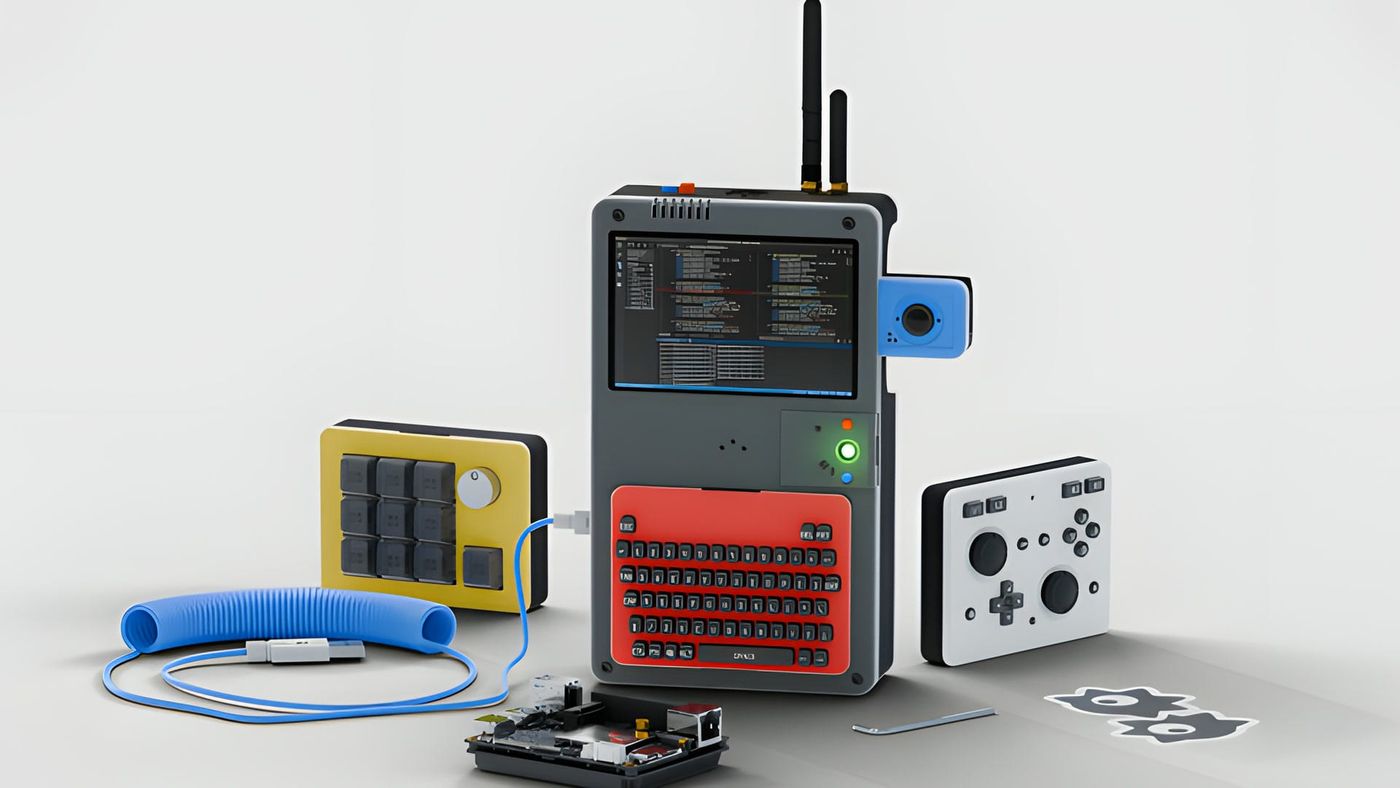
Under the CG Deck’s screen there’s an empty slot. Fill it with a thumb keyboard and you’re holding a tiny Linux laptop. Fill it with a gamepad and the same box plays your Steam games. One 23-year-old in Austin designed it, and backers covered his $20,000 goal within two days. Just read the cheapest tier closely, because the $349 kit leaves out the PC itself.
What is the CG Deck?
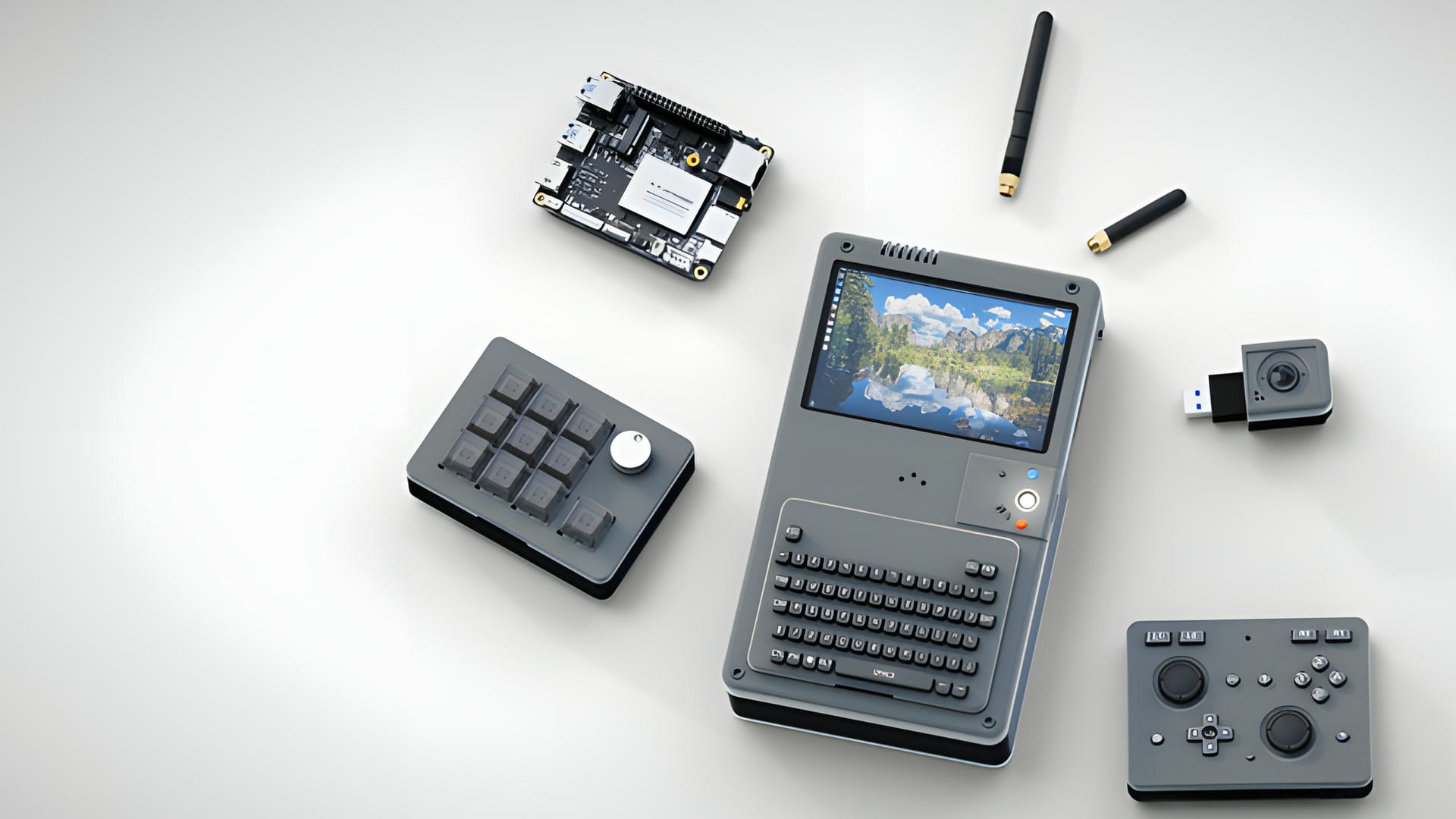
Think of a Game Boy-shaped shell built around a real PC. Screen on top, swappable controls underneath, a battery packed in around them and screw-on antennas up top.
The PC part is a LattePanda IOTA. It’s a single-board computer about the size of your palm, which DFRobot sells to people building robots, kiosks and other gadgets. It uses an Intel x86 chip like a normal laptop, so desktop Windows and full Linux both install on it. It’s the newer version of the original LattePanda, in the same size, so it isn’t a one-off made just for this handheld. Since you can buy the board separately, a fried one can be replaced instead of ending the device.
Behind it is Zane Maldonado, 23, who does the design, engineering and coding himself and took no outside money. The idea came in January 2026. Nine months on, he had a working prototype. Now he has his first Kickstarter. That’s a lot of hats for one person, so keep it in mind when you get to the delivery date.
Nobody has reviewed one yet, so what follows about the device itself is Mogozen’s own description.
How do the modules work?
The main slot takes one control module at a time. You get a choice of three at launch: a 64-key thumb keyboard, a gamepad with Hall-effect sticks, or a macropad with ten keys and a knob. A second, smaller slot holds a trackball, the only module made for it so far. That could change, since a joystick module for the same slot is the next stretch goal.
Typists get to pick the feel. The keyboard comes with a soft silicone keypad or a firmer plastic one, and you can trade one for the other later. The macropad is for people who like to tinker with keyboards, with mechanical switches you can pull out and firmware you set up yourself through QMK or Vial, the free tools keyboard fans use to remap their keys.
The gamepad is the interesting one. Its render is labelled Bluetooth plus wired, which hints you could pair it with something else and hold it on its own.
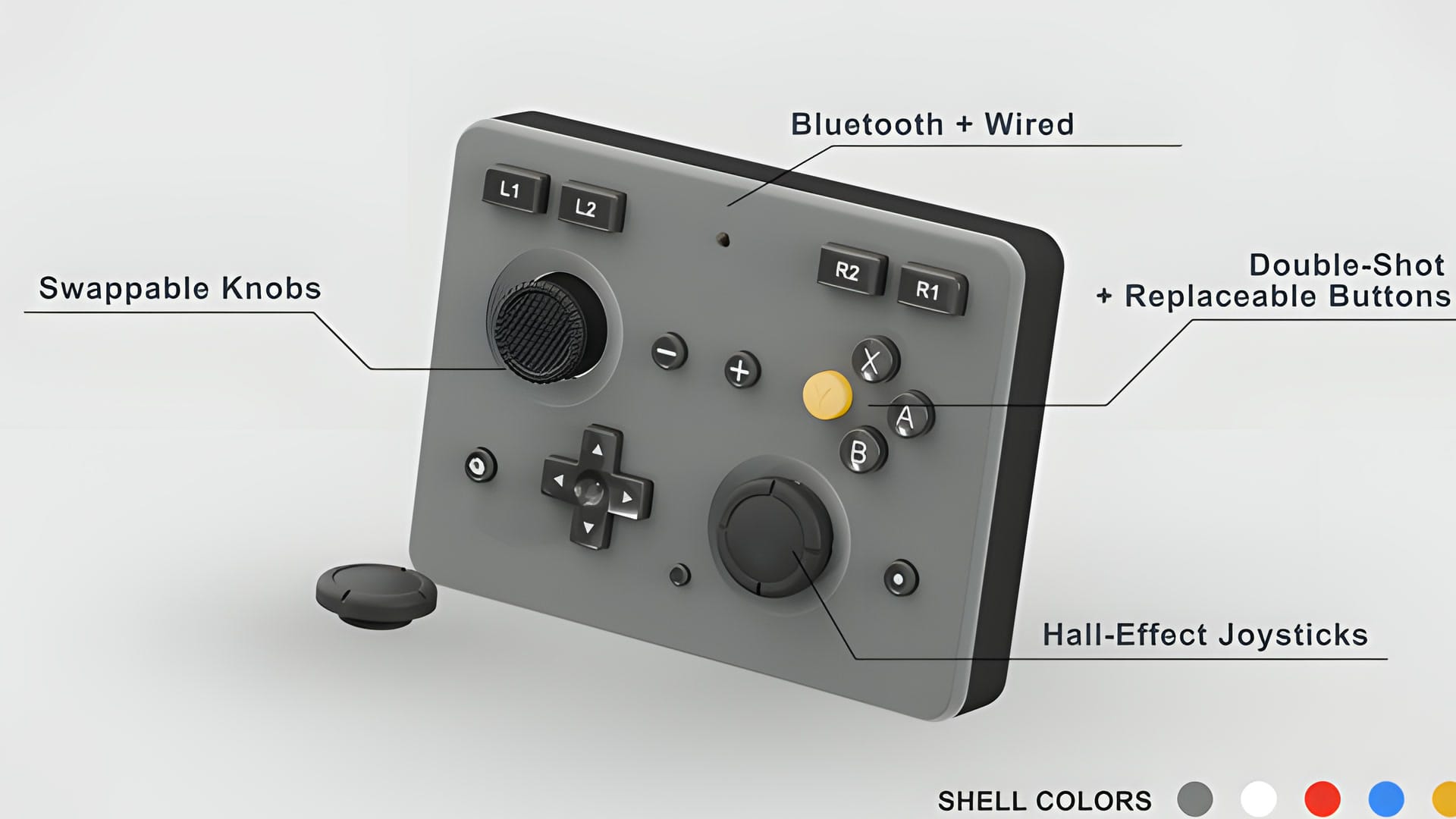
Making it yours goes beyond the modules. After the campaign you pick from two shell colours and four module colours, and once the design is locked, the 3D files for the case and modules are due to go public, so a custom backplate or a homemade module is fair game.
What’s inside?
Mogozen sells two versions, and the MAX doubles the memory and storage:
| Part | Base | MAX |
|---|---|---|
| Computer board | LattePanda IOTA | LattePanda IOTA |
| Processor | Intel N150, 4 cores, up to 3.6 GHz | Same |
| Graphics | Intel, 24 execution units | Same |
| Memory | 8GB LPDDR5 | 16GB LPDDR5 |
| Storage | 64GB eMMC, plus microSD | 128GB eMMC, plus microSD |
| Wireless | Wi-Fi 6E, Bluetooth | Mogozen lists Wi-Fi 7, Bluetooth |
| Screen | 5-inch IPS, 10-point touch | Same |
| Ports | HDMI 2.1 (4K at 60 Hz), USB-A (two on Mogozen’s spec sheet, three in its side view), Ethernet, 3.5 mm audio | Same |
| Battery | Three 18650 LiFePO4 cells, 10,500 mAh total by Mogozen’s spec sheet | Same |
| Charging | USB-C PD at 15 V | Same |
Both can take more inside. One add-on board holds a 2230 or 2280 NVMe SSD up to 4TB, and another brings 4G LTE. For hardware tinkering there’s a GPIO header too, a double row of pins you can wire sensors, lights or buttons to.
How do you set it up?
You won’t need a soldering iron, even for the kit. Instructions come in the box as a printed booklet and as a digital PDF.
Buy a finished unit and the backer survey asks what you want on it: Windows 11, Linux Mint, or nothing, if you’d rather install your own. Later you can boot something else off a microSD card or a USB stick to try it.
What can you do with it?
Treat it as whatever kind of computer the day calls for. Mogozen’s tested list stretches from older Windows releases to postmarketOS, a Linux made for phones.
With the keyboard fitted, you’ve got something to write or code on in a café. Run a cable to a TV, add a mouse, and it’s a desk PC. Windows for one job and Linux for another is two drives away.
Mogozen says it can even become a phone you finish building yourself, a full Windows or Linux PC with its own cellular connection. You bring the modem and the SIM for the LTE board. Pair it with the $68 camera, which adds autofocus and a mic, and video calls fit the picture too. The Ethernet port opens one more door, as a portable network tool or a small server on a shelf.
Can it play games?
Lighter ones, going by the hardware. The board lets the N150 run between 6 and 15 watts, and its graphics are the modest kind built into the chip. Mogozen’s own list is modest too: retro emulation, old DOS point-and-click adventures and your Steam library, with no word on which games run well.
If you back it for games, the Gaming Kit is the one built for it. It swaps the keyboard for the gamepad at the same price, so making it a handheld doesn’t cost extra.
What does it cost?
Early birds paid $299 for the kit or $759 for a full unit, and those tiers closed November 19. What’s left is Phase 2 pricing, which Mogozen sets at 10% under its planned retail price:
| Tier | What’s in it | Price |
|---|---|---|
| DIY Kit | The case and parts, no computer board | $349 |
| CG Deck, 64GB / 8GB | Keyboard and trackball modules | $879 |
| Gaming Kit, 64GB / 8GB | Gamepad and trackball modules | $879 |
| Launch Special, 64GB / 8GB | Keyboard, gamepad, trackball and macropad modules, 8MP camera, NVMe and LTE expansion modules, screen protector, Windows 11 Pro key | $1,055 |
| CG Deck MAX, 128GB / 16GB | Keyboard and trackball modules | $1,230 |
| Gaming Kit, 128GB / 16GB | Gamepad and trackball modules | $1,230 |
| Launch Special, 128GB / 16GB | Same as the 64GB Launch Special | $1,405 |
Budget for shipping on top, starting near $15 in the US and charged once your address is collected. In the US and the EU, Mogozen deals with customs for you. Anywhere else, expect the courier to get in touch about import fees.
Each tier holds 50 pledges, and the cheaper ones can run out before the campaign does.
What’s the catch with the $349 kit?
The board. The kit’s listing says outright that the LattePanda IOTA isn’t in the box.
Buying one yourself isn’t cheap today, at $339 for the 8GB board. Even so, the kit route comes out about $190 cheaper than a finished 8GB unit, before shipping and controls. Go for 16GB and the saving passes $400.
Controls are a question too. The listing names the kit, a USB cable and a sticker pack and nothing else. If no keyboard or gamepad is included, add $36 for whichever you want, and ask Mogozen before you assume otherwise.
That makes the kit the cheaper road, as long as you don’t mind tracking down a board, sorting out the controls and putting it together yourself. Already have an IOTA in a drawer? Even better. If you’d rather open the box and start, that’s what the extra money on a finished unit buys.
How long does the battery last?
Maybe not as long as the numbers suggest. LiFePO4 is a lithium battery type known for staying safe and lasting many charges, at the cost of holding less energy for its size. The spec sheet says each of the three 18650 cells holds 3,500 mAh, yet LiFePO4 cells of that size typically hold about 1,500 to 1,800. Until someone measures a real unit, treat the capacity as unconfirmed.
The quoted runtime, about eight hours, is for a CG Deck sitting idle, with no figure for games. Backers abroad have one more thing to check, since Mogozen says local shipping rules may keep the batteries out of some boxes.
What don’t we know yet?
The things you’d want to know before holding it for an hour. Three of them are still blank. How heavy it is, whether a fan keeps it cool, and how sharp that 5-inch screen looks. There’s also no dust or water rating, which Mogozen says will vary with how each unit is put together.
That’s a lot to fit between a prototype and March 2027. The design has to be readied for manufacturing, pass certification and go through mass production. Read the date as the target if all of that goes to plan.
Should you back it?
Back it if you like tinkering and you’re comfortable betting on a first-time maker. The modules make it as much a project as a gadget, and the discount ends with the campaign.
The real risk is parts. Mogozen lists the worldwide shortage of computer parts among its risks and says some are already reserved. Kickstarter’s own page adds that rewards aren’t guaranteed. If you want a gaming handheld, or you’d like the battery question settled first, wait for reviews.
What’s next?
Pledges close at 10 a.m. Eastern on January 1, 2027. The goal is already met, so every pledge gets charged when it closes. At $100,000, every backer with a kit or a CG Deck gets a joystick module for the small slot at no extra cost, and $250,000 would unlock a power and data dock.
Miss the campaign and the price should rise to the planned retail one, though the campaign names no date or store for that. Even the add-on modules are only priced as Kickstarter add-ons so far.
Nerd Alert
Your Turn
What are YOUR thoughts
What have your experiences been? Let us know.