News · News · PC Hardware
You Can Now Just Buy a 512GB Steam Machine, but the 2TB Waitlist Is Closed
The 512GB Steam Machine is in stock on Steam with no waitlist, while the 2TB waitlist is closed. Prices, specs, how we got here and what Valve says comes next.
https://averagetechnerds.com/steam-machine-512gb-no-waitlist-2tb-sold-out/
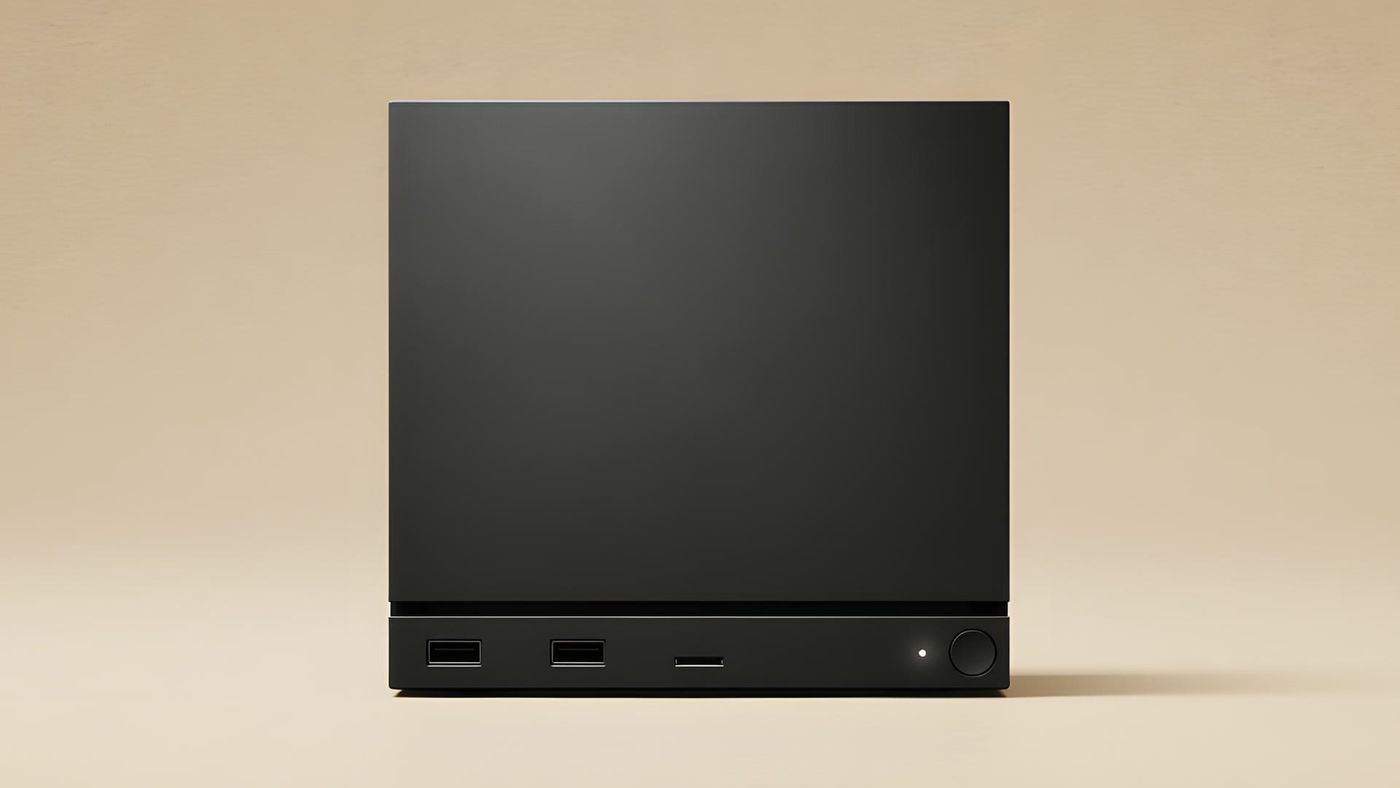
For five months, getting a Steam Machine meant signing up, waiting for a random draw and hoping an email showed up. As of November 19, the 512GB model skips all that. It’s in stock on Steam, and you can add it to your cart like anything else. The 2TB model went the other way. Valve closed its waitlist, and its store button now says out of stock.
What changed on November 19?
The lottery ran out of people. Valve used a random draw because it had been burned once already: demand for its new Steam Controller earlier in the year caught it out, and a launch at a set time tends to hand the stock to bots and resellers. So everyone signed up, the draw set the order, and Valve worked down the list. As of November 19, everyone who reserved a 512GB has had their chance, so the 512GB is simply for sale.
The 2TB is the opposite problem. Every 2TB reservation holder has an invite, but there are more people waiting behind them than boxes Valve can build. So the waitlist is closed to new signups. If you’re already on it, you keep your place, with no promise of a unit. You can switch to the 512GB while it lasts, but that means giving up your spot. Stay put and hope, or take the sure thing.
How did we get here?
It took a year to get from the announcement to an add-to-cart button:
| When | What happened |
|---|---|
| November 2025 | Valve announces the Steam Machine, a new Steam Controller and the Steam Frame headset |
| June 22, 2026 | Prices revealed and signups open; one per household, Steam purchase before April 27 required |
| June 25, 2026 | One-time random draw sets the reservation order |
| Week of June 29, 2026 | First purchase emails go out, each with 72 hours to buy |
| July 28, 2026 | Valve expects every reservation holder to get a chance by year’s end |
| November 19, 2026 | 512GB in stock with no waitlist; 2TB waitlist closed |
Can you buy one right now?
Yes, if it’s still in stock when you read this. Pick the 512GB on the Steam Machine page and check out. When the current stock is gone, the button turns to out of stock, and this time there’s no line to join behind it.
What does it cost?
Valve’s launch prices haven’t moved:
| Model | US | Canada | EU | UK | Australia |
|---|---|---|---|---|---|
| 512GB | $1,049 | $1,509 CAD | €1,039 | £879 | $1,609 AUD |
| 512GB with Steam Controller | $1,128 | $1,628 CAD | €1,108 | £938 | $1,728 AUD |
| 2TB | $1,349 | $1,919 CAD | €1,359 | £1,149 | $2,109 AUD |
| 2TB with Steam Controller | $1,428 | $2,038 CAD | €1,428 | £1,208 | $2,228 AUD |
Over a thousand dollars for a box under the TV. Valve was upfront about why. It started buying parts back in 2023, expecting PC hardware to get cheaper over time, the way it usually does. Then RAM and storage prices shot up, and Valve called its original price goal “no longer viable.”
Will the price go up?
Valve hasn’t said it will. It hasn’t ruled it out either. Its November 19 note says memory and storage costs “continue to increase at unprecedented levels,” so it doesn’t know how many more it can build, or at what price.
It’s been rough the whole way. Back in June, Valve said there were stretches when it couldn’t get some parts “at all, at any price.” Put those two lines together, and it’s about as close as a company gets to warning you.
Is the 512GB enough?
For a lot of people, yes. If you rotate a few big games in and out, and park older ones on a microSD card, 512 GB covers you. Both models have the card slot, so you can add space later instead of paying $300 more for the 2TB up front.
The 2TB does come with two extra faceplates, one in red fabric and one in solid walnut. Nice touch. Still not a reason to spend $300.
What’s in the box?
A small PC, about six inches on each side:
| Part | Steam Machine |
|---|---|
| CPU | Semi-custom AMD Zen 4, 6 cores and 12 threads, up to 4.8 GHz |
| Graphics | Semi-custom AMD RDNA3, 28 compute units, up to 2.45 GHz |
| Memory | 16 GB DDR5, plus 8 GB GDDR6 for the graphics |
| Storage | 512 GB or 2 TB NVMe SSD, plus a microSD slot |
| Video out | DisplayPort 1.4, up to 4K at 240 Hz; HDMI 2.0, up to 4K at 120 Hz |
| Ports | Two USB-A in front, two USB-A and one USB-C in back, Gigabit Ethernet |
| Wireless | Wi-Fi 6E, Bluetooth 5.3, and a built-in Steam Controller receiver |
| Power | Built into the box, no power brick |
| Size and weight | 156 x 162.4 x 152 mm, 2.6 kg |
| Software | SteamOS 3, with a KDE Plasma desktop |
The memory is split the way a gaming PC’s is: 16 GB for the system, and a separate 8 GB on the graphics side for the game’s textures and effects. Valve puts it at more than six times the horsepower of a Steam Deck. That’s Valve’s number. Still, a box plugged into the wall has a lot more to work with than a handheld on battery.
Under a TV, the HDMI port supports CEC, so one remote turns on the TV and the box together. At a desk, the DisplayPort can run more than one monitor.
Will your games run on it?
Check this before you check out. It runs SteamOS, the same system as the Steam Deck, and Windows games run through a translation layer Valve builds in called Proton. Most of a Steam library works that way. Since July, Valve’s Verified badges cover the Steam Machine too. Each game’s store page shows one of four: Verified, Playable, Unsupported or Unknown. Look up the five games you play most before you buy, and if any say Unsupported, that’s your answer.
The biggest gap is the same as on the Deck. Games whose anti-cheat doesn’t support Linux won’t run, whatever the hardware.
As for 4K, it gets there the way a lot of consoles do. The game draws a smaller picture, and AMD’s FSR upscaler blows it up on the way to your TV. Valve added the newest version, FSR 4.1, in July to Proton Experimental, the test version of Proton you switch on yourself, so games that already use a recent FSR can switch to it.
Do you need the Steam Controller bundle?
The bundle adds $79 in the US, and the controller costs $99 on its own, so the bundle saves you $20 if you want one. Whether you need one at all comes down to what’s already in your drawer. The Steam Machine has the Steam Controller’s receiver built in, so a Steam Controller pairs straight to it, without its separate wireless puck, and you can wake the box from the couch with it.
You don’t have to use one, though. There’s Bluetooth 5.3 and four USB-A ports, so the controller you already play with on PC is the obvious first thing to try. If you want the setup Valve designed around, with its gyro and trackpads, get it in the bundle.
What’s it like under a TV?
Easy to live with, on paper. The power supply is inside, so there’s no brick behind the TV stand. Up to four Steam Controllers pair to its own receiver, so a friend can grab one and play. And a light strip on the front shows download progress, so you can leave it working with the TV off.
And when you want a PC instead, it’s right there. Switch to the desktop and it’s a regular Linux computer, with a browser and your own apps.
Is it a console?
Valve really doesn’t want you calling it one, and its reason is the business model. Consoles usually sell at a loss and make it back on subscriptions and games locked to that hardware. Valve calls the Steam Machine an extension of PC gaming instead, and its June post says the price comes straight from what the parts cost.
The upside is that it’s yours. Install your own apps, or even a different operating system. And there’s no subscription standing between you and online play, which PlayStation and Xbox both charge for.
Didn’t Valve try this before?
It did, and the name gives it away. The first Steam Machines came from Valve’s partners back in 2015, and they never caught on. Few Windows games ran on Linux back then. By 2018, Valve had quietly taken the Steam Machines section off its store.
What’s different now is the Steam Deck. It showed the software could actually play most of your library, and this time Valve built the box itself.
What about the Steam Frame?
It’s going through the same line, a few months behind. The Frame is Valve’s wireless VR headset, and it doubles as a giant screen for your regular games. It’s made to stream from a PC, so it pairs naturally with a Steam Machine. It plays more than 100 games without a PC too, and Half-Life: Alyx comes with it.
Unlike the 2TB Steam Machine, you can still get in line for one. Its waitlist is open, and you join at the back, since the random draw was back in September. When your email comes, you get the same 72 hours to buy. Already have a reservation? The Frame’s product page shows whether your email lands by December or in 2027.
If you were hoping to set up both at once, the Frame is the one you’ll be waiting on.
Can’t get one? Build your own
Valve is fine with that, oddly enough. It says outright that the Steam Machine shouldn’t be the only way to play PC games on a TV. Since SteamOS 3.8, the same software runs on a living-room PC you build yourself, as long as it has an AMD graphics card. That support is still in beta, with more cards on the way.
That won’t save you money in this market, since you’re buying the same RAM and storage everyone else is. But if you already have a PC with an AMD card, it’s a way to get the same couch setup without waiting on Valve.
What’s next?
January, when Valve tells us more about supply. Until then, the 2TB stays closed, and the 512GB sells until it’s gone.
If you’ve been on the fence, today’s $1,049 is the one price you know. It covers the units Valve has now, and nothing after them has a price yet.
Nerd Alert
Your Turn
What are YOUR thoughts
What have your experiences been? Let us know.