News · News · PC Hardware
Intel’s Arc B580 Might Be Discontinued, Says One Leaker. Intel Hasn’t Said a Word
One post said the Arc B580 might be discontinued. Here is what is behind it, what the card costs now, and what it means if you own one.
https://averagetechnerds.com/intel-arc-b580-discontinued-rumour/
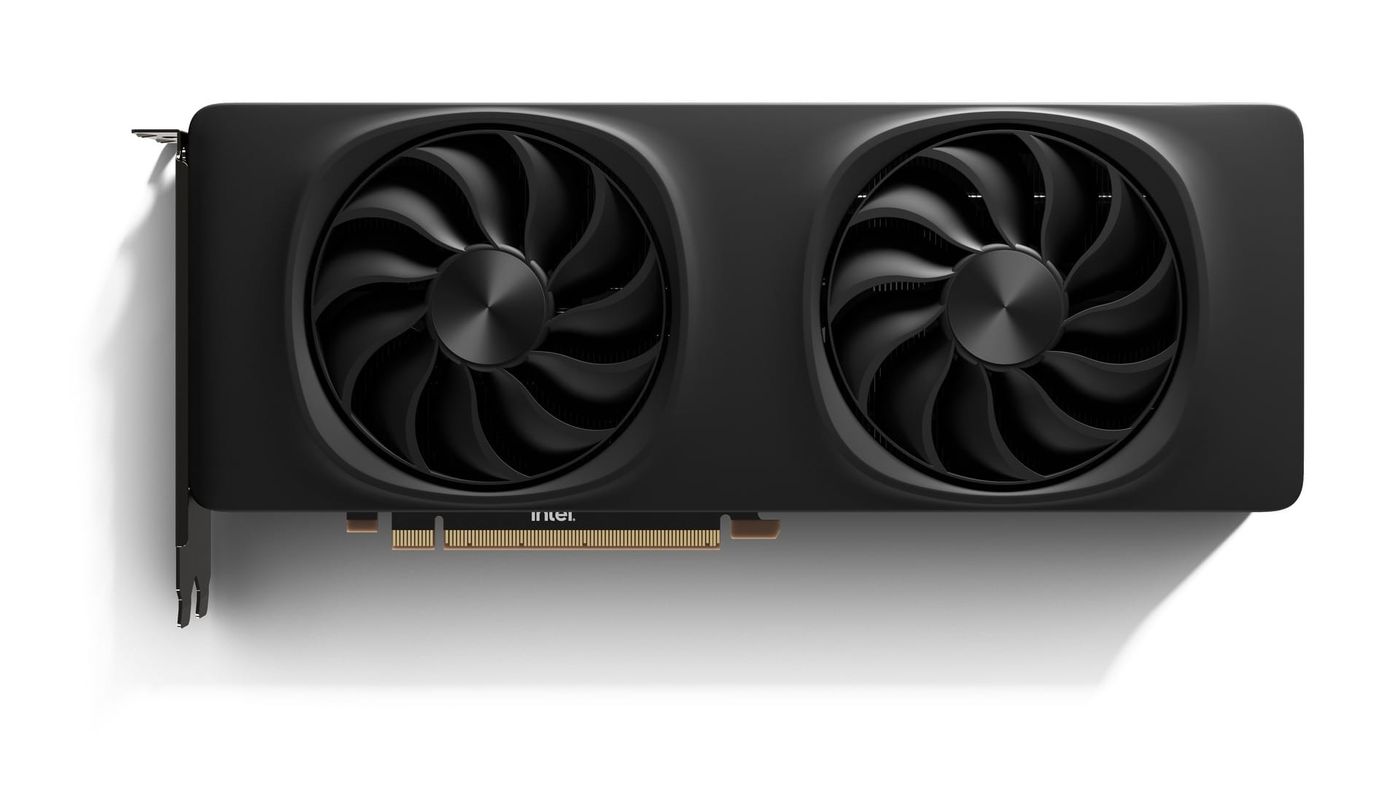
On Monday, an Intel watcher on X who goes by Haze posted one sentence: “Arc B580 might get EoL as Intel shifts priority toward higher margin pro/workstation (Arc Pro B50) AI/inference products that are selling really well.” EoL means end of life, the point where a company stops making something. Within a day, that “might” had turned into “Intel Arc B580 could face RTX 5090-like fate” in one headline and, in Club386’s telling, a claim that “the firm will decree the Arc B580 as end-of-life”. For a card whose whole pitch was being the cheap one with 12 GB of memory, that’s a scary chain of words. So here’s what’s actually behind it, what the B580 costs right now, and what it means if you already own one.
Is the Intel Arc B580 being discontinued?
Not as far as anyone can show. The whole story is one post that says “might”, with no document, screenshot or named source behind it. Intel announces the end of a product through product change notices, and that’s how it ended the Arc A750 Limited Edition in June 2025. An unofficial mirror of those notices, covering everything up to October 26, 2026, has nothing for the B580, the B570 or any Arc Pro B card. Intel’s own site wouldn’t let us check it directly, so that’s the mirror’s word. Intel hasn’t responded to the rumour either, and Club386 said it was still waiting on official word when it wrote the story up.
The card is still on shelves, too. It’s just not on many of them at the old price.
Who is Haze, and how reliable are they?
A small account that keeps a close eye on Intel. Haze has about 2,150 followers and mostly passes along things like driver versions and spec leaks. They did call one early: Haze said an Arc Pro B65 would arrive alongside the B70 before Intel announced it, and it did, in March 2026. That’s one hit, on a product announcement. Haze has no track record that we could find on supply or end-of-life calls, and this post doesn’t claim inside knowledge. It reads more like a reasonable guess than a leak.
Why would Intel stop making the B580?
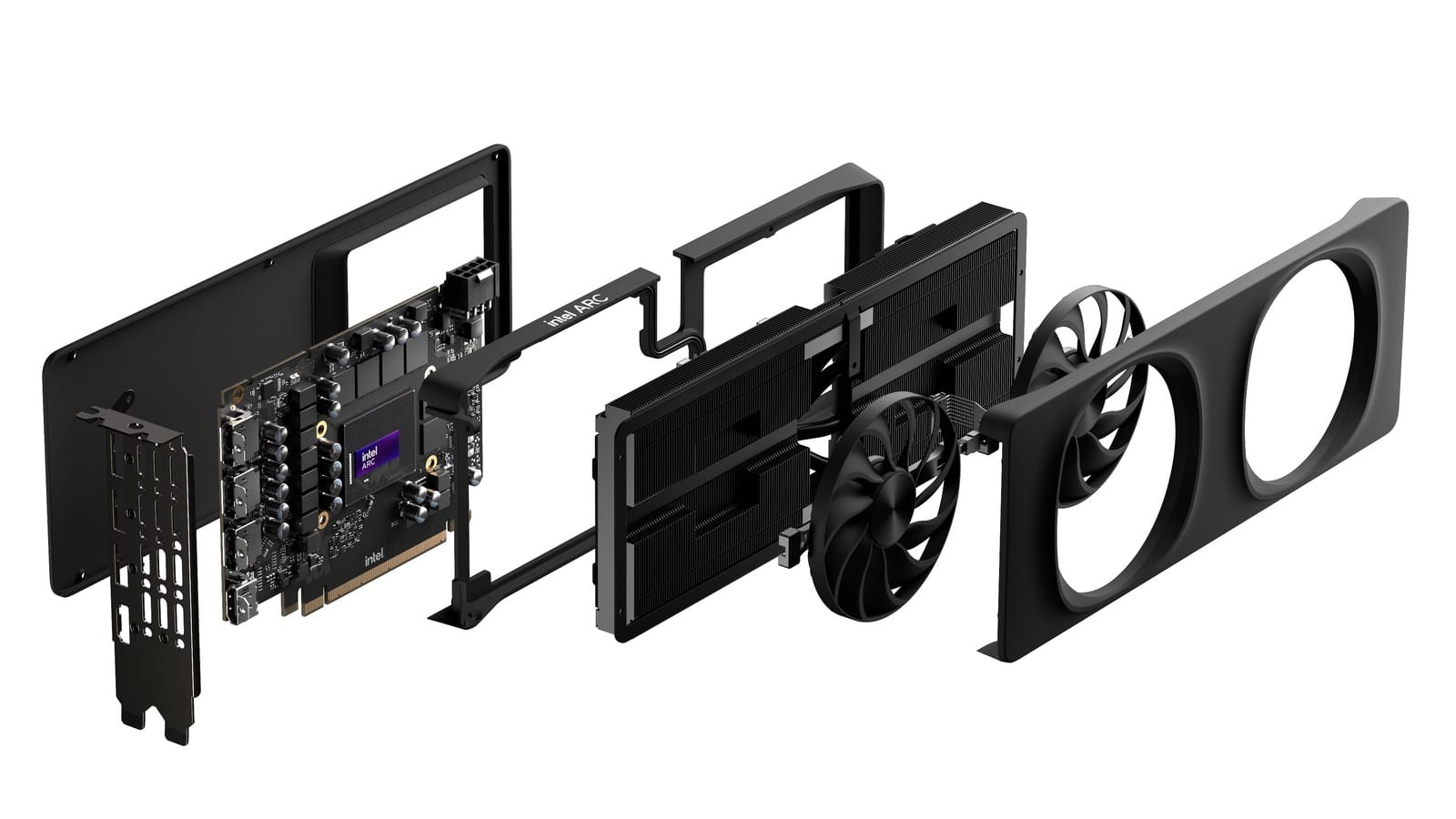
Because the same chip can earn Intel more money elsewhere, and that part of the theory holds up. The B580 runs on Intel’s BMG-G21 chip, and so does the Arc Pro B60, a workstation card for AI. The B60 is basically a B580 with twice the memory: 24 GB against 12 GB, with the same 20 Xe cores and the same memory bandwidth. Partners like Maxsun and Sparkle also sell 48 GB versions, though those are two 24 GB B60 chips on one board.
Intel’s biggest Battlemage chip already goes only into workstation cards like the Arc Pro B70, which I covered last month. So “Intel puts the good silicon where the margins are” is a pattern you can see.
The part Haze can’t show is that the Arc Pro cards are “selling really well”. There are no sales figures out there. Street prices do hint at demand: the cheapest Arc Pro B50 listing in the US was $639 on November 2, according to the GPUPrix price tracker, and the B60 was around $1,000, both well above where they started.
Is this like the RTX 5090 story?
Only on the surface. The RTX 5090 rumour started with a leaker too, but it picked up real evidence along the way. Micro Center switched many 5090 models to “Not Carried”, a graphics card partner told der8auer it couldn’t order 5090 chips and memory even on backorder, and PC Games Hardware reported several industry sources confirming that no new chips were going to GeForce cards. Nvidia still denies the card is finished. Jeff Fisher, who runs Nvidia’s GeForce business, said in a Taipei interview in October, in HotHardware’s translation, that the RTX 5090 “has certainly not been discontinued, and NVIDIA will continue shipping them”, while admitting supply is “somewhat constrained”, as HotHardware reported.
The B580 story has none of that: no retailer pulling it, no partner on record, no response from Intel. Calling it an “RTX 5090-like fate” also assumes the 5090 had a fate, and Nvidia says it didn’t.
How much does the Arc B580 cost now?
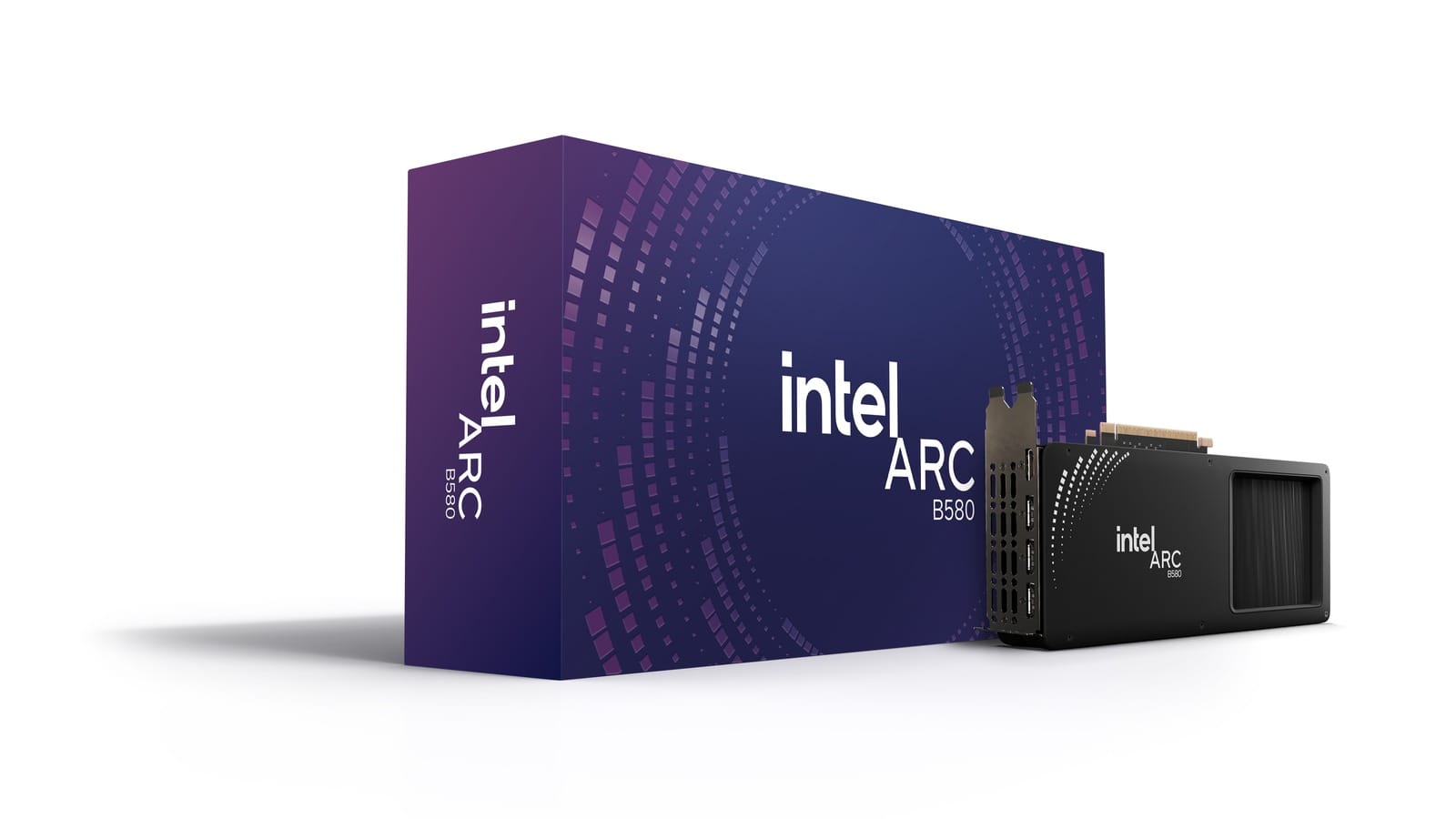
About $330 to $370 in the US, against its $249 launch price. Club386 found it at $329 at Newegg on November 2, with only the ASRock Challenger in stock, and the GPUPrix tracker had the cheapest US listing at $371 the same day. The UK is worse. At Overclockers UK, the only models in stock are £499.99 and up, and every cheaper version is sold out.
| Card | Launch price | Cheapest now | Where, when |
|---|---|---|---|
| Intel Arc B580 | $249 | About $330 to $371 | Newegg via Club386; GPUPrix, November 2 |
| Intel Arc B570 | $219 | $290 | GPUPrix, November 2 |
| Nvidia RTX 5060 8 GB | $299 | $450 | GPUPrix, November 2 |
| AMD RX 9060 XT 16 GB | $349 | $650 | GPUPrix, November 2 |
The card did sell out at launch in December 2024, but the price jump is recent: GPUPrix puts its median US price over the last three months at $260. It has climbed with the rest of the market as memory costs soared. TrendForce reported that consumer GDDR6 spot prices went from about $2.50 to $7.50 per gigabyte between autumn 2025 and mid-2026.
Is the Arc B580 still worth buying?
At today’s prices it’s still the cheapest of the three, and it has more memory than Nvidia’s card. A B580 at around $371 sits well under the cheapest RTX 5060 at $450 and the RX 9060 XT 16 GB at $650. Every card in this class costs well over its launch price right now, so the B580 hasn’t gone up more than its rivals. It’s gone up about as much.
The 12 GB of memory is still the main reason to pick it over an 8 GB RTX 5060, especially for newer games at higher settings and for people running AI models at home. What you give up is DLSS, Nvidia’s upscaler, which is in far more games than Intel’s XeSS: over 760 games and apps by 2025, against the 150-plus Intel counted for XeSS at the B580’s launch, plus a weakness with older processors that the next section gets into.
Will Arc B580 owners keep getting drivers?
Yes, for now. When Intel split its graphics drivers in September 2025, it kept the Alchemist and Battlemage cards, the B580 included, on the main game-ready branch, while older integrated graphics moved to a legacy branch with security fixes every three months. The B580 is still getting new game drivers in 2026. Intel hasn’t said for how many years that continues. The closest precedent is Intel’s own A750 Limited Edition card, which it stopped making in 2025 while partners kept selling their A750s, and the A750 still gets the main drivers.
Was the B580’s slowdown on older CPUs fixed?
Partly. The B580 had a known problem where it lost a lot of performance with older or slower processors, because its driver leaned harder on the CPU than Nvidia’s or AMD’s. Hardware Unboxed found that drivers from Intel’s 7028 branch mostly fixed it in the games it had flagged, with Spider-Man Remastered up 36% on average with a Ryzen 5 5600, as Club386 reported. It isn’t a blanket fix. The improvements are per game, and a Ryzen 5 2600 still lost performance. If your CPU is a few generations old, it’s worth checking benchmarks for the games you actually play.
What about Intel’s next gaming GPU?
There’s no official word. The bigger Battlemage gaming card, the B770, was reportedly cancelled for lack of financial viability, according to XDA’s sources as reported by PC Gamer in February, and its chip went into the Arc Pro B70 and B65 instead. A leaker known as Jaykihn claimed in April that Intel had also cancelled its next-generation Celestial gaming cards, as Tom’s Hardware covered. Intel hasn’t confirmed either. Its most recent line on the subject came from Alex Katouzian, who runs Intel’s PC chip business, at Computex in June. He called graphics “super important” to Intel’s PC lineup but dodged the question about desktop graphics cards.
Battlemage itself had a scare like this too. In May 2024, a leaker’s claim that there was “no trace of Battlemage” had Notebookcheck raising the possibility of a delay “or even cancellation”. Seven months later, Intel announced the B580.
Does Nvidia’s stake in Intel have anything to do with it?
Nothing connects the two. Nvidia agreed in September 2025 to buy $5 billion of Intel stock at $23.28 a share, a purchase that closed in December, as part of a deal for the two companies to develop PC chips and data centre processors together, per Nvidia’s announcement. Some people have pointed at it as a reason Intel might back away from gaming cards, but nobody has reported any link between that deal and the B580.
What happens next?
Watch for two things: an end-of-life notice from Intel, or retailers dropping the B580 the way Micro Center dropped many of its RTX 5090s. Either would turn this from a guess into a story. Until then, it’s one post with one “might” in it, and a card that’s still on sale.
Nerd Alert
Your Turn
What are YOUR thoughts
What have your experiences been? Let us know.