Hands-on / First look · First Impressions · Handheld Gaming · Retro Gaming · Retro handhelds
KONKR Pocket Advance First Impressions: Pixel-Perfect GBA for $129
My first 45 minutes with the KONKR Pocket Advance, AYANEO’s $129 GBA-style Android handheld: the screen, the buttons, AYASpace and what it plays.
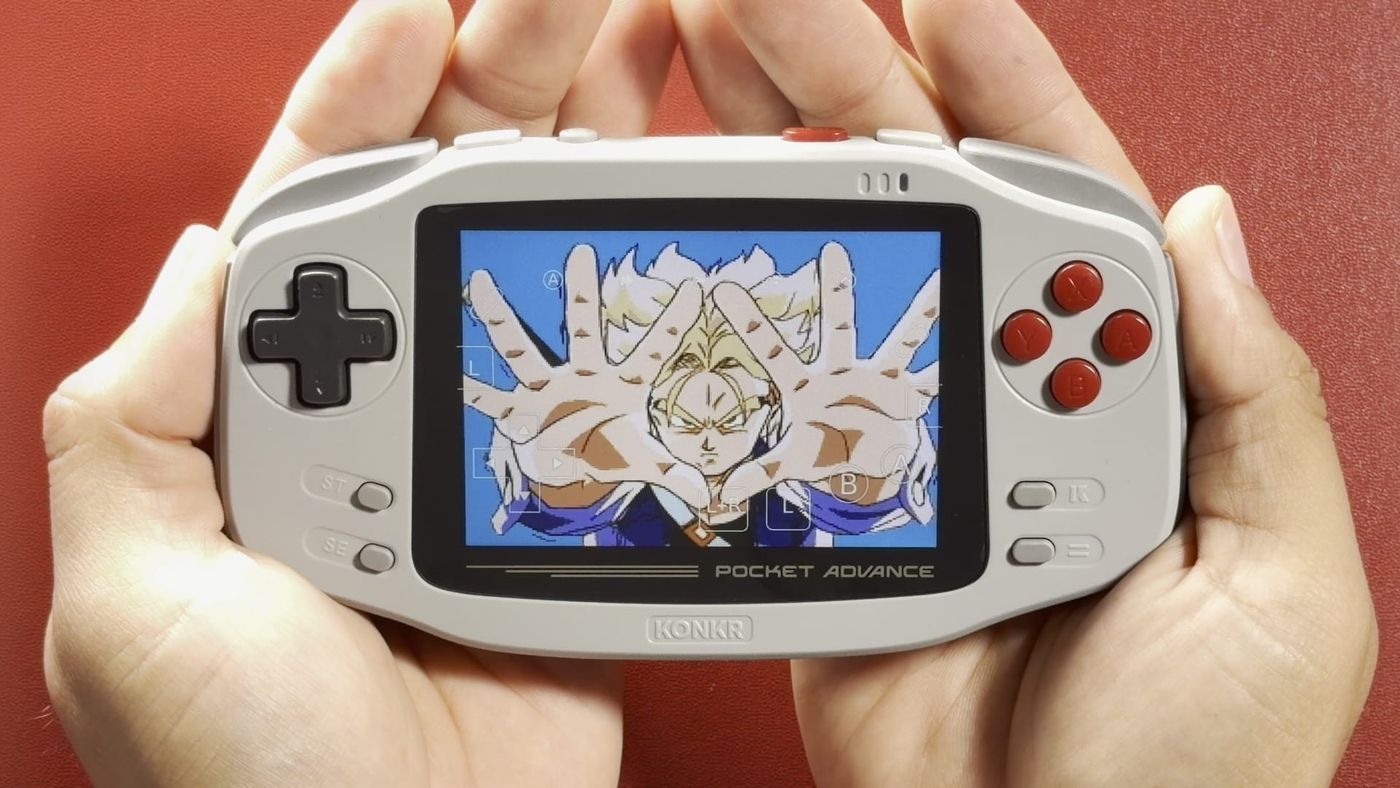
The Game Boy Advance and me, we have some good memories. I remember playing Tony Hawk’s Pro Skater 2 on it, and that was a technical revolution at that point in time. So when KONKR, AYANEO’s budget brand, made a handheld that’s very reminiscent of the original, I pre-ordered the 4GB, 64GB model for $109 ($129 at retail). These are my first impressions after about 45 minutes with it.
UPDATE What’s new since publishing
AYANEO says it has shipped about 90% of all Pocket Advance pre-orders. That figure comes from an email to customers, as reported by Retro Handhelds. Most of the orders still waiting are the limited Onyx Ice edition. AYANEO planned that one to ship last from the start: its August 10 announcement set Onyx Ice shipping for the end of October, and the Onyx Ice store page still says the same. AYANEO adds that its production team is already scheduling the next batches. As of October 18, every colour still shows in stock on AYANEO’s store.
What’s in the box?
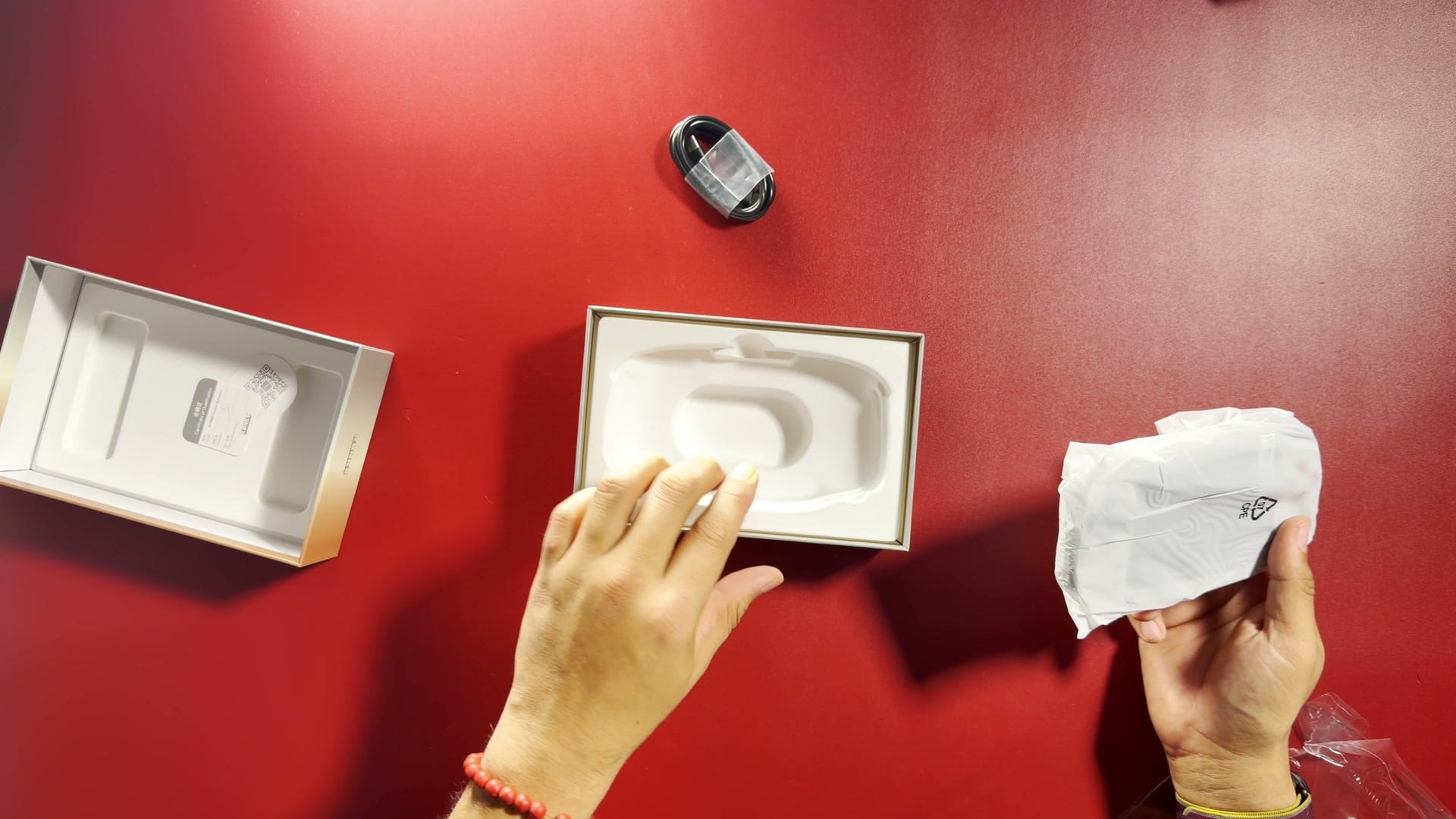
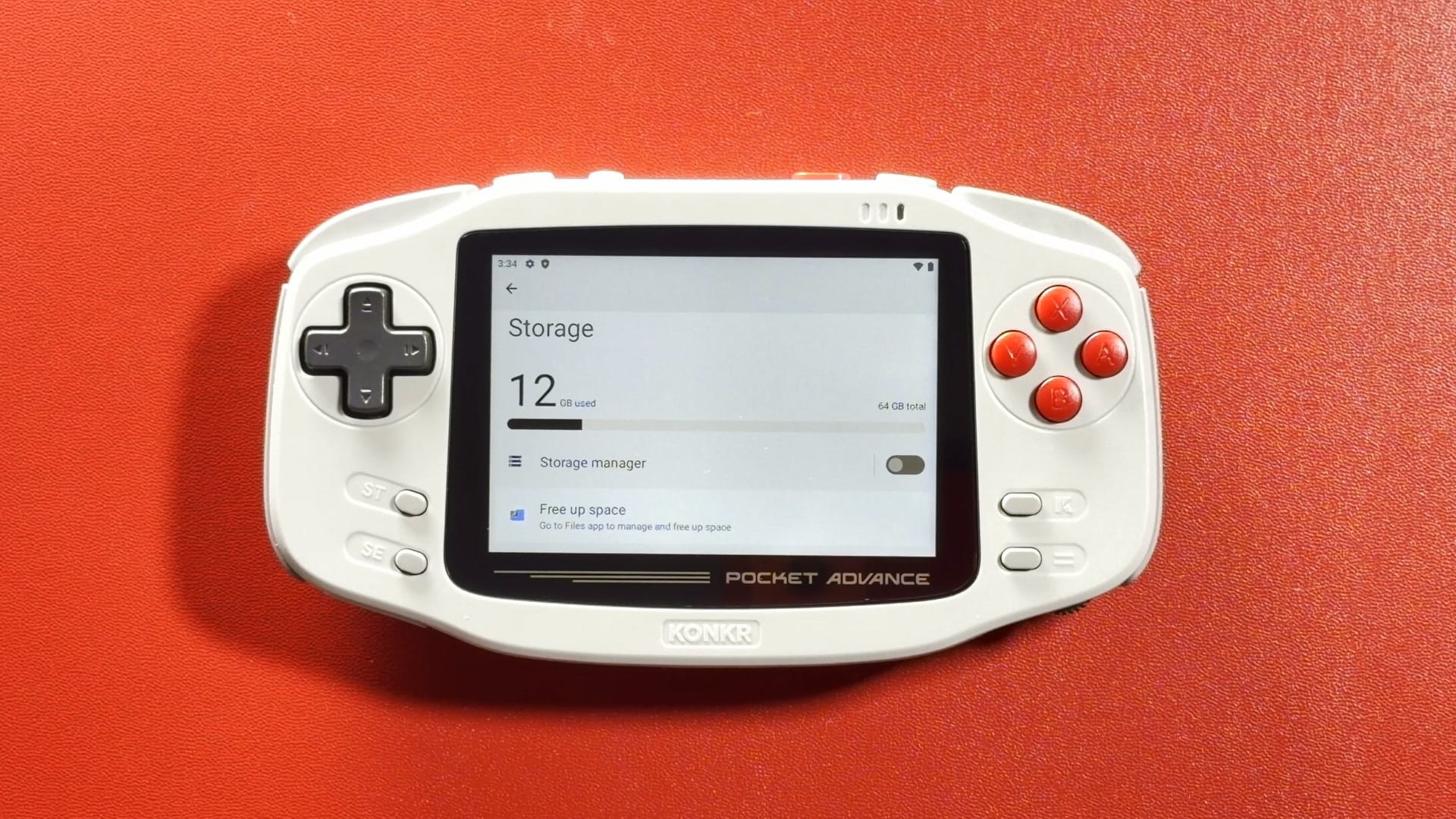
Just the handheld and a USB-C cable. No charger, no microSD card and no games, so budget for a card and bring your own library. Mine also had 12GB of its 64GB already spoken for out of the box. AYANEO sells a carrying case ($13.90) and a tempered-glass screen protector ($8.90) separately.
What are the KONKR Pocket Advance specs?
The Pocket Advance runs Android 12 on a MediaTek Helio G90T, the same chip as AYANEO’s Pocket Air Mini. The screen is beautiful: 3.5 inches at 960x640, exactly four times the GBA’s resolution, so every pixel scales evenly.
| Spec | KONKR Pocket Advance |
|---|---|
| Screen | 3.5-inch LCD touchscreen, 960x640, 3:2, 60Hz |
| Processor | MediaTek Helio G90T, 8 cores, up to 2.05GHz |
| Memory and storage | 3GB + 32GB or 4GB + 64GB, plus microSD |
| Battery | 4000 mAh, USB-C fast charging; AYANEO claims 4 to 10 hours |
| Cooling | Active fan, rear intake and top exhaust |
| Software | Android 12 with Google Play, AYASpace and AYAHome |
| Wireless | Wi-Fi 5, Bluetooth 5.0 |
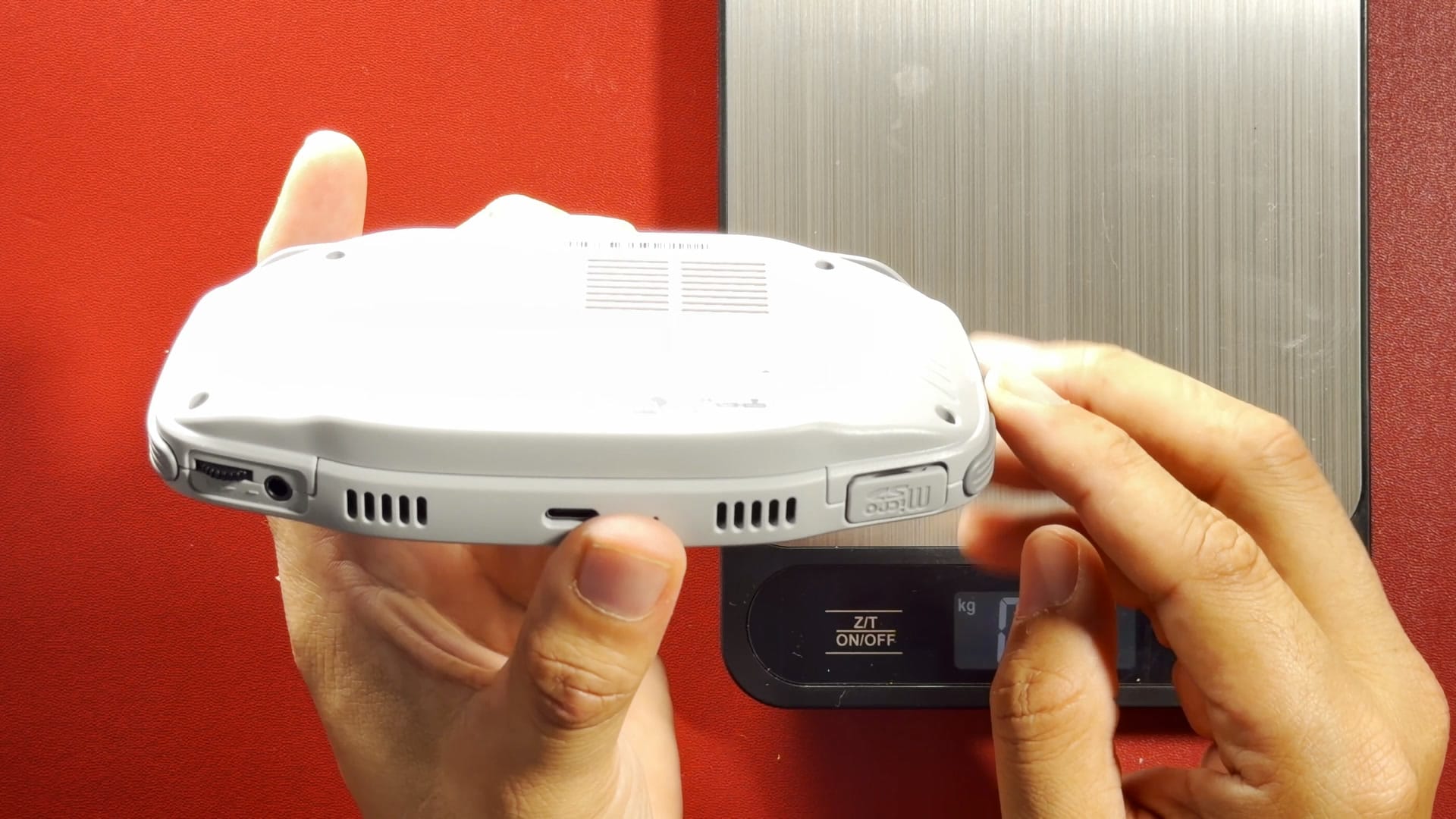
| Ports | USB-C 2.0, microSD, 3.5mm headphone jack |
| Size and weight | 151.3 x 82.4 x 22 mm, about 224 g |
| Colours | Heritage Gray, Navy Blue, Coral Orange, Peach, and a limited Onyx Ice |
| Price | $109 (3GB) or $129 (4GB); Onyx Ice $129 or $149 |
Three things are missing. There are no analog sticks and no gyroscope, and the USB-C port is USB 2.0, so there’s no video out to a TV. You play this one in your hands, on the D-pad.
How does it feel?
It has a nice weight to it, about 224 grams, and there’s a beauty in its simplicity.
The face buttons are silent membranes, so quiet my microphone barely picked them up. Given the choice I’d take clicky, but at this price they’re fine. Retro Handhelds is less forgiving: it calls them “crazy mushy”, and Retro Dodo describes the D-pad as soft and padded, with no click. The shoulder buttons do click lightly, and next to them sit two extras, LC and RC, that you can remap.
Reviewers who’ve had it longer mostly like the build. Time Extension calls it sturdy, with plastic that feels premium. Retro Dodo is cooler on it: no metal, no glass, and its L1 and R1 didn’t quite match each other.
On the screen, Time Extension praises the brightness and viewing angles, and liked it more than the modded screen in its own GBA, while Retro Dodo calls it just okay for a $100 device, though bright, with no ghosting or light bleed.
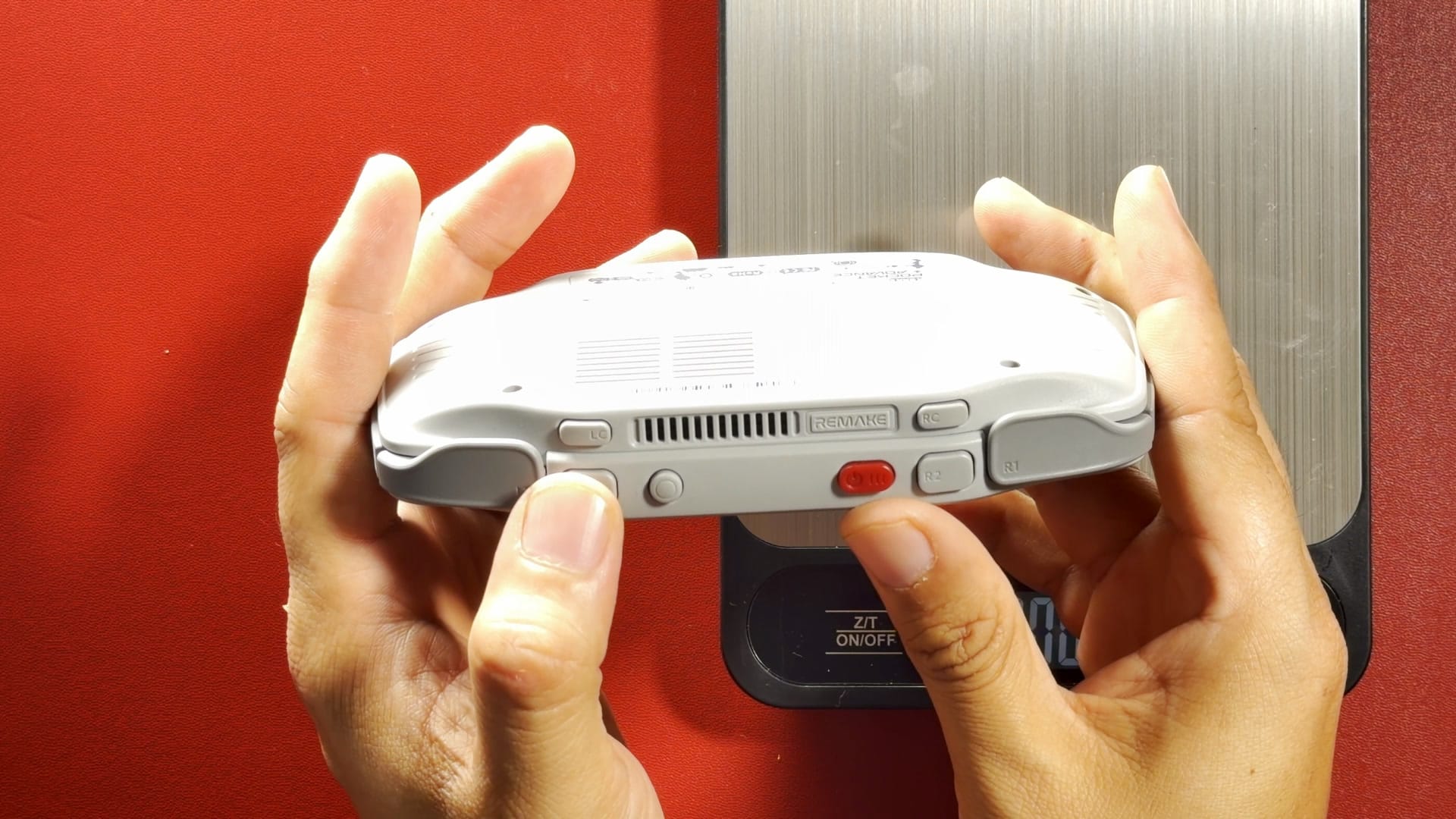
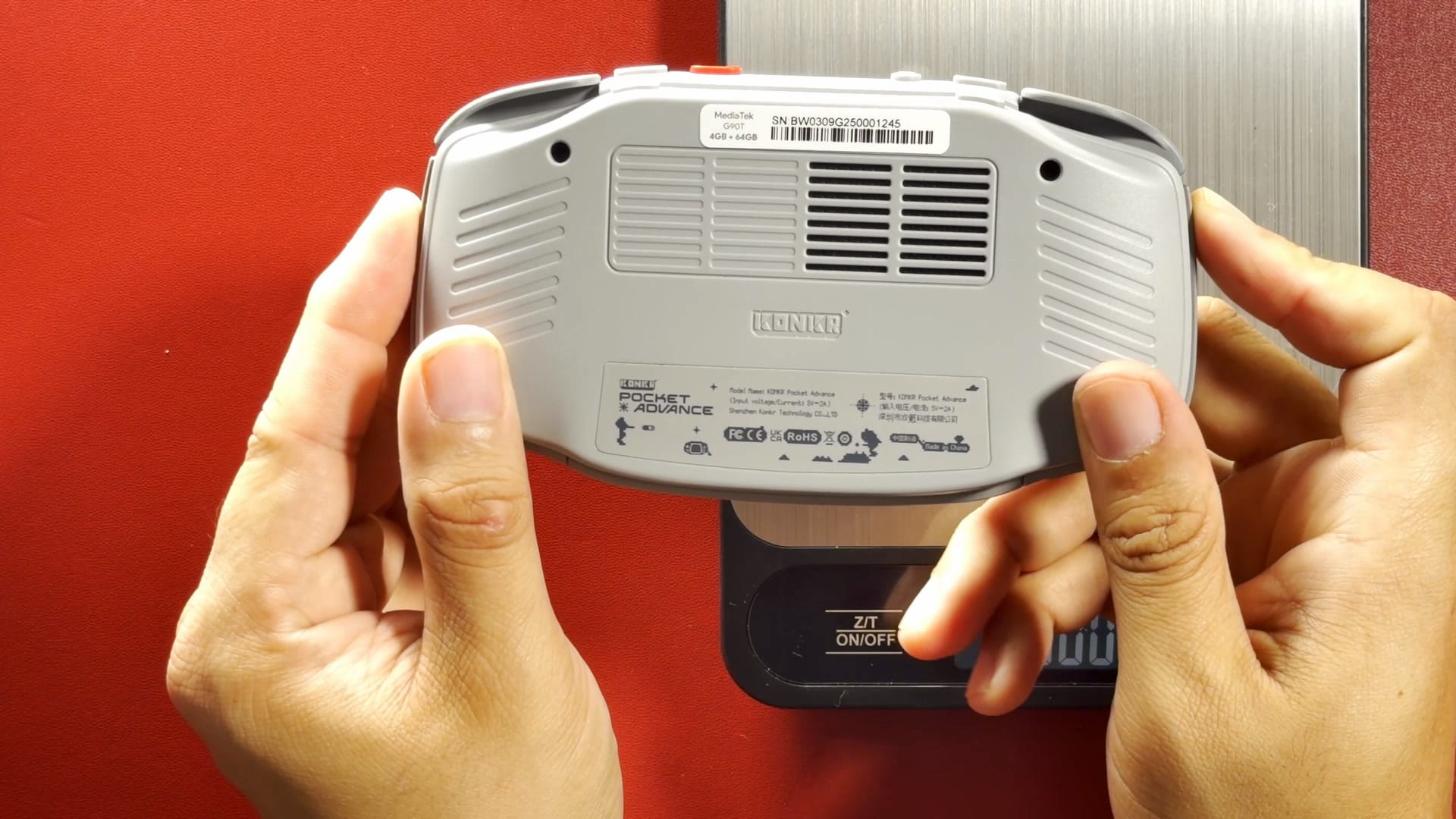
Two things I only figured out after filming. There’s a real fan in there, breathing in through the back and out the top. And the KONKR button opens the performance and fan modes; the button below it is Home.
The fan is quiet in normal play, according to Time Extension and Retro Handhelds. DROIX measured about 50 dB on High and 60 dB on Max, so you’ll hear it. DROIX also read about 44°C on the display, and Retro Dodo notes it gets warm.
Why does a GBA handheld need this much power?
Strictly speaking, it doesn’t. AYANEO has never said why it picked the G90T. My guess is that reusing the Pocket Air Mini’s chip was cheaper, and the spare power buys room for shaders and cooler running in Eco mode. The side effect is the fun part: DROIX measured 361,668 in AnTuTu, which puts PSP, N64 and Dreamcast in reach.
What does it play?
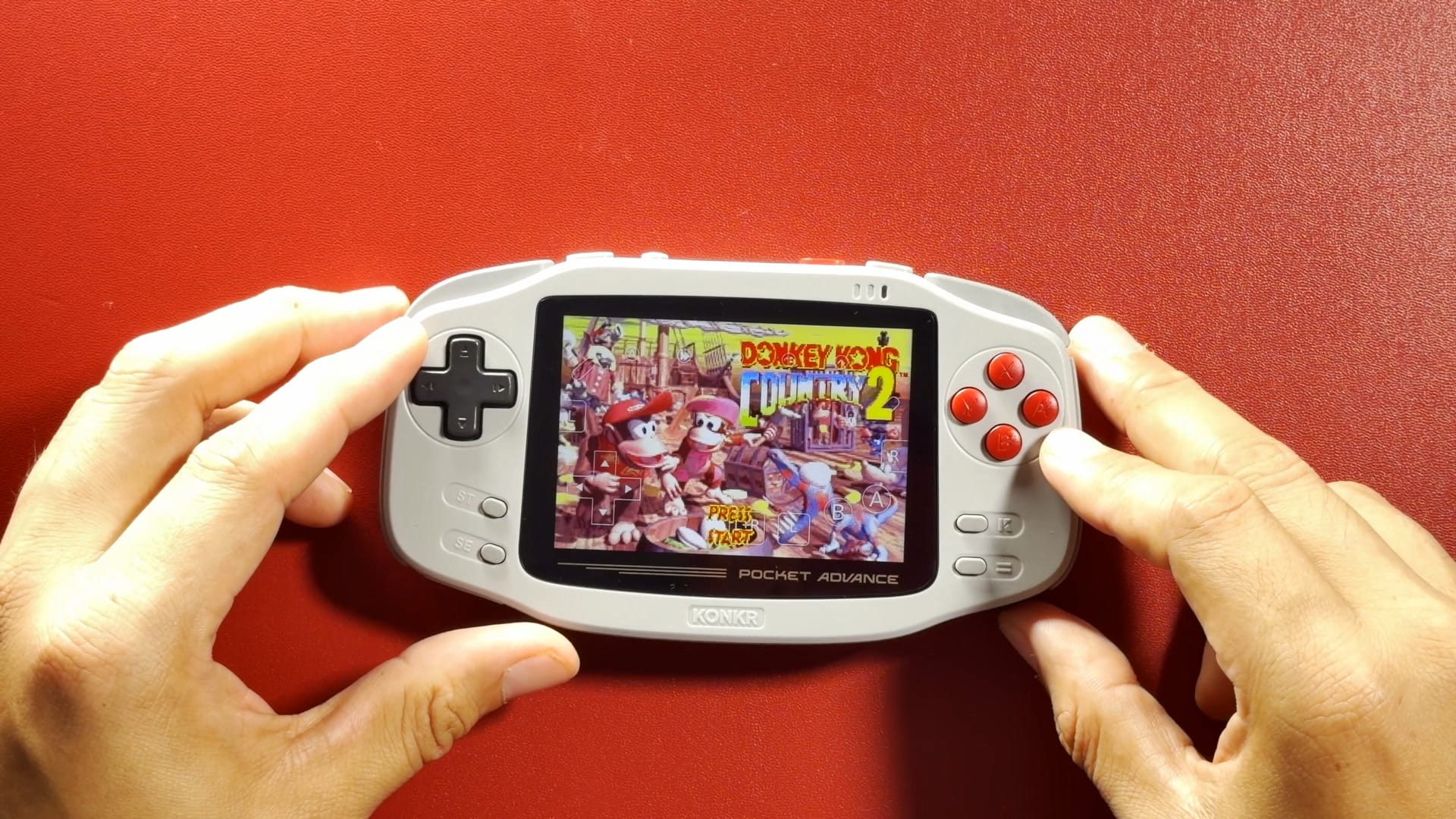
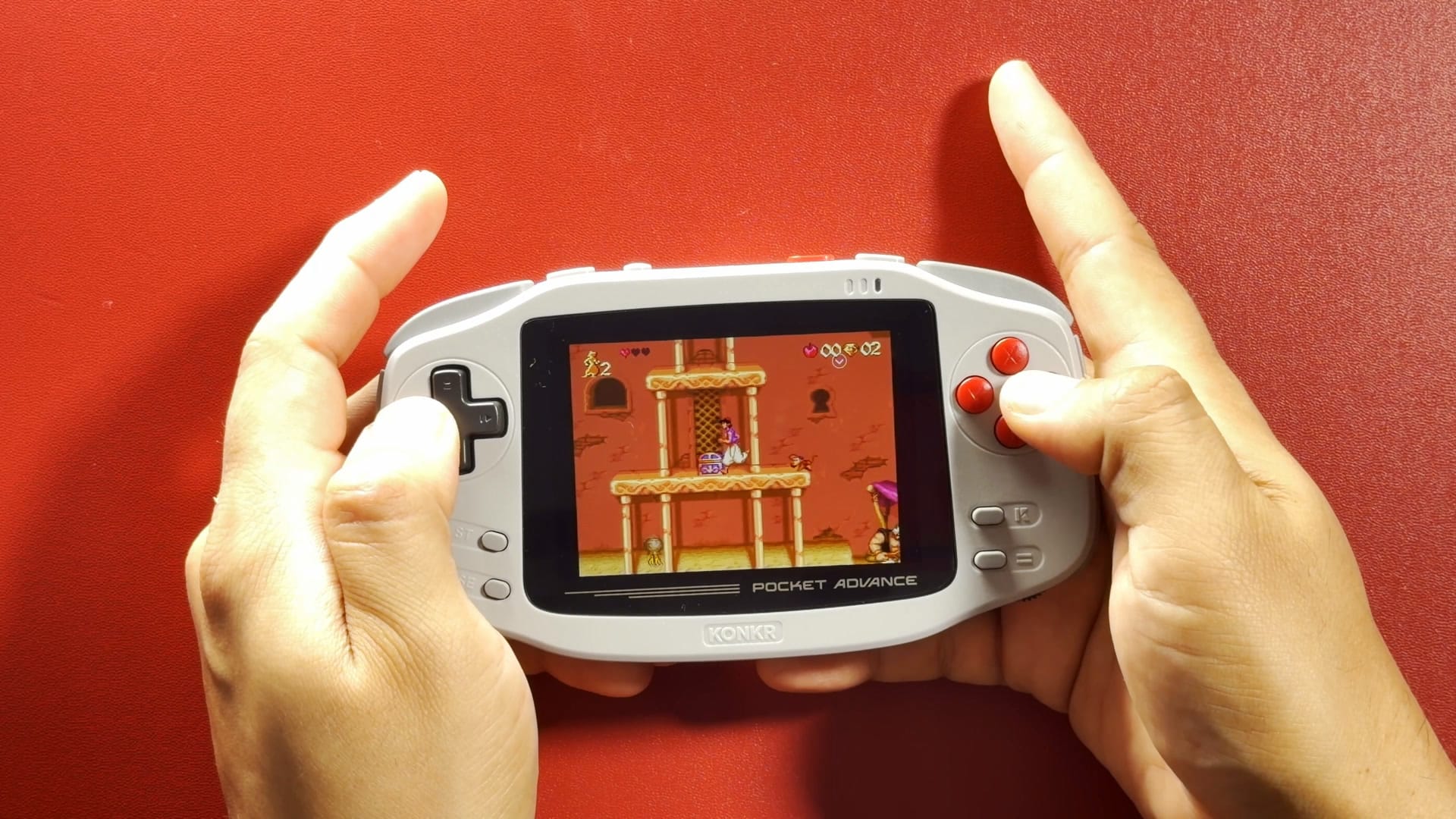
Plenty, as long as the game doesn’t need a stick. GBA, Super Nintendo and PS1 all ran smoothly for me, Time Extension found Mega Drive just as comfortable, and DROIX says PSP runs very well at twice its resolution. Only GBA fills the 3:2 screen, so Super Nintendo and Mega Drive get black bars at the sides, which Retro Handhelds finds pretty minimal even on default settings.
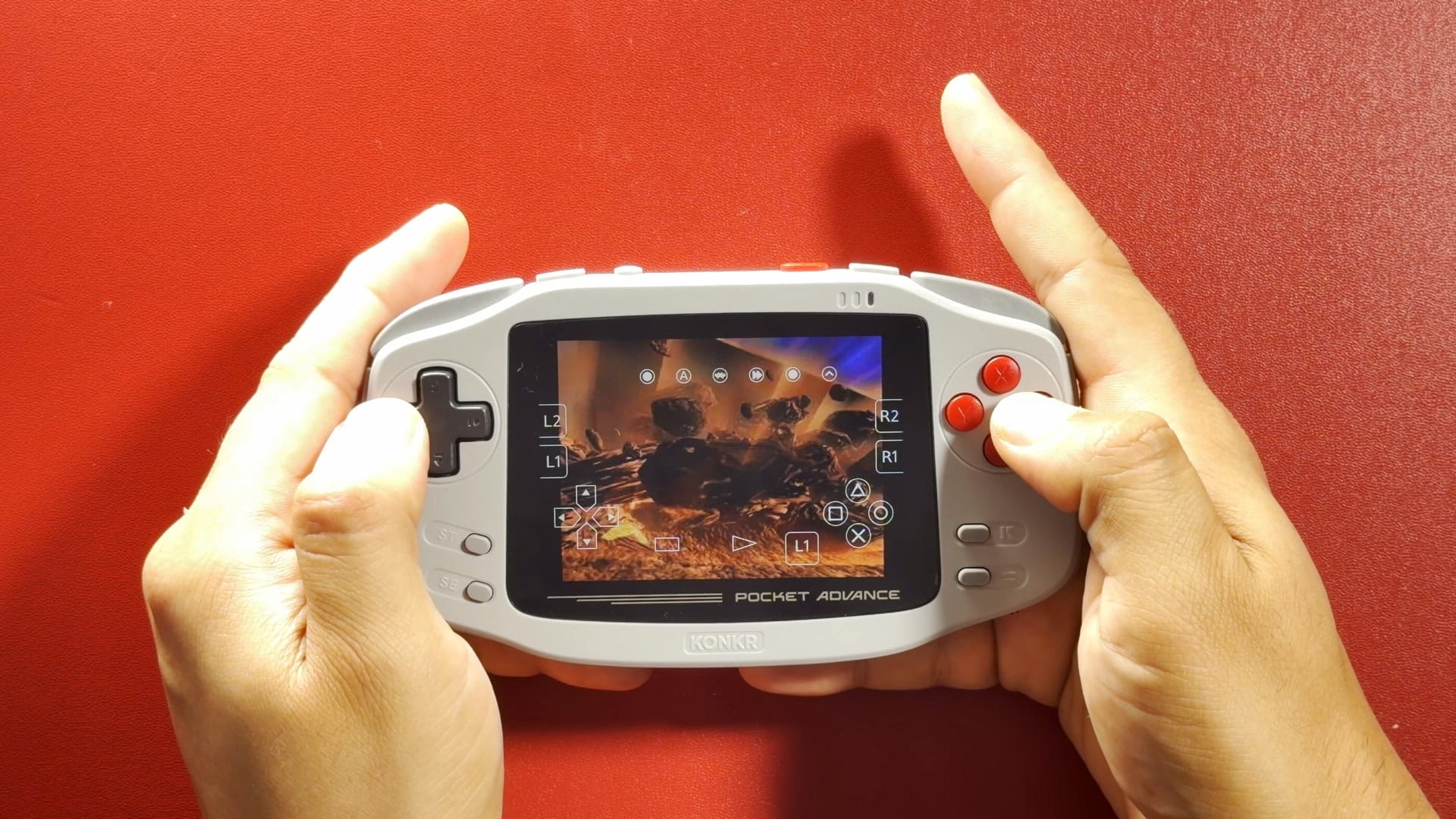
N64 and Dreamcast run, but many of their games want an analog stick. A software toggle turns the D-pad into the left stick, which Retro Handhelds calls “both a handy and miserable experience.” I skipped Dreamcast because I thought it needed a BIOS file; turns out the Flycast core treats it as optional, and ReDream needs none. PS2 and GameCube are a stretch: Retro Dodo called God of War a no-go, even though AYANEO’s launch material promises smooth PS2.
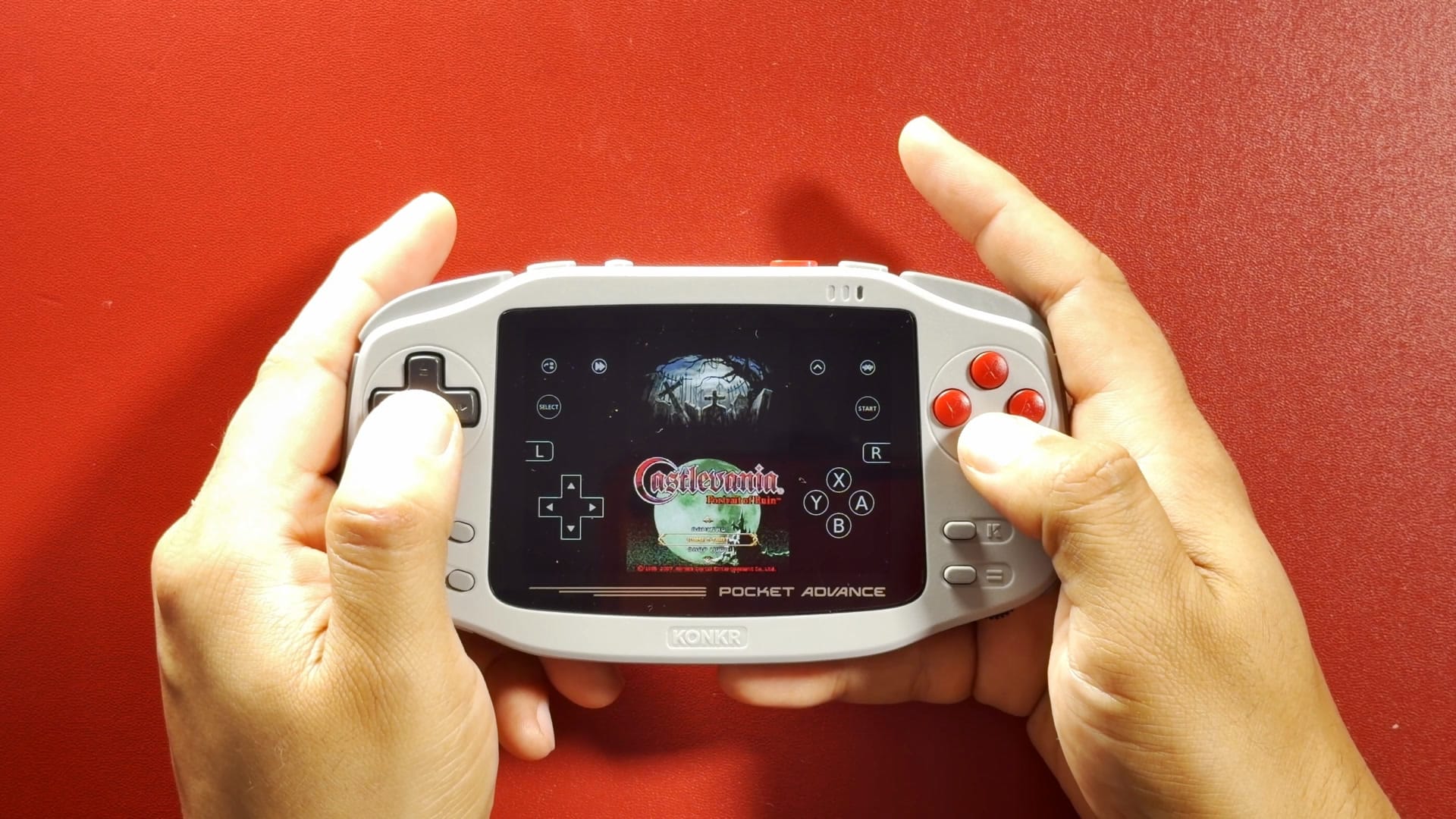
And DS? It runs. I tried one just to see whether it could. But one screen and a game built for two don’t really get along.
How’s the software?
Rough out of the box, but fixable. AYANEO’s AYASpace launcher found the games I dropped into its ROM folder right away, but not my artwork. Then it asked for a RetroArch core, and once RetroArch was installed, it just opened RetroArch. No game. Reviewers aren’t fans either: Retro Handhelds calls AYASpace “absolutely terrible” and suggests Daijisho or Beacon, and DROIX notes it can’t scrape screenshots.
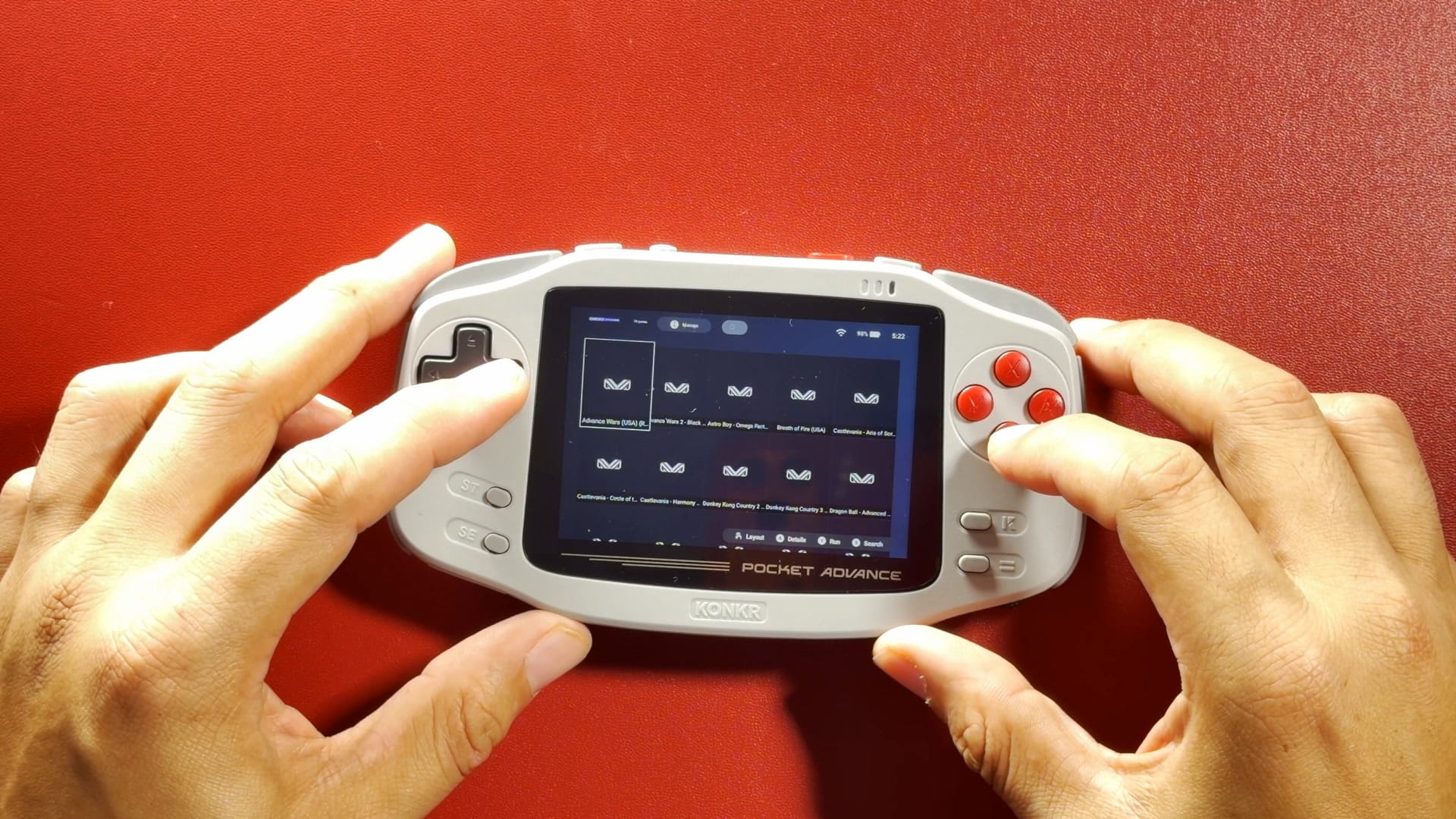
The fix is the best thing about Android: swap the front end. I’m using RetroArch directly for now and moving to EmulationStation, with a microSD card already prepped. Build the card ahead of time and you’re playing in minutes. The ES-DE Android guide suggests getting RetroArch from retroarch.com or F-Droid instead of the Play Store.
One catch: Android 12 is getting old. DROIX found some Play Store games, like Alien: Isolation, unavailable on it. Retro Handhelds found some Android games fight the small screen (Stardew Valley’s dialogue boxes filled it), and PC games are a stretch: GameNative crashed often, while streaming from a PC with Artemis held up better.
What can’t it do?
Run Linux, for one. There’s no Linux build for this device or any MediaTek chip, going by the device lists of Batocera, ROCKNIX and Knulli as of October 12. AYANEO hasn’t announced an Android upgrade past 12 either; its updates are for its own apps. It can’t read your old cartridges, as Time Extension points out, and there’s no link port for cable multiplayer.
How long does the battery last?
Four to six hours, going by reviewers’ tests. AYANEO claims four to ten. DROIX ran it flat out and got just under four, and Retro Dodo averaged about six in mixed play, with 45 minutes on the charger getting it to about 80%. It fast-charges over USB-C PD, though AYANEO doesn’t publish the wattage.
How loud does it get?
Really loud, even from about two feet away at max volume. The speakers fire downward, and PS1 games came through even louder than GBA. There’s a 3.5mm jack for when the rest of the house disagrees.
The volume wheel sits where the GBA’s did and spins endlessly in digital steps, where the GBA’s dial was analog. I found it really hard to bump by accident. Retro Dodo, Time Extension and Retro Handhelds all say otherwise, so your hands may vary.
How much does it cost, and is it in stock?
AYANEO’s store lists it at $109 with 3GB and 32GB or $129 with 4GB and 64GB, or $129 and $149 for the limited Onyx Ice. As of October 13, every colour shows in stock there in both memory sizes, Peach at the standard prices, and AYANEO gives you 7 days from delivery to ask for a refund or replacement. In the UK, DROIX lists it at £119.95 and £138.95 with a one-year warranty.
Early buyers had to be patient. AYANEO announced it on August 5 with shipping from the end of August, the first batch all but sold out within days, and a restock and a new Peach colour followed. Many orders took weeks, and Retro Handhelds reported that Peach and Onyx Ice still hadn’t shipped by September 17.
How does it compare with the RG34XX and Pocket Air Mini?
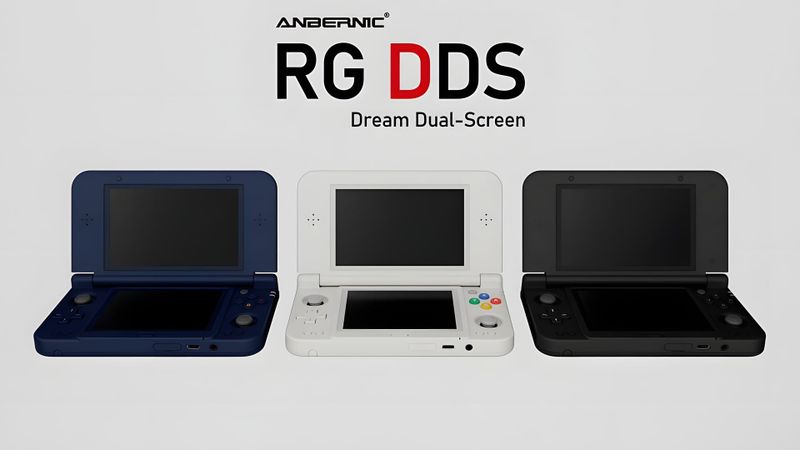
Anbernic’s RG34XX costs less, weighs less, runs Linux and has TV out, but its screen and chip are a big step down. AYANEO’s Pocket Air Mini has the same chip, a bigger 4:3 screen and two sticks, if you can find one: its standard colours are sold out. And if you’d rather go vertical, KONKR has since announced the cheaper Pocket Block. A clamshell SP-style model is only a promise so far: AYANEO’s CEO said during a livestream that it will make one but hasn’t worked out how yet, as Time Extension reported in August. Retro Remake’s Taki Udon is also prototyping an FPGA GBA SP that he says plays real cartridges. For a clamshell you can order now, Anbernic’s dual-screen RG DDS is on pre-order from $284.99 for 8GB and 128GB, though it’s built around DS and 3DS games.
| KONKR Pocket Advance | Anbernic RG34XX | AYANEO Pocket Air Mini | |
|---|---|---|---|
| Screen | 3.5-inch 960x640 | 3.4-inch 720x480 | 4.2-inch 1280x960 |
| Processor | Helio G90T | Allwinner H700 | Helio G90T |
| Software | Android 12 | Linux | Android |
| Analog sticks | No | No | Two Hall effect sticks |
| Price | $109 or $129 | From $59.99 on sale | From $109.99 (standard colours sold out) |
Is it worth $129?
Honestly, that’s going to be subjective. We all have different situations, and we’re all going to have a different answer. But to me personally, this is absolutely worth it. It’s a fantastic little device. The screen is beautiful, the power is there, and it can play PlayStation 1 games. PlayStation 1, PlayStation Portable, Super Nintendo, Sega Genesis, Nintendo 64: these are the games that defined my generation. I grew up alongside them, so this little device is really a blast from the past, a piece of nostalgia that hits close to home for me.
It’s also a very extensible little piece. I can install any front end I want, and I’m going with EmulationStation for myself. So all of that put together, for $129 and 4GB of RAM, I think it’s a fantastic value proposition and worth considering if you’re in the market for something like this.
Obviously, the competition is stiff. Handhelds like the Odin 3 try to conquer it all, and my own Odin 2 Portal Max, one of my favorites, can emulate up to the Switch. But those cost a lot more, and at $129, I do believe this one is worth the value it provides.
On the shelf
Retro handheldsSee the whole story →Nerd Alert
Your Turn
What are YOUR thoughts
What have your experiences been? Let us know.