News · News · Retro Gaming
Retro Song Bird Plays the Soundtrack of Any Game Boy Cartridge You Plug Into It
Plug a Game Boy cart into Retro Song Bird and it plays the game’s soundtrack. It also backs up saves and turns a Game Boy Camera into a webcam. $79 on Kickstarter.
https://averagetechnerds.com/retro-song-bird-game-boy-cartridge-music-player/

You’ve got a drawer of Game Boy cartridges, and every one of them has a soundtrack you could hum from memory. Retro Song Bird lets you listen to them without the game. Push a Game Boy or Game Boy Color cart into the top and it plays that game’s music through its own speaker. It’s on Kickstarter now from $79, and it’s already well past its goal.
What is Retro Song Bird?
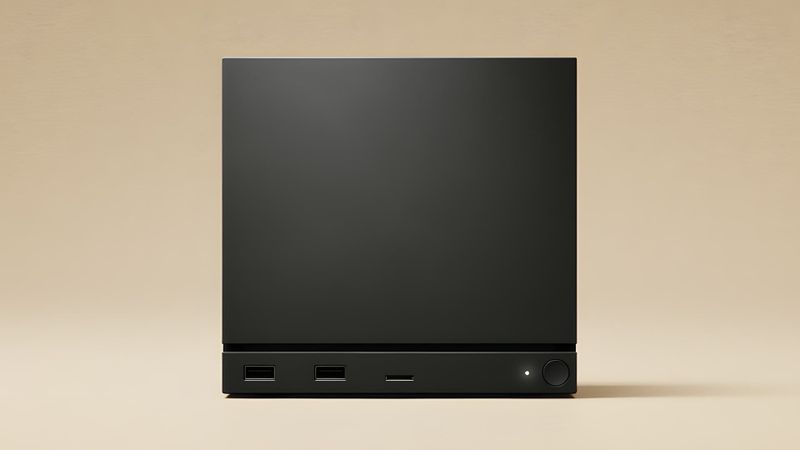
A little box speaker with a Game Boy cartridge slot on top. There’s no screen. Push in a cart. The soundtrack starts. Two red buttons skip back and forward through the tracks, and two yellow ones set the volume. Everything else, like alarms, is set up from a web page it serves over Wi-Fi.
Every track plays. Sound effects too. Want it louder? There’s a stereo line out on the back for your hi-fi. Inside, the speaker is rated at 3 watts, six times the original Game Boy’s 0.5, according to its maker in an interview with Blog2Geeks.
How does it get the music out of a cartridge?
It doesn’t play a recording, and there’s no original Game Boy sound chip inside either. Retro Song Bird keeps a map of more than 1,900 cartridges. When you plug one in, it reads the cart’s header to know which game and which version it is. Then it reads only the parts of the game that hold the music and the sound code.
From there, it does what the Game Boy’s sound chip would do with that music code, step by step. So you hear the game’s own music, made the same way the Game Boy made it, without the rest of the game running.
Each supported game needs a small “recipe” that points at the right spots in the cartridge, and versions from different regions can differ. That’s why the list is 1,900 games and growing instead of every cart ever made. Over-the-air updates add more carts over time. Its maker says he’s filing a US patent on the method.
Which cartridges work?
More than 1,900 games so far, and the hard part, BJ says, is versions. The same game can come in different regions and revisions, and some lay out their code differently, so the music can sit in a different spot. That’s why every recipe is tied to one exact version of a game.
Homebrew is easier. Plug in a game made with GB Studio, or an LSDj cart with your songs on it, and Retro Song Bird spots it on its own and builds the recipe right there, in under 10 seconds. Writable flash carts work too, which is how the mixtapes below get made.
The strangest cart BJ mentions is a rare Japanese one that’s actually a fishing sonar. BJ ordered it to make sure carts with extra hardware work, the way the Game Boy Camera does. That meant reworking his early boards, which didn’t drive all 32 pins on the slot. He thinks they now follow Nintendo’s own hardware specs.
What else can it do?
A lot more than play music, and two of the extras you’d never guess. Plug in a Game Boy Camera and it shows up on your computer as a USB webcam: 128 x 112 pixels, four shades, about 5 frames a second. Your next video call, in proper Game Boy grey. It’s also an alarm clock. It wakes you up with whatever cartridge is in it. Press the button to snooze, or pull the cart to make it stop.
The rest is for collectors and musicians. If you collect, it backs up your save files, so your progress is safe even if a cart’s old save battery gives out. Make music? It’s a chiptune tool too. Each of the Game Boy’s four sound channels comes out as its own USB audio stream, so you can remix them in your music software. Plug in LSDj, a music-making program that runs from a Game Boy cart, and it plays back your saved songs. Two units can even sync over MIDI so you can DJ a set.
Mixtapes are the sweet one. Pick songs from across your collection and flash them onto one writable cart, like a cassette you’d make for a friend. You can also play the plugged-in game right in your browser, Game Genie and GameShark codes and all.
What’s inside, and how do you connect it?
It’s simple inside. There’s an ESP32, a small chip with Wi-Fi built in, so Retro Song Bird serves its own little web page for the browser features and alarms. Around the back you get the stereo out and a USB-C port. Plug the USB-C into your computer and that’s where the separate audio channels and the webcam come through. It doesn’t run on batteries. It’s powered from a fixed power supply, which is also why its speaker can be so much louder than a Game Boy’s.
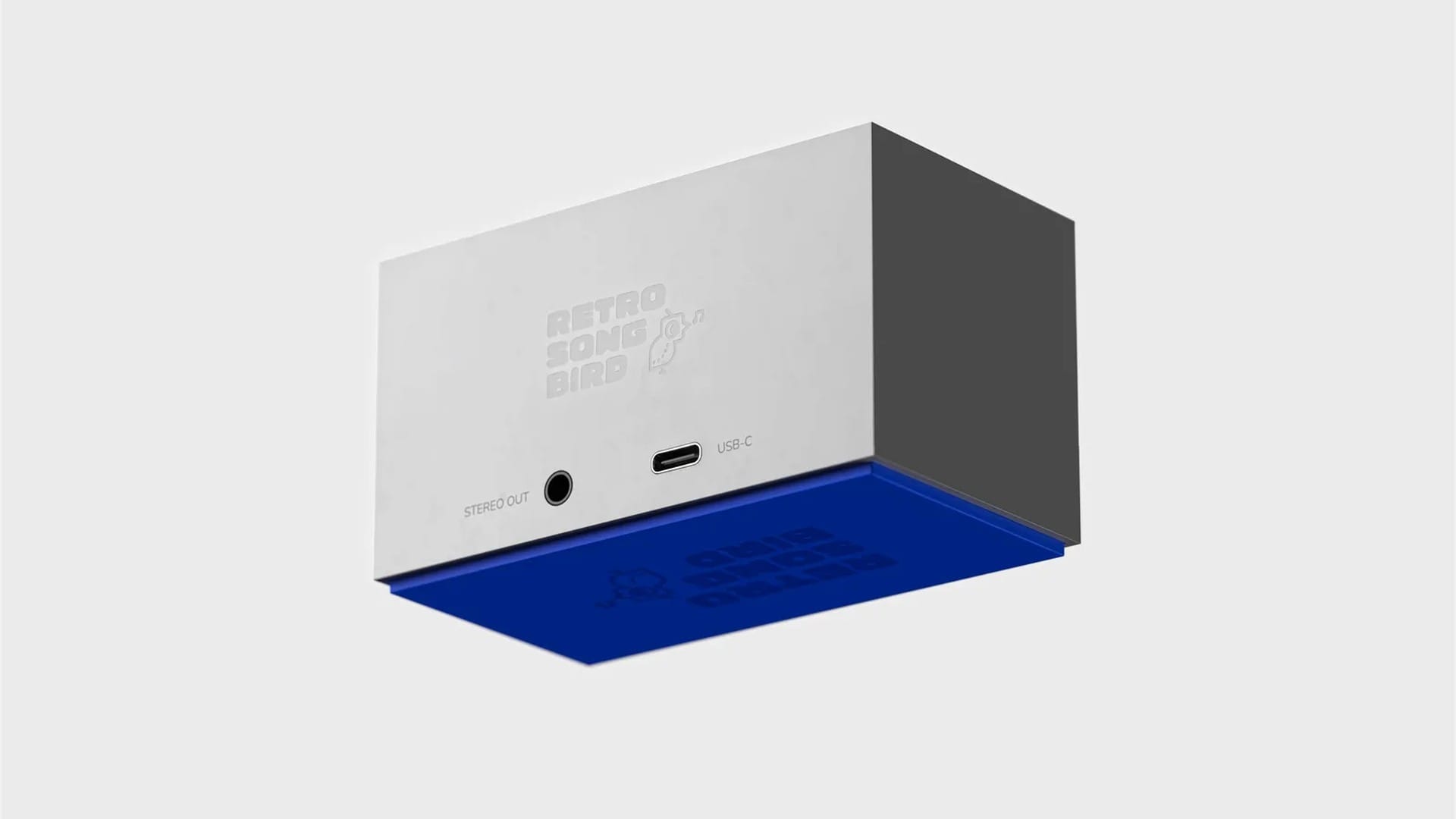
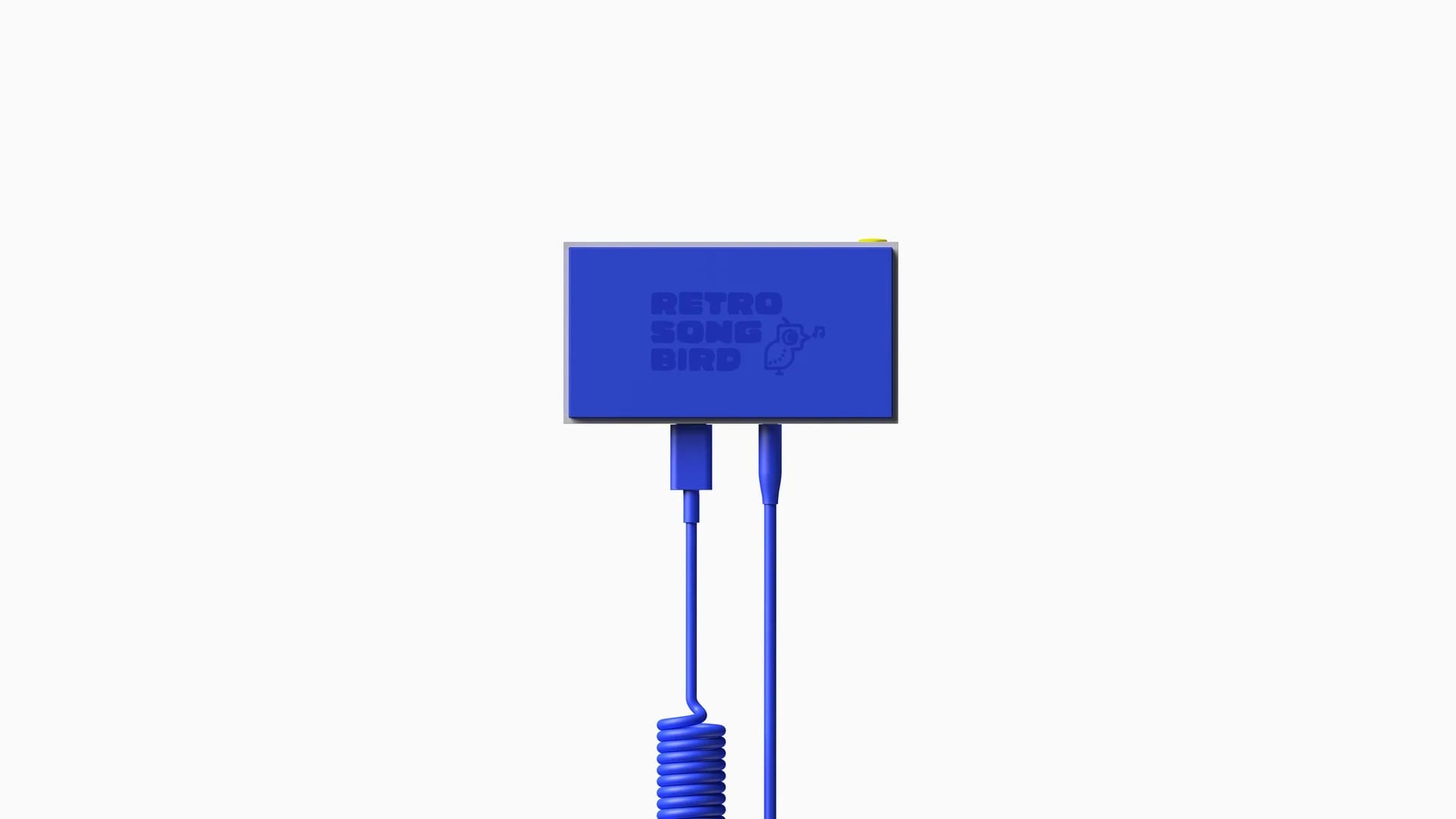
These are renders, remember. The site marks them as subject to change, and the campaign is still sorting out the final molded case and circuit boards.
Who makes it?
One person. BJ, who runs Bird Cartel, lives near Seattle and has made video games for about 20 years. He built Retro Song Bird on evenings and weekends, alongside a full-time job. It started as a small speaker project that played a daily exercise tune. Then, with a few Game Boy carts fresh from a retro store, he saw how fun it would be to plug one into it. He’s always loved the click of a cart going in. In his words on the site, he built it “to add a little joy and whimsy to the world.”
What else has Bird Cartel made?
Small, odd, cheerful things. Before Retro Song Bird, there was Taiso SPKR, a tiny speaker that plays three minutes of calisthenics music every day. That’s the project that led here. Bird Cartel also makes word games like Well Word and Downwordly, plus kanji and kana study apps.
The one that matters most for Retro Song Bird is GB Album Creator, a free web tool. You drop in an LSDj save file and some cover art, and it gives you back a Game Boy ROM that plays your songs as an album, on real hardware or in an emulator. Retro Song Bird plays those albums too, so if you make chiptunes, you can put out a real cartridge release.
How does it compare with other cartridge gadgets?
We couldn’t find another gadget that just plays the music. Other gadgets read Game Boy carts, though, and they overlap in places:
| Retro Song Bird | Epilogue GB Operator | insideGadgets GBxCart RW | Analogue Pocket | |
|---|---|---|---|---|
| Price | $79 pledge | $49.99 | $33 to $37 | $239.99 |
| What it’s for | Playing a cart’s soundtrack | Playing your carts on a PC | Backing up and writing carts | Playing carts on a handheld |
| Needs a computer | No | Yes | Yes | No |
| Built-in speaker | Yes, 3 W | No | No | Yes |
| Save backups | Yes | Yes | Yes | Not advertised |
| Game Boy Camera as a webcam | Yes | Yes | No | No |
| Works with GBA carts | No | Yes, plays them | Reads and writes them | Yes, plays them |
If all you want is your saves backed up, a GBxCart RW does it for much less. If you want to play the games, the Pocket or the GB Operator makes more sense. Retro Song Bird is the one that sits on a shelf and plays the soundtrack, no screen or computer needed.
How much is it, and when does it ship?
The standard pledge is $79 for one, and backers didn’t wait around. The Kickstarter went live on November 15 with a $15,000 goal and nearly tripled it in a day, by Time Extension’s count. You’ve got until December 15 to back it, and the first units are due in April 2027. Every special tier is already gone:
| Tier | Pledge | Status |
|---|---|---|
| Early Bird | $59 | Sold out |
| Launch Bird (limited) | $89 | Sold out |
| Proto Bird (hand-assembled) | $100 | Sold out |
| Bespoke Bird (wooden) | $500 | Sold out |
| Standard | $79 | Available |
| Two-pack | $150 | Available |
Before you pledge, check what shipping, taxes and import fees come to where you live.
Is it risky to back?
It’s crowdfunding, so yes, a bit. BJ has working prototypes, but he built those by hand. Making them in bulk means a factory, molded plastic parts and enough components arriving on time, and any one of those can slip. Treat April 2027 as a target date.
Is it legal?
It’s built so you bring the game. The box comes with no games and no copyrighted game code, and everything it plays comes off a cartridge you own. Nintendo has nothing to do with it, either. Bird Cartel says plainly it isn’t affiliated with Nintendo or endorsed by it.
Does it play Game Boy Advance carts?
No, only Game Boy and Game Boy Color carts. BJ would love GBA support, but GBA games used many different audio systems, which makes them much harder. The NES is closer than you’d think. He split the circuit boards so a bigger cartridge board can swap in, and in October a working NES prototype was close. He has floated a Pro model too, with two cartridge slots and beat sync for DJing without a second unit. None of these are announced products yet, but an NES Song Bird would be a fun one.
Who is it for?
Anyone with a stack of Game Boy carts who wants to hear them again, chiptune musicians who want each channel on its own track, and people who’d honestly enjoy a Game Boy Camera webcam. If all you want is to back up your saves, a cartridge reader does that today. Retro Song Bird is for when you want the music too.
Nerd Alert
Your Turn
What are YOUR thoughts
What have your experiences been? Let us know.