News · News · PC Hardware
ASUS’s Ascent QN10 Is the First Snapdragon X2 Elite Mini PC, and It’s €2,195 in Germany
ASUS made its Snapdragon X2 Elite mini PC official in Germany, Austria and Switzerland. It’s quiet and fast in Arm apps, and $1,699 in the US.
https://averagetechnerds.com/asus-ascent-qn10-snapdragon-x2-elite/
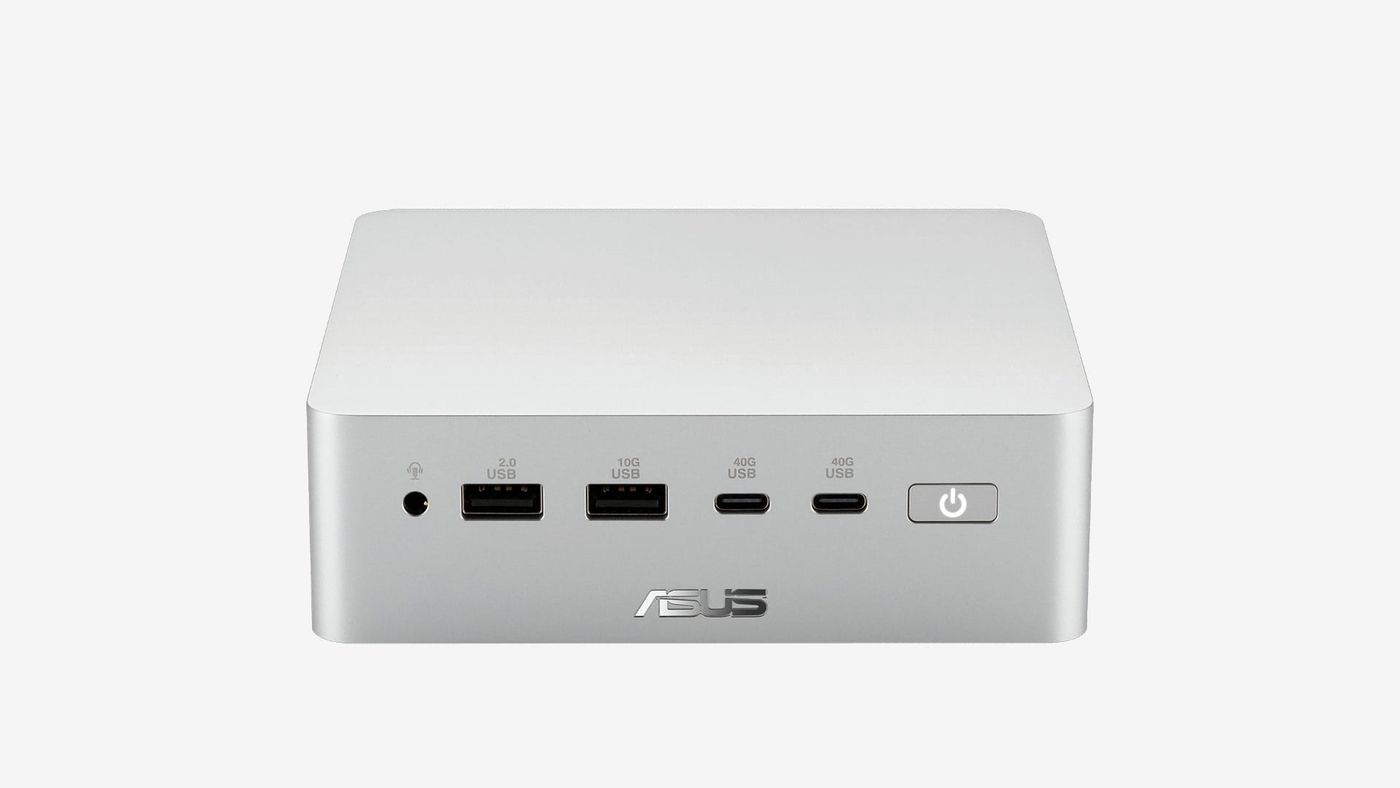
Windows on Arm isn’t a gaming machine for me, and gaming is the reason I follow mini PC performance in the first place. So I’m looking at ASUS’s Ascent QN10 as what it really is: a small, quiet desk computer with a laptop chip inside. It’s the first mini PC with Qualcomm’s Snapdragon X2 Elite, and on November 4 ASUS made it official in Germany, Austria and Switzerland at €2,195. Here’s what you get for that, what it costs elsewhere, and where Windows on Arm still trips it up.
What is the ASUS Ascent QN10?
A palm-sized desktop PC built around the chip Qualcomm made for laptops. Qualcomm calls it the first Snapdragon X2 Elite mini PC, and the reviews agree. ASUS’s own pitch is the first AI mini PC with an 80 TOPS NPU. It isn’t the first Arm mini PC, though. Lenovo’s ThinkCentre neo 50q used the first-generation Snapdragon X, and Qualcomm showed its own X2 mini PCs last year as reference designs that were never sold.
Inside is the X2E-88-100, the second-largest X2 Elite, with 18 cores, Adreno X2-90 graphics and an NPU rated at 80 TOPS. The box is 13 cm square and 4 cm tall, with an aluminium shell, a fan that stops completely when the PC is idle, and a second small fan just for the SSD.
How much is it, and where can you buy it?
$1,699 in the US for the 32 GB model, which is in stock on ASUS’s US store and at the big US retailers. A 16 GB version has been at Best Buy since September 17 for $1,349.99, according to reports.
Germany, Austria and Switzerland get only a 32 GB model with Windows 11 Pro and slightly slower memory than the US one, and ASUS’s announcement puts it at €2,195 or CHF 2,195. That’s a suggested price, and shops already sell it for less: the cheapest listing in Switzerland is CHF 1,780 and in Finland €2,119. Canada lists it at CAD 2,399, out of stock for now.
Is it new in Europe?
Not really, and that’s the part the headlines skip. The November 4 release made Germany, Austria and Switzerland official, but German shops were listing the QN10 in September, ComputerBase reviewed it with a European price on September 21, and ASUS’s own store finder shows it in stock in Spain and the Netherlands too. It went on sale in China on September 10 and in the US a week later. What’s new is ASUS putting its name and a price on it in those three countries.
How fast is it?
Fast in software built for Arm, less so in everything else. In ComputerBase’s test, it landed near the top in modern Arm-native apps and fell behind in older x86 software, without dropping to the bottom. StorageReview measured it 43% to 73% faster than an Intel NUC 14 Pro in Geekbench, though Intel still won a couple of single-threaded and number-crunching tests.
The noise and power numbers are the nice surprise. ComputerBase measured about 5 W at the wall when idle, with the fan fully off, and up to 38 dB(A) under load. StorageReview called it whisper quiet all the way through sustained load.
Can it play games?
Some. ComputerBase got 36.7 fps in Cyberpunk 2077 at 1080p on High, below the Intel Panther Lake laptops it compared against. Qualcomm’s own combined graphics driver also failed to install on the QN10; Qualcomm told ComputerBase that some OEM devices block it.
Microsoft has made it easier than it used to be. Its Xbox app now runs on Arm PCs, with more than 85% of the Game Pass catalogue compatible by Microsoft’s count, and Easy Anti-Cheat works on Arm Windows. That’s still a long way from a mini PC you’d buy for games, which is why I’m treating this one as a desk PC.
What about the 80 TOPS NPU?
It’s real, but most people’s local AI apps can’t use it yet. ComputerBase found that LM Studio and Ollama, two of the most common ways to run a chatbot on your own PC, use neither the NPU nor the graphics on Snapdragon X2, so everything ran on the CPU. AnythingLLM could use the NPU for smaller models. StorageReview, using Qualcomm’s own AI tools, got 25 to 36 tokens per second from small models on the NPU. So the 80 TOPS pays off if your software is written for it, and sits idle if it isn’t.
Will my Windows apps run on it?
Most will. Windows runs x86 and x64 apps on Arm through an emulator called Prism, which Microsoft’s documentation describes as working for regular apps but not for drivers. That last part matters on a desktop. A printer, capture card or other gadget whose driver only exists for x86 won’t work, so check your peripherals before you buy. Drivers and firmware for the QN10 itself come through Windows Update.
Can you upgrade the memory or storage?
Storage yes, memory no. The memory is soldered, and ASUS’s product page says 32 GB is the most you can have. Inside, reviewers found the shipped 512 GB PCIe 4.0 SSD plus a second, empty M.2 slot that runs at PCIe 5.0, something ASUS’s own spec sheet leaves out. ASUS’s store listings put the total at up to 4 TB across the two.
ASUS Ascent QN10 vs Mac mini: which should you buy?
The Mac mini costs a lot less to start, and the QN10 is the one if you need Windows. Apple’s base Mac mini starts at $899, or €1,049 in Germany, and the M5 Pro model starts at $1,699, the same as the 32 GB QN10 in the US. In Germany, the QN10’s €2,195 sits between the two M5 Pro starting prices of €1,999 and €2,219.
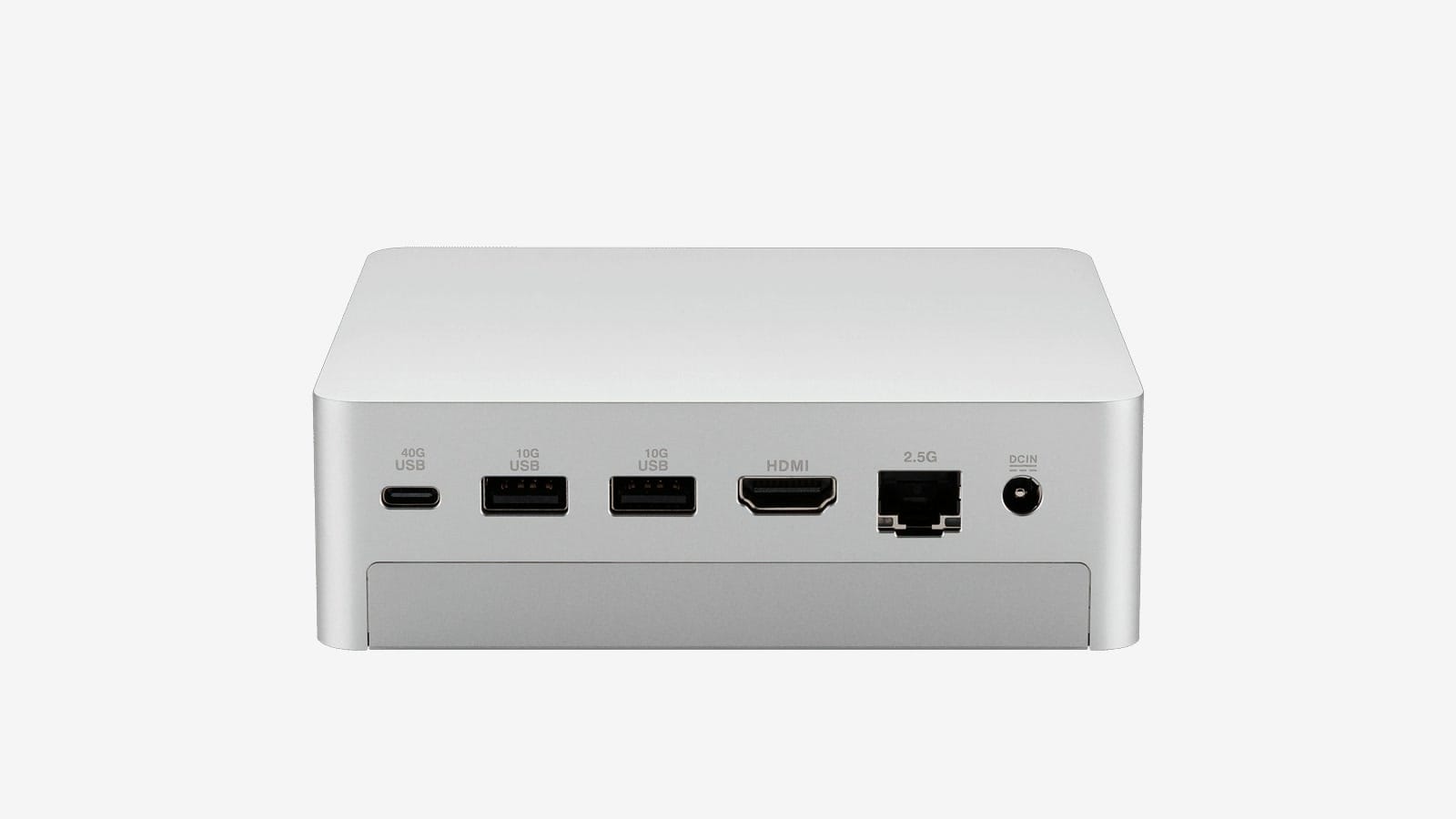
The QN10 makes sense if you need Windows in a Mac mini-sized box, want three USB4 ports and a spare PCIe 5.0 slot, or are building software for Windows on Arm. ComputerBase also points out that over €2,100 is more than ASUS’s own Intel-based NUC 16 Pro costs even in a high-end setup, and that the NUC comes with a 3-year warranty in Germany against the QN10’s two.
| ASUS Ascent QN10 | Mac mini | ASUS NUC 16 Pro | |
|---|---|---|---|
| Chip | Snapdragon X2 Elite, 18 cores | Apple M6, 12 cores | Intel Panther Lake |
| Starting price (US) | $1,349.99 (16 GB), $1,699 (32 GB) | $899 | $999 without memory or storage |
| Memory | 16 or 32 GB, soldered | 16 GB, up to 32 GB | Socketed on some models, soldered on others |
| OS | Windows 11 on Arm | macOS | Windows 11 |
Does it run Linux?
Not officially yet. Qualcomm has announced an early developer preview of Linux for the Snapdragon X2 series, but ASUS only lists Windows 11 for the QN10. If Linux is why you’re looking, wait for someone to confirm it boots.
Who is it for?
Someone who wants a tiny, near-silent Windows desk PC, runs mostly modern apps, and doesn’t care about gaming. Developers targeting Windows on Arm and people building signage, kiosks or small AI setups with software written for Qualcomm’s NPU will get the most from it. If you play games, rely on old Windows software or unusual hardware drivers, or just want the most computer for your money, there are better buys, and a Mac mini is one of them.
Nerd Alert
Your Turn
What are YOUR thoughts
What have your experiences been? Let us know.