Nintendo GameCube (2001)
The little cube with a handle: a secret in the start-up sound, Dolphin, 8 cm discs, the big green A, the WaveBird, Hotter than Potter, and a controller still sold in 2026.
https://averagetechnerds.com/nintendo-gamecube/
A secret in the start-up
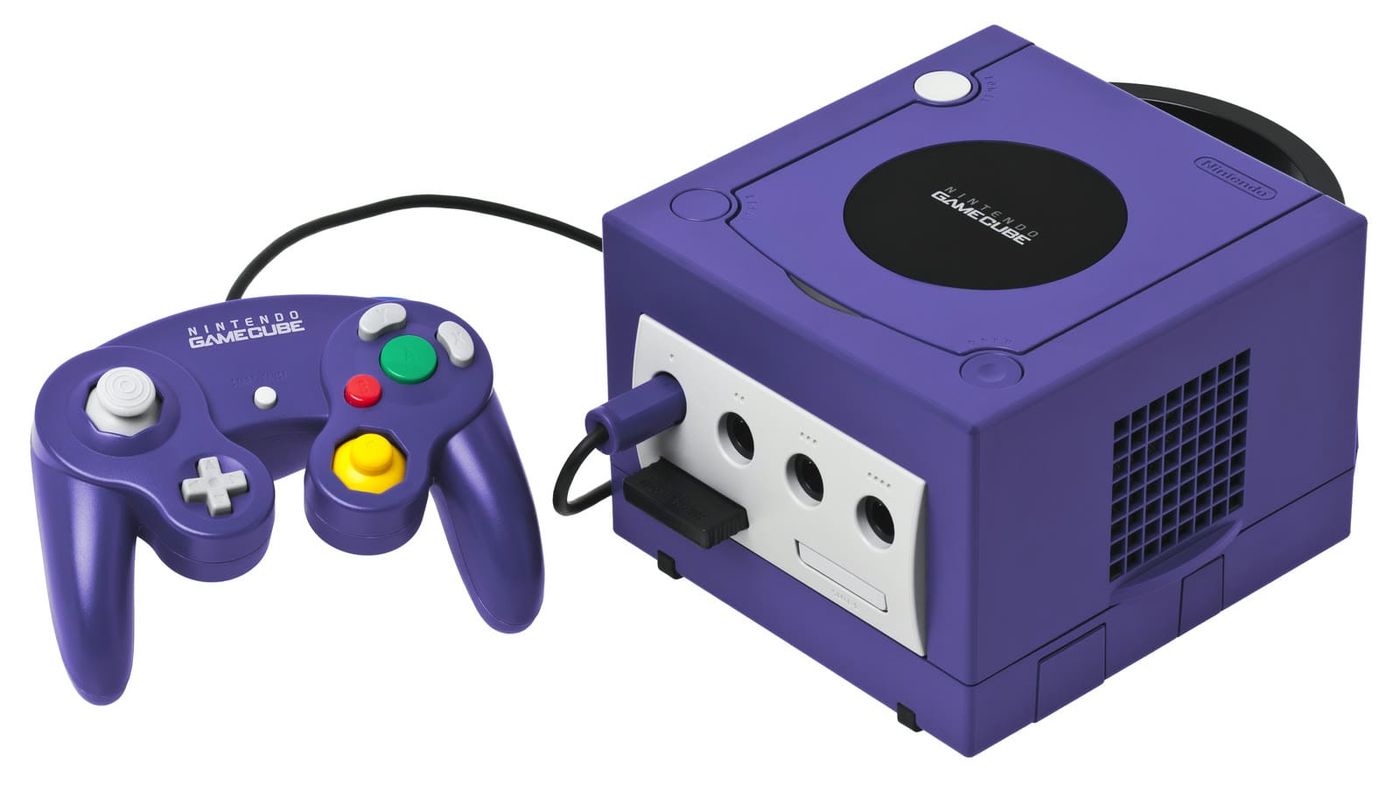
Hold down the Z button on a GameCube controller while you switch the console on, and the start-up jingle changes. The usual sound turns into squeaky-toy noises and a child’s laugh. Do it with four controllers, all holding Z, and you get a different version again, with a Japanese flavour to it.
It isn’t new. Kotaku tested the one-controller version in January 2024 and wrote it up as news to its own staff, but Nintendojo had described both versions back in 2015. You may also have heard that holding a button combination at start-up opens a hidden Super Nintendo emulator. There’s no evidence one ever existed. The console’s menu has four items, Game Play, Calendar, Memory Card and Options, and the real secret was the sounds.
That’s the GameCube all over: a small, friendly machine with a little more inside than it lets on.
Dolphin
Before it was a GameCube, it was Dolphin. Nintendo announced it under that code name in May 1999, aimed it at the holidays in 2000, and brought in big partners for the insides. IBM would build the brain, in a deal worth more than $1 billion. A small company called ArtX, which ATI later bought, would make the graphics chip. And Matsushita, the company you know as Panasonic, would make the drive and the discs. A billion dollars, and nobody had even seen the box yet.
The idea behind it was a reaction to the Nintendo 64. The N64 could do a lot, but getting it to do those things was hard work, and it picked up a name as a tough machine to make games for. So Dolphin was meant to be “creator-friendly”: no bottlenecks, the spots where one slow part holds everything else up, and smooth running in a real game instead of big numbers on paper. Nintendo meant it, too. Its own spec sheet says its peak figures “cannot be achieved in an actual game”. Read that again: a console maker telling you, in writing, that its biggest numbers won’t show up in your games.
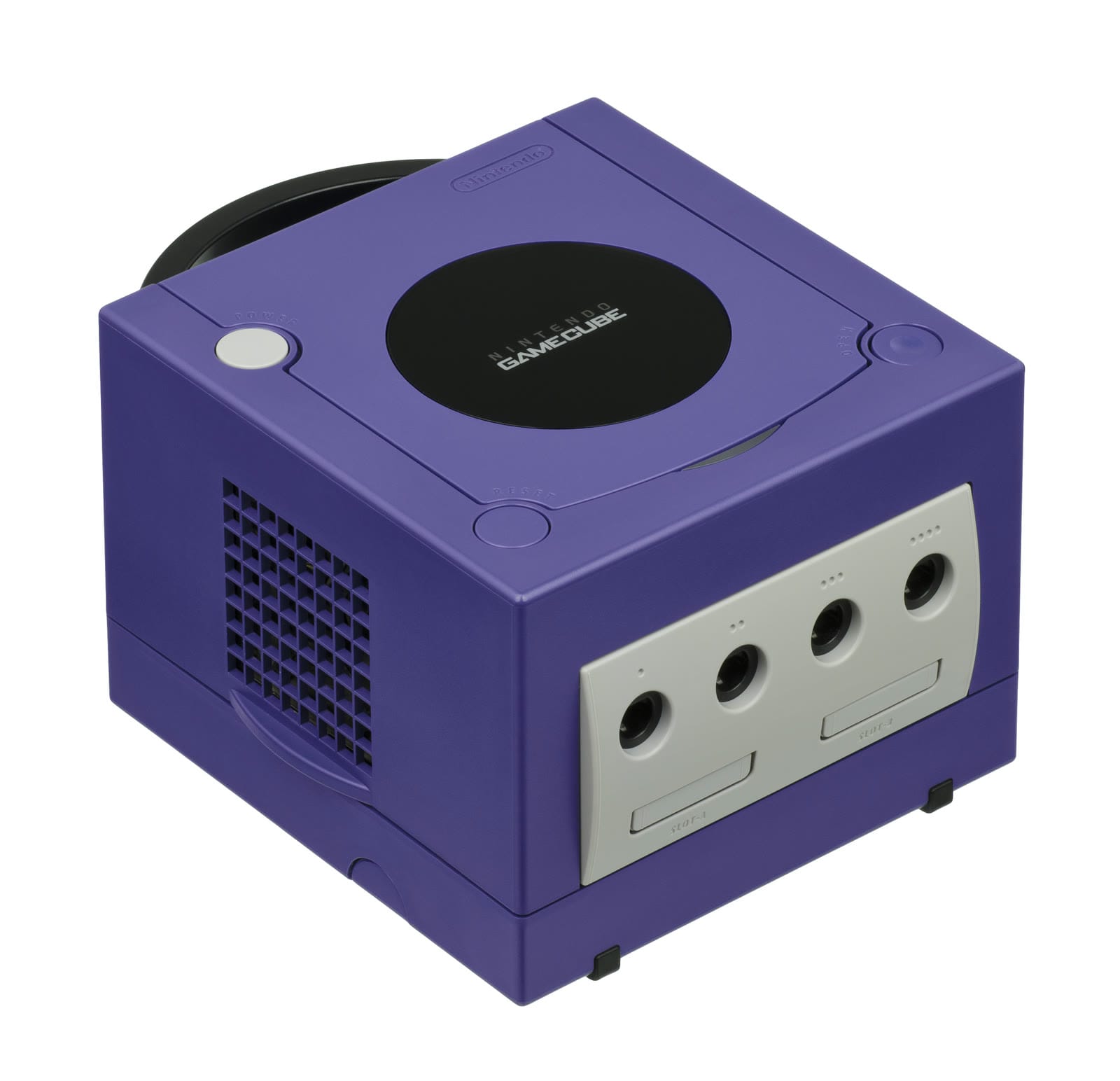
It became the GameCube in August 2000, at Nintendo’s Space World show near Tokyo, sharing the stage with the Game Boy Advance. One demo there put a hundred Marios on a round, floating stage at once. It was a way to show off the hardware. Then it kept growing. If you’ve ever hopped Mario between tiny planets in Super Mario Galaxy, that’s where it began, by the account of Koizumi, who directed Galaxy.
The code name never quite went away. The model numbers of GameCube hardware start with DOL, as in the WaveBird’s DOL-004. And by fans’ reading, Super Mario Sunshine’s Isle Delfino, Pikmin’s S.S. Dolphin and even the graphics chip’s name, Flipper, after the TV dolphin, are all nods to it.
Purple in Japan, half and half in America
Holiday 2000 came and went. The GameCube finally reached Japan in September 2001, and if you wanted one on day one, you got purple. Violet was the only colour. Orange and black came two months later. You had three games to pick from: Luigi’s Mansion, Wave Race: Blue Storm and Sega’s Super Monkey Ball.
Luigi got there first. Luigi’s Mansion was the clear top seller in Akihabara, Tokyo’s electronics district, that day, and about 300 people lined up at a single store. Shop staff made a point of warning buyers that it wouldn’t play DVD films or music CDs. And the first thing it asked you to do when you first switched it on wasn’t to play. It was to set the calendar.
America got it on November 18, 2001, for about $200. That was a hundred dollars less than its rivals, and Nintendo made sure you heard about it. In America you could pick from two colours, Indigo or Jet Black, and Nintendo split them exactly half and half.
Nintendo filled American shelves with about 700,000 consoles for launch, its biggest first-day supply ever. On day one, people spent more than $98 million on GameCubes, games and accessories. That same weekend, the first Harry Potter film opened to about $94 million over three days. One day of GameCube against three days of Harry Potter. Nintendo couldn’t resist, and titled its press release “Hotter than Potter”.
A handle and a tiny disc
The shape was the first thing anyone noticed. It’s a little cube, a bit bigger than a box of tissues, with a carrying handle on the back. When the Japanese site PC Watch took one apart at launch, they found special screws sunk into deep holes and far fewer parts than inside a PS2 or a Dreamcast. To them, it was built like a toy, made for children to play with.
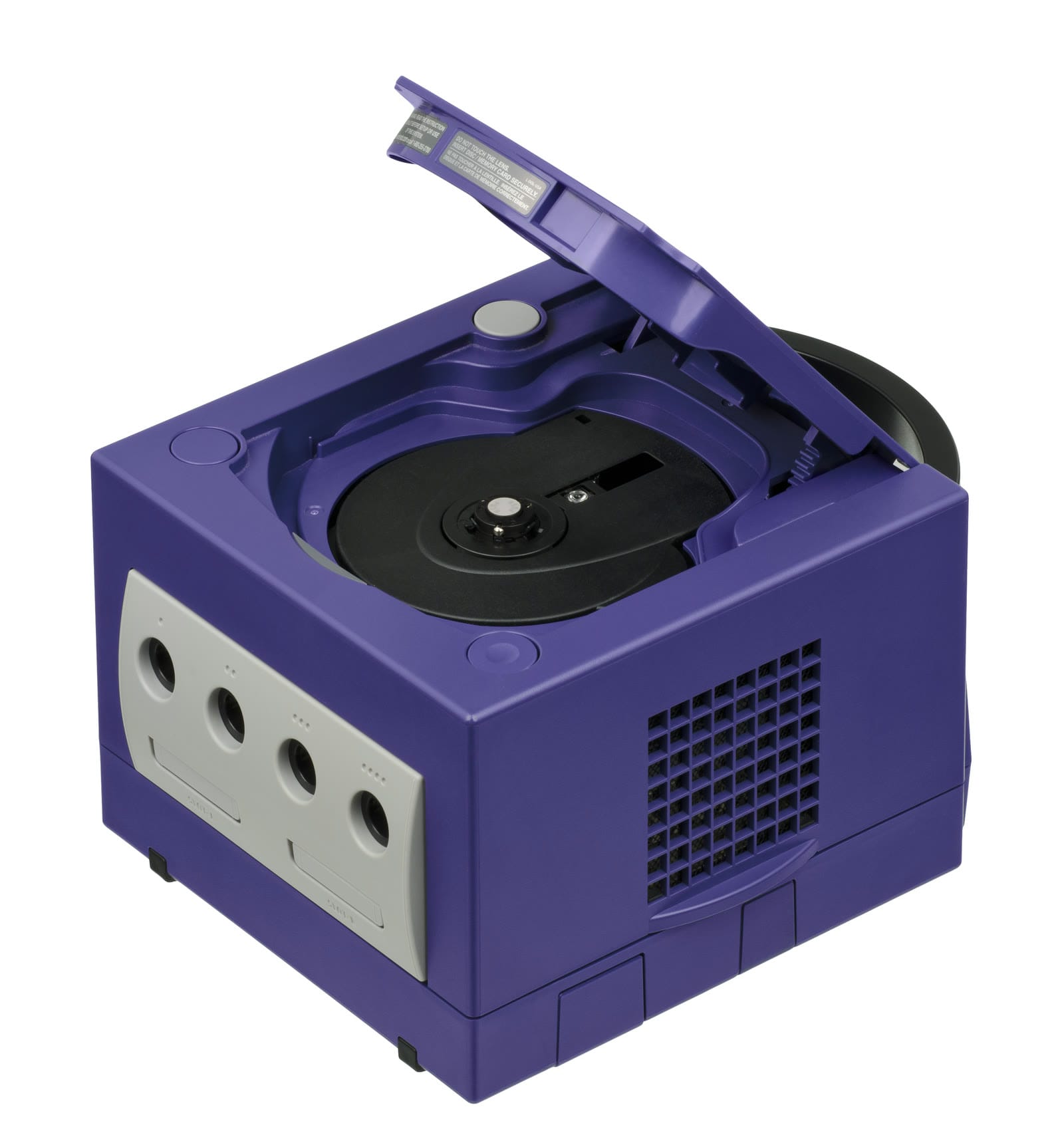
Then there were the discs. The GameCube was Nintendo’s first console to use them, and they were small: 8 cm across, about 3 inches, holding about 1.5 GB. Nintendo worked out that one disc held about 190 times as much as the 8 MB Super Mario 64 cartridge.
Why so small? Nintendo’s own answer comes down to your hands. A pocket-sized disc is easy to take out of the drive and easy for anyone to handle, and Nintendo expected the size to become a standard as home and handheld games grew closer. It also carried Matsushita’s copy protection, to make illegal copies harder. You’ll often hear that the small disc was about faster loading, but Nintendo never gave that as a reason. And to get one out, you pressed the centre and the disc lifted up, so your fingers stayed off the shiny side.
No DVD playback meant no DVD films, and that’s one thing the PS2 had over it. In Japan, Panasonic sold its own version that played both, the Q, from December 2001, in silver only. It never left Japan.
The big green A
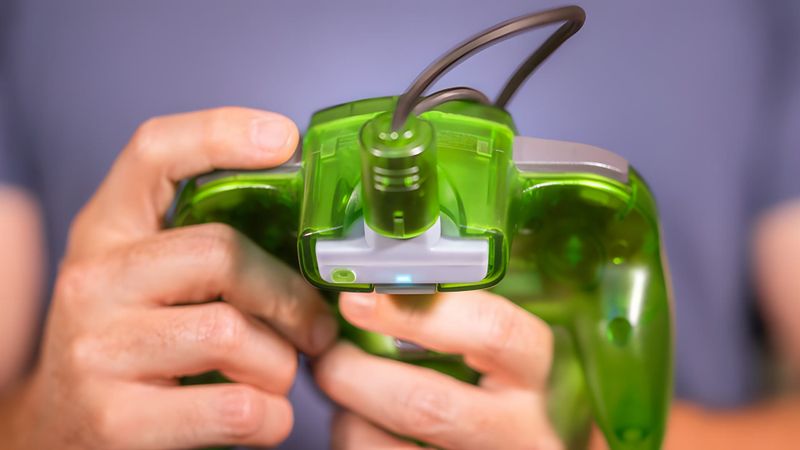
The controller turned out to be the longest-lived part of the GameCube, and Nintendo designed it with real care. It has two grips, and the controls split cleanly between your left hand and your right. On the right, the buttons sit around what Nintendo called the “A button home position”: the A button is big, in the middle, with the others around it, so your thumb always knows where it is and each button’s job is clearer. A and B are even different sizes.
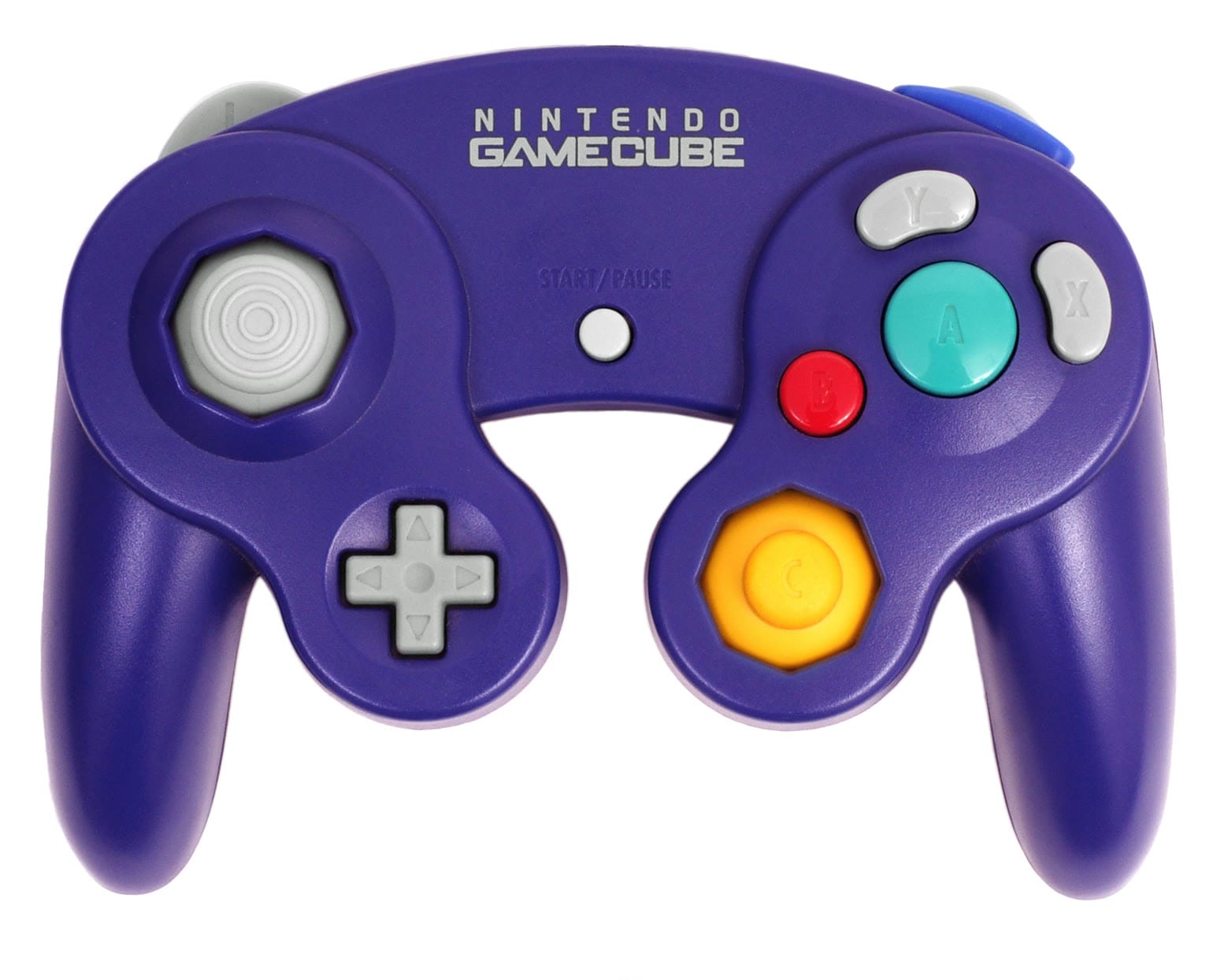
Your right thumb gets a second stick. The two shoulder triggers are analog, which means they feel how far you push them, the way a car’s gas pedal does: a little squeeze for a little, all the way down for everything. And the press is long and deep. The rumble motor lives inside, too, so you never had to buy a Rumble Pak or swap its batteries the way you did on the N64.
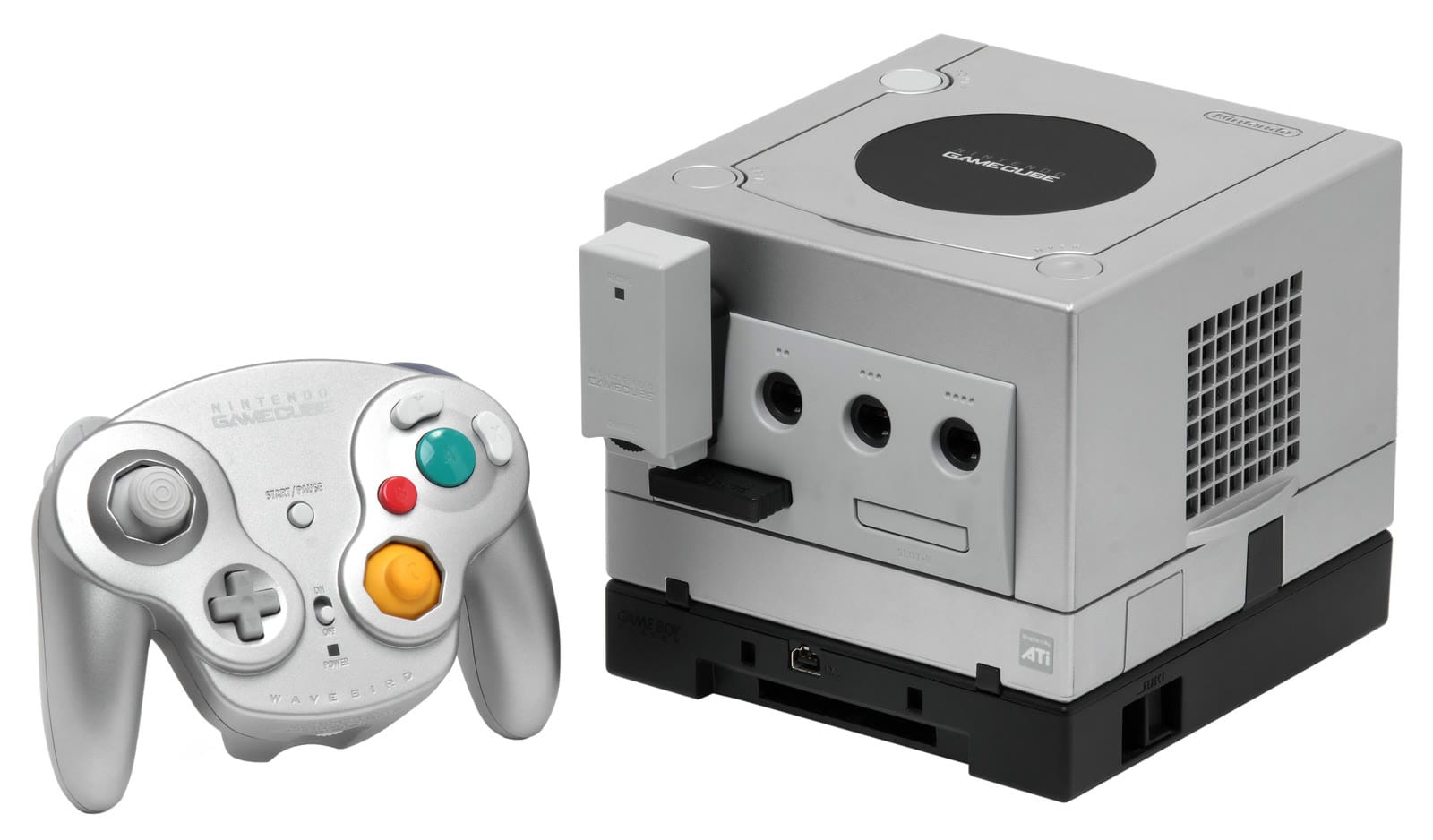
Then came the WaveBird, in America in June 2002, a GameCube controller with no cable at all. It used radio instead of infrared, so you didn’t have to aim it at the console the way you aim a TV remote. Nintendo promised it worked “even under the covers or behind a wall”. Two AA batteries kept it going for about 100 hours. The one thing it gave up was rumble.
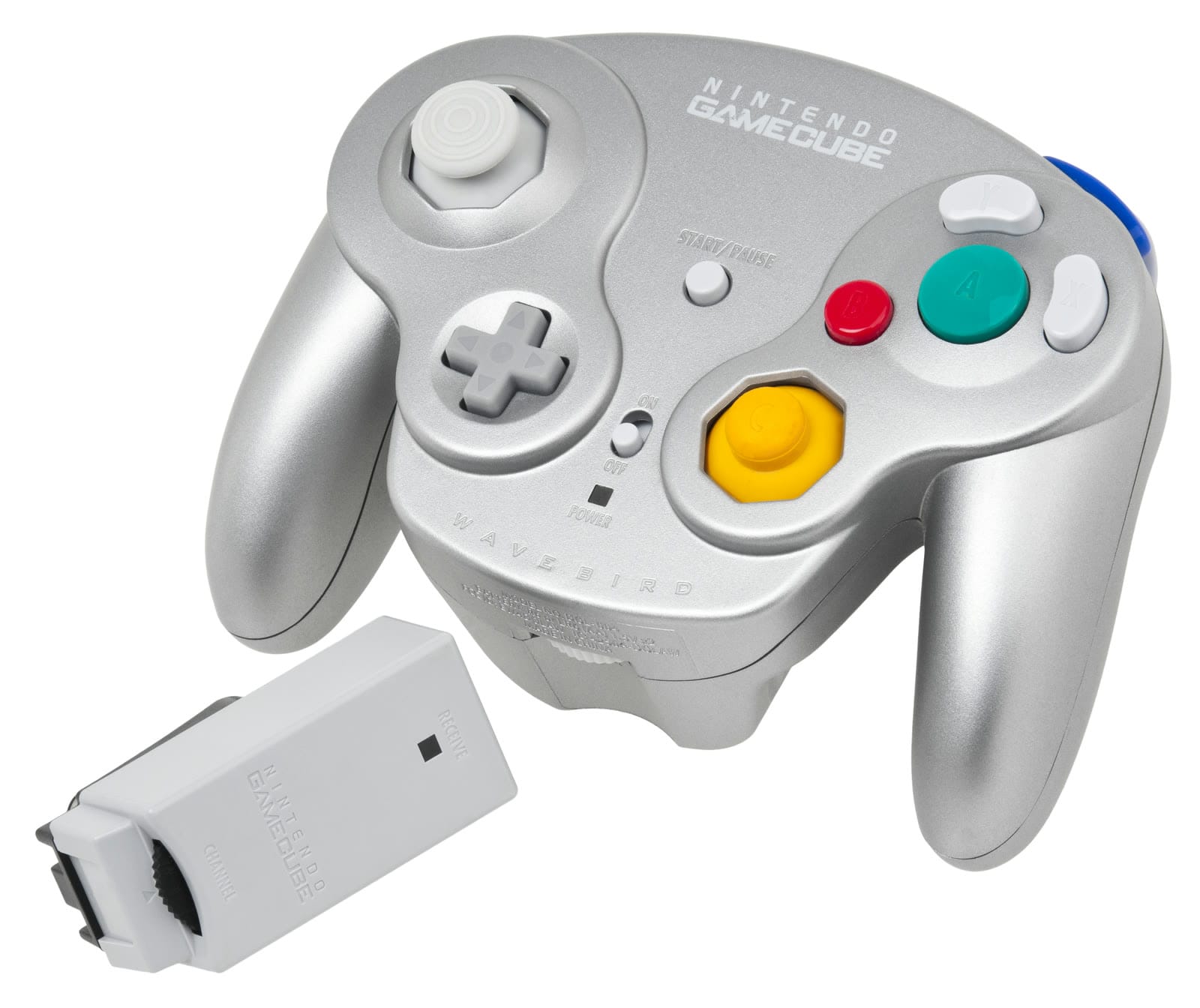
It wasn’t the first wireless controller. Atari sold radio joysticks for the 2600 in 1983, and Nintendo’s own NES Satellite went wireless with infrared in 1989. The WaveBird was Nintendo’s first radio controller, the one that needed no line of sight.
The games
In the first few months, three games passed a million copies each: Super Smash Bros. Melee, Luigi’s Mansion and Pikmin. Melee never stopped. It ended up at about 7 million, more than any other game on the console.
The next year was even bigger. In about twelve months you got a new Mario, a new Metroid and a new Zelda: Super Mario Sunshine, Metroid Prime and The Wind Waker. Metroid Prime came from Retro Studios, a team in Austin, Texas, and it went down especially well in Europe and America. Animal Crossing reached the Americas that year too, after starting in Japan as Animal Forest+, and it had a surprise tucked inside: playable NES games. A game inside a game.
You may remember Resident Evil 4 as a GameCube exclusive. It was, for about nine months. It began as one of the “Capcom Five”, a set of games Capcom announced for the GameCube, and it came out there first, in 2005. But Capcom had already announced a PS2 version before then, and it followed later that year.
The things you could plug in
The GameCube had a lot of ports for its size, and Nintendo found uses for them.
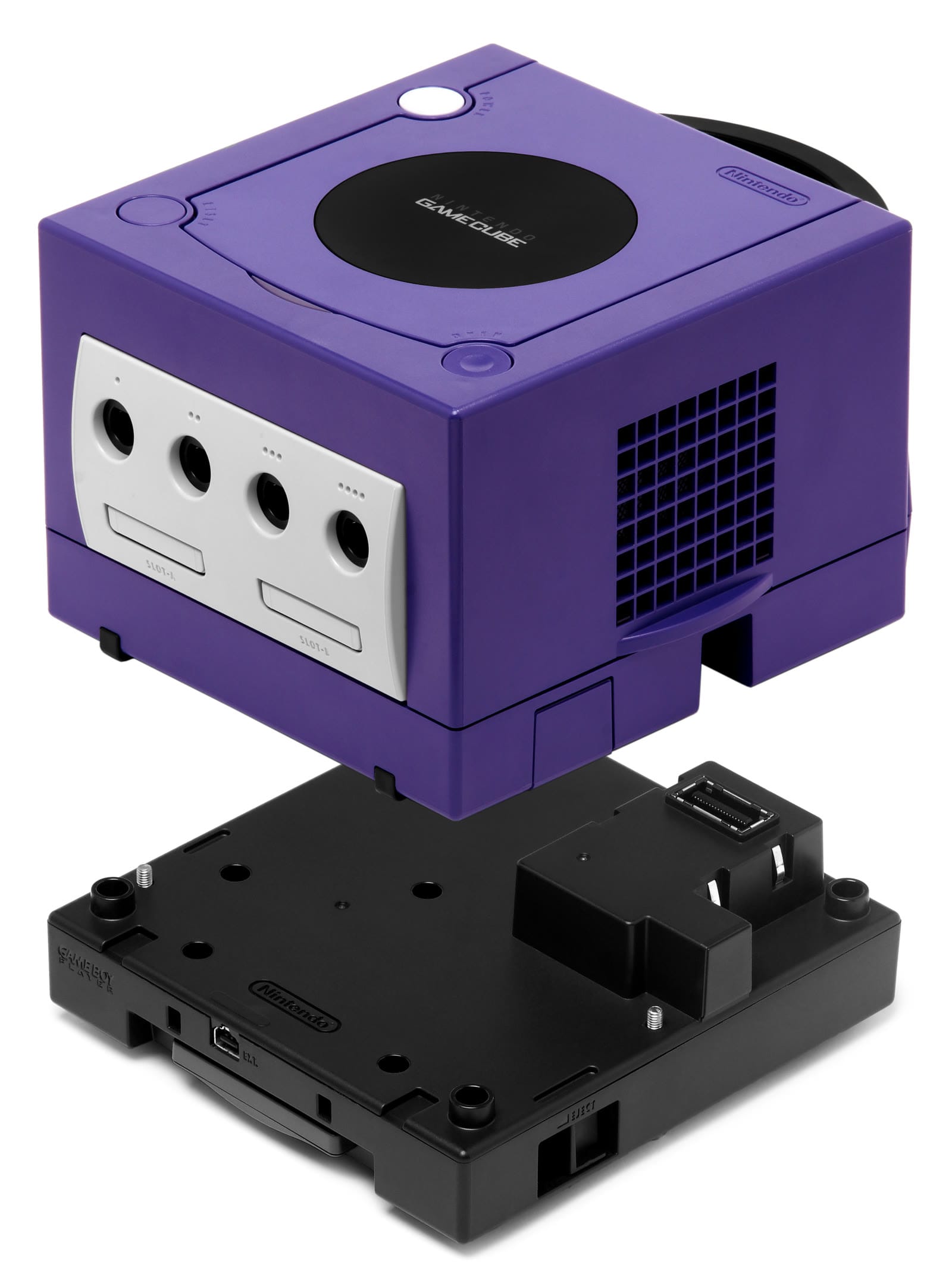
One of them sits underneath. The Game Boy Player is a platform about an inch tall that bolts to the bottom of the console, and it turns your TV into a giant Game Boy. Game Boy, Game Boy Color and Game Boy Advance cartridges all play on it. You can hold a GameCube controller, a WaveBird or even a Game Boy Advance to play. It arrived in 2003, and in America it cost $49.99.
The GameCube went online too, barely. You bought a Broadband or Modem Adapter, $34.95 in America from late 2002, and Nintendo charged you nothing to connect. The first online game, Phantasy Star Online Episode I & II, was another matter: Sega wanted $8.95 a month. Only a handful of online games followed. A few others, like Mario Kart: Double Dash, Kirby Air Ride and 1080 Avalanche, used the Broadband Adapter another way, linking consoles in the same room, each with its own TV.
Your saves went on memory cards, and space came in blocks, a bit like spots in a parking garage. The Memory Card 59 from launch had 59 of them, the Memory Card 251 from 2002 had 251, and every game parked a different number. The ports took stranger things too: a microphone, an SD card adapter and, in Japan from late 2003, the DK Bongos, a pair of little barrels you drummed on.
How it was made
Open the cube up, and you can see that “creator-friendly” promise turned into parts.
In numbers:
| Part | Nintendo GameCube |
|---|---|
| Processor | IBM’s Gekko, a PowerPC chip, at 485 MHz |
| Graphics | Flipper, from ArtX (later ATI), at 162 MHz |
| Memory | 24 MB of fast 1T-SRAM, plus 16 MB of slower memory |
| Discs | 8 cm discs, about 1.5 GB each |
| Controller | The big green A button, analog triggers, a C-stick; the wireless WaveBird came later |
The brain. The processor is IBM’s PowerPC “Gekko”, running at 485 MHz and built on IBM’s copper-wiring process. It’s a relative of the chips in Apple’s Macs of that time, and it has a large 256 KB cache, a small pool of very fast memory right on the chip, so it rarely sits waiting for main memory.
The graphics. Flipper, the chip ATI and Nintendo made to draw the picture, runs at 162 MHz. MHz counts how many million times a second a chip ticks, like a drummer keeping time, so that’s 162 million beats every second. Its real trick is about 3 MB of very fast memory built right into the chip, roughly what one photo on your phone takes up today. It’s like keeping your tools on the workbench instead of walking to the garage for each one. It could also work out the light in a scene from up to eight lamps at once, without the main processor doing that maths. When PC Watch opened the console, Flipper was the biggest chip on the board, bigger than the processor.
The sound. It has its own little processor, tucked inside Flipper too, and it can play 64 sounds at once. Picture 64 musicians, each with one part: footsteps, music, an engine, a voice, all mixed live while you play.
The memory. Most of it is the fast kind: 24 MB of main memory that hands the processor what it asks for almost at once, like a cook with everything already chopped on the counter. Nintendo named it as one of the ways it got rid of the N64’s bottlenecks. Next to it sits 16 MB of slower memory that Nintendo called “A-memory”.
The clock speeds. Remember those 485 and 162 MHz? Neither was the plan. Between the first announcement and launch, the processor got faster and the graphics chip got slower. If Nintendo ever explained why, nobody has turned it up.
The power. Nintendo quoted 6 to 12 million polygons a second, “assuming actual game conditions”, which is a very Nintendo way of giving a number. Whether it was more powerful than the PS2 depends on what you measure. A common view puts it somewhere between the PS2 and the original Xbox.
The disc drive. It spins at one steady speed, and when a game asks for something, it finds it in about an eighth of a second on average. That’s about as long as you take to blink.
The ports. Four controller ports on the front, so four of you could sit down and play, and two memory card slots. There are ports for the online adapters, and one more on the bottom for the Game Boy Player. One port quietly disappeared, though. Consoles made from around mid-2004 may be missing the digital video port, and without it, component cables, the kind that gave you a sharper picture, won’t work.
Even the shape won a prize. The GameCube took a Good Design Award in Japan in 2002, five years after the N64 won a Gold one.
Third place, and fine
The price came down fast in America. Sales slowed even after a first cut in 2002, and Nintendo blamed the price cuts its rivals had started. By September 2003 you could take one home for $99.99, half what it cost at launch.
What it cost, and what plugged into it:
| What | When | Price |
|---|---|---|
| GameCube | September 2001, Japan | ¥25,000 |
| GameCube | November 2001, US | $199.95 |
| Panasonic Q | December 2001, Japan only | ¥39,800 at Panasonic’s own store, with a DVD player built in |
| Price cut | May 2002, US | $149.95 |
| WaveBird | June 2002, US | $34.95 |
| Broadband or modem adapter | October 2002, US | $34.95 each |
| Game Boy Player | June 2003, US | $49.99 |
| Price cut | September 2003, US | $99.99 |
In the end, about 21.7 million GameCubes were sold, by Nintendo’s count. That’s well short of the N64’s 33 million, far behind the PS2 and a little behind the original Xbox. Third place. It stayed Nintendo’s lowest-selling home console until the Wii U. But the people who had one kept feeding it: about 209 million games, nearly ten for every console. Nintendo stopped making it in early 2007.
It didn’t sink Nintendo, though, whatever you may have heard. The year it launched, Nintendo made a record profit, about ¥106 billion, with plenty of help from the Game Boy Advance.
Still plugged in
The first Wii kept it going. The original Wii model has four GameCube controller ports and two memory card slots under a flap, and it plays GameCube discs. The 2011 redesign and the Wii mini dropped all of that, and the Wii U doesn’t play GameCube discs either.
The controller outlived the console. When Super Smash Bros. came to the Wii U in 2014, Nintendo sold an adapter so you could keep playing it with a GameCube pad. And on Switch 2 you can play GameCube games again, as part of Nintendo Switch Online + Expansion Pack, $49.99 a year, with a mode that makes the picture look like the old tube TV you played them on. Nintendo sells a new GameCube-style controller to go with them, with C and Capture buttons added. It all started with the Switch 2 itself in June 2025, with The Wind Waker, F-Zero GX and SoulCalibur II.
Based on Nintendo’s Japanese GameCube spec, disc, controller, concept and accessory pages, Nintendo of America’s press releases from 2001 to 2003, the 1999 IBM and Nintendo announcement, Nintendo’s 2002 and 2003 annual reports, Nintendo IR sales data, Nintendo UK’s technical details, Iwata Asks on Super Mario Galaxy, PC Watch’s launch teardown and GAME Watch’s launch report, The Register, Nintendo World Report, Kotaku and Nintendojo on the start-up sounds, AV Watch on the Panasonic Q, and Nintendo of America’s Wii support and Switch 2 store pages, as of November 16, 2026. Where the sources disagree, the page says so.
Nerd Alert
Your Turn
What are YOUR thoughts
What have your experiences been? Let us know.