News / News · News · Handheld Gaming · Handheld PCs
Is FSR 4 Coming to the Steam Deck? What AMD Has Actually Said
AMD promises FSR 4 for RDNA 2 cards in early 2027 and handhelds by year-end, without naming the Steam Deck. What runs today, and what it costs.
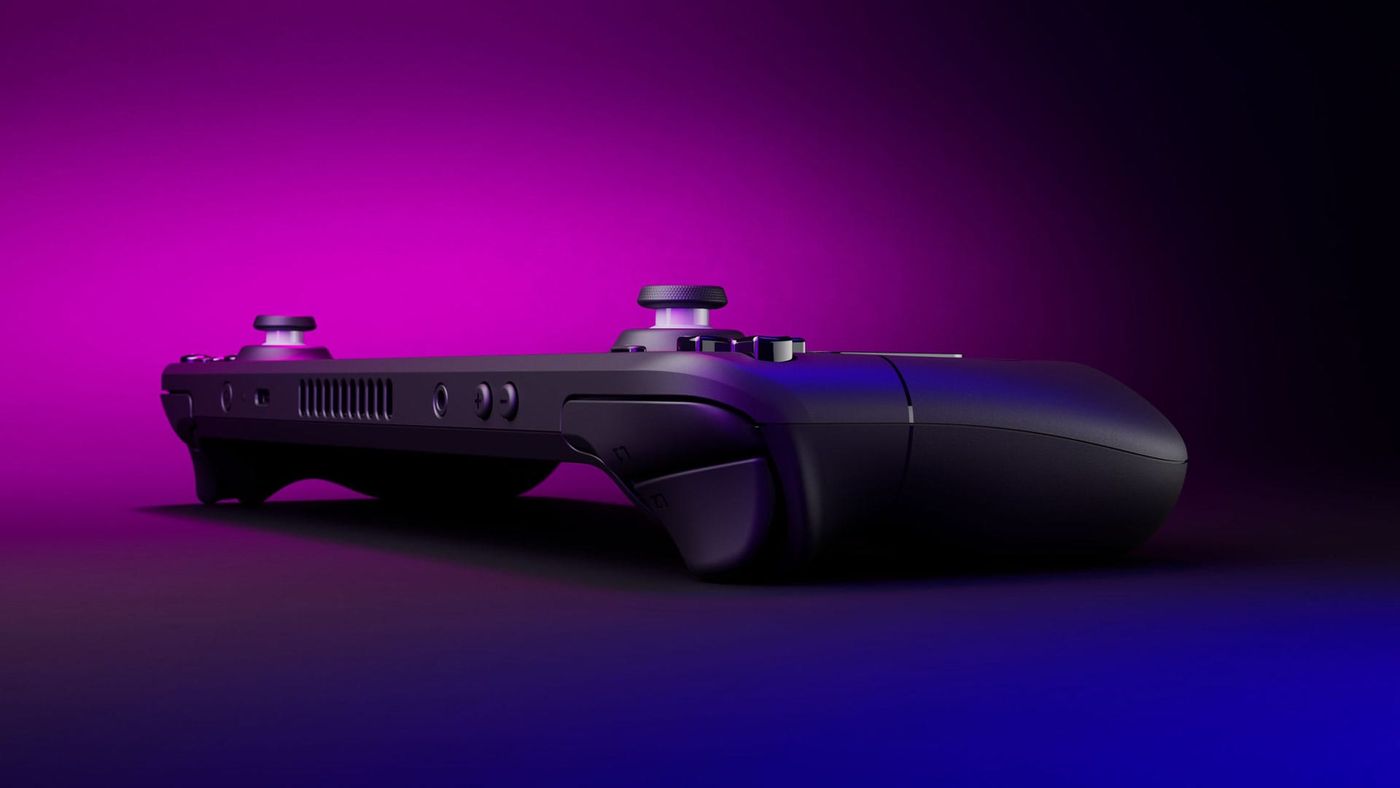
A widely shared report this week says AMD’s FSR 4 upscaler is about to arrive on Valve’s Steam Deck. FSR 4 is AMD’s machine-learning upscaler: a game renders at a lower resolution, and a trained model rebuilds a sharper image from it. The official record is narrower than the headlines, and the Deck’s actual route to FSR 4 today runs through community tools. What follows separates what AMD and Valve have said from what already runs, and what it costs in frames.
UPDATE What’s new since publishing
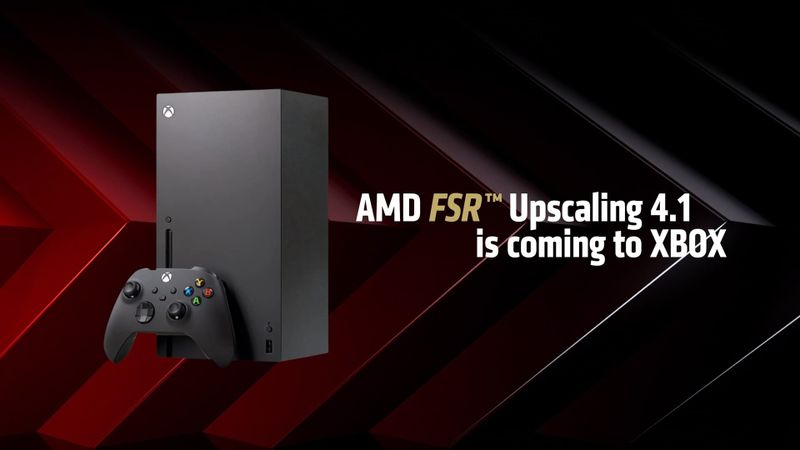
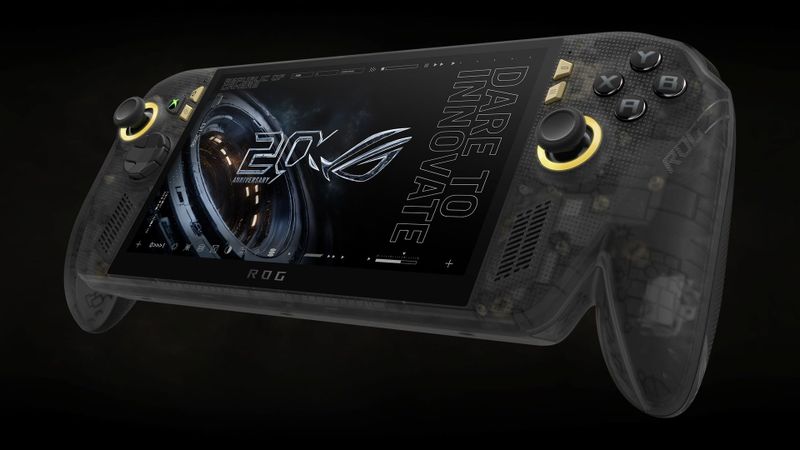
AMD released FSR Upscaling 4.1 for Radeon RX 6000 graphics cards, which use the Deck’s RDNA 2 generation, in its Adrenalin 26.10.1 driver, well ahead of the early-2027 target. It also named the handheld chips getting a smaller version: the Ryzen AI Z2 Extreme, Ryzen Z2 Extreme and Ryzen Z2 A. The Deck’s chip isn’t on that list, and AMD says only that it’s working on more chips. The same announcement put FSR 4.1 on the road to Xbox Series X|S and the ROG Xbox Ally X.
What has AMD actually promised?
Two promises and one driver release, and none of them names the Steam Deck. FSR 4 launched in 2025 as an exclusive for AMD’s RDNA 4 graphics cards, the Radeon RX 9000 series. On May 14, Jack Huynh, AMD’s head of computing and graphics, posted the next step: FSR Upscaling 4.1 for RDNA 3 players in July, and for RDNA 2, “something exciting coming in early 2027,” adding that FSR Upscaling 4.1 “will be coming to your cards as well.” RDNA 3 got it early, in the Adrenalin 26.6.2 driver dated June 22, with the FSR SDK 2.3 for developers following two days later.
The second promise came on October 7 in Seoul. THE ELEC says Huynh told Korean media that FSR 4 will reach APUs (AMD’s chips that put the processor and graphics on one chip, like the Deck’s), gaming laptops and handhelds by the end of this year, in “two directions, expanding support to existing APUs and launching new products.” He added that AMD has built a version of FSR 4 optimized for APUs. AMD hasn’t published which existing chips that covers, and the report doesn’t mention the Deck.
So what does the Deck officially get today?
FSR 3.1, in games that support it. AMD’s FSR Upscaling page says FSR 4 needs a Radeon RX 9000 or RX 7000 series discrete GPU, and anything else falls back to FSR 3.1.5 automatically. The SDK 2.3 notes spell out the same fallback for RDNA 3.5 and RDNA 2, the graphics generations inside most current handhelds and the Deck. By AMD’s spec pages, the Z2 Extreme uses RDNA 3.5, the Z2 A in the base ROG Xbox Ally and the Z2 Go in the Legion Go S use RDNA 2 like the Deck, and the original ROG Ally’s Z1 Extreme uses RDNA 3, which falls back as well because it’s integrated graphics.
Where did the “coming soon” story come from?
A Geeky Gadgets article headlined “FidelityFX Super Resolution 4 Debuts on Steam Deck Soon,” built on a Deck Ready video. That goes further than anything AMD has said, and it skips a step. AMD ships its official versions through its Windows driver and its developer SDK, but the Deck runs SteamOS, where Windows games run through Valve’s Proton compatibility layer, so an official Deck version needs Valve on board too.
Two more claims in that piece run against the sources. It calls FSR 4 lighter than earlier versions, yet its machine-learning model costs more to run than FSR 3 on the Deck, as the frame-rate numbers below show. It also says AMD drew inspiration from Sony’s PSSR upscaler, while Sony’s Mark Cerny has described the PS5 Pro’s upgraded PSSR as a replacement built on technology Sony co-developed with AMD. As far as either company has said, that joint work is what the two upscalers have in common.
Why can’t the Deck just run it?
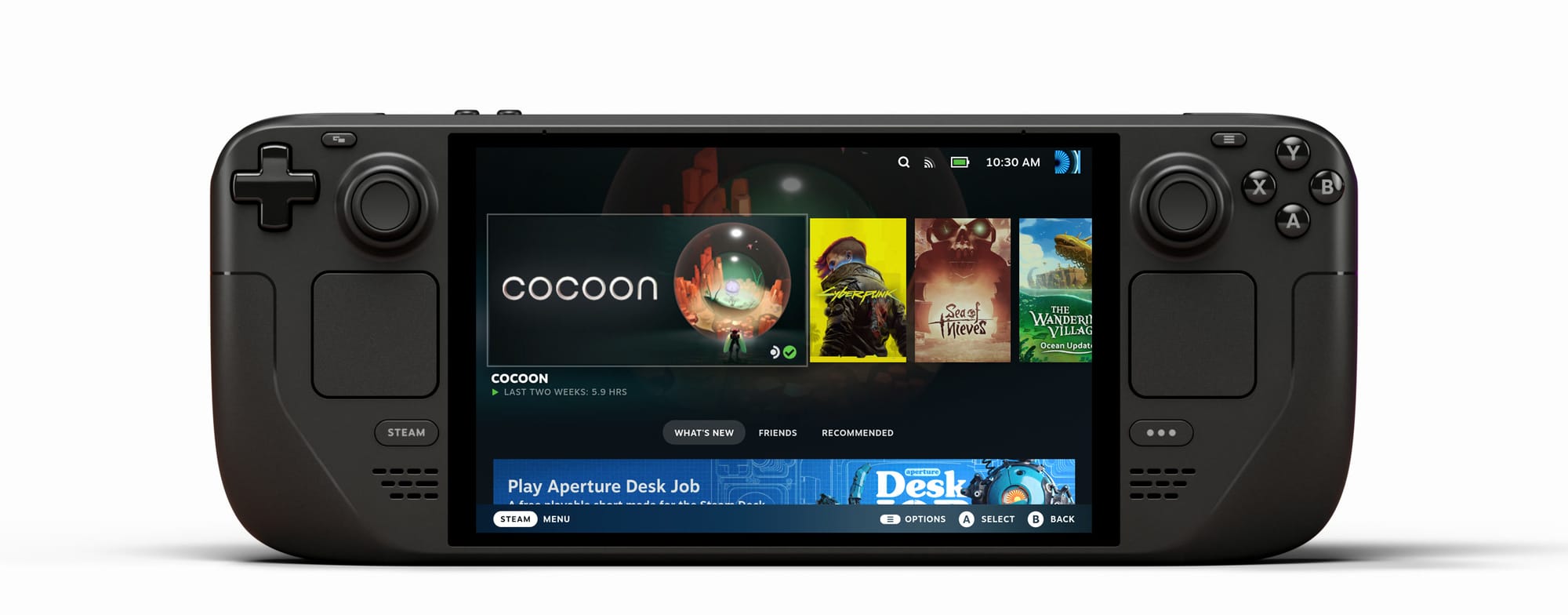
Because of the math format. FSR 4 was built around FP8, a compact number format that RDNA 4 speeds up in hardware, and older chips have no fast path for it. AMD’s RDNA 3 release uses a version converted to INT8, another compact format that older GPUs handle more readily. And the Deck’s graphics are small: 8 RDNA 2 compute units at 1.6GHz, rated at 1.6 TFLOPS, inside a 4 to 15 W chip, according to Valve’s specifications.
INT8 builds exist anyway. In August 2025, while releasing its FidelityFX SDK 2.0, AMD accidentally published FSR 4 source files, an INT8 variant included, TechSpot reported. The files were pulled quickly and AMD has never confirmed the leak, but the community has run INT8 builds on unsupported hardware ever since. Since June, those tools have had an official build to work with, AMD’s own INT8 model in FSR 4.1.1, even though AMD hasn’t enabled it for the Deck’s graphics.
Can you run FSR 4 on a Deck right now?
Yes, through community tools, on both the LCD and OLED models. The main one is OptiScaler, which intercepts a game’s upscaler calls and redirects them to a different upscaler. Version 0.9.4, released July 18, bundles AMD’s FSR 4.1.1, which AMD’s own checks limit to RDNA 4 and RDNA 3 desktop cards, and adds a setting that forces the INT8 model on unsupported GPUs. Its notes tell you to confirm with the on-screen FSR watermark, which shows whether FSR 4 is really running or the game has fallen back to FSR 3. That matters because AMD’s code quietly drops unsupported GPUs to FSR 3, and with the setting on, the overlay lists the upscaler only as “FSR3.X/4”.
On the Deck itself, the Decky Framegen plugin installs and manages OptiScaler from Gaming Mode. Its July 26 release moved to OptiScaler 0.9.4, and earlier test builds added a dedicated RDNA 2 option for FSR 4.1.1. Despite the name, it handles upscaling as well as OptiScaler’s frame generation, which is a separate switch.
Valve has been reported to have added an FSR 4 file to Proton Experimental in June, spotted by leaker Brad Lynch, and Valve has since said what it’s for. On June 24, Valve developer Pierre-Loup Griffais posted that FSR 4 “for discrete RDNA3 GPUs and Steam Machine” works through Proton Experimental, and Valve told PC Gamer it’s working with AMD on FSR 4 for the Steam Machine, whose GPU is RDNA 3; neither statement mentions the Deck. Meanwhile, community builds such as Proton-CachyOS already expose it through a launch option that upgrades FSR 3.1 games to FSR 4.
How many frames does FSR 4 cost on the Deck?
Between 1 and 5 FPS on average in XDA’s tests. XDA ran the same benchmarks on a Steam Deck at 720p and Medium settings, once with FSR 3.1.5 and once with FSR 4 through OptiScaler. Shadow of the Tomb Raider, held back by the GPU, dropped from 49 to 44 FPS on average. Horizon Zero Dawn Remastered, held back by the processor, only slipped from 31 to 30.
| Steam Deck, 720p Medium (XDA) | FSR 3.1.5 | FSR 4.0.2 | Change |
|---|---|---|---|
| Shadow of the Tomb Raider, average | 49 FPS | 44 FPS | -10.2% |
| Shadow of the Tomb Raider, GPU average | 52 FPS | 45 FPS | -13.5% |
| Horizon Zero Dawn Remastered, average | 31 FPS | 30 FPS | -3.2% |
| Horizon Zero Dawn Remastered, GPU average | 36 FPS | 33 FPS | -8.3% |
Your battery doesn’t pay for it: power draw stayed the same or fell in both games. Those Deck runs used FSR 4.0.2 through OptiScaler 0.9.3, before OptiScaler bundled the INT8 model, so newer builds may behave differently. On a ROG Ally X, a stronger RDNA 3 handheld, XDA measured 47 FPS falling to 40 with the INT8 model. Every comparison changed only the upscaler, which is the same trade you’d make flipping the setting yourself.
What do you get for those frames?
A much steadier image, according to TechSpot. On a Legion Go, an RDNA 3 handheld running Windows, it found FSR 4 INT8 in Balanced mode close to native 1440x900 in Cyberpunk 2077, while FSR 3 showed moiré patterns and unstable detail in motion. The frame rates sat close together: 56 FPS for FSR 4 Balanced, 59 for FSR 3 Balanced, from 47 at native. TechSpot also found that OptiScaler’s FSR 4 Quality mode breaks anti-aliasing in many games, and recommends Balanced or Performance instead.
How do you install FSR 4 on a Steam Deck, and what can go wrong?
Mostly through Decky Loader, the plugin framework for the Deck’s Gaming Mode. Decky Framegen’s “Setup OptiScaler Mod” button then installs the files, and the plugin gives you a launch option to paste into each game’s properties. In the game, the OptiScaler overlay opens with the Insert key, which you can map to a back button through Steam Input; set the upscaler to FSR 4 there and check the watermark.
Quite a bit can go wrong. None of this is supported by AMD or Valve, and a game or Proton update can break it. Running Windows on your Deck? OptiScaler’s developers recommend the older FSR 4.0.2c build on RDNA 2 under Windows, because of an AMD driver regression that hasn’t been fixed.
Which games does it work with?
DirectX 11 or 12 games that support DLSS 2 or newer, FSR 2 or newer, or XeSS, because OptiScaler needs one of those upscalers to hook into. OptiScaler’s wiki keeps a per-game compatibility list. XDA adds that Capcom’s RE Engine titles often won’t cooperate. OptiScaler works by intercepting rendering calls, so games with anti-cheat are off limits unless you want to risk a ban. One Deck owner has reported FSR 4.1.1 INT8 running in Cyberpunk 2077 under SteamOS with OptiScaler’s INT8 setting on.
What should you watch for?
Three things will settle the Deck’s FSR 4 story: whether AMD’s early-2027 RDNA 2 release reaches integrated graphics, whether its year-end handheld version covers the Deck’s chip, and whether Valve extends its Proton support from the Steam Machine to the Deck. The other handhelds in this site’s four-way benchmark, the ROG Ally, Legion Go 2 and X2 Mini Pro, use RDNA 3 and 3.5 graphics, newer than the Deck’s. In that comparison, the Deck averaged 30 FPS in Cyberpunk 2077 at Medium. A better upscaler that costs a few frames weighs differently at that baseline than on a faster machine.
On the shelf
Handheld PCsSee the whole story →Nerd Alert
Your Turn
What are YOUR thoughts
What have your experiences been? Let us know.