News / News · News · Handheld Gaming · Handheld PCs
The ROG Xbox Ally X20 Is Out: A $1,299.99 OLED Ally X for ROG’s 20th Anniversary
ASUS’s 20th-anniversary handheld swaps the Ally X’s LCD for a 7.4-inch OLED and adds magnetic sticks and a transforming D-pad. Here’s what it costs in each region, and how it compares.
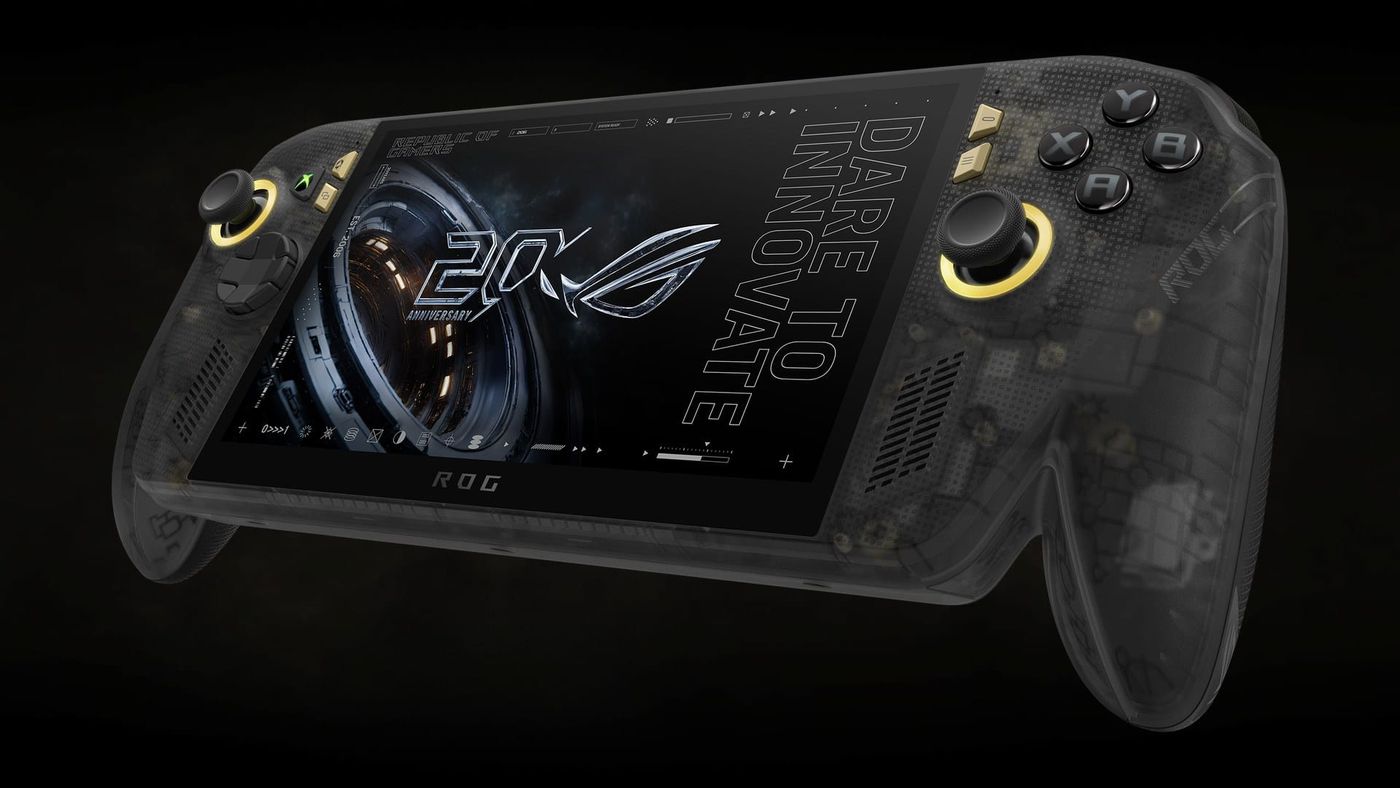
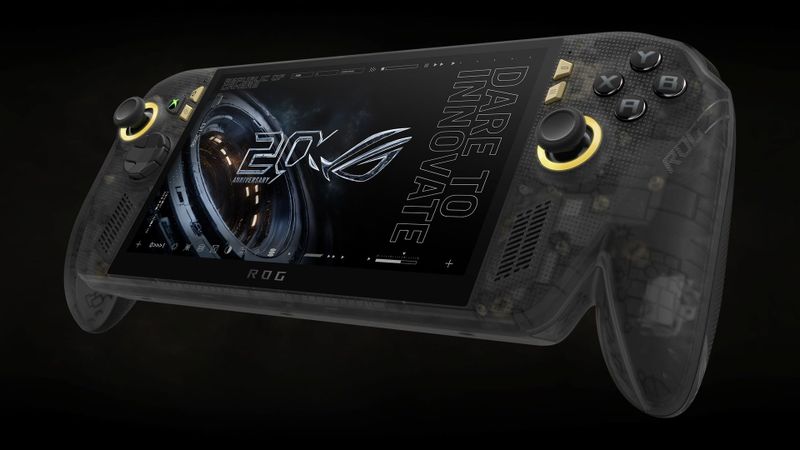
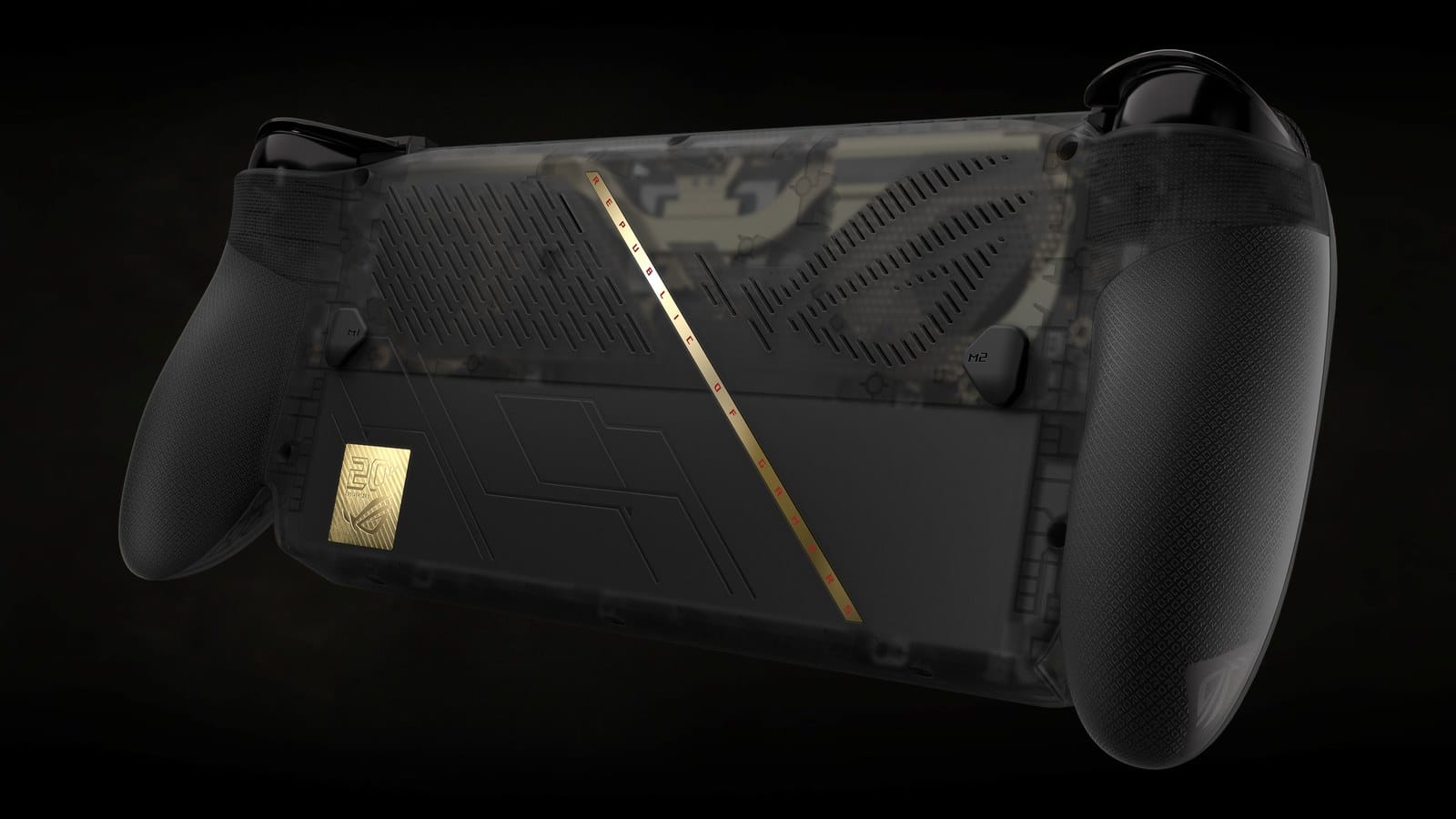
ASUS put the ROG Xbox Ally X20 on sale in the US on October 15, at $1,299.99 on its own store. It’s a special edition of the ROG Xbox Ally X, the Windows handheld ASUS makes with Microsoft. It marks 20 years of ROG, ASUS’s gaming brand. It comes in a translucent black shell with gold details and an ROG 20th Anniversary badge on the back. The big change is the screen: a 7.4-inch OLED, a panel type where every pixel makes its own light, in place of the Ally X’s 7-inch LCD. A $2,499.99 bundle adds AR (augmented reality) glasses and two cases.
What is the ROG Xbox Ally X20?
It’s the 20th-anniversary version of the ROG Xbox Ally X, marking 20 years since ASUS founded ROG (Republic of Gamers), its gaming brand, in 2006. It keeps the Ally X’s AMD Ryzen AI Z2 Extreme chip, 24 GB of memory and 1 TB SSD. Like the Ally X and the cheaper base ROG Xbox Ally, it runs Windows 11 Home and starts up in Xbox mode, Microsoft’s controller-first full-screen interface.
ROG Xbox Ally X20 vs ROG Xbox Ally X: what’s new?
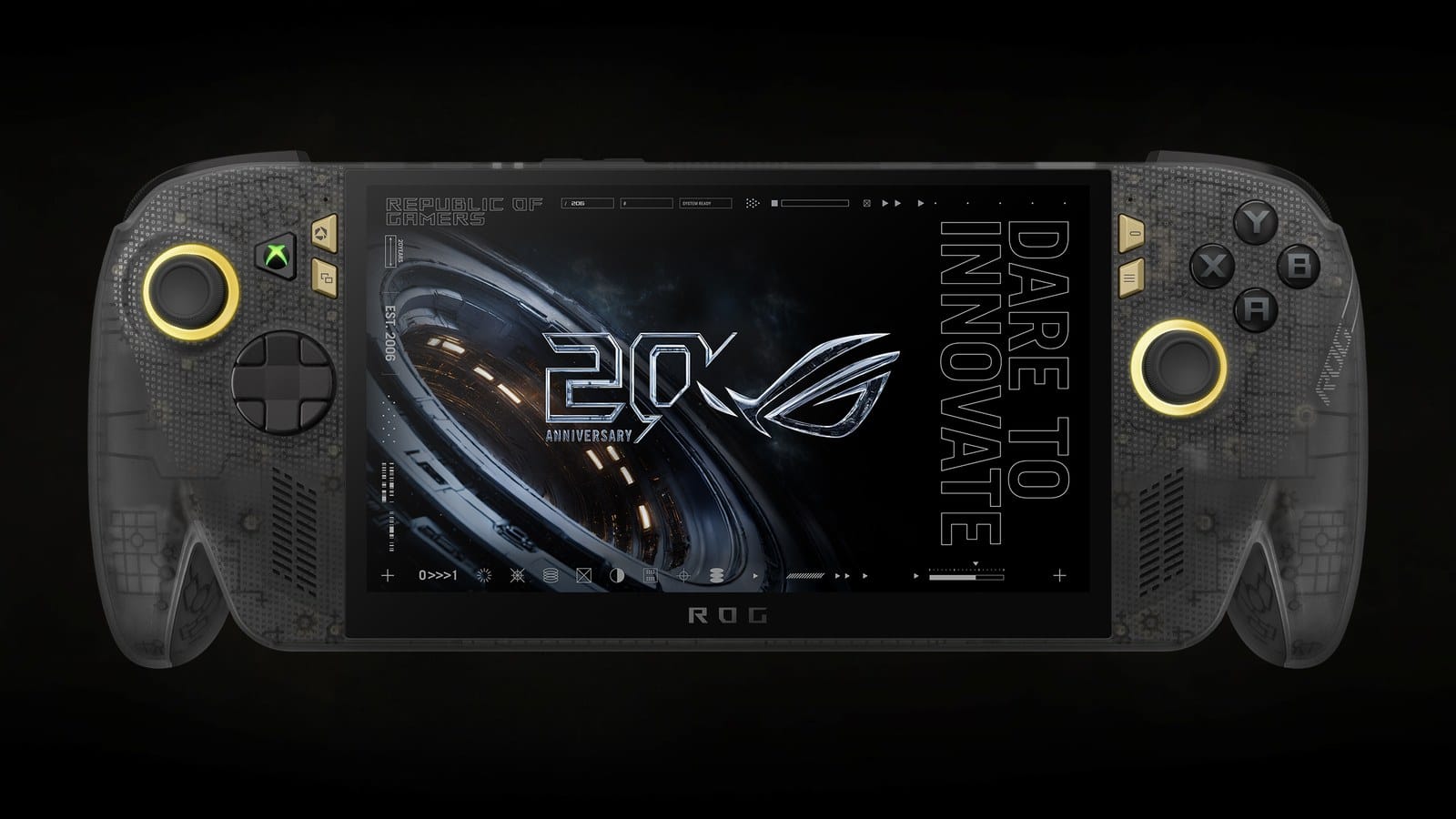
The X20 gets a new OLED screen, magnetic sticks, a transforming D-pad, new cooling, a microSD Express card slot and a newer DisplayPort output. The screen is a 7.4-inch 1920x1080 OLED at up to 120 Hz, rated at 600 nits for everyday content and 1,400 nits peak in HDR (high dynamic range), against 500 nits on the Ally X’s 7-inch LCD. Variable refresh rate (VRR), which matches the screen’s refresh rate to the game’s frame rate to avoid tearing, works from 30 to 120 Hz. ASUS says a slimmer top bezel fits the bigger screen into the same body, though ASUS’s own spec sheets list the X20 at 30.0 cm wide against 29.0 cm for the Ally X. It is heavier, too: 756 g, 41 g more than the Ally X.
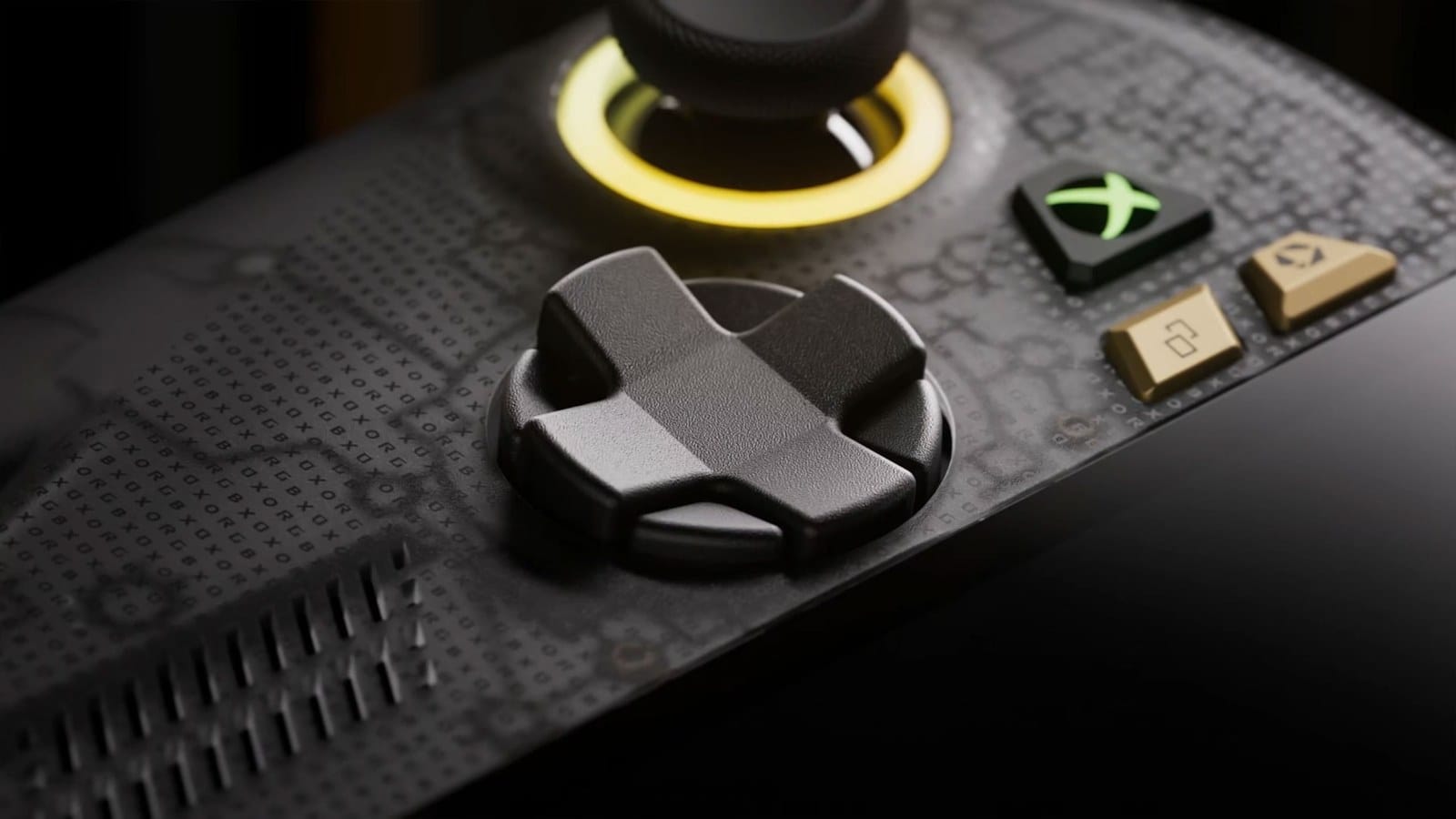
The sticks now use TMR sensors, magnetic sensors with no parts rubbing together, which ASUS says reduce the risk of stick drift, where a stick registers movement on its own. ASUS quotes a 3% dead zone, the small area around the centre where movement is ignored. The D-pad lifts and turns 90 degrees to switch between four directions, for retro and indie games, and eight, for fighting games. ASUS adds that the face buttons sit flush when pressed and need less force. The grips get a rubberized texture.
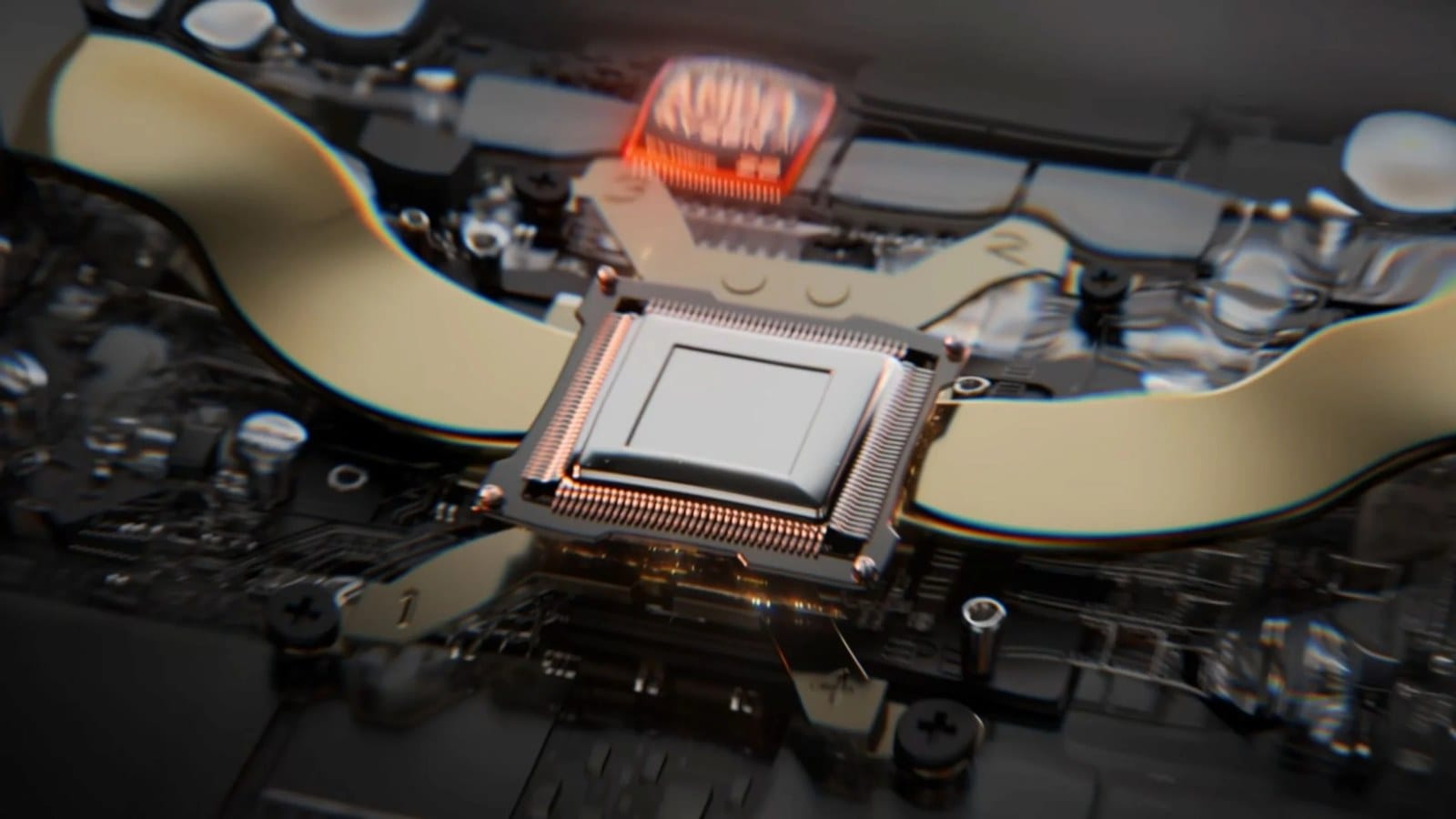
Inside, ASUS redesigned the cooling to push air down three paths: behind the OLED panel, through the heatsink fins and straight at the processor. The fans have fewer, larger blades. ASUS claims 20% more airflow and 11% more heatsink fin area. ASUS Japan adds that the vents now have a dust filter.
The card slot and the USB4 port change, too. The slot now takes microSD Express cards, a faster card type. Ordinary microSD cards come in two speed classes, UHS-I and the faster UHS-II. The X20 runs ordinary cards at UHS-I, where the Ally X’s slot supports UHS-II. The USB4 port sends DisplayPort 2.1 to a monitor, where the Ally X’s sends DisplayPort 1.4.
| ROG Xbox Ally X20 | ROG Xbox Ally X | ROG Xbox Ally | |
|---|---|---|---|
| Chip | Ryzen AI Z2 Extreme | Ryzen AI Z2 Extreme | Ryzen Z2 A |
| Memory and storage | 24 GB, 1 TB | 24 GB, 1 TB | 16 GB, 512 GB |
| Screen | 7.4-inch OLED, 1920x1080, 120 Hz | 7-inch LCD, 1920x1080, 120 Hz | 7-inch LCD, 1920x1080, 120 Hz |
| Brightness | 600 nits, 1,400 nits HDR peak | 500 nits | 500 nits |
| Sticks and D-pad | TMR sticks, transforming D-pad | Standard sticks and D-pad | Standard sticks and D-pad |
| Card slot | microSD Express (ordinary cards at UHS-I) | UHS-II microSD | UHS-II microSD |
| Battery | 80 Wh | 80 Wh | 60 Wh |
| Weight | 756 g | 715 g | 670 g |
| Width | 30.0 cm | 29.0 cm | 29.0 cm |
| Price (ASUS US store) | $1,299.99 | $999.99 | $599.99 |
What battery does it have?
An 80 Wh battery, the same size as the Ally X’s and bigger than the 60 Wh in the base Xbox Ally. ASUS doesn’t publish a battery-life figure in hours.
The spec sheet lists a 68 W USB-C charger, though ASUS notes that whether one comes in the box varies by country and model. ASUS says some seat outlets on planes and trains only accept a 65 W charger, and a higher-wattage one won’t work there. Travel Mode, new in ASUS’s Armoury Crate SE app for every Xbox Ally, limits the handheld’s charging to 65 W, which ASUS says gives wider compatibility with those outlets. It turns on automatically with Airplane Mode.
How much does the ROG Xbox Ally X20 cost?
In the US, it’s $1,299.99 for the handheld with 24 GB and 1 TB, or $2,499.99 for the bundle, on ASUS’s own store. The standalone X20 is $300 more than the $999.99 Ally X and $700 more than the $599.99 Xbox Ally, which both stay on sale. Here’s what ASUS’s stores charge in each region, checked on October 16.
| Region (ASUS store) | X20 standalone, 24 GB and 1 TB | X20 Bundle |
|---|---|---|
| United States | $1,299.99 | $2,499.99 |
| Canada | CA$1,899 | CA$3,499 |
| United Kingdom | £1,299.99 | £2,299.99 |
| Germany | €1,399 | €2,599 |
| France | €1,399.99 | €2,599.99 |
| Italy, Spain, Netherlands | Not listed | €2,599 |
| Australia | A$2,499 | A$4,499 |
| Japan | ¥258,800 | ¥442,800 |
| Mexico | MX$26,999 | MX$49,999 |
| Singapore | Not listed | S$3,599 |
| United Arab Emirates | Not listed | AED 10,999 |
When does it come out, and where can you buy it?
It went on sale in the US on October 15 and in Japan on October 16, after pre-orders opened on August 25. You can buy it from ASUS’s own stores and, ASUS says, local retailers. On October 16, ASUS’s US store listed both the standalone X20 and the bundle as out of stock. ASUS’s store pages in eleven more countries besides the US and Japan list prices for the X20 or its bundle, shown in the price table above.
What’s in the bundle?
The $2,499.99 bundle adds ROG XREAL R1 Edition 20 AR glasses, a dbrand Killswitch case, a Pelican hard case and a 68 W charger. AR glasses show a large virtual screen in front of your eyes.
ASUS says the XREAL R1 glasses project a 171-inch screen at 4 meters from micro-OLED displays running at 240 Hz. They have Bose audio. They plug into the X20 with one USB-C cable. ASUS also sells the glasses on their own.
The Killswitch is a protective case with a kickstand, grips, a circuit-board skin and ROG stick covers. The Pelican case holds everything in the bundle.
Is it a limited edition?
ASUS calls it a special edition and part of its “limited Edition 20 lineup,” but ASUS hasn’t said how many units it will make.
Does it use the Xbox full-screen experience?
Yes, under its new name, Xbox mode. Microsoft renamed the full-screen experience, which debuted on Windows handhelds. On April 30, Microsoft began rolling Xbox mode out to all Windows 11 PCs. In Xbox mode, your Game Pass catalog and games from other PC stores can sit in one library. You can jump back to the Windows desktop at any time.
Steam, Epic, Battle.net, GOG and other stores install as on any Windows PC. Microsoft says its next console, Project Helix, will play PC games too, though it hasn’t said which stores. Since April, a “+” button in the Xbox app adds any installed game to the Xbox mode library. Pressing the Xbox button opens Game Bar, Microsoft’s overlay for quick tools, and holding it switches between open apps. The X20 comes with two months of Xbox Game Pass Premium in eligible markets.
What’s new in Armoury Crate SE?
Version 3 of Armoury Crate Special Edition, ASUS’s own handheld app for performance, controls and lighting, adds more button remapping, one-click game profiles, Remote Play and new lighting and HDR modes, and most of it comes to every Ally. ASUS says the menus now scale better. The Command Center button, which opens the quick-settings overlay, and the Library and Action buttons can now be remapped. Settings changed in Command Center save to the current game’s profile in one click.
Remote Play, in beta, streams games from your gaming PC. A Preview Updates menu lets you opt into updates early. Immersion Lighting, which reacts to game audio, comes to every Ally too. On the original ROG Ally, which I own, the update adds a choice of the Xbox Allys’ button layout.
Two additions are X20-only: a pair of HDR modes and Reactive Lighting. HDR Native keeps a game’s original colours and HDR Vivid gives a punchier picture. Reactive Lighting uses extra LEDs around the X20’s sticks to light up in the direction you push.
Is there a dock for it?
ASUS has announced one, the ROG Bulwark Dock DG310, for the whole Xbox Ally family. ASUS hasn’t given a price yet. The dock connects over one USB-C cable and adds HDMI 2.1 with 4K at up to 144 Hz, VRR and HDR, gigabit Ethernet, three USB-A ports and up to 80 W of charging with a 100 W charger. ASUS says supported TVs recognize a docked Ally as an Xbox and switch to their low-lag game mode on their own.
How does it compare with the Legion Go 2?
These days the Legion Go 2 goes for $2,000 and up, so the X20 is about $700 less for the same chip family. The Legion Go 2 runs AMD’s Ryzen Z2 Extreme, where the X20 has the Ryzen AI Z2 Extreme. AMD’s spec pages for the Z2 Extreme and AI Z2 Extreme list the same CPU and graphics, and the AI version adds an NPU, a processor block for AI tasks rated at up to 50 TOPS (trillion operations per second).
The Legion Go 2 has the bigger screen, an 8.8-inch 1920x1200 OLED at up to 144 Hz, and more weight to go with it: mine weighs 936 g, against ASUS’s 756 g for the X20. Lenovo lists a 74 Wh battery, a little smaller than the X20’s 80 Wh.
ROG Xbox Ally X20 vs Steam Deck OLED: what’s the difference?
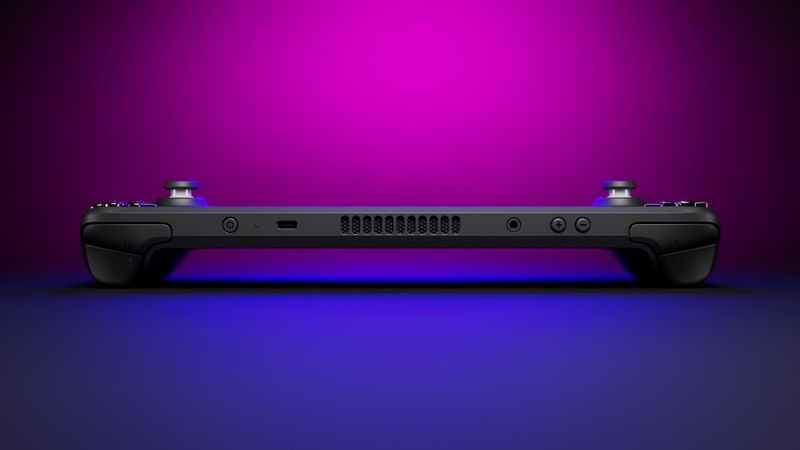
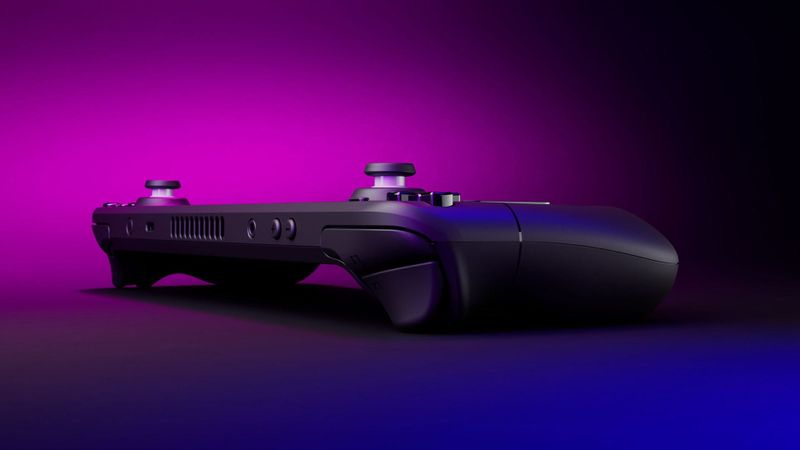
Both have a 7.4-inch OLED, but the X20’s runs at 1920x1080 and up to 120 Hz, where the Steam Deck OLED’s is 1280x800 at up to 90 Hz. Valve rates the Deck at 1,000 nits peak in HDR against the X20’s 1,400. The Deck’s 50 Wh battery is smaller than the X20’s 80 Wh.
The Deck is lighter, at about 640 g. It runs SteamOS, Valve’s Linux-based system, instead of Windows. It costs $789 with 512 GB or $949 with 1 TB on Valve’s store, so the 1 TB X20 costs $350.99 more than the 1 TB Deck.
How does it compare with the OneXPlayer X2 Mini Pro?
The X2 Mini Pro is a bigger, heavier and pricier handheld than the X20, built on AMD’s Ryzen AI Max+ 388 with Radeon 8060S graphics. It costs almost twice as much: $2,499 with 48 GB and 1 TB on OneXPlayer’s store. New orders ship from October 20.
It drives an 8.8-inch 1920x1200 OLED at 144 Hz. Its 85 Wh battery is removable. With the battery on, mine weighs 1,287 g, about 530 g more than the X20.
| ROG Xbox Ally X20 | Legion Go 2 | Steam Deck OLED | X2 Mini Pro | |
|---|---|---|---|---|
| Chip | AMD Ryzen AI Z2 Extreme | AMD Ryzen Z2 Extreme | Custom AMD chip | AMD Ryzen AI Max+ 388 |
| Screen | 7.4-inch OLED, 1920x1080, 120 Hz | 8.8-inch OLED, 1920x1200, 144 Hz | 7.4-inch OLED, 1280x800, 90 Hz | 8.8-inch OLED, 1920x1200, 144 Hz |
| Battery | 80 Wh | 74 Wh | 50 Wh | 85 Wh, removable |
| Weight | 756 g | 936 g (my scale) | About 640 g | 1,287 g with battery (my scale) |
| Operating system | Windows 11 Home, starts in Xbox mode | Windows 11, Xbox mode available | SteamOS | Windows 11, Xbox mode available |
| US price | $1,299.99 (24 GB, 1 TB) | $2,000 and up (about $1,300 when I bought mine) | $789 (512 GB), $949 (1 TB) | From $2,499 (48 GB, 1 TB) |
My tests of the LCD Steam Deck, original ROG Ally, Legion Go 2 and X2 Mini Pro at 15 to 35 W are in my four-handheld benchmarks.
Who is the X20 for?
It’s for anyone who wants an OLED screen in an ASUS handheld, along with magnetic sticks, a transforming D-pad and the 20th-anniversary design. Ally X owners gain the least, since the chip, memory and battery are unchanged. For them, the X20’s extra $300 over the $999.99 Ally X buys the OLED screen, the magnetic sticks, the D-pad and the design, with the same performance. Shoppers choosing between it and the Legion Go 2 get the same chip family for about $700 less.
On the shelf
Handheld PCsSee the whole story →Nerd Alert
Your Turn
What are YOUR thoughts
What have your experiences been? Let us know.