Neo Geo AES (1990)
SNK's arcade board with a twin at home: rented out in Japan before it was sold, $649.99 in America for the Gold System, with $200 games, a memory card for the arcade, and the AES+ due in 2027.
https://averagetechnerds.com/neo-geo-aes/
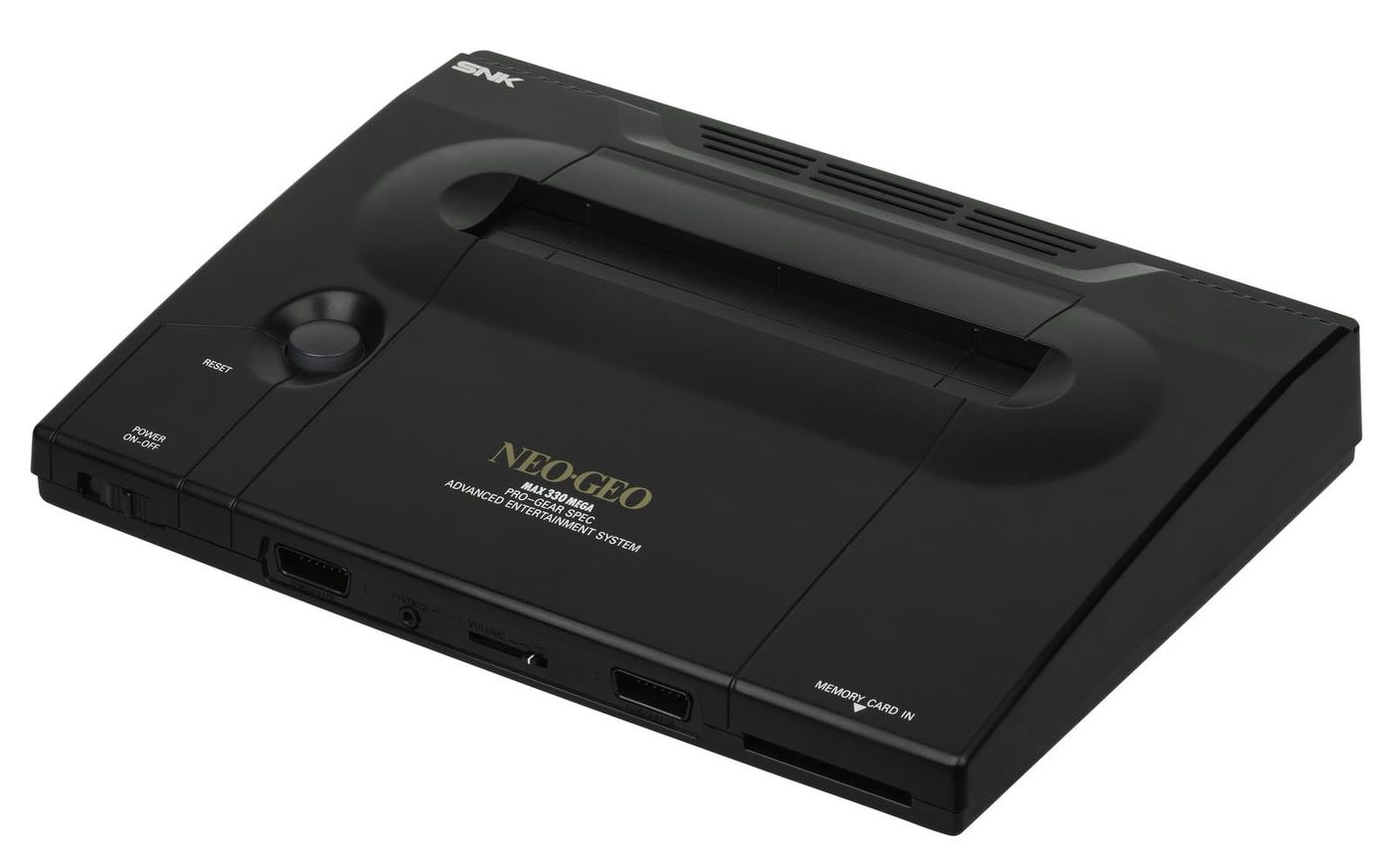
When SNK’s home Neo Geo came out in Japan on April 26, 1990, you weren’t really supposed to buy one. SNK sold it to video rental shops and game centres, at a dealer price of ¥58,000, and they rented it out with the games, the way they’d rent you a movie. The slogan was roughly “Take the amazing games home with you.” For a while, anyway.
Then more people asked to buy one than SNK had expected. On July 1, 1991, the Neo Geo went on general sale in Japan. A console built to be rented became one people insisted on owning, even though it was the most expensive home console of its day, with games that cost more than other consoles did.
An arcade board with a twin at home
Part of the reason it cost so much: it was an arcade machine. The Neo Geo was one system in two forms. The MVS, the Multi Video System, was the arcade board, on sale in Japan from April 16, 1990. The AES, the Advanced Entertainment System, was the home console. Same hardware family, same games.
That was rare on both sides. An arcade board back then usually ran one game and nothing else. The MVS took cartridges instead, starting with Magician Lord in 1990, and one cabinet could hold up to six, so an arcade could change its line-up by swapping carts, the same way you swap games at home. The idea is usually credited to Takashi Nishiyama, who had made the first Street Fighter at Capcom before he moved to SNK. And at home, where arcade hits usually came as cut-down ports, the Neo Geo gave you the real thing. You were playing the arcade game itself.
It grew into a whole family over the years.
| Model | When | What it was |
|---|---|---|
| MVS | 1990 | The arcade board, with room for up to six cartridges in one cabinet |
| AES | 1990 for rental, July 1991 on sale in Japan | The home console |
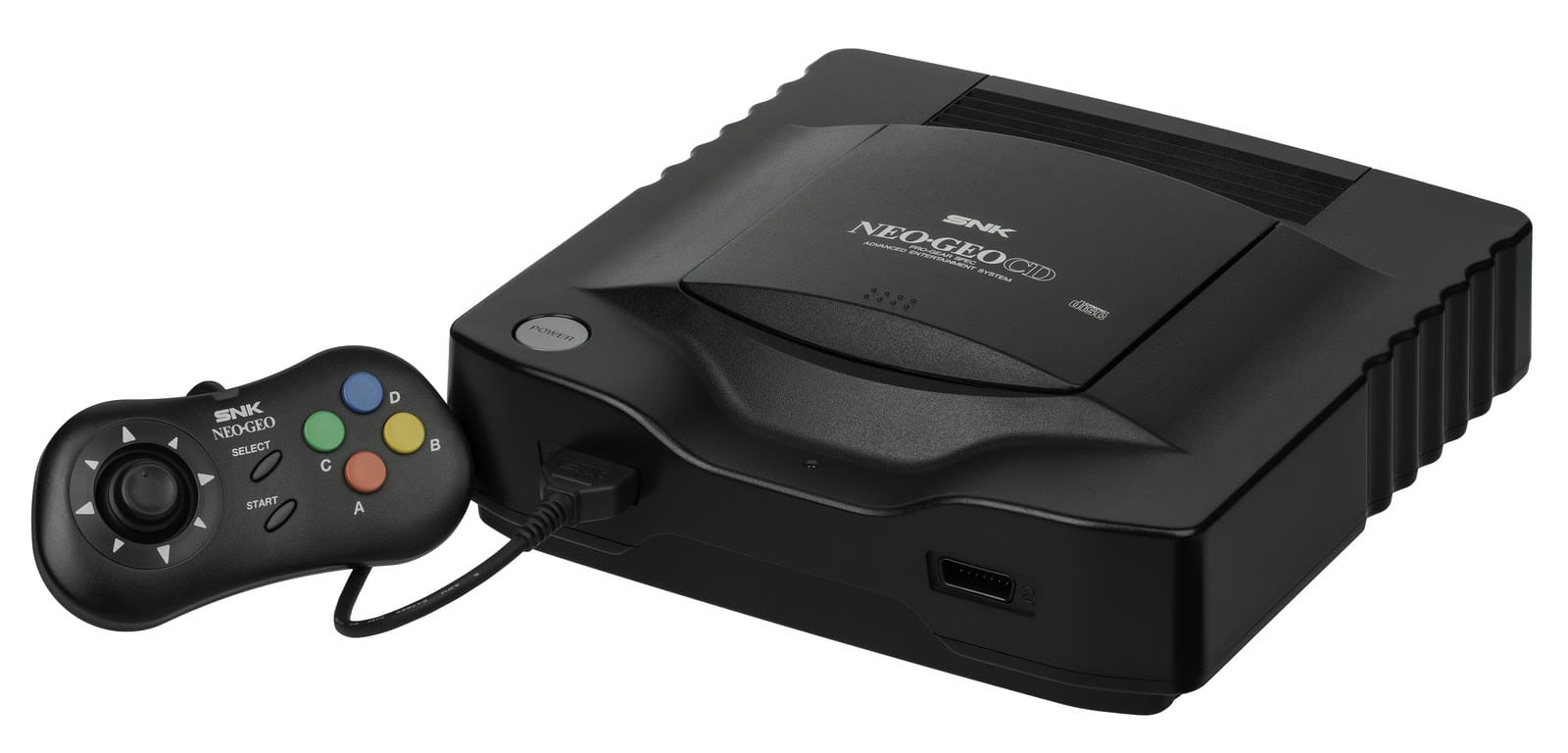
| Neo Geo CD | 1994 | The same games on disc, far cheaper, with long loading |
| Neo Geo CDZ | Late 1995, Japan only | A CD model that loaded faster |
| Neo Geo Mini | 2018 | SNK’s 40th-birthday mini console with 40 games built in |
| NEOGEO AES+ | Due September 2027 | New hardware from Plaion that plays the original cartridges |
The Ferrari ad
In America it reached shops in late 1990 and early 1991, and this is where the legend starts. The Gold System, two joysticks and a game, cost about $650. The Silver System gave you one joystick and no game for around $400 to $450, depending on the shop. Neither came with a memory card. Then came the games. About $200 each, going by the shop ads in 1991 magazines.
You’ll often see “$650 at launch” as if that were the only price. It’s the Gold box. The cheaper box was a lot cheaper, and still a fortune.
Put side by side, the prices looked like this.
| What | Japan | United States |
|---|---|---|
| The console | ¥58,000 (the dealer price in the rental days) | Gold System $649.99 with two sticks and a game; Silver System around $400 to $450 with one stick |
| A game cartridge | Around ¥30,000, more for the biggest | About $200 |
| A game on the 1994 Neo Geo CD | Around ¥7,000 | - |
SNK knew exactly what it was selling. Its American ad in early 1991 asked, “Does NEO*GEO cost more than other video game systems? You bet. Does a Ferrari cost more than a Yugo?” The same ad called anyone still playing Sega, NEC or Nintendo a “weenie”, and a Neo Geo player “a real hot dog”. The supercar comparison people still make about this console started with SNK itself. By July 1991, a magazine was calling it “the world’s most expensive video-game system”.
A memory card for the arcade
The Neo Geo also had a clever extra. Its memory card used one save format for the home console and for arcade cabinets that had a card slot. Save your game at home, take the card out with you, and carry on at the arcade. Or the other way round.
That card is usually credited as a first, too: no home console before it had a removable memory card for saves. It was tiny by today’s standards. It held 2 KB, about as much text as one short email, with a little battery inside to keep your saves alive. And not every cabinet had a slot. Some had one built in, some had an add-on and some had none, so your save only travelled to the arcades that were ready for it.
The games that carried it
Fighting games carried it, and Fatal Fury led the way. It arrived in 1991 and stood right beside Street Fighter II at the centre of the fighting boom. If you liked a fighter, the Neo Geo kept handing you new ones: Art of Fighting, Samurai Shodown, The King of Fighters. And when you wanted a break from fighting, there was Metal Slug. SNK didn’t even make every game on it. ADK and other studios built games for it too.
In arcades it was a hit. At home it stayed a small, expensive niche, which is what SNK had planned all along, but in 1994 it opened a cheaper door anyway: the Neo Geo CD. Games on disc cost around ¥7,000 in Japan, under a quarter of what a cartridge cost there. You paid in time instead. A cartridge is ready the instant you switch on, while a disc has to load, and on the Neo Geo CD you did a lot of waiting.
How it was made
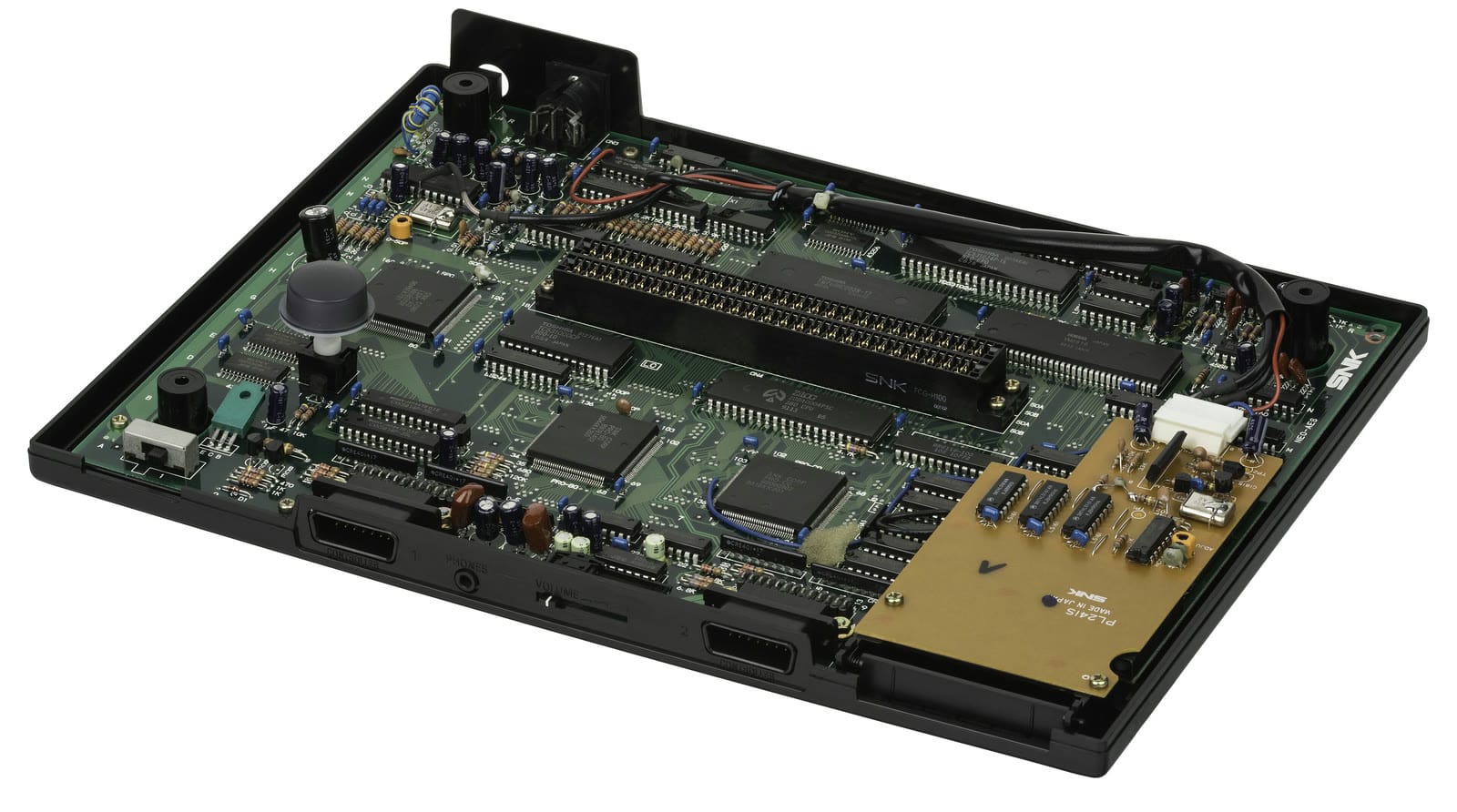
Inside, the Neo Geo is built a lot like the arcade boards it came from, with a couple of unusual choices.
On paper, it looked like this.
| Part | Neo Geo AES |
|---|---|
| Main processor | Motorola 68000 at 12 MHz |
| Sound processor | Zilog Z80A at 4 MHz |
| Sound chip | Yamaha YM-2610, 14 channels (SNK’s ads said 15) |
| Resolution | 320 x 224 |
| Colours | 4,096 on screen, out of 65,536 |
| Sprites | Up to 380 on screen, 96 on one line |
| Work memory | 64 KB |
| Cartridges | “Max 330 Mega” (megabits) on the boot screen; the biggest games went past 700 |
| Saves | 2 KB memory card |
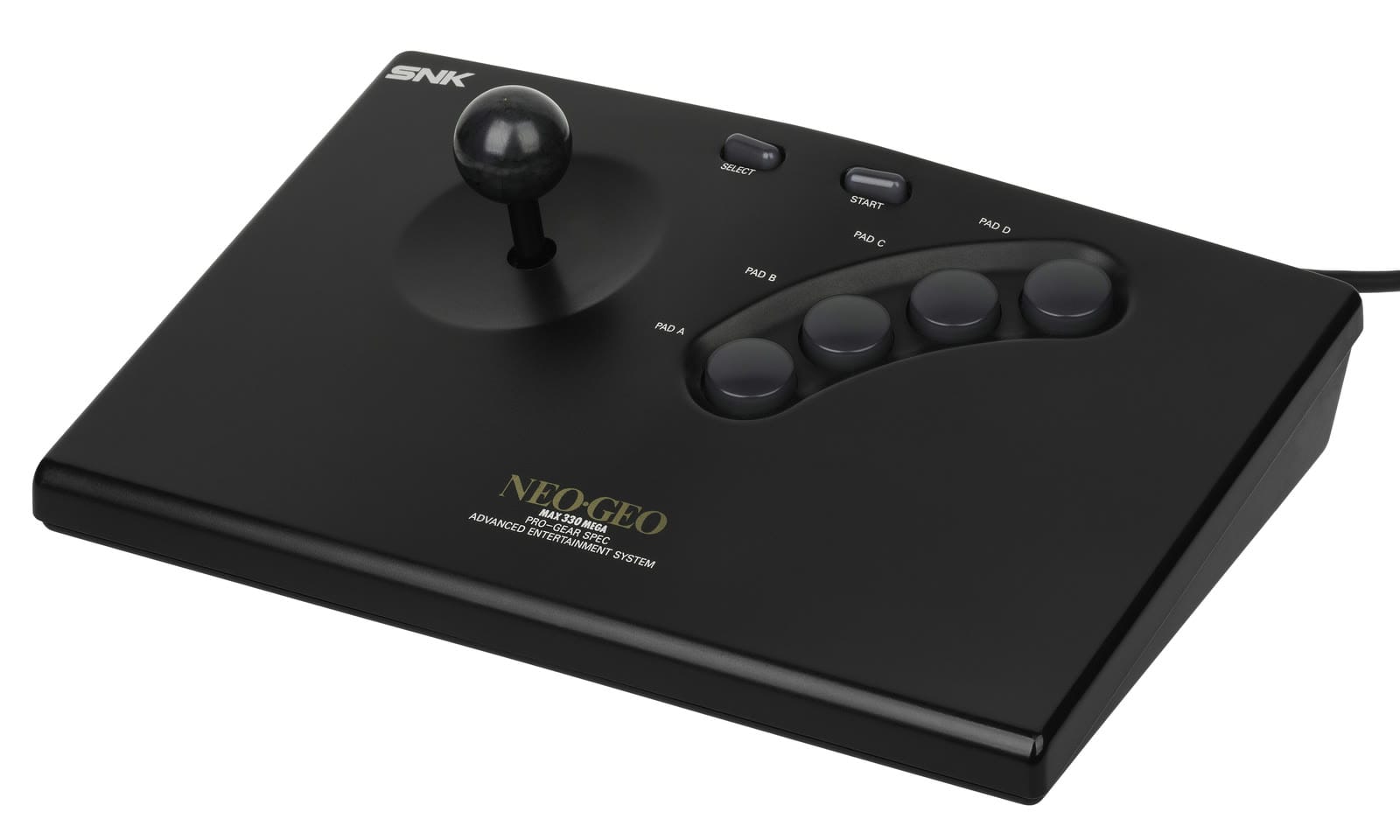
| Controller | Arcade joystick with four buttons |
Two brains. The main processor is a Motorola 68000 at 12 MHz, the same family of chip used in the Sega Genesis and plenty of arcade boards. A second processor, a Zilog Z80A at 4 MHz, has one job: running the music and sound effects.
The sound. A Yamaha YM-2610 mixes synthesized music with recorded samples, which is why Neo Geo games had clear voices and announcers. The chip has 14 channels, and SNK’s own ads claimed 15.
No background layers. Most game hardware of the time had layers for scrolling backgrounds plus sprites, the moving objects, drawn on top. The Neo Geo has no background layers at all. Everything on screen, the scenery included, is built from sprites. Each one is a tall strip 16 pixels wide and up to 512 tall, and the strips are laid side by side like planks to build big objects and whole backgrounds. Up to 380 can be on screen at once, and 96 on a single line. The only other layer is a fixed one for text.
Shrinking. The hardware can shrink sprites smoothly, in 256 steps vertically and 16 horizontally. That’s the zoom-out you see in fighting games when the two fighters move apart. It can’t enlarge or rotate them. When something seems to zoom in, the art was drawn big and shrunk.
Colour. Picture a paint shop with 65,536 shades on the wall. The Neo Geo could put 4,096 of them on screen at once, handed out as 256 small palettes of 16 slots each. It’s like handing every character on screen a box of crayons of their own.
Memory. The scratch pad a game thinks on was 64 KB, smaller than a single photo on your phone. The art itself lived on the cartridge.
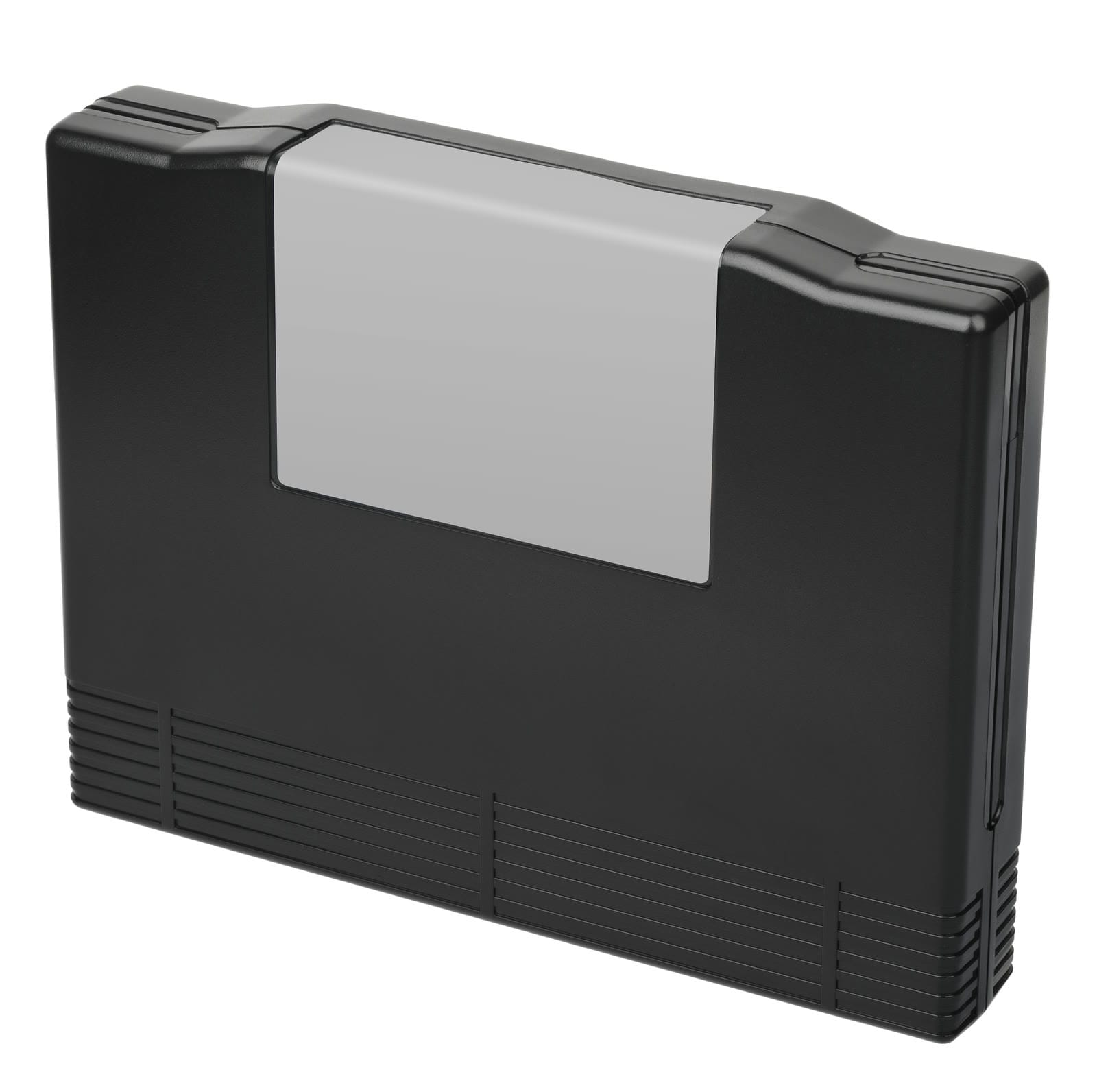
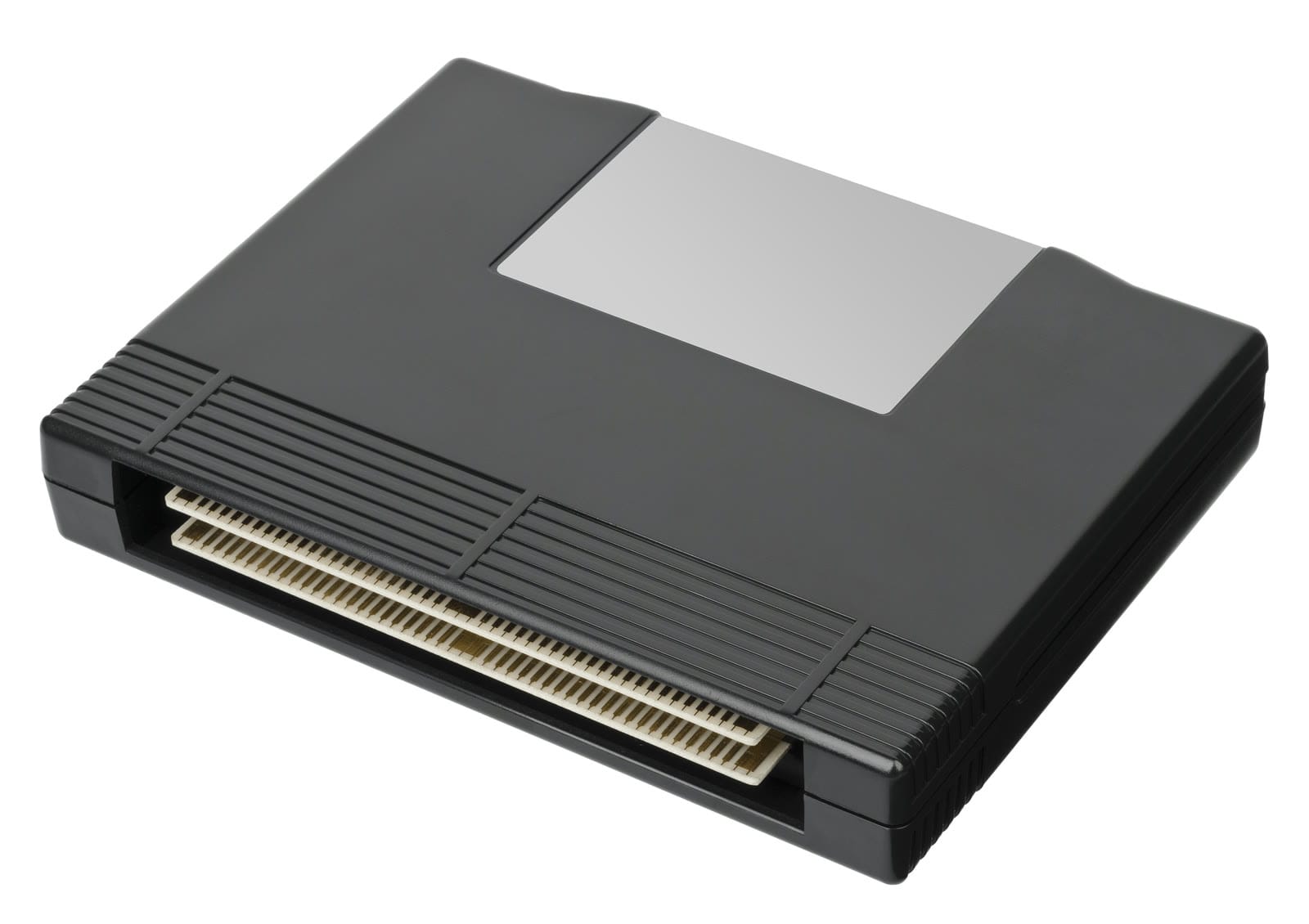
The cartridges. They’re about the size of a VHS tape, and the boot screen brags about how much they can hold: “Max 330 Mega”. That’s megabits. A bit is one tiny on-off switch and a byte is eight of them, so 330 megabits is about 41 megabytes, the most SNK said a cartridge could reach. If you read it as megabytes, you’re in good company: a magazine had to put a reader straight on it back in 1990. Even so, rival consoles’ cartridges held 4 or 8 megabits, so you can see why SNK put the number up front. And later games got past the limit anyway, flipping between chunks of memory like a book you can only read one page of at a time. The biggest went past 700 megabits.
Home and arcade carts. You’ll hear that they’re the same cartridge, and that flipping a little switch turns one into the other. Close, but no. They hold the same game, but the shapes and the connectors are different, so a home cart won’t go into an arcade machine, or the other way round. The game doesn’t need a switch to know where it is, either. When it starts, the machine’s built-in system program tells it whether it’s at home or in an arcade, and which region it’s in. The switches in the story are real. They just live inside the arcade cabinets. They’re called DIP switches, rows of tiny on-off toggles the arcade owner flips to set the machine up, and that’s where the mix-up comes from.
The controller. You didn’t get a little pad. You got a full-size arcade joystick with four buttons in the same layout as the cabinet, so your hands sat in the same place at home as they did at the arcade.
“24-bit”. That was marketing. Back then consoles bragged about bits the way cars brag about horsepower, and a bigger number looked better on the box. The Neo Geo’s main processor is really a 16/32-bit chip: it moves data 16 bits at a time and holds 32-bit numbers inside. The boast stuck around, too. In 2026 Plaion was still using “24-bit” to sell the new AES+. Some brags are too good to retire.
The end of the old SNK
SNK stopped making the home console around 1997, and the company itself wasn’t far behind. Sales slid through the late 90s while SNK spent big on ideas like its own Neo Geo theme venue in Tokyo, which opened in 1999 and closed two years later. By 2001 it owed about ¥38 billion. SNK went to court to restructure, the rescue fell apart within months, and that autumn the company went bankrupt. The maker of the Ferrari of consoles had run out of road.
Even then, SNK got one more home cartridge out the door. Sengoku 2001 came out on schedule that October, with the company around it shutting down. Then SNK said goodbye. Its message to fans that autumn thanked them for 23 years and came with a wallpaper of its characters: “In the Autumn of 2001, SNK will close the company history in its business.” A company on its way out still stopped to say thank you. The name outlived it, too. The rights passed to a new company, Playmore, which goes by SNK today.
The games kept coming, for fourteen years in all. The last official one, Samurai Shodown V Special, arrived in 2004, and Guinness counts that run from Magician Lord as the longest support any arcade system has had. SNK never published how many consoles it sold. It looked after the ones out there, though. It kept repairing them until 2007, when the parts ran out, and its closing notice thanked fans for using a console that was “very expensive” for a home machine.
How can you play Neo Geo games today?
The easiest way is a download. Hamster, the company behind the Arcade Archives line, re-releases Neo Geo games one at a time as ACA NEOGEO, on Switch, PS4, Xbox One and Windows. Since February 2025 there’s also ACA2 NEOGEO on PS5 and Xbox Series X|S, at $9.99 a game, with rewind, more save slots and online play on the games that support it. These are the arcade versions, running on a console you already own.
If you want the real box under your TV, original AES consoles and cartridges still turn up second-hand. Remember the cartridge rule from earlier, though. Home carts fit the home console and arcade carts fit arcade boards, and they don’t swap.
Then there’s SNK’s own side of the family, old and new.
Coming back
The Neo Geo never quite went away. For SNK’s 40th birthday in 2018, it made the Neo Geo Mini, a little console with 40 games built in and its own 3.5-inch screen, the size of the very first iPhone’s. And independent studios still make brand-new games on real Neo Geo cartridges. Bitmap Bureau’s Xeno Crisis is one of them. New games. On real carts. For a console SNK stopped building around 1997.
Then, in April 2026, Plaion and SNK announced the NEOGEO AES+. Plenty of retro re-releases are emulators, software pretending to be the old console. This one has no emulation at all. It’s new hardware built on re-made copies of the original custom chips, so if you still have your old AES cartridges, they go straight in, and it plugs into a modern TV over HDMI. The standard model is $249.99, well under half of what a Gold System cost in 1991. You’ll have to wait for it, though: component shortages have pushed it back to September 2027. Before the delay, people wanted it badly. Embracer’s Lars Wingefors reportedly said the first day of pre-orders beat the forecast for a whole year.
Plaion is making new cartridges too, ten to start, and the list loops right back to the end of this story. Samurai Shodown V Special, the last official game back in 2004, is one of the first on the new console, next to Metal Slug and Garou: Mark of the Wolves. And every edition comes with an arcade stick in the box, the way the original did.
| Edition | Price | What’s different |
|---|---|---|
| Standard | $249.99 | The console in black |
| Anniversary | $349.99 | Ice white, with a white wireless arcade stick, a white memory card and a white Metal Slug cartridge you can’t buy any other way |
| Ultimate | $999.99 | All ten launch games, more controllers and a rack for the carts, sold only on Plaion’s own store |
The console that started as something you rented is about to come home again.
Based on SNK’s own 1991 hardware specification, SNK’s 1991 American magazine ads, VideoGames & Computer Entertainment (1990 and 1991), 1990 and 1991 Japanese trade press as quoted by famicoms.net, Famitsu, Impress Game Watch (2001), SNK’s 2007 repair notice and its 2001 farewell message, SNK’s corporate history, Guinness World Records, the NeoGeo Development Wiki, Plaion’s 2026 announcements, Hamster’s 2025 Arcade Archives announcement, Time Extension and VGC, as of November 16, 2026. Where the sources disagree, the page says so.
Nerd Alert
Your Turn
What are YOUR thoughts
What have your experiences been? Let us know.