News · News · Retro Gaming · Retro consoles
NEOGEO AES+: The Neo Geo Comes Back on New Chips, With No Emulation
A brand-new Neo Geo AES from Plaion and SNK, on custom chips rebuilt from the original hardware. Your old cartridges work, and it’s due September 2027.
https://averagetechnerds.com/neogeo-aes-plus-new-chips-no-emulation/
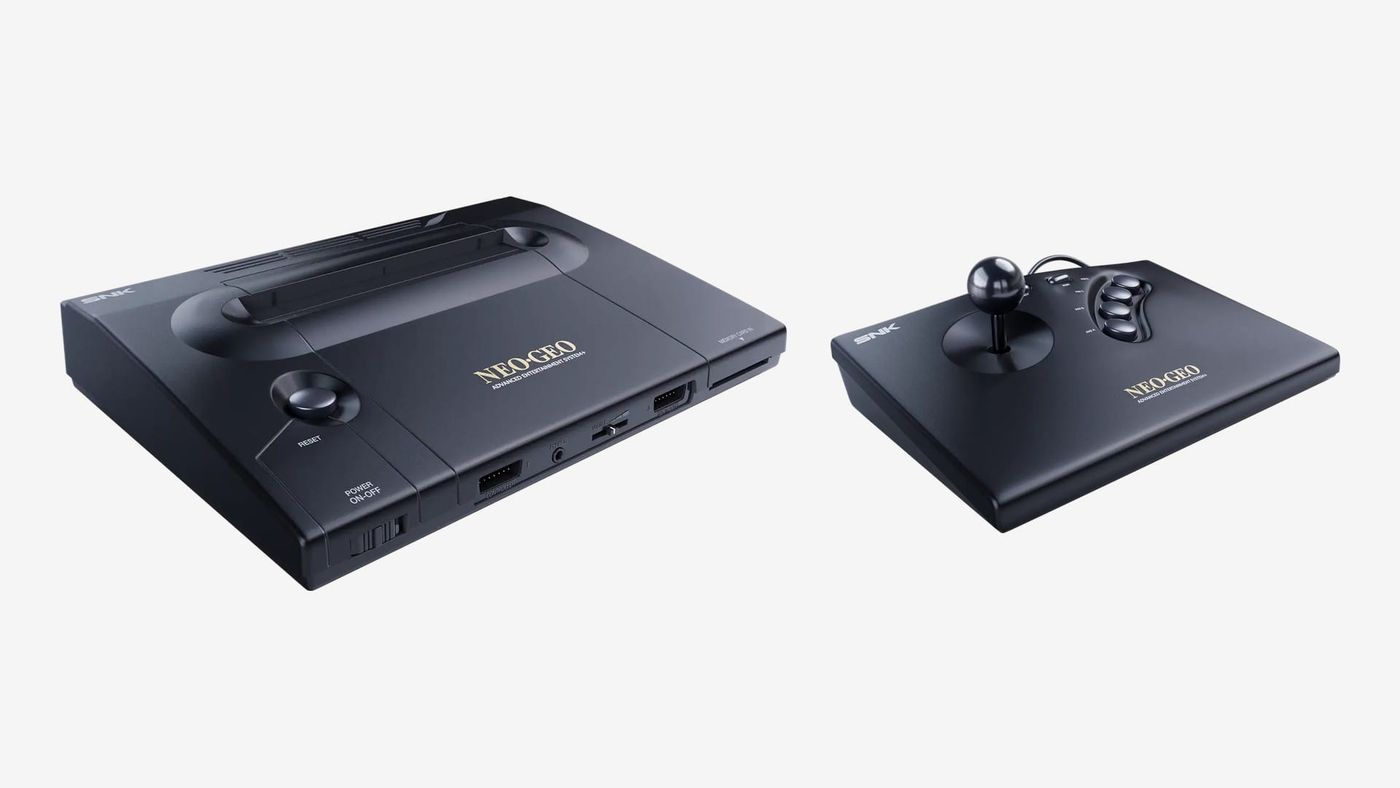
This one’s exciting to me. It’s the idea of a 1990s console being brought back with no FPGA and no emulation, in software or hardware, just its chips rebuilt in the 2020s. It’s a faithful representation of the original, made as a love letter to what the console was. And I think that’s absolutely phenomenal.
What is the NEOGEO AES+?
It’s a new version of SNK’s home Neo Geo, the AES. That’s the console that brought real arcade games home in 1990. Plaion Replai, the retro label behind the Atari 2600+ and 7800+, announced it with SNK on April 16, 2026.
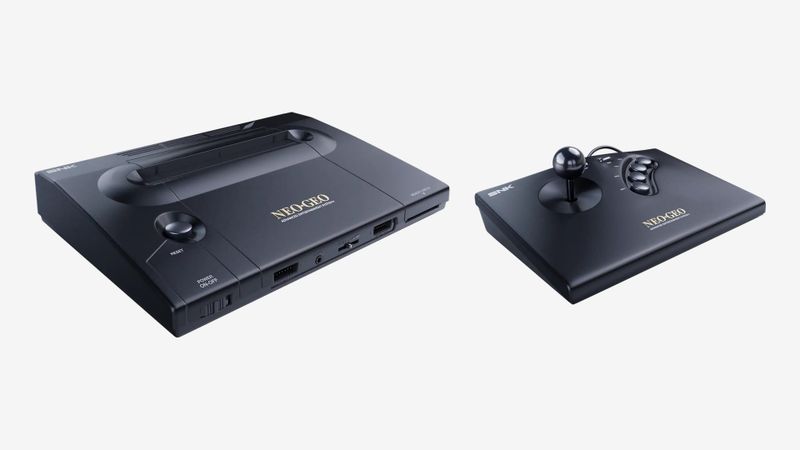
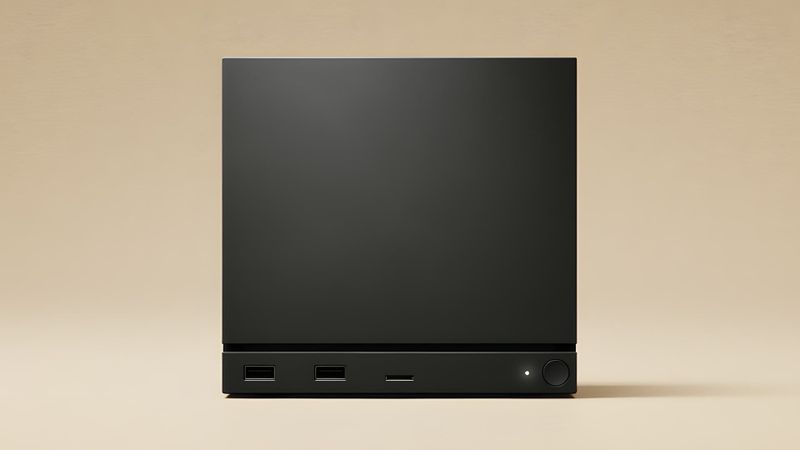
Forget mini consoles with games built in. There are no games inside at all. You put in a cartridge, the same way you did in 1991, and it runs. It’s even the same size as the original, by the hands-on reports from Tokyo Game Show. Black and boxy. Same two controller ports, same memory card slot.
If you want the full story of the original, from the rental shops to the $650 Gold System, it’s on our Neo Geo AES page.
Is it emulation, or an FPGA?
Neither. And this is the part that makes it special. Most retro re-releases run an emulator: software on a modern phone chip, imitating the old console. The more exact ones use an FPGA. That’s a chip you can rewire to behave like the old hardware, the way the Analogue 3D does for the N64 in our N64 consoles comparison.
The AES+ uses ASICs: chips built to do one job, and only that job. Here the job is to be a Neo Geo. Plaion’s own words are “true console reincarnation etched back into silicon”.
The surprise is how they got there. The old AES documents didn’t cover what was inside those custom chips. So Sean “Furrtek” Gonsalves reverse engineered every one of them, working out from the real hardware how each chip behaves. Then Bruno Steux designed new chips from what he found. That’s how Plaion Replai’s Ben Jones described it to Automaton, and he called it the hardest, longest part of the project. One chip that behaves differently, and everything breaks.
Now the twist. Those new chips started life as an FPGA project. Jotego, who worked on the AES+ with Furrtek, said in an interview that the design was spun off from the Neo Geo core for MiSTer, the FPGA one. So the machine sold as “no FPGA” grew out of one. It just doesn’t ship with one. Jotego likened it to the Genesis 2 next to the first Genesis: the old console’s parts squeezed into fewer chips, and still the same system.
That FPGA history caused a fight. If the chips came out of an FPGA core, is “no FPGA” a fair thing to say? One FPGA developer said no, and called it a “bait and switch”, as GamesRadar+ reported. Furrtek’s side: the point was always to do better than emulation, and simply repackaging MAME, the best-known arcade emulator, or the MiSTer core would be “a bit sad”. There’s one real trade-off, though. An FPGA can get fixes later. An ASIC can’t. Whatever is in the silicon on launch day stays there.
What’s new compared with the original?
Mostly, the changes help it live with today’s TVs. Underneath, it’s still a Neo Geo:
- **HDMI.** Up to 1080p, or 720p, and Plaion says it’s low latency. Nobody has measured it yet.
- **The old AV output.** Still there, for a CRT TV. Jotego says it carries RGB, the cleanest picture an old TV can take. The cable is sold separately.
- **DIP switches on the bottom.** Like an arcade board. They set the region and language, overclocking, and the display mode: resolution, aspect ratio and screen rotation.
- **A hidden menu.** Hold all four buttons and Start as you switch it on. You get language settings, a hardware test, and a switch between home mode and arcade (MVS) mode.
- **Saved high scores.** Plaion says the console keeps your high score for each game for good.
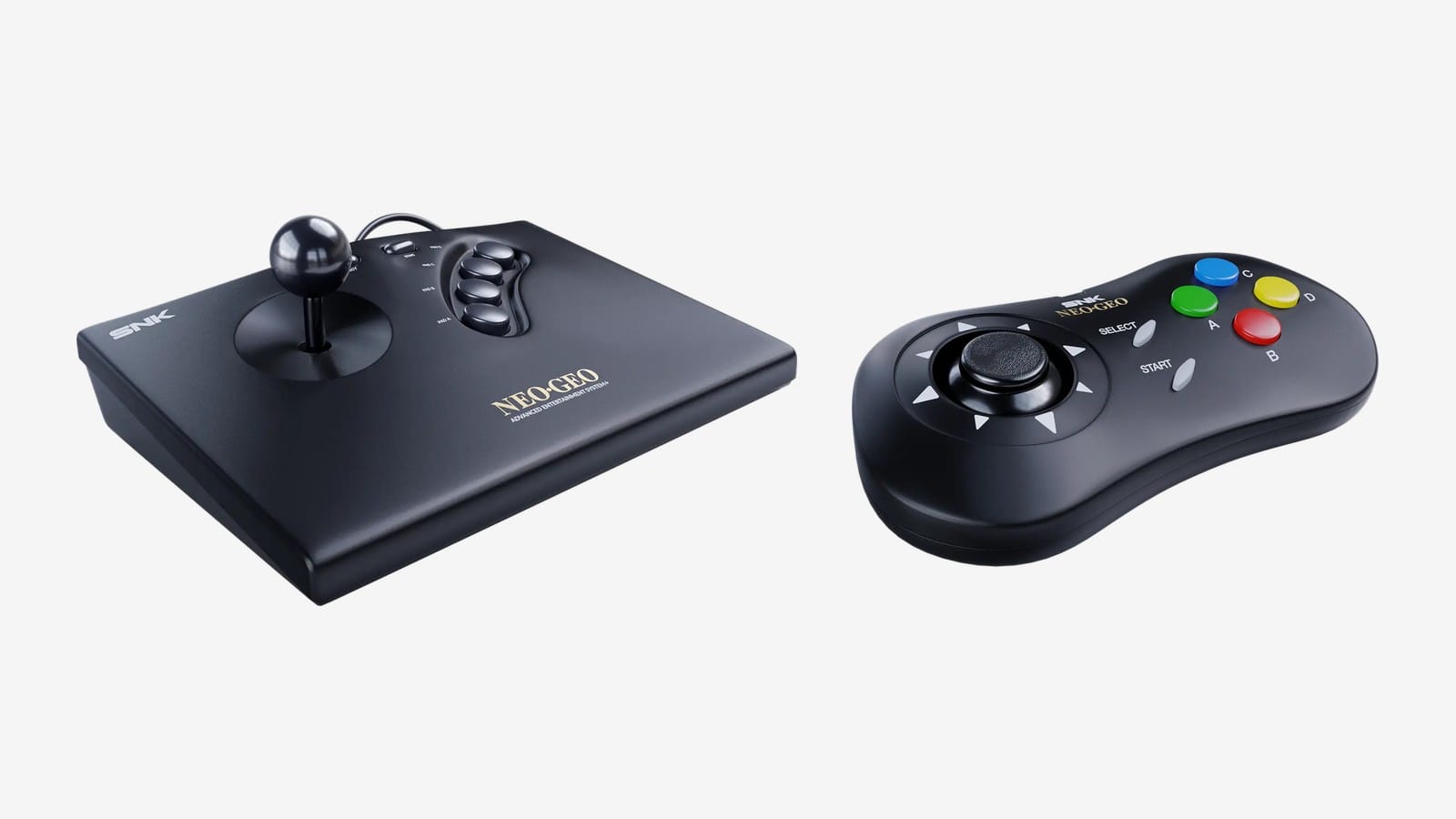
- **A new arcade stick.** A copy of the original, and it works wired or wireless, with a switch on the back. The developers told Famitsu wireless adds a tiny bit of delay. In a quick try, it didn’t bother Famitsu.
- **A memory card with no battery.** The originals needed a cell battery to keep your saves. The new one doesn’t, and it works in an original AES too.
Even the box is a nod to the past. Open it, Famitsu found, and there’s a replica of the original AES box inside.
How does it compare with the original AES?
The AES+ changes how it connects and what it costs. To the games, it’s the same machine. The original’s full spec, from its Motorola 68000 processor down, is on our Neo Geo AES page.
| Part | Original AES (1990) | NEOGEO AES+ (2027) |
|---|---|---|
| Chips | SNK’s original custom chips | New custom chips (ASICs) rebuilt from the original |
| Cartridges | AES home cartridges | AES home cartridges, old and new |
| Video out | AV | HDMI at 720p or 1080p, plus AV with RGB |
| Controller ports | Two 15-pin ports | Two 15-pin ports; old and new controllers both work |
| Saves | Memory card with a battery inside | Memory card with no battery; high scores kept for each game |
| Settings | Region set inside, by the system ROM | DIP switches and a hidden menu: region, language, overclock, display |
| Size | The original | The same size as the original |
| Price | About $650 for the US Gold System | $249.99 |
Will my old cartridges and controllers work?
Yes. Both ways. Your original AES cartridges play on the AES+, and the new carts play on an original AES. Controllers and memory cards work both ways too. The developers told Famitsu they’d tested more than 160 games. Even the mahjong controller works.
Arcade cartridges are the exception. MVS carts, the ones from arcade cabinets, use different boards and connectors. They don’t fit. Famitsu heard they can run through a converter, but that may not be official.
How much does it cost, and what’s in each box?
There are three editions. Every one comes with a power supply, an HDMI cable and an arcade stick.
| Edition | US | UK / Europe | Japan | What you get |
|---|---|---|---|---|
| Standard | $249.99 | £179.99 / €199.99 | ¥32,800 | The black console with a wired arcade stick |
| Anniversary | $349.99 | £269.99 / €299.99 | ¥49,800 | An ice-white console with a white wireless stick, a white memory card, and a white Metal Slug cartridge you can’t buy anywhere else |
| Ultimate | $999.99 | £799.99 / €899.99 | ¥150,000 | All ten launch games, a second arcade stick (wireless), a gamepad and a cartridge rack; among the first units made, each numbered at the factory |
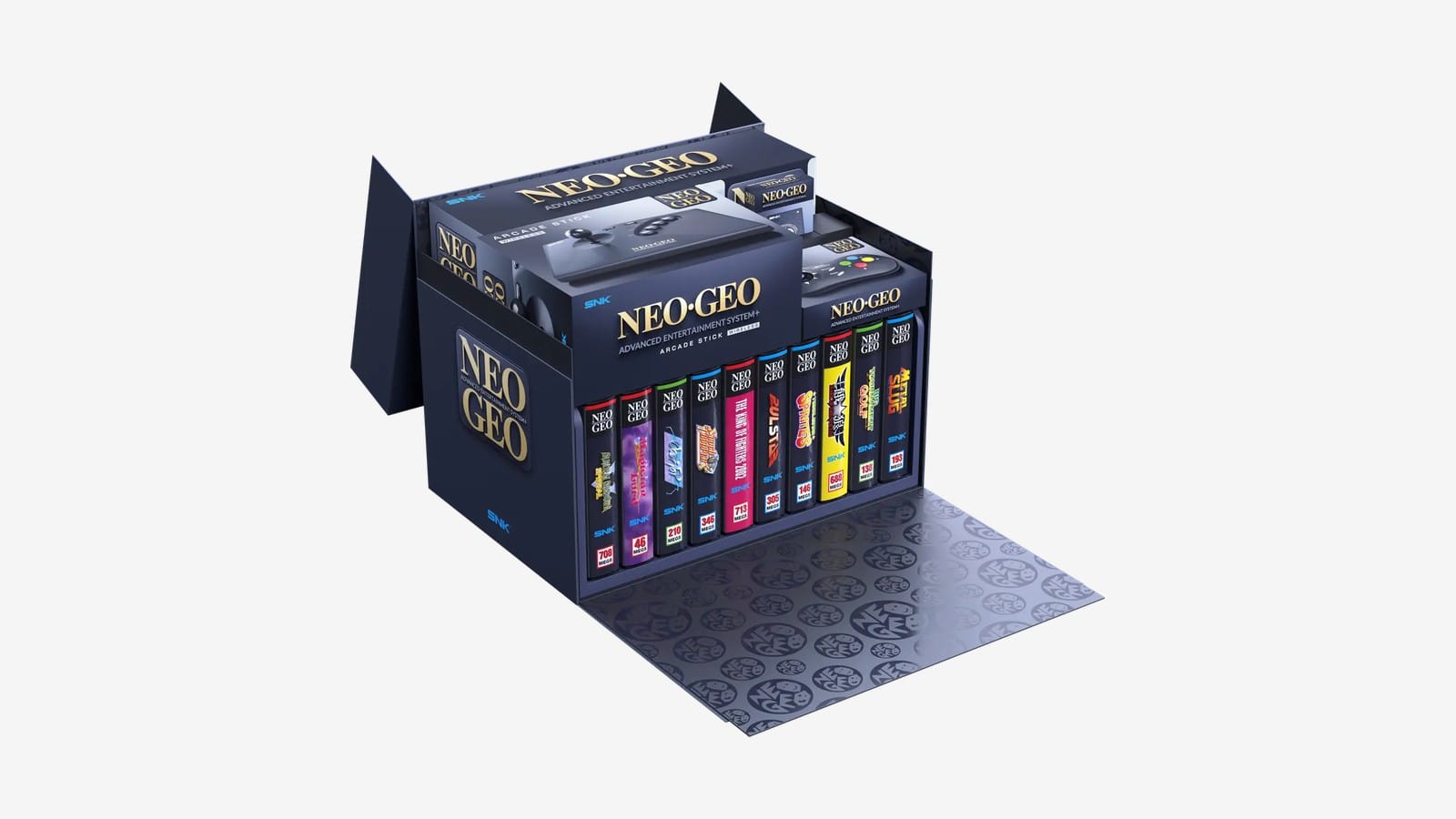
The extras are sold on their own as well. US prices are from the pre-order listings:
| Item | US | Japan | Notes |
|---|---|---|---|
| Game cartridge | $89.99 | ¥9,980 | £69.99 / €79.99 in the UK and Europe |
| Arcade stick | $119.99 | ¥17,200 | Wired and wireless, in black or white |
| Gamepad | $59.99 | ¥8,480 | Modelled on the Neo Geo CD pad |
| Memory card | $34.99 | ¥5,500 | No battery needed, in black or white |
For perspective, the original Gold System cost about $650 in America. Games were about $200. The AES+ costs well under half of that. And that’s before 35 years of inflation.
Which games are coming?
Ten carts launch with the console:
- Metal Slug
- The King of Fighters 2002
- Garou: Mark of the Wolves
- Big Tournament Golf (Neo Turf Masters)
- Shock Troopers
- Samurai Shodown V Special
- Pulstar
- Twinkle Star Sprites
- Magician Lord
- Over Top
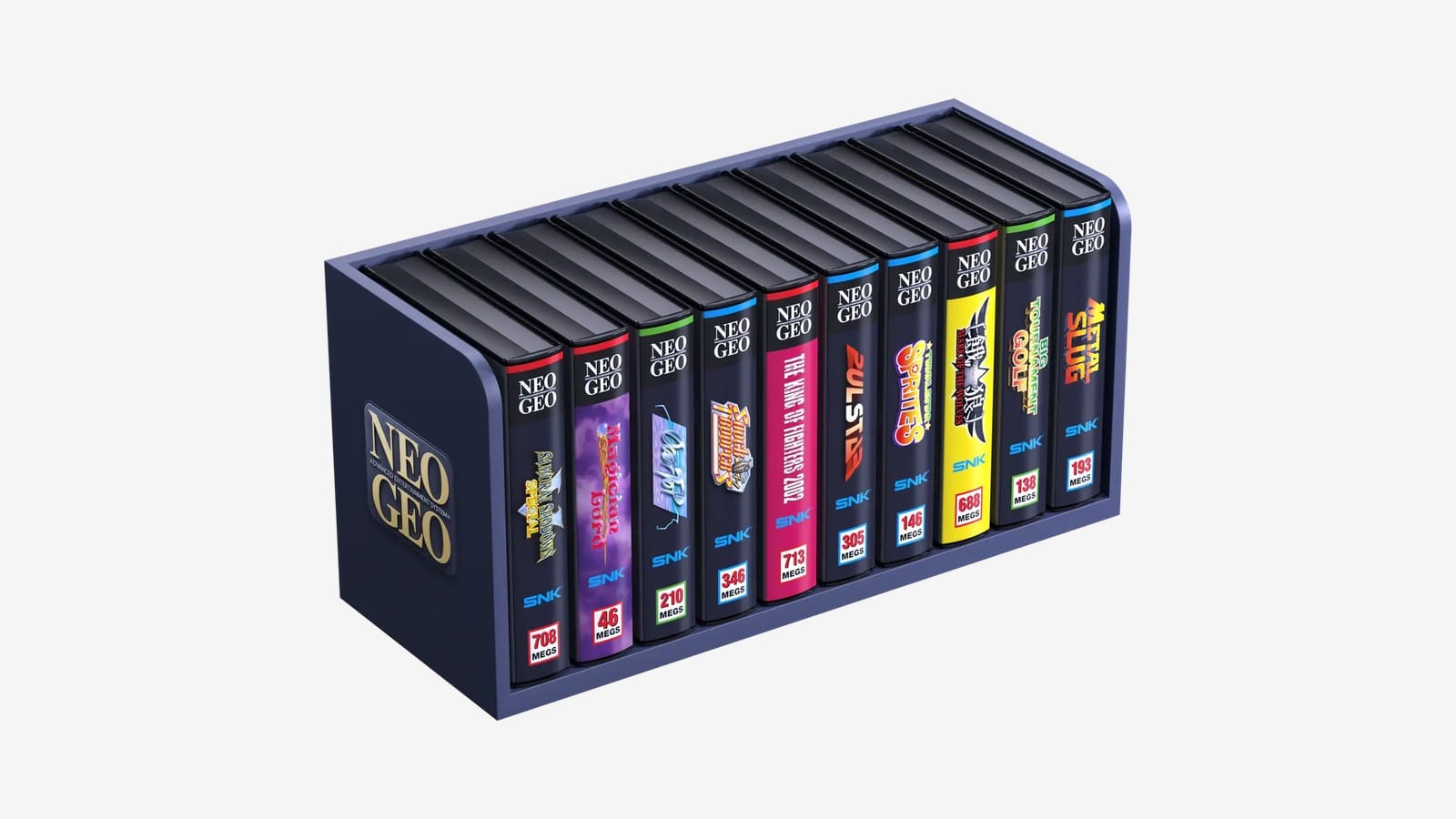
Some get small extras. Big Tournament Golf adds the Scotland course from the Neo Geo CD version, its first time on a cartridge. Samurai Shodown V Special came home censored in 2004. The new cart will match the arcade version, the developers told Famitsu. Gore and finishing moves included.
More came at Tokyo Game Show in September. Zero Wing, the 1989 Toaplan shooter, is coming to the Neo Geo for the first time ever. It started as a fan’s port. The team found it and licensed it from TATSUJIN, which owns Toaplan’s games now. Then four Data East carts: Fighter’s History Dynamite, Dunk Dream (Street Hoop), Miracle Adventure (Spinmaster), and Magical Drop II and III. Those last two share one cartridge. You pick either game when it starts.
Why was it delayed to 2027?
Memory chips. It slipped ten months, from November 2026 to September 2027, because Plaion couldn’t get enough parts.
Jones told Automaton what that meant. The cartridges needed a lot of parallel NOR flash, a type of memory chip. Buying it meant waiting about a year, likely because AI is soaking up chip supply. So the team redesigned the carts around a different type of memory. It had only just started working when he spoke.
Prices didn’t go up with the delay, and people who’d already pre-ordered kept their place in line.
Is it popular?
Very. In its first 24 hours, the AES+ took more paid pre-orders than the forecast for a whole year, according to Lars Wingefors, who founded Plaion’s parent company Embracer and chairs it. A year’s worth in a day. Plaion raised its production plans after that. If you’re ordering in the US, Plaion’s own store struggled with Ultimate Edition orders for a while, over what Plaion called a shipping fee problem. Amazon carries the other two editions.
Who should pre-order one?
Got AES cartridges in a box somewhere? This is the easiest way to play them on a modern TV, and the new carts go back into your old console too. It’s also for you if you play on a CRT, or if you collect. The white Metal Slug cart only comes in the Anniversary box.
If you mostly want to play Neo Geo games, there are cheaper ways right now. Our Neo Geo AES page goes through them. And if you’d rather see it tested first, waiting costs you nothing. It ships in September 2027 either way. By then, someone will have measured the HDMI delay and put the new chips through their paces.
On the shelf
Retro consolesSee the whole story →Nerd Alert
Your Turn
What are YOUR thoughts
What have your experiences been? Let us know.