News · News · Retro Gaming · Retro consoles
SGBC: An FPGA Console That Puts Your Game Boy Cartridges on a TV
Thomas Sanfourche's independent FPGA console for Game Boy, Game Boy Color and GBA cartridges on your TV, with a SNES controller port. What it does, and why it's still a wishlist.
https://averagetechnerds.com/sgbc-fpga-game-boy-console/
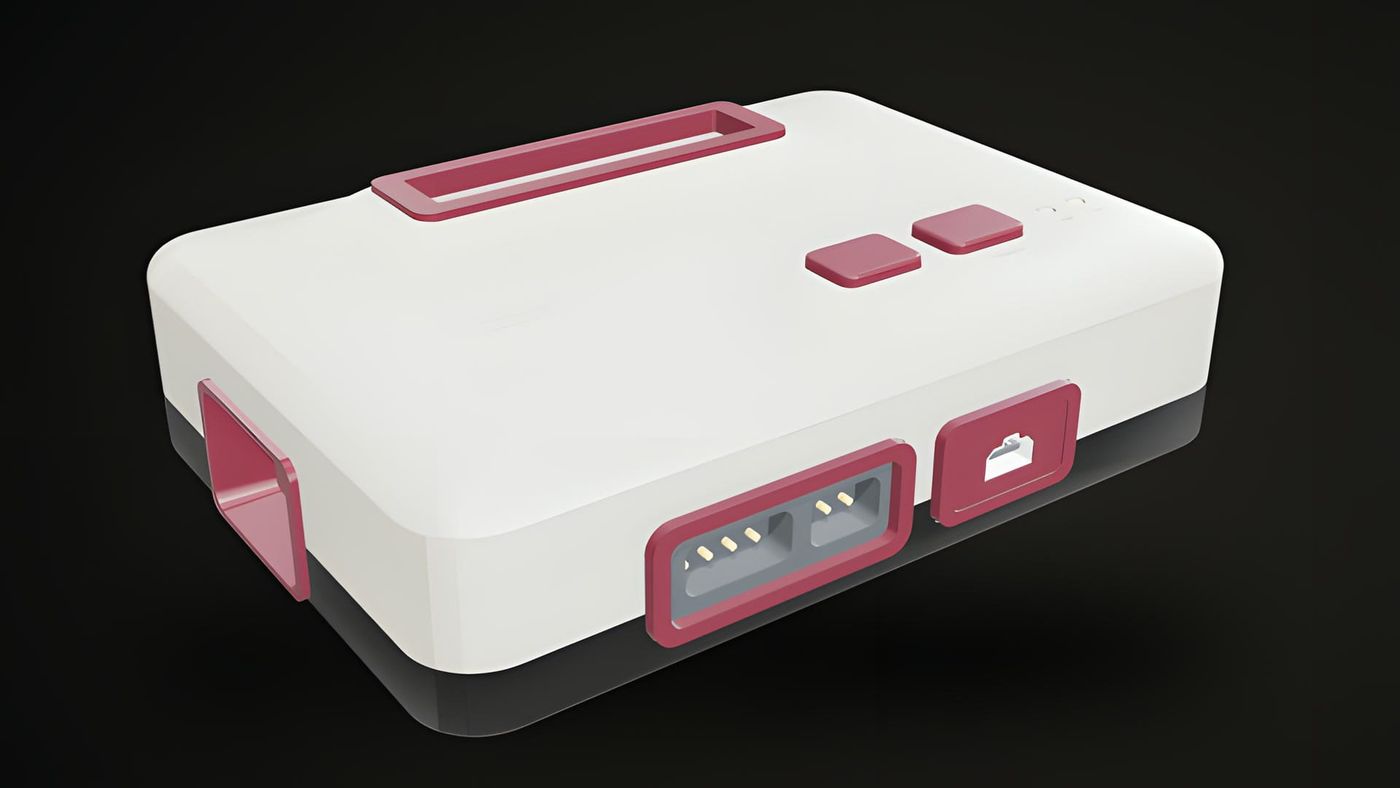
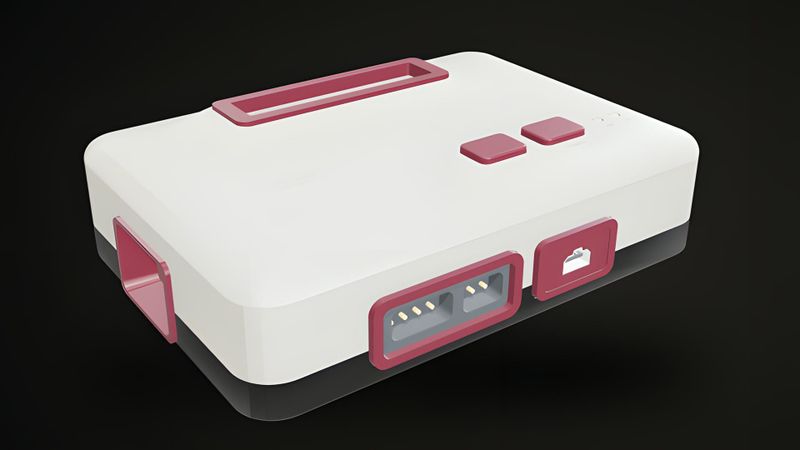
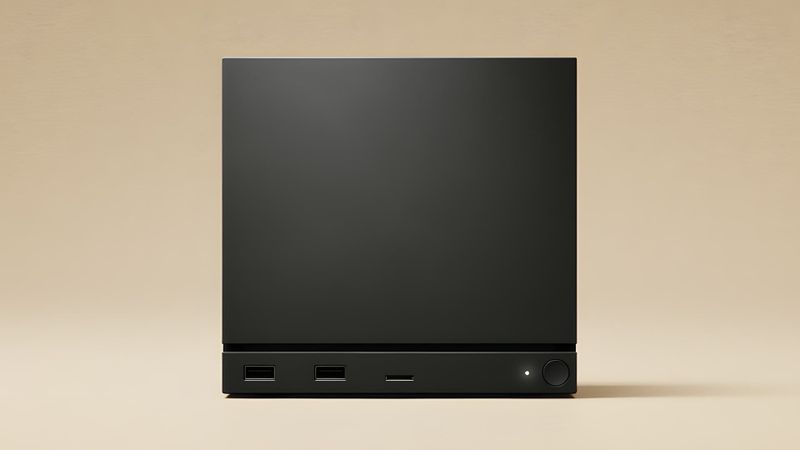
A grey box with a cartridge slot on top, maroon buttons like the original Game Boy, and on the front, of all things, a SNES controller port. That’s the SGBC. Its maker, Thomas Sanfourche, wants it to play your actual Game Boy, Game Boy Color and Game Boy Advance cartridges on a TV, through an FPGA chip that behaves like the original hardware. There’s a slick website with a 3D model you can spin around, and the retro sites have picked it up as a console that’s on its way. It’s earlier than that. Here’s what the SGBC is, what it’s meant to do, what the coverage got ahead of, and why I think it’s one more sign of where retro gaming is heading.
What is the SGBC?
It’s a small console with no screen, built to play your Game Boy cartridges on the TV. The SGBC site lists all three families, Game Boy, Game Boy Color and Game Boy Advance, and calls the whole thing “an FPGA console for the games that never left you.”
FPGA is the part that makes it interesting. Instead of software pretending to be a Game Boy, an FPGA is a chip that gets configured to act like the Game Boy’s own circuits. That’s the same approach behind the ModRetro Chromatic and the Analogue Pocket, and it’s why people who care about accuracy get excited about these things.
The look is pure nostalgia. Warm gray on top, black underneath, and Bordeaux, a deep maroon, on the buttons and the details you touch, the same colour family as the buttons on the original brick Game Boy. The cartridge goes in upright on top, next to dedicated power and reset buttons.
Can you buy the SGBC, and how much is it?
No, and there’s no price yet. The only thing on offer is a wishlist: you leave your email “to hear when SGBC is available to order,” and the site is clear that “no payment is taken and no console is reserved.”
There’s no price and no release window anywhere on the site. The design is labelled Rev C, the third revision of the board, and marked “in development.” So if you’ve seen it described as coming soon, that’s the coverage talking. The maker hasn’t put a date on anything.
What will it actually do?
On paper, a lot for a little box. The plan is 1080p HDMI to your TV or monitor, with integer scaling. That means the Game Boy’s tiny picture gets multiplied by a whole number, so every original pixel becomes a neat square block instead of a blurry smudge.
You’d keep your game files on a microSD card and pick them from an on-screen menu. You could also put a cartridge in and copy it straight to the card, which the site pitches as a backup of the games you already own. There’s a fast-forward for the slow parts, a link port for multiplayer and trading with a compatible handheld, and firmware updates over time.
That link port deserves a second read, though. “Link cable support” is one of the three things the site names as still being validated, along with game compatibility and the final feature list. And one more thing to know about the pictures: the site’s cutaway view is labelled “the earlier enclosure assembly.” What ships, if it ships, could look different.
Is that really a SNES controller port?
Yes. You plug in a SNES controller, a real one, and that’s how you play. It’s the only controller connection in the 3D model on the site. It’s hard not to think of the Super Game Boy, the 1994 adapter that let you play Game Boy cartridges on a Super Nintendo with that same pad in your hands, and Time Extension made the same connection. Whether the maker meant it that way, he hasn’t said.
It also clears up something you might have read. One report says the SGBC’s USB-C port is for gamepads. The current site only mentions an HDMI opening and a USB-C opening, and an earlier version of the maker’s own site text said “USB-C supplies power.” So for now, the SNES port is the controller port, and USB-C is power.
Who’s making it?
Thomas Sanfourche. The site calls it “an independent project” and notes it isn’t affiliated with Nintendo. Retro Dodo reports that he’s a French electronics engineer studying in Taiwan, that the SGBC began as his university graduation project, and that Taiwan’s retro community got so into it that he started planning to take it further. The site itself doesn’t tell that story, so take it as Retro Dodo’s.
That’s part of what makes it interesting. There’s no launch calendar behind it, just an independent project with a website that lets you spin a 3D model around, a clear sense of style, and a design that’s already on its third revision.
How does it compare with the Analogue Pocket and the Chromatic?
It’s the only one of the bunch built for the TV first. The Analogue Pocket plays the same three cartridge families and goes on a TV through a dock you buy separately. My ModRetro Chromatic stops at the Game Boy Color and has no HDMI at all. And Retro Remake has just teased the SuperStation Pocket, another FPGA handheld for Game Boy, Game Boy Color and GBA cartridges, with a dock for the TV.
The SGBC skips the screen and the battery entirely. If your Game Boy games mostly live on a shelf and you’d rather play them on the couch with a SNES pad, that’s exactly the gap it’s aiming for.
Why do FPGA consoles keep showing up?
More and more FPGA hardware keeps appearing, and I don’t think that’s a coincidence. I said it when Taki Udon showed his FPGA GBA SP, and the SGBC is one more example. AI has made tech expensive. Memory prices have shot up, graphics cards cost a fortune, and PCs went up right along with them. IDC counted worldwide PC shipments down 20% last quarter.
When new hardware gets out of reach, people look for something else, and retro gaming has always been there. They lean into the nostalgia, dig deeper, and FPGA is getting a second life because of it. An independent console like this one landing on people’s wishlists is that scene growing in the face of it all.
What happens next?
The things that’ll tell us whether the SGBC becomes a real console: a price, an order page, and proof that the cartridge slot and the link port work with real games. Until then, the wishlist is the way to follow it.
On the shelf
Retro consolesSee the whole story →Nerd Alert
Your Turn
What are YOUR thoughts
What have your experiences been? Let us know.